
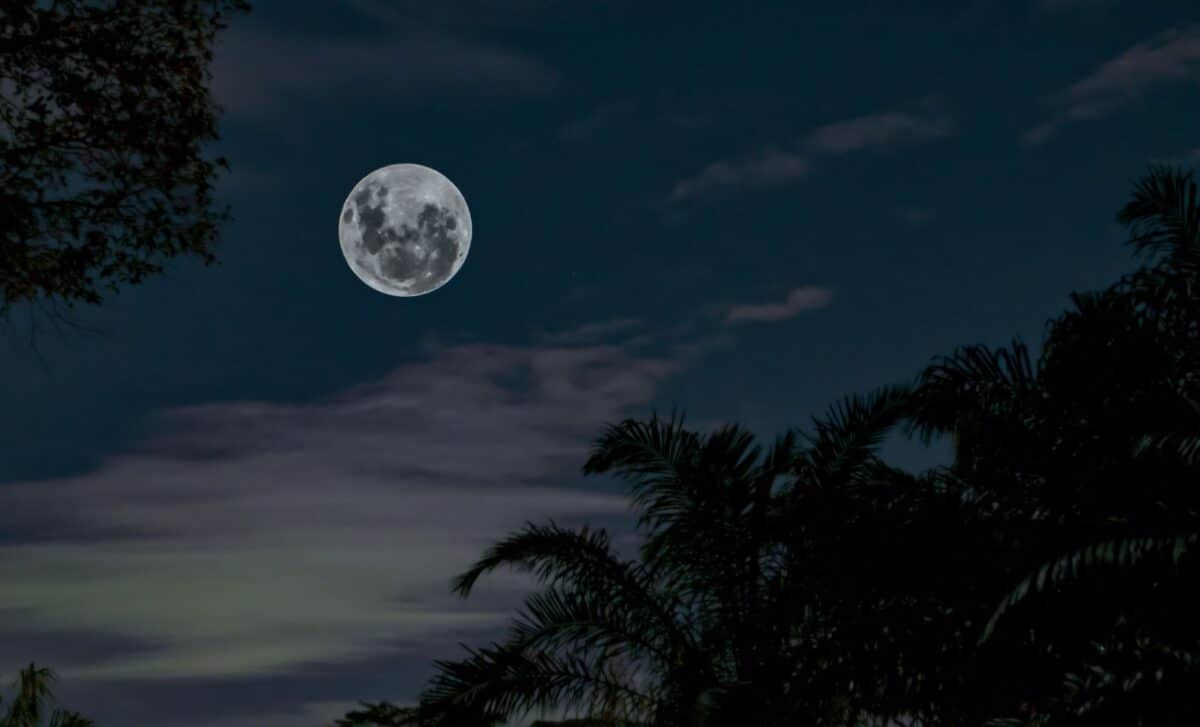
Skywatchers across the world will witness the final supermoon of the year. This “Cold Moon” will shine particularly bright. For those eager to see it, the best time will be just after moonrise when the moon appears largest near the horizon, a phenomenon known as the “moon illusion.”
As the year draws to a close, the December full moon is often referred to as the Cold Moon, a name rooted in the chilly winter nights it accompanies. It also holds significance as the final supermoon of 2025, offering a unique opportunity to view the moon when it’s at its closest approach to Earth, making it appear noticeably larger.
What Makes the Cold Moon a Supermoon?
The term “supermoon” is often used in popular culture, but it doesn’t hold any formal status in astronomy. According to Earthsky, a supermoon occurs when a full moon comes within 90% of perigee, the point in its orbit where it is closest to Earth. This makes the moon appear larger and brighter than a typical full moon. The Cold Moon will be 2025’s final opportunity to experience such a phenomenon. .
Unlike other phases of the moon, when the moon is closer to Earth, its gravitational pull affects tides more strongly, and it can appear almost 14% larger than when it is farther away. This special characteristic of the Cold Moon will be visible even without a telescope or binoculars, although some stargazers may choose to use these tools to observe finer details.
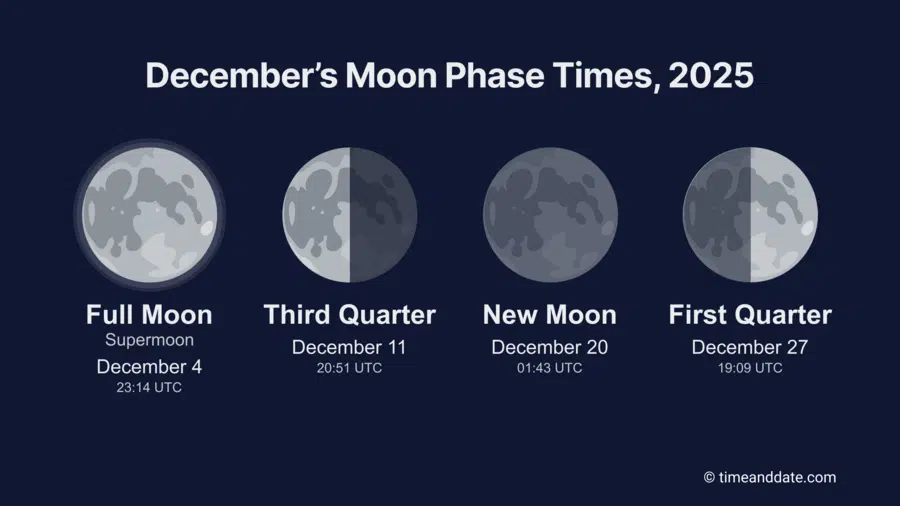 Dates and times for the key lunar phases in December 2025. Credit: timeanddate
Best Viewing Times and Locations
To catch the Cold Moon in its full glory, timing is key. The Cold Moon will peak at 6:14 PM EST on December 4, but it will remain visible through the night. According to the article, the most striking moment may occur just after moonrise, when the moon seems larger near the horizon. In New York, moonrise will occur at around 3:54 PM EST, while in Los Angeles, it will rise a bit later at 4:22 PM PST.
For the best view, it’s recommended to find a location far from city lights. Light pollution can obscure the moon’s brilliance, so remote or rural areas with clear skies will provide optimal viewing conditions. Even without equipment, the Cold Moon’s full glow should be visible to the naked eye, but binoculars or a telescope might allow stargazers to appreciate it even more.