
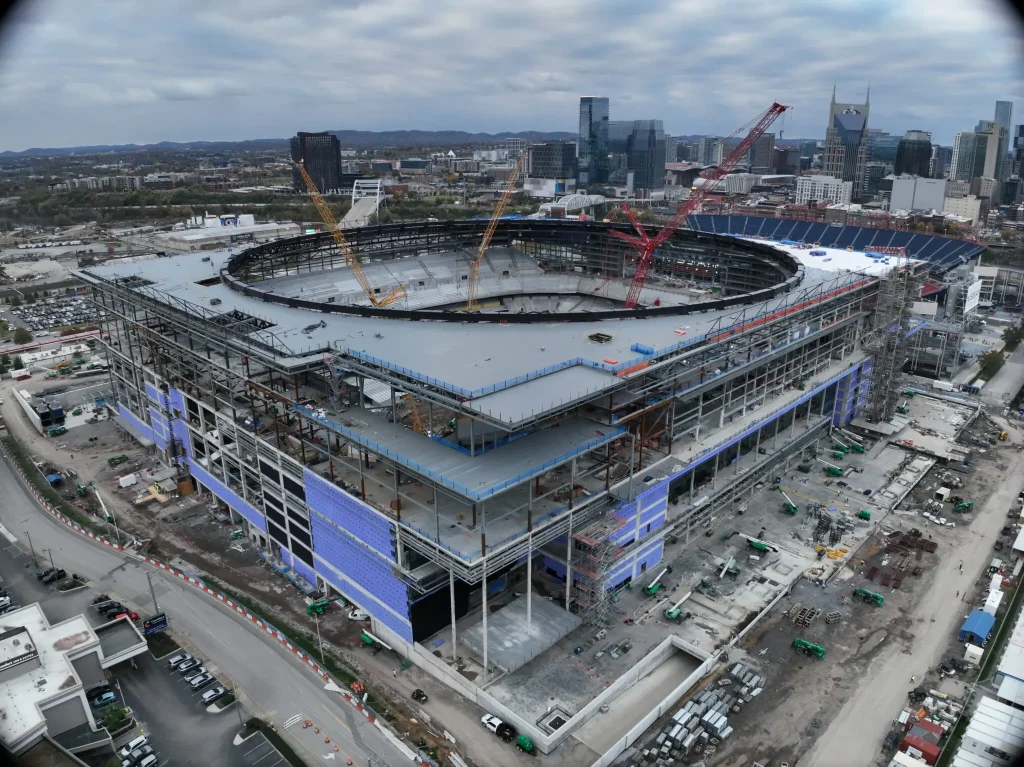
Nashville is reshaping its sports identity with a bold move, a new 2.1 billion dollar Nissan Stadium that will give the Tennessee Titans a cutting-edge home and position the city to host the Super Bowl for the first time. After twenty-five years in an aging open-air venue, the franchise and the city agreed that renovation costs had grown too high and the old stadium’s limitations too hard to ignore. The new stadium, now under construction beside the existing structure, answers those challenges with modern engineering, better comfort, and revenue-driving amenities built for the NFL’s biggest stage.
Nissan Stadium © Tennessee Builders Alliance
The current Nissan Stadium opened in 1999. It has delivered memorable moments, but it cannot meet today’s premium fan expectations or the league’s Super Bowl standards. Cold winters, an open roof, and limited infrastructure have kept Nashville off the shortlist for the Super Bowl for decades. February 2025 brought daytime lows of around negative four degrees Celsius, a reminder of why the NFL avoids awarding its marquee event to open stadiums in cold-weather cities. Renovation estimates climbed high enough that starting fresh made more economic sense than repairing the old shell.
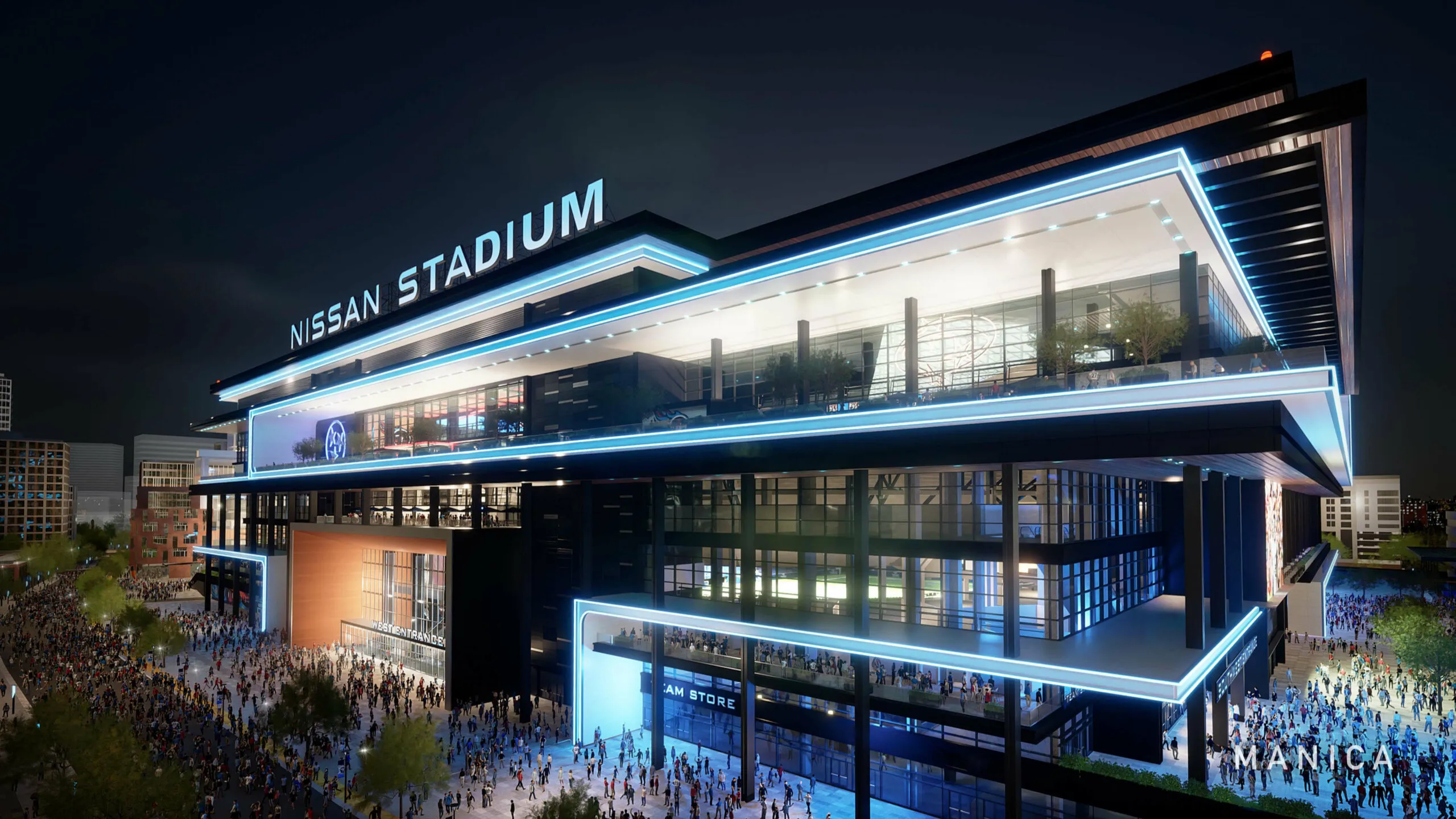
Nissan Stadium © MANICANashville’s New Nissan Stadium Moves Through Final Construction Phases
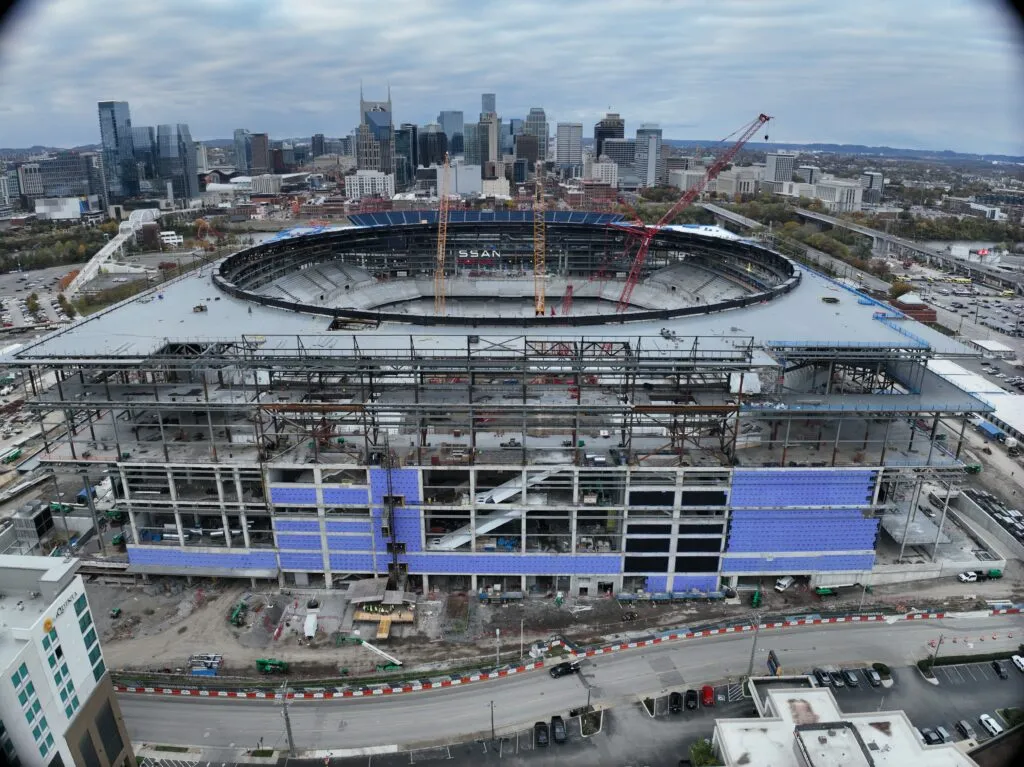
The new Nissan Stadium is designed to fix those issues from the ground up. Its signature feature is a cable-stayed roof supported by 50 ring beam boxes and tensioned steel cables. The roof system utilizes approximately 660 feet of ETFE panels, a translucent and durable material that allows natural light to pass through while shielding the fans from rain, snow, and harsh temperatures. ETFE is lightweight, weather-resistant, and needs little maintenance, which helps reduce long-term operating costs. This roof alone transforms Nashville from a weather-restricted market to a potential Super Bowl contender.
Titans’ New Nissan Stadium in Nashville © Turner Construction
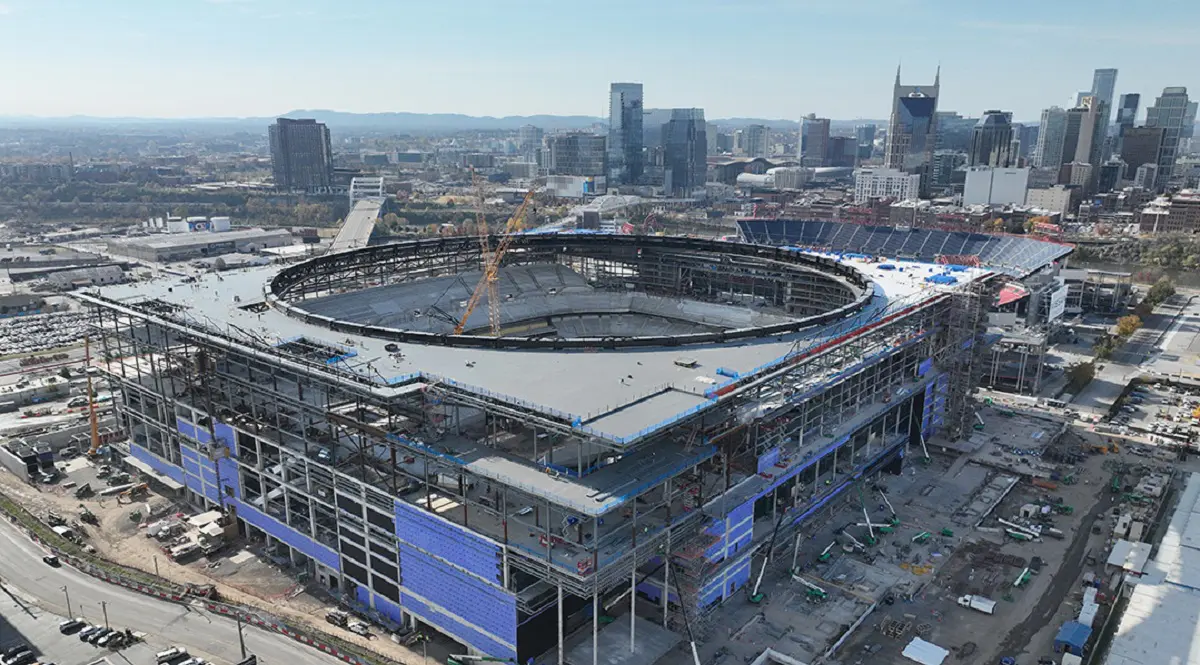
Beneath the roof sits a hybrid structural frame built from concrete and steel. Crews pour concrete from the foundation up to the upper concourses, then switch to steel assembly for the upper stadium bowl. Around 19,000 tons of steel, cut into roughly 25,000 pieces, form the backbone of the superstructure. Seven cranes rotate shifts, enabling near-continuous work to keep the project on schedule toward its planned 2027 opening.
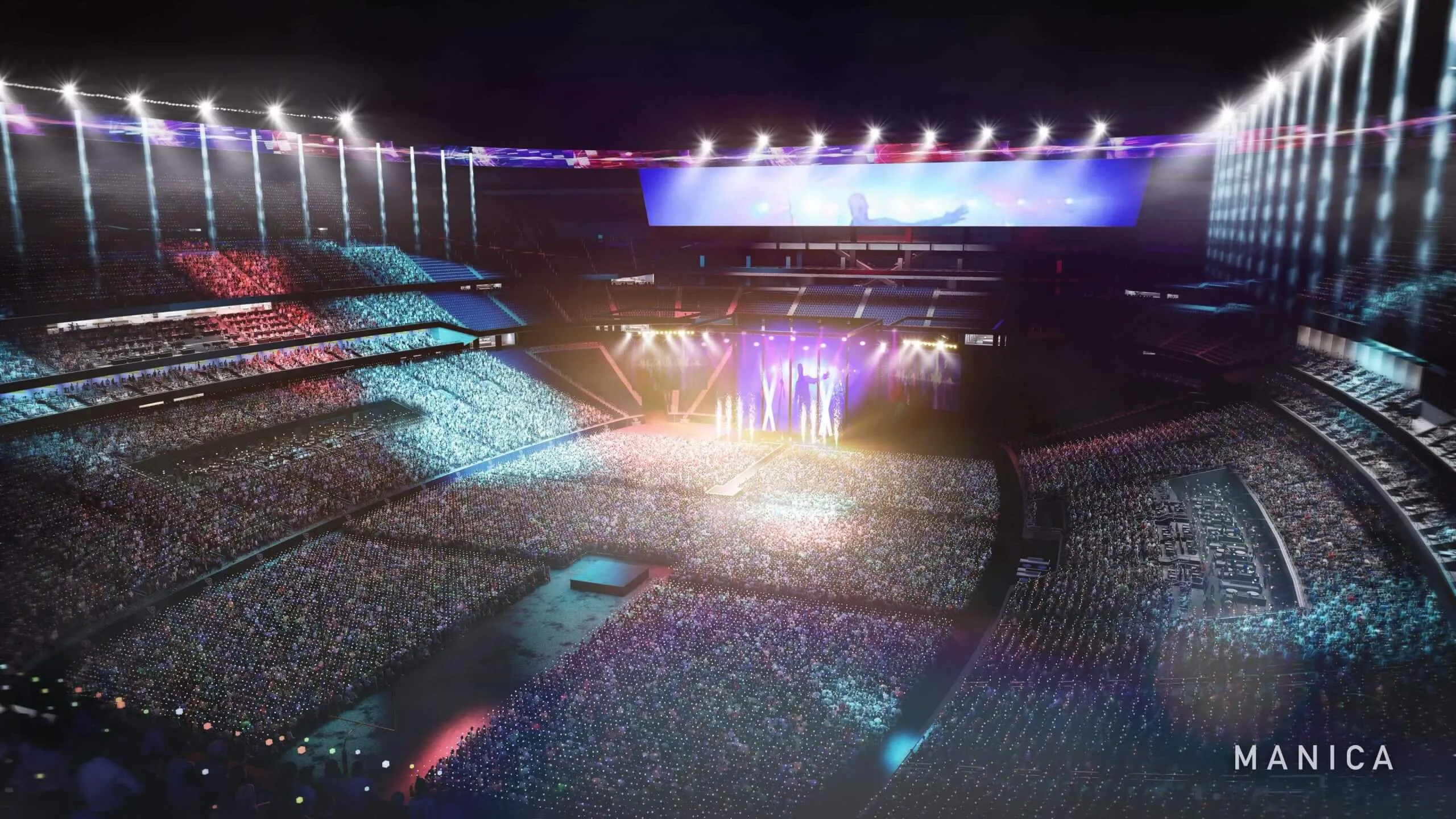
Nissan Stadium © MANICA
The seating bowl introduces another major change. Capacity will drop from about 70,000 seats in the old stadium to around 60,000 in the new one, but fans will move approximately 38 percent closer to the field on average. The design eliminates distant nosebleed sections to create a tighter, more premium environment. The architects rotated the building footprint ninety degrees, forming a square shape that brings end zone seating closer and increases the value of premium sections.
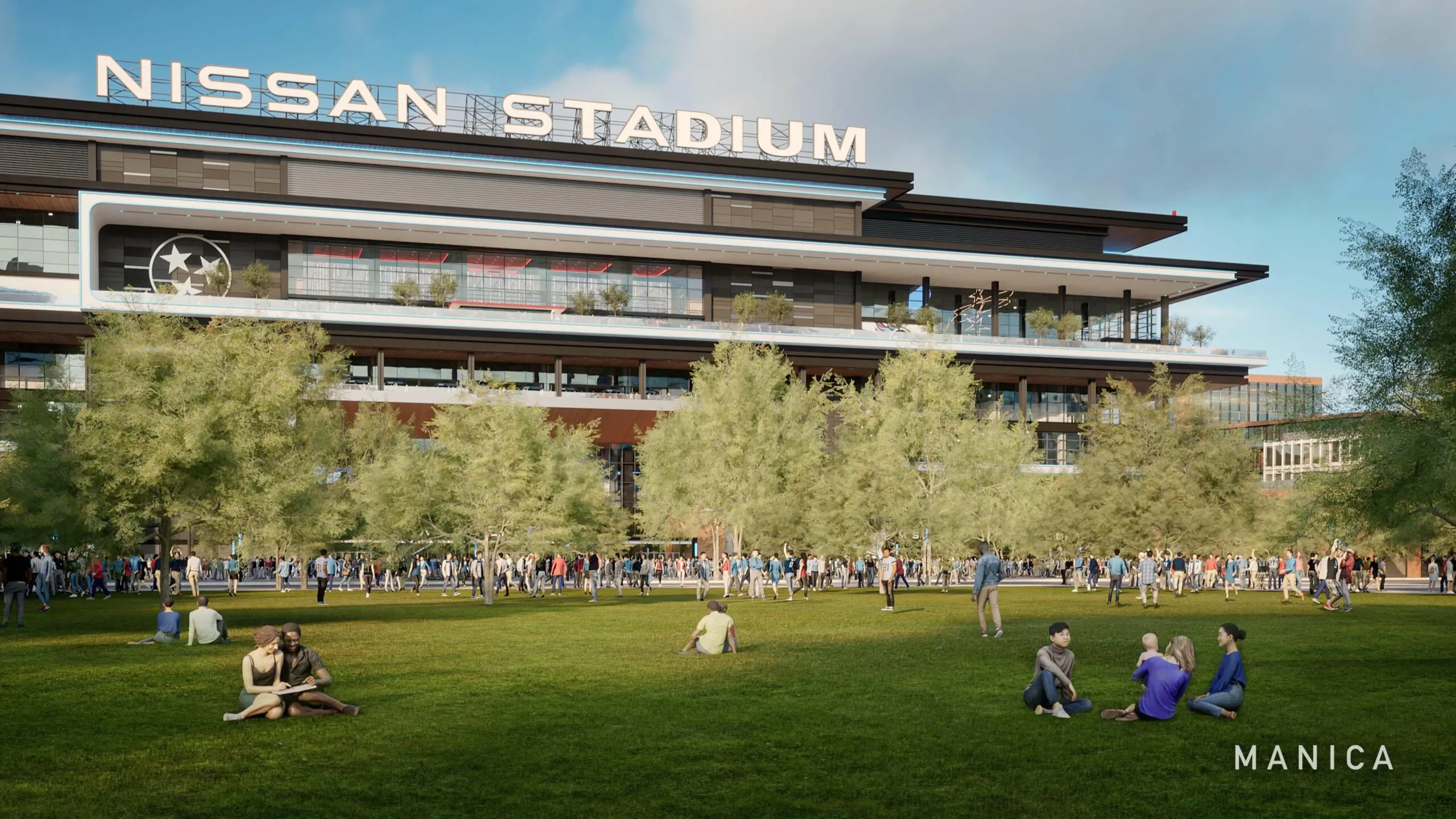
Nissan Stadium © MANICA
Luxury and hospitality spaces expand far beyond what the old building offered. Although the suite count drops from 143 to 130, the stadium gains new all-inclusive clubs and 126 studio boxes aimed at high-end fans and corporate groups. These additions are expected to generate more revenue per seat than traditional suites. Technology upgrades are extensive. About 77,000 square feet of LED displays will handle game action and advertising. Forty-four escalators and twenty-seven elevators will move crowds more efficiently than before. Concessions will feature frictionless payment systems that allow fans to scan in with a card or phone, pick up items, and walk out without waiting in line.
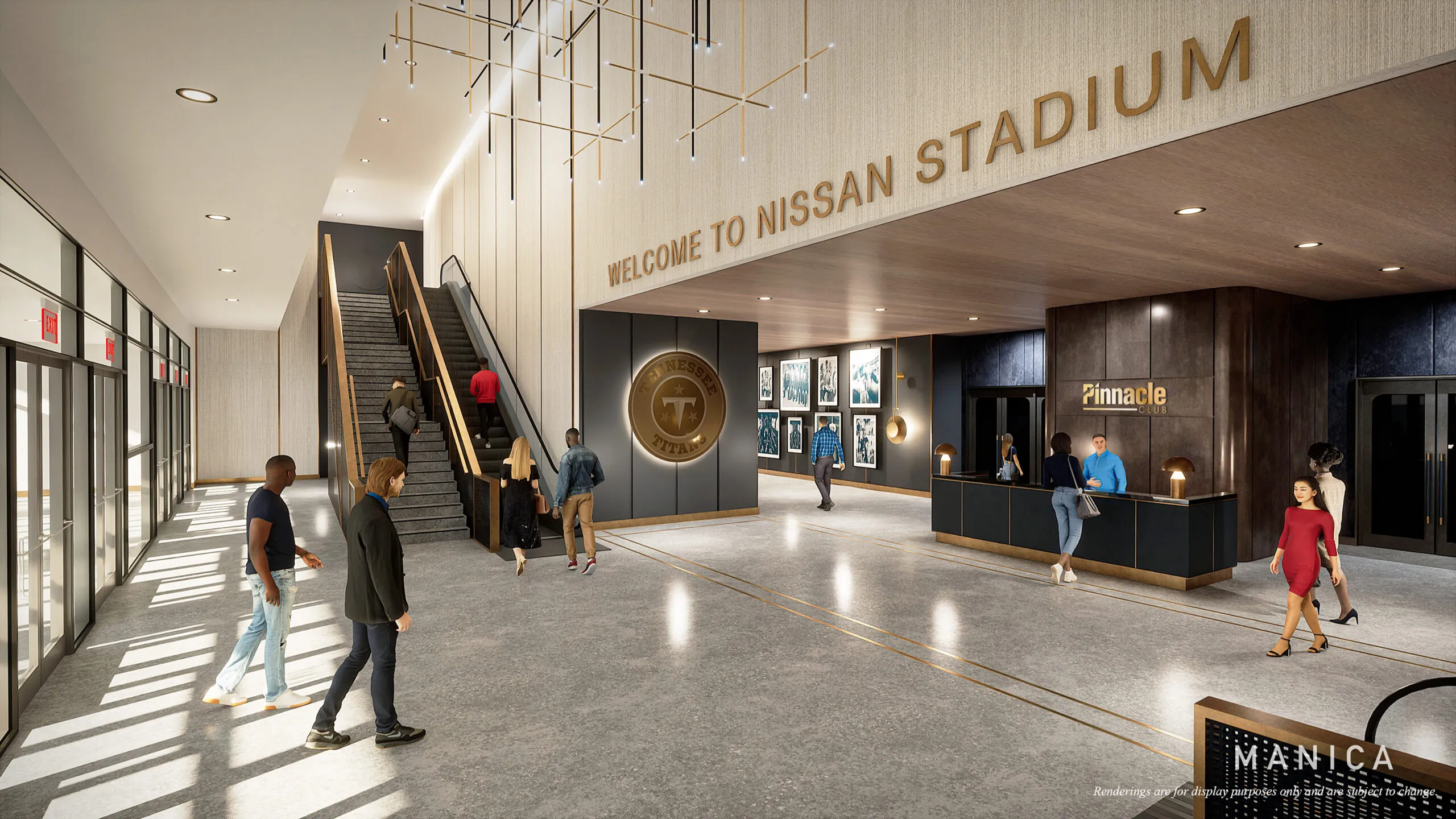
Nissan Stadium © MANICA
The stadium also opens itself to the city. Glass walls and garage-style doors lead to wraparound terraces with 360-degree views of Nashville. Those outdoor connections are unusual for an NFL venue and help the building function year-round for concerts, festivals, and non-sports events. Its enclosed design makes it a candidate for the NCAA Final Four, WrestleMania, and other major productions. A twelve-thousand-square-foot community center inside the complex will host job fairs, charity events, seminars, and neighborhood meetings.
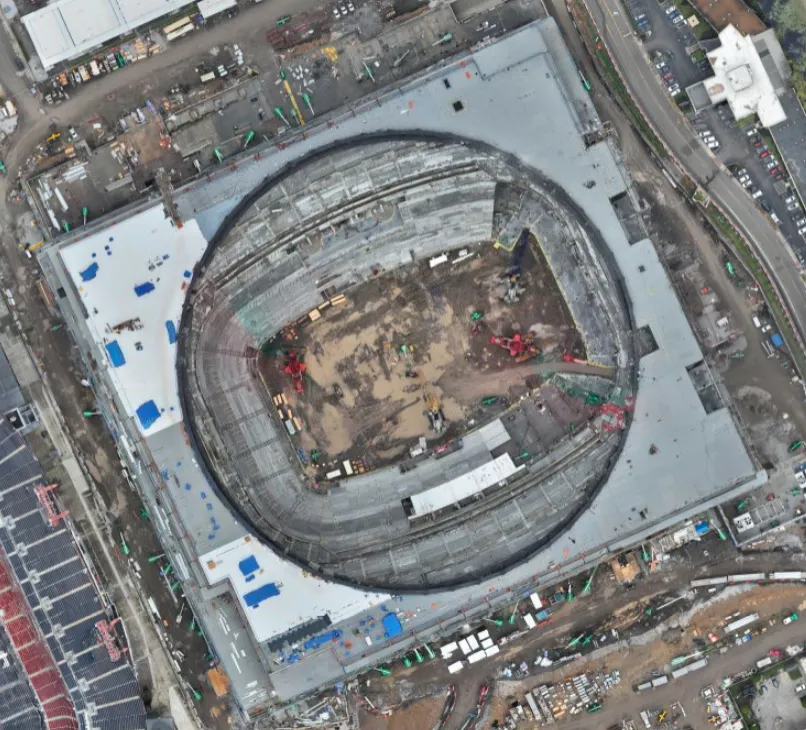
Nissan Stadium © Tennessee Builders Alliance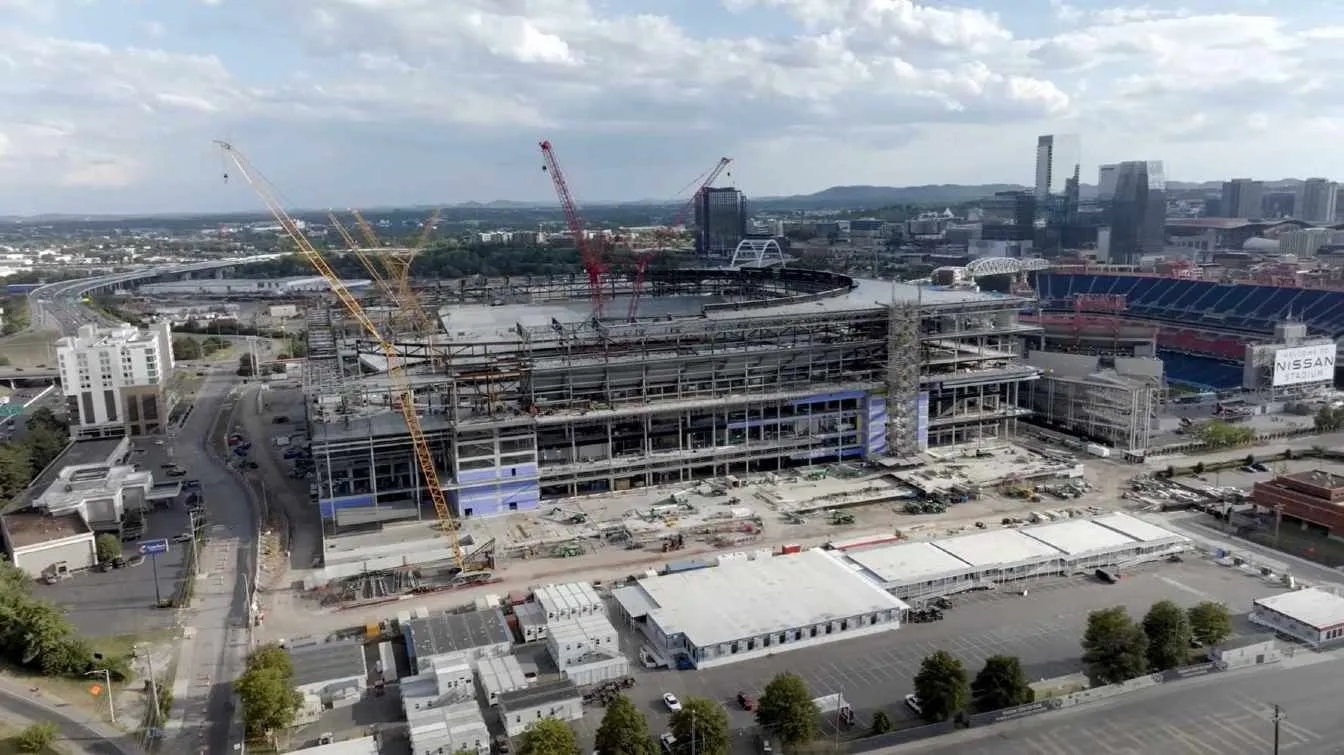
© McGraw Multimedia
The economic case for the project is straightforward. Cities that host the Super Bowl often see up to one billion dollars in visitor spending tied to hotels, restaurants, transportation, and temporary employment. Nashville’s tourism growth, downtown entertainment district, and rising national profile make it a natural fit once the stadium meets NFL standards. With the new roof and upgraded infrastructure, city and franchise leaders are targeting the 2029 or 2030 Super Bowl.
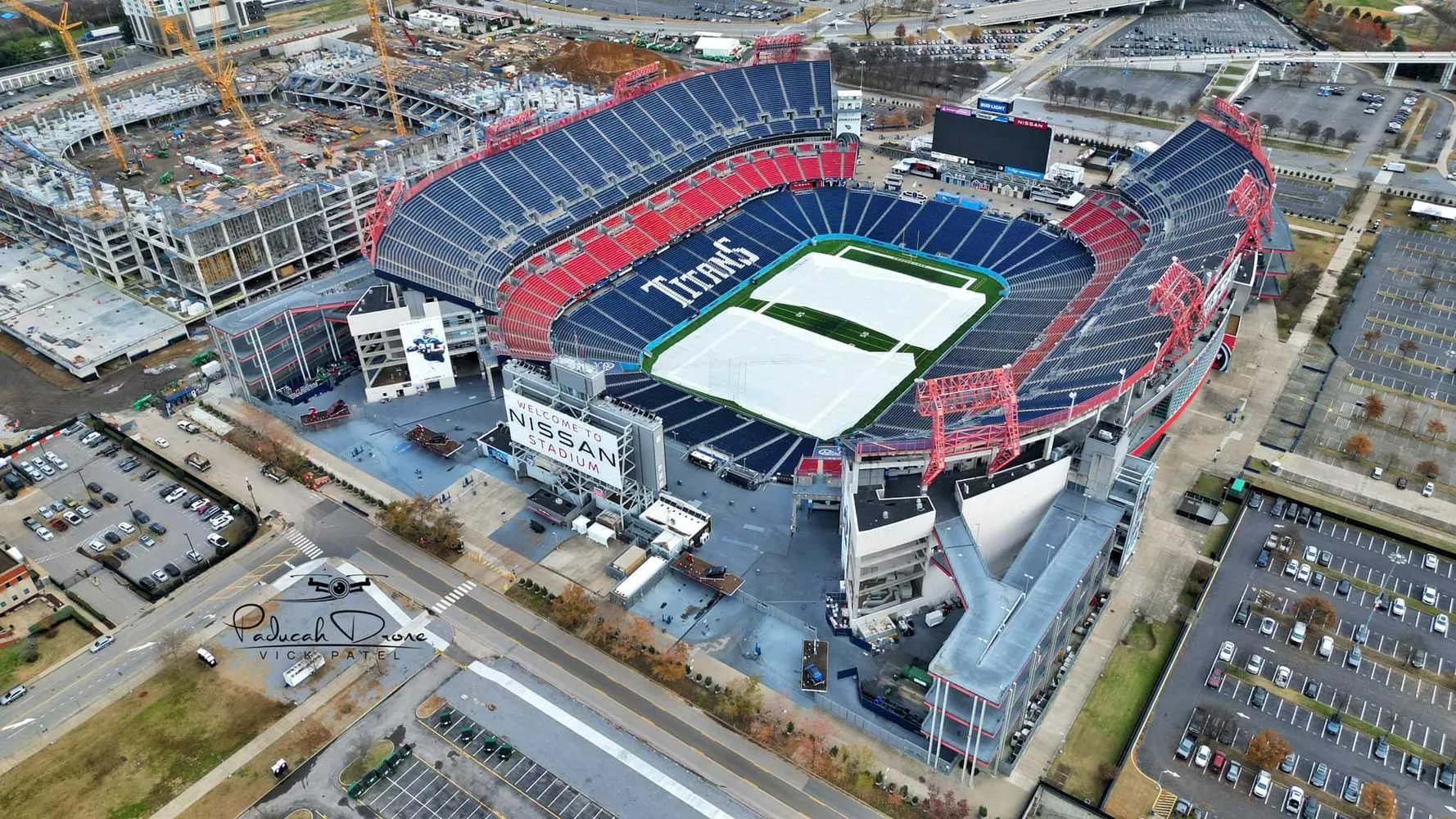
Nissan Stadium © Paducah Drone
Once the new stadium opens, the original Nissan Stadium will come down. Because the two buildings stand only about ninety feet apart, engineers cannot use a controlled implosion. Instead, crews will dismantle it with a mechanical claw capable of reaching about 135 feet. The takedown is expected to last around six months, with each side requiring approximately three months of careful removal.
Nissan Stadium © MANICA
The new Nissan Stadium marks the start of a new era for the Titans and for Nashville. It blends modern engineering with a focus on fan comfort, premium experiences, and year-round usability. It addresses the weather and age-related challenges that held the city back while setting the stage for some of the biggest events in American sports and entertainment. Nashville built the old stadium just before a run to the Super Bowl. As the new one rises, local fans hope history finds a way to rhyme.