
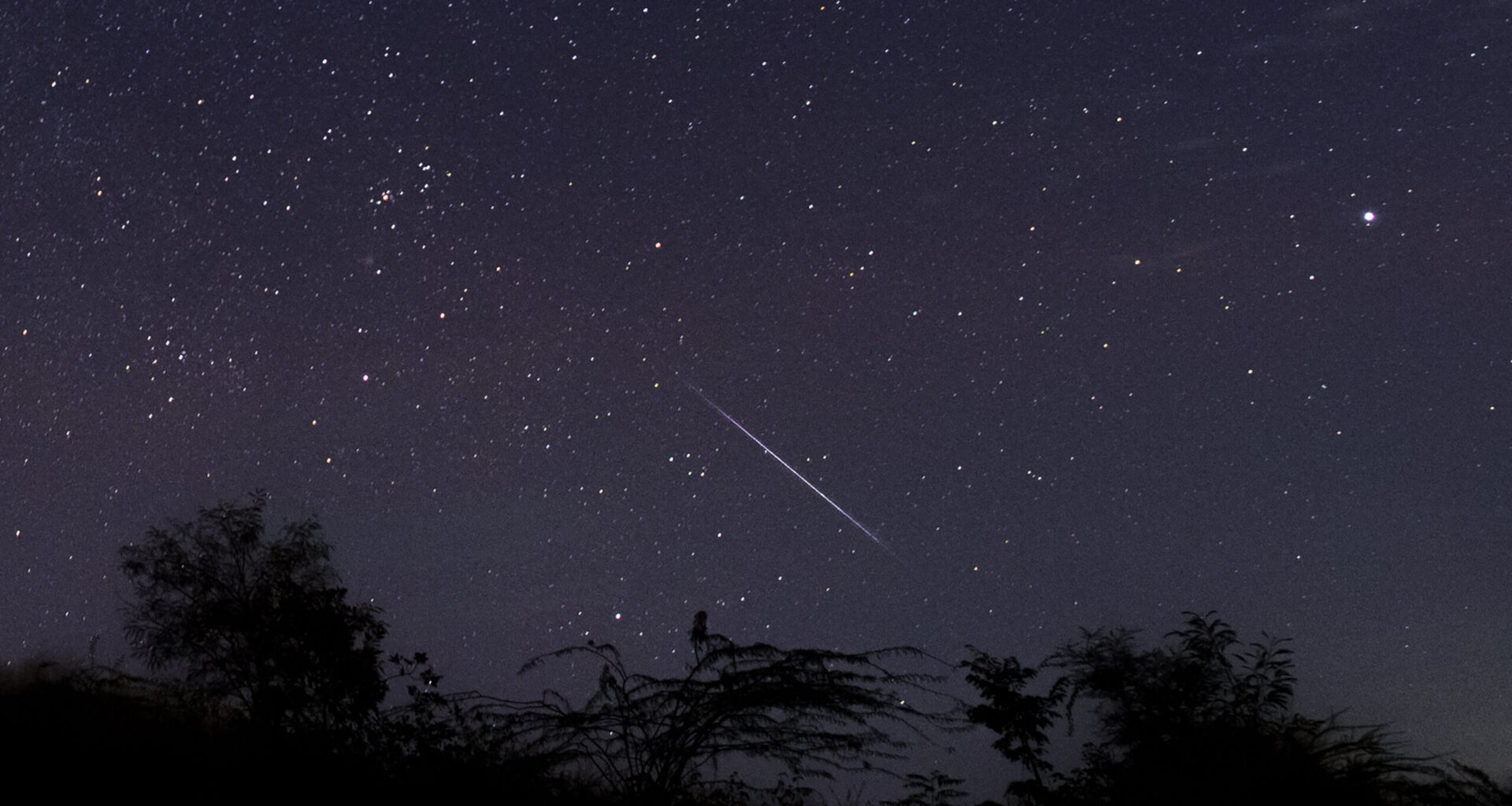
December for lovers of astronomy is highlighted by the Geminids meteor shower, as Greg Redern highlights in December’s edition of “Eyes to the Skies.”
“Eyes to the Skies” is a recurring feature and publishes on the first of every month. You can find it on WTOP’s The Space Place. Email Greg your space questions and he might answer them in the next edition.
Welcome to WTOP’s monthly feature, with a new name: “Eyes to the Skies.” Each month will feature the best the sky has to offer stargazers regarding the moon, planets and stars. Space related events around the D.C. area that might interest you will be included as well.
Let’s get to the sky for December!
Must-see sky sights for December
The winter constellations
Geminids meteor shower the night of Dec. 13-14.
Star of the month
In December, be on the lookout for bright, orange colored Aldebaran, the “fiery eye of Taurus the Bull.” Look for it right after it gets dark in the east. Aldebaran is easy to spot among the stars of the Hyades star cluster that forms a distinct and easily visible “V” in the sky.
Directly above the bull’s angry eye is the beautiful Pleiades star cluster, also known as the “Seven Sisters.” These young stars form a little dipper, which some people mistake for the real “Little Dipper,” or Ursa Minor.
If you have binoculars, the Pleiades are worth observing. The star cluster also has a stunning dust cloud between it and Earth, which can be seen in long exposure photos. Taurus the Bull makes for a very nice smartphone pic.
Highlights of the month
As December begins, the bright constellations and stars of winter begin to rise as soon as it gets dark. As the night progresses, the “best and brightest” are high in the east at 11 p.m. Bright Jupiter adds to their splendor. By month’s end, you can see them well above the eastern horizon at 8:30 p.m.
This happens because our planet moves around the sun “by approximately one degree a day and at the same time is completing one rotation every 23 hours and 56 minutes,” according to BBC’s Sky at Night Magazine.
Dec. 3 — After it gets dark, the bright almost full moon passes through the Pleiades star cluster covering (occulting) some of the stars. Binoculars will enhance the view, but it will be difficult to view due to the brilliant moon.
Dec. 4 — The full cold supermoon occurs 6:14 p.m. You can also use this website to determine moonrise for your location. This is the third full supermoon in a row and the last full moon for 2025.
Dec. 9 — The waning gibbous moon rises very, very close to the star Regulus in the east at 10:30 p.m. The two move closer together until just after midnight. Binoculars will enhance the view greatly.
Dec. 13-14, all night — The Geminids meteor shower has very favorable viewing conditions, i.e. the moon will not be a major detractor. Bundle up, get a warm drink and gather some friends to enjoy this sky sight.
Dec. 14 — If you are up for the Geminids, a must see in the predawn sky in the east is the waning crescent moon with probable earthshine joining up with the star Spica at just two degrees apart. Try taking a smartphone/camera pic.
Dec. 14 — Remember our star of the month in October, Algol? It is worth looking at it going to minimum brightness for two hours centered at 10:39 p.m., and then getting brighter. See the other dates this month below. Try taking a smartphone/camera pic.
Dec. 17 — Algol at 10:28 p.m.
Dec. 20 — Algol again, but earlier, at 7:17 p.m.
Dec. 21 — Winter solstice at 10:03 a.m. heralds the start of winter and the longest night of the year.
The moon
Dec. 4 — Full cold supermoon (third full supermoon in a row)
Dec. 11 — Last quarter
Dec. 20 — New moon
Dec. 27 — First quarter
Planets
Mercury is favorable for Northern Hemisphere viewers before dawn in the east at the beginning of the month until Christmas Day.
Venus is in the glare of the sun, as is Mars.
Jupiter rises in the northeast after dark and is quite bright.
Saturn is high in the southwest after dark, a great view in a telescope as the rings cast a thin line across the planet.
Uranus is in the eastern sky after dark. You need a telescope to best observe the planet, although it is visible with binoculars.
Neptune is in the east as it gets dark. You need a telescope to observe the planet.
Pluto is way out there in the solar system and requires taking images through a telescope spaced days apart to hunt it down.
DC-area events
Bonus section
Download NASA’s 2025 science calendar, which features out of this world pictures and information.
The Planetary Society’s calendar is another resource for tracking space missions.
Use this useful tool to create a custom star chart for your location to help you find your way around the stars.
You can also send in any space-related questions to my email address. Suggestions about this feature are also welcome.
Follow my daily blog to keep up with the latest news in astronomy and space exploration. You can email me at skyguyinva@gmail.com.
Get breaking news and daily headlines delivered to your email inbox by signing up here.
© 2025 WTOP. All Rights Reserved. This website is not intended for users located within the European Economic Area.