
This article was funded by LebTown donors as part of our Civic Impact Reporting Project.
Planned changes to the Pennsylvania Code concerning the delivery of mental health services across the commonwealth will cost Lebanon County $25 million annually, county commissioners were told at a one-hour workshop on Wednesday, Nov. 26.
The new regulation does not address the ability by county mental health officials to implement those rules changes even if they have the available financial resources to do so, according to Holly Leahy, administrator of the Lebanon County Mental Health/Intellectual Disabilities/Early Intervention program.
Lebanon County’s state legislative contingent was invited to the meeting, and state Rep. John Schlegel (R-101) attended the session, which was exclusively covered by LebTown.
The state wants to codify the regulations so that mental health services are consistent across the commonwealth, but officials are saying a one-size-fits-all approach does not work for financial and practical reasons.
Leahy said the state Legislature is not funding this initiative, meaning counties will have to find the financial resources to operate their programs under these rules, adding that Lebanon County does not have qualified staff to run them if approved.
“As a small county, we knew from the crisis service modalities outlined that there was no way that our county would have the financial nor qualified staff resources to fully implement each of the modalities, so we chose to apply for the funding to complete a comprehensive crisis system dynamic enhancement plan,” Leahy said. “By doing so, we hoped to identify our strengths, weaknesses and ability to implement what OMHSAS (Office of Mental Health and Substance Abuse Services) was requesting.”
Leahy noted there are three main barriers that would lead to the end of Lebanon County’s mental health program.
She said the primary areas of concerns are inadequate funding, unrealistic staffing requirements, and restrictive physical site mandates, the latter leading to the closure of the county’s walk-in center and what she called an “extreme hardship to hold onto our mobile crisis intervention services.”
Inadequate funding
Lebanon County is already facing a $5 million budget deficit heading into 2026, and finding the resources necessary to implement and maintain moving forward would further drain county coffers, according to Leahy.
“The proposed regulations significantly underestimate the true cost of delivering crisis intervention services that meet the outlined standards. Without adequate funding to support these requirements, providers will face substantial challenges in maintaining service quality, accessibility, and sustainability,” she said. “The county of Lebanon is already projecting a deficit in its 2026 operating budget. The county cannot absorb the financial gap created by these proposed regulations, especially in light of the state’s continued underfunding of mental health base allocations.”
Leahy told Schlegel that a shortfall of mental health funding across Pennsylvania has been a problem for many, many years – even with additional funding that was passed as part of this year’s budget. LebTown reported in late June that the county’s mental health agency was expecting a deficit of just over $766,000.
Read More: Lebanon County Commissioners approve budgets for three social agencies
Leahy added that 50% of the county’s mental health block grant funding is allocated to crisis intervention services, adding that only 30% of county residents utilizing crisis services are HealthChoice members, which severely limits access to Alternative Payment Arrangement funds. Moreover, she said private insurance “consistently denies reimbursement for crisis intervention services.”
“The regulations underestimate the costs of recruiting, hiring, and retaining staff at the level prescribed and needed at each level of crisis intervention,” she said. “Without adequate funding being mandated, counties will opt out of levels of care that currently exist or be forced to look at regionalized levels of care that will make it a barrier to utilize the resources for both patients and first responders.”
This will have dire repercussions for current mental health services in Lebanon County, which commissioners and Schlegel said during the meeting are already exceptional.
“Implementing the regulations in the manner written in the proposed regulations will reduce the level of crisis services already provided in counties. This will then result in the opposite effect where more individuals would be pushed to use emergency room and prison resources instead of decreasing them,” Leahy said.
County officials are encouraging the inclusion of provisions to either require adequate state funding or a reduction in the staffing requirements and mandated services at each level to align with actual available funding, she added.
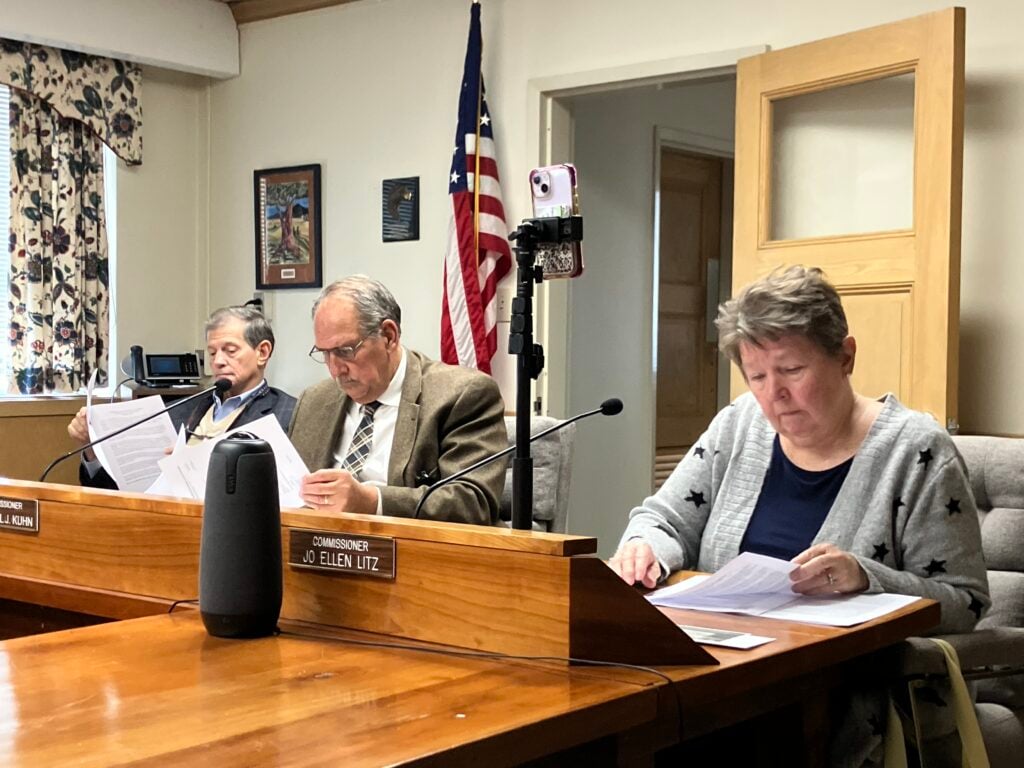
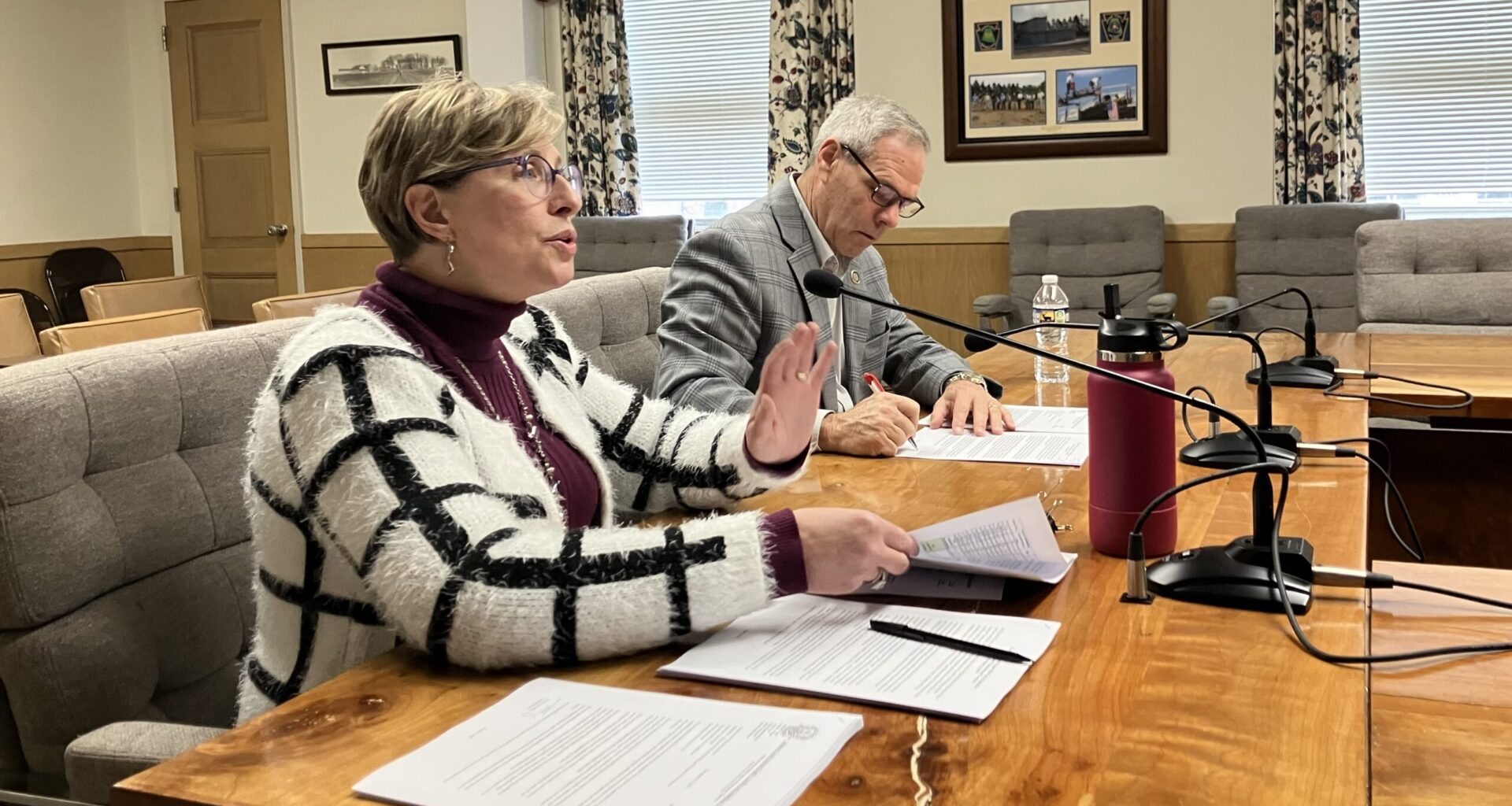
Lebanon County Commissioners follow along as Holly Leahy, administrator of Mental Health/Intellectual Disabilities/Early Intervention, discusses concerns for proposed changes to codify mental health services across the commonwealth. (James Mentzer)
Staffing requirements
Leahy told commissioners that the proposed rules under 55 PA Code Chapter 5250 (crisis regulations) would require a higher level of licensure credentials than her staff has.
“The proposed increase in educational and licensure requirements for crisis intervention staff — particularly the expectation for licensed or master’s-level professionals — raises significant concerns for Lebanon County as a rural and under-resourced county,” she said.
Leahy cited workforce shortage when there are existing major recruitment and retainment challenges for qualified staff for second, third, and weekend shifts, risk-averse clinical judgments being made to mitigate liability, and inequitable staffing ratios and credentialing requirements.
“A one-size-fits-all approach risks deepening disparities between well-resourced and under-resourced regions,” she said.
Further exacerbating the problem is acute versus non-acute crisis services.
“The proposed regulations focus heavily on acute crisis situations, such as imminent risk of harm. While these high-risk scenarios are critical, they represent only a portion of the crisis continuum,” Leahy said. “Crisis services also play a vital role in early intervention and stabilization for individuals experiencing non-acute but urgent behavioral health challenges.”
Leahy said escalating anxiety or depression, housing instability or eviction risk, grief, loss, or trauma, family conflict or caregiver burnout and substance use concerns without immediate danger are some of the non-acute situations her staff handles through the walk-in center and via the mental crisis hotline.
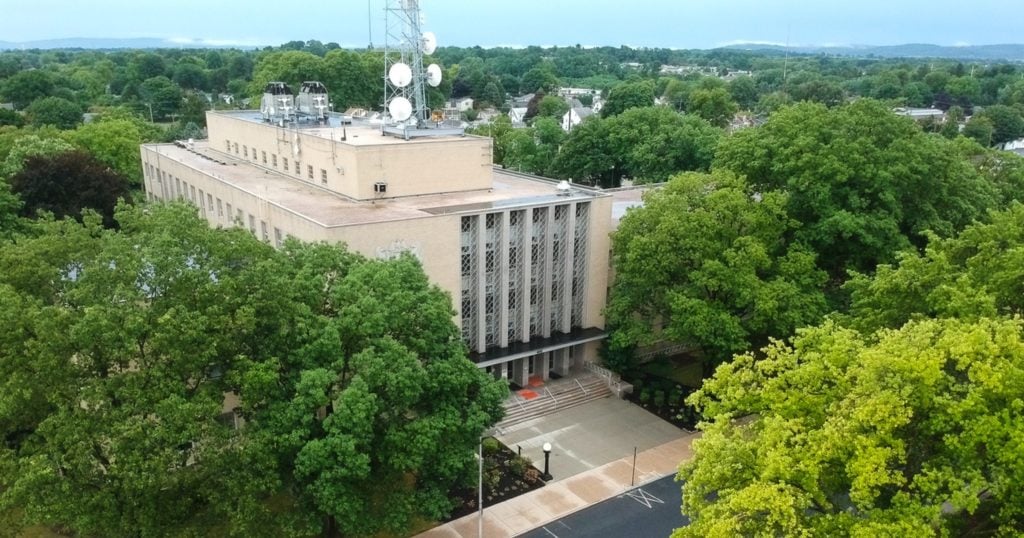
Lebanon County Municipal Building. (Will Trostel)
“A large percentage of our walk-ins and telephonic are non-acute situations. These situations may not meet the threshold for acute intervention but, if left unaddressed, can escalate into emergencies requiring hospitalization or law enforcement involvement,” she added.
Leahy said key concerns for staffing are a lack of guidance for addressing non-acute crises in the proposed regulations. The proposal does not provide flexibility for early intervention models, and there is a risk in narrowing the scope of crisis services, which will undermine their preventive value.
She said mental health professionals are encouraging the state to allow for flexible staffing models which would permit the use of bachelor degree-level professionals with relevant experience in crisis roles. Additional recommendations include a waiver option for counties with documented workforce shortages or limited access to licensed professionals, and the creation of a training and certification program for bachelor’s level crisis workers to obtain licensures and meet the expected educational requirement.
There are concerns for crisis call centers, the mobile crisis team services, and walk-in center services, according to Leahy.
Crisis call center
Several proposed mandates for call centers are unrealistic and unfeasible, Leahy said.
Those include a required licensed behavioral health professional per shift, texting and chat requirements that lack communicative clarity, and limitations to 988 call centers. Lebanon’s 988 calls are currently routed to a financially strained Lancaster County system, and further requirements may lead to Lancaster dropping Lebanon County.
Recommendations include staffing flexibility, providing an opt-in for text/chat services, and provision of adequate funding for the integration of 988 center services.
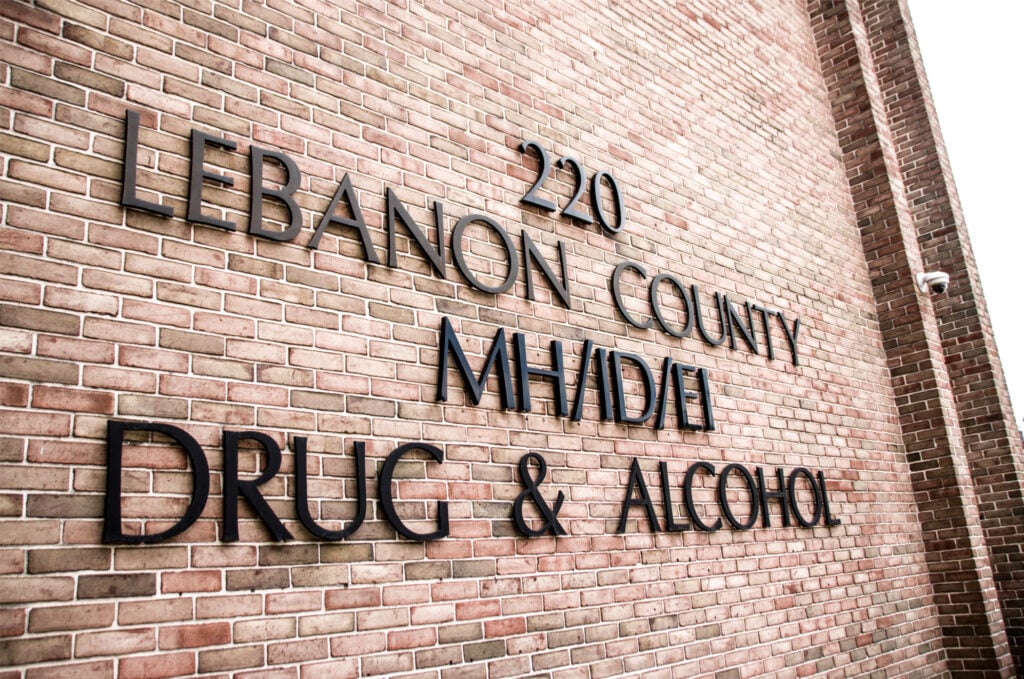
The county’s mental health department projects expenditures over revenue of just over $766,000 for 2026 without additional funding to implement proposed rule changes that would have certain requirements and mandates that would drive up costs for these services in Lebanon County by $25 million annually, according to local officials. (LebTown file photo by Will Trostel)
Mobile crisis team services
“Limitations in proposed regulations can significantly impact the effectiveness of mobile crisis services, especially when responsiveness is critical to outcomes. Additionally, it is going to be very difficult for us to hold onto our mobile crisis services if these regulations are passed without significant modifications,” Leahy said, adding that a licensed clinician oversight requirement to approve mobile crisis utilization is a huge concern to her.
She said there are only 25 master’s-level behavioral health technicians within the WellSpan system, and only four are currently licensed. Additionally, only 40 licensed bachelor social workers currently exist statewide, which Leahy said “makes this option very impractical.”
“The impact is that this requirement reduces, rather than expands, mobile crisis availability,” Leahy said, adding this requirement along with other staffing requirements would increase the county’s budget by $2 million to $3 million annually.
“There is a funding shortfall and no sustainable funding exists to support this expansion,” Leahy reiterated. “Recruitment and retention issues for additional staff remain significant challenges.”
Recommendations sent to the state would seek staffing flexibility for single-staff mobile responses when clinically appropriate, a reconsideration of licensed professional oversight requirement, provide sustainable funding for 24/7/365 coverage and staffing expansion, and endorsement of the “Just Go” model, which enables immediate response based on clinical judgment, uses law enforcement when only necessary, and reduces barriers and improves outcomes.
Walk-in center services
Leahy said the proposed requirement for walk-in centers to operate 24/7/365 presents significant challenges. “If these regulations are passed, we will be forced to close our walk-in center,” she added.
Estimated additional cost for a licensed walk-in center is between $10 million to 15 million per year, which equates to more than the entire combined Lebanon County MH/ID/EI annual budget, according to Leahy.
Physician staffing (24/7/365) would require five or more physicians, increasing costs by $5 million to $7.5 million annually, Leahy said. “Start-up and sustainment costs are unsustainable under current funding and would force closure of existing walk-in services.”
She said proposed requirements are a mismatch with current Lebanon County mental health needs.
“There’s a mismatch with utilization. Lebanon County Crisis averages 12 patients per day across all modalities,” Leahy said. “Most walk-ins are low acuity, resolved with outpatient referrals. Mandating 24/7/365 operations may lead to widespread closures. Our Lebanon County center operates 8 a.m. to 8 p.m., and otherwise by appointment, and that meets the needs of our community. Mandating 24-hour operations may result in closures and will reduce access to care, especially in rural and underserved areas.”

Lebanon County officials oppose proposed changes to the Pennsylvania Codes that would change the way mental health services are provided in Lebanon County. (LebTown file photo by Will Trostel)
The state is recommending regional walk-in centers, but Leahy highlighted existing operational deficits, transportation limitations, and additional strains on emergency departments since that’s where residents will go during a behavioral health crisis.
Leahy provided statistics that show Lebanon County’s current mental health service programs are working to the benefit of the local community. Since July 1, she said, the crisis team has served an average of 367 individuals per month, with an average of 584 visits per month. Of those, there’s an average of 67 voluntary commitments and 24 involuntary commitments (down 9%) per month.
“They continue to decrease as we have seen more and more intervention within the community and the ability to really meet individuals where they are and where they need the assistance. If we compare that data to from 2024 to 2025, we’ve seen a 4% decrease in emergency department utilization,” Leahy said. “And in October 2025, emergency department visits decreased by 13.8%. That was 196 in October of 2024, down to 169 visits to the emergency department.
She added that the mobile crisis intervention team has an average response time of leaving the office within five minutes and can arrive everywhere around the county within 15 minutes of leaving the office. That response time will be lost if patients are required to travel to a regional center, she noted.
“Residents who do have access to transportation and are experiencing crisis will not travel one and a half to two hours away to a regional center, especially during a time of crisis. It’s hard enough for them to get local,” Leahy said. “Residents will return to the emergency department utilization for behavioral health crises. So that will put a strain on the hospitals and a reversal progress made in diverting behavioral health patients from the emergency department. And it will impact access at a community level. So it’s going to be a domino effect for everyone across the community.”
Flexibility is also being recommended for licensure of walk-in center services involving a tiered model. That model would have high-acuity Enhanced Behavioral Health Centers and low-acuity Crisis Stabilization Centers, the latter having flexible hours, scaled staffing, community-based access, and a focus on outpatient linkage and stabilization.

Lebanon County officials believe that new rules for mental health services will lead to the closure of local centers, causing patients to seek services locally at WellSpan’s Good Samaritan Hospital instead of regional mental health centers. (LebTown file photo by Will Trostel)
All three commissioners voiced opposition to the proposed regulations, as did Schlegel, who noted the Department of Human Services was required to make their proposal public and to solicit comment, which Leahy has done on behalf of Lebanon County on Nov. 14.
“Holly has submitted comments. I found a chance to read that comment. It’s excellent. I would also tell you that both chairs of the House Human Services Committee have submitted a letter as part of public comment raising great concern. So for sure, I’m well aware of, as I said, Holly’s comments on behalf of Lebanon County, but also our respective chairs’ comments from Carbon County as well as Chester County. So the concern that Holly has shared, it is far-reaching.”
He said discussions with legislative caucus members revealed that there were “many public comments that were raising the same concerns.”
Review of the proposal is under the purview of the Independent Regulatory Commission, according to Schlegel, with their comments and concerns being sent back to the state Department of Human Services. DHS will issue a report highlighting the commission’s thoughts and concerns and any recommendations that they provide to DHS.
“I think Commissioner Kuhn has shared this with me in an email that a lot of the aspects that are in the regulations might very well be great recommendations, maybe a blueprint for best practices, but as Holly had so well-shared, there really is a need for flexibility,” Schlegel said. “Let’s take a look at the totality of the programs that are working. However, those programs and services are delivered and let’s provide for that flexibility because the bottom line is we experience a shortage in many of our counties of these types of professionals that truly offer the kinds of assistance that so many people need. And those instances are growing.”
He said placing limitations on mental health services is a disservice to county residents.
“And so again, I’m here with Holly to support Holly and the initiatives that go on here in Lebanon County, but also across the commonwealth,” Schlegel said. “One size doesn’t fit all. I recognize that. So let’s keep and maintain the types of things that are working well and any way that we can have the conversation that’s going to make improvements for the benefit of the people that we serve.”
Questions about this story? Suggestions for a future LebTown article? Reach our newsroom using this contact form and we’ll do our best to get back to you.

Become a LebTown member.
Cancel anytime.
Still no paywall!
Fewer ads
Exclusive events and emails
All monthly benefits
Most popular option
Make a bigger impact
Already a member? Log in here to hide these messages
Lebanon County needs modern local journalism that works. LebTown delivers timely, accurate reporting without paywalls or corporate mandates. Support our independent newsroom with a monthly or annual membership, or make a one-time contribution to fuel more local coverage. Cancel anytime.