
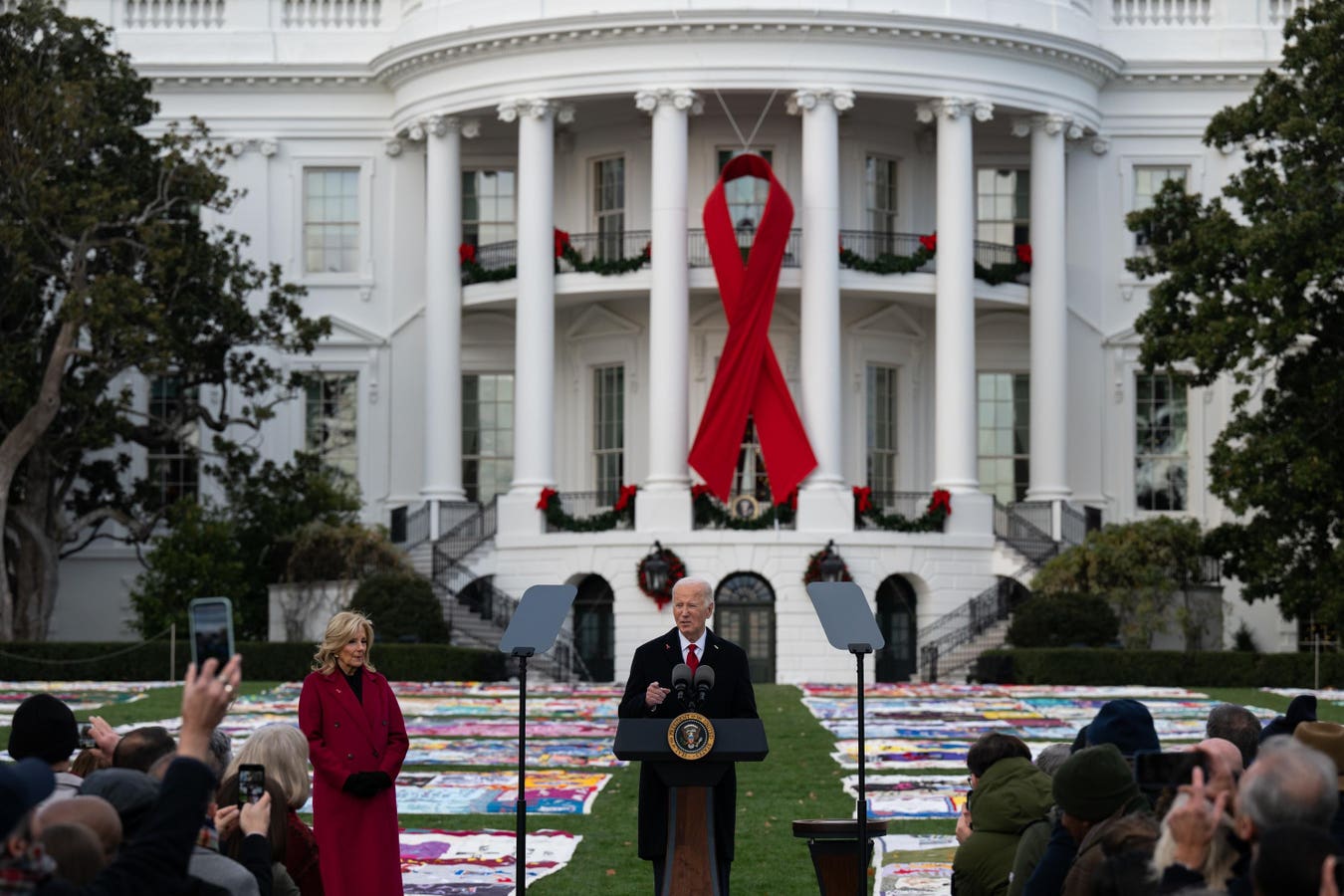
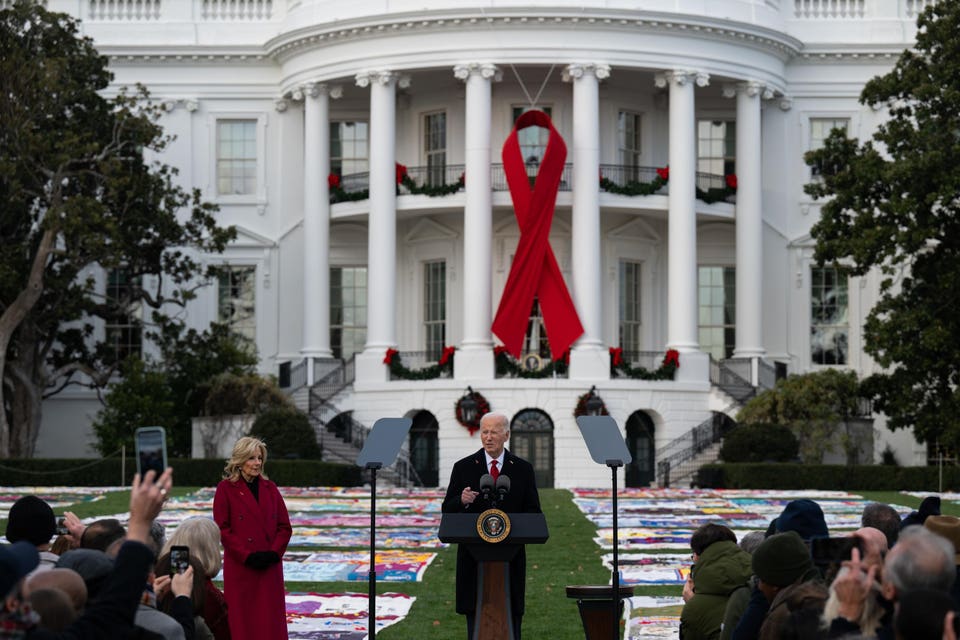
Since 1988, communities throughout the world, and U.S. presidents, have commemorated World AIDS Day on December 1. The Trump administration announced that the U.S. would not participate this year. (Photo by Annabelle Gordon/Getty Images)
Getty Images
The United States will not formally commemorate World AIDS Day this year. This decision comes on the heels of recent federal funding cuts that threaten to disrupt hard-earned progress combatting this global epidemic. Despite significant scientific advancements in HIV treatment and prevention, many people worry about our efforts to end this ongoing crisis.
World AIDS Day
Since 1988, Dec. 1 has been recognized as World AIDS Day by communities throughout the world. It is a day to remember the people who have died of HIV/AIDS, demonstrate our continued support for people living with HIV and strengthen the global efforts to end this epidemic.
U.S. presidents have recognized the day in various ways. Seventeen years ago, President George W. Bush discussed the unparalleled success of his signature initiative, the President’s Emergency Plan for AIDS Relief. He also noted that the red ribbon displayed at the White House was, “a symbol of our resolve to confront HIV/AIDS and to affirm the matchless value of every life.” Just a year ago, President Joe Biden remarked that, “we renew our commitment to accelerating efforts to finally end the HIV/AIDS epidemic.”
This year, the U.S. State Department sent an email to employees that stated, “The U.S. Government will not be commemorating World AIDS Day this year.”
HIV/AIDS Funding Cuts
One could argue that a day of commemoration does not save lives. But funding does. And the HIV/AIDS funding landscape has changed dramatically during the Trump administration. Winnie Byanyima, executive director of UNAIDS, noted in a recently released report that, “this year’s disruption to the global response has exposed the fragility of the progress we have fought so hard to achieve.”
The numbers are stark. According to the UNAIDS report, 60% of women-led HIV organizations have been significantly affected by recent funding disruptions. The number of people accessing pre-exposure prophylaxis has dropped in many countries. NGOs in the U.S. and globally have scaled back their services because of a loss of funding. The result? The number of new HIV infections per year could rise after several years of declines.
Current HIV/AIDS Landscape
Today, about 40 million people worldwide are living with HIV. Roughly 1.3 million people became newly infected in 2024 and over 600,000 people died. In the United States, about 1.2 million people are living with HIV. And roughly 32,000 people become newly infected each year.
Globally and domestically, the number of new infections per year has dropped in recent years. In the U.S., for example, the number of new infections declined 12% between 2018 and 2022. Recent advancements in HIV/AIDS treatment and prevention certainly have contributed to these declines. The long-acting injectable lenacapavir, for example, is a highly effective pre-exposure prophylaxis drug. Just two injections per year can provide nearly complete protection from the sexual transmission of HIV. For people infected with HIV, various drug regimens can effectively reduce one’s viral load to undetectable levels. And we know that U = U. If your viral load is undetectable, then you cannot transmit the virus sexually.
But the gains that we have made in recent years easily can be lost. Stigma, discrimination, and inequalities prevent people from accessing services. Decreased funding will negatively impact the availability of HIV/AIDS services. Now is not the time to relax our efforts to ending the HIV epidemic.
World AIDS Day may not directly save lives. But it is an opportunity for us to remember the gravity of the problem. As Beatriz Grinsztejn, president of the International AIDS Society, recently remarked, “On this World AIDS Day, let us honor the strength of communities, the power of science and the courage of everyone working with, living with or affected by HIV.” On this World AIDS Day, the U.S. declines to participate. Let’s hope this decision does not contribute to a resurgence of HIV/AIDS.