
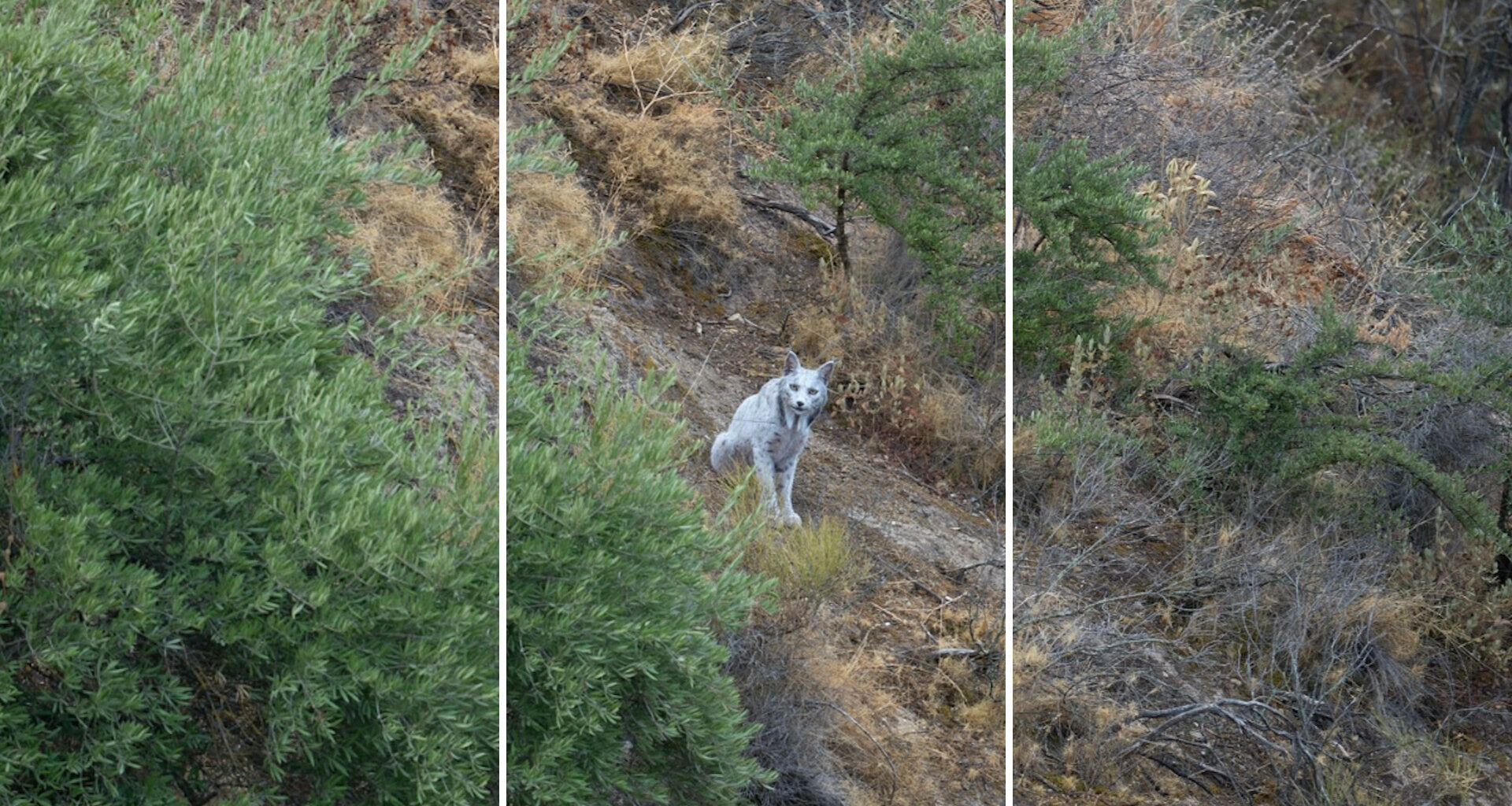
An amateur photographer in southern Spain captured something almost no one expected to see.
Ángel Hidalgo managed to photograph a white Iberian lynx near Jaén after spending months checking his trail camera traps in the forest at sunrise.
Hidalgo shared his images of the “white ghost of the Mediterranean forest” online, showing the lynx’s unusually pale coat and dark spots, according to The Guardian.
“When I saw a ‘white Iberian lynx’ for the first time, with its snow-white winter coat and piercing eyes, I was transfixed. I couldn’t believe what I was seeing,” he told the outlet.
The sighting stood out because, about two decades ago, scientists feared the species was sliding into extinction. Numbers increased after steady monitoring and conservation efforts.
According to a study published in the European Journal of Wildlife Research, trail cameras are a critical tool for documenting sightings and tracking population changes over time, supporting recovery efforts.

Unlock your next great adventure with a high-tech e-bike at an unbeatable price. Upway saves you up to 60% off retail prices from top-tier brands like Specialized, Aventon, Cannondale, and many more.
And this holiday season, you can get an extra $1,500 off your perfect ride, from electric city cruisers and cargo rigs to mountain bikes and road racers.
Hidalgo’s photos joined a growing list of wildlife finds that everyday people stumbled upon. PixCams captured an image of a rare fisher in Pennsylvania, once thought to be on the decline.
Another photographer spotted a New Britain goshawk after 55 years without a confirmed sighting, and a traveler in Papua New Guinea helped verify the existence of three species previously believed to be extinct.
Researchers studying the Iberian lynx are now investigating possible environmental factors behind its color change.
Javier Salcedo of Life Lynxconnect said that the lynx, named Satureja, was a female born in 2021.
She began life with the usual coat, raised litters, and moved through the area with normal behavior, even as her pigmentation changed. They noted another female lynx in the same region also turned pale, then returned to its normal brown color.
Across species, scientists study physical traits, such as coloration, to better understand how wildlife adapts to shifting habitats.
United Nations research on biodiversity indicated that rising global temperatures shrink habitats and can introduce new diseases, devastating species that are already struggling. These losses move through ecosystems and eventually affect the food supply.
Local action, habitat management, and steady community involvement make a meaningful difference and can help species survive. These efforts support biodiversity and help sustain food chains and supply resources that communities depend on.
The New York Post shared Hidalgo’s TikTok video, and viewers were stunned.
“Just beautiful,” one person wrote.
“Please protect him,” another said.
💰Get TCD’s free newsletters for easy tips to save more, waste less, and make smarter choices — and earn up to $5,000 toward clean upgrades in TCD’s exclusive Rewards Club.
