

Ben-Gurion University of the Negev’s Prof. Alon Monsonego says he has discovered a set of immune cells that may hold the secret to prolonging longevity.
“The immune system deteriorates with time, and that process may dictate the pace of aging,” said Monsonego, 61, of Ben-Gurion’s Shraga Segal Department of Microbiology, Immunology and Genetics in the Faculty of Health Sciences. Monsonego, who is also affiliated with the school of Brain Sciences and Cognition, heads the university’s Neuroimmunology lab.
Speaking with The Times of Israel via Zoom, Monsonego explained that as people age, senescent cells — cells that can no longer divide and cause inflammation — accumulate, leading to tissue damage and disease.
However, Monsonego’s team discovered that certain lymphocytes, or white blood cells, known as cytotoxic T helper cells, can identify and destroy infected or cancerous cells within the body.
The research team didn’t realize the unique qualities of these T helper cells until a Japanese study showed that the immune systems of super-centenarians — people who live to be over 100 years old — were full of these cells.
Get The Times of Israel’s Daily Edition
by email and never miss our top stories
By signing up, you agree to the terms
“We found these cytotoxic T helper cells can be very effective in reducing the burden of senescent cells, allowing tissues to regenerate and recover,” the researcher said.
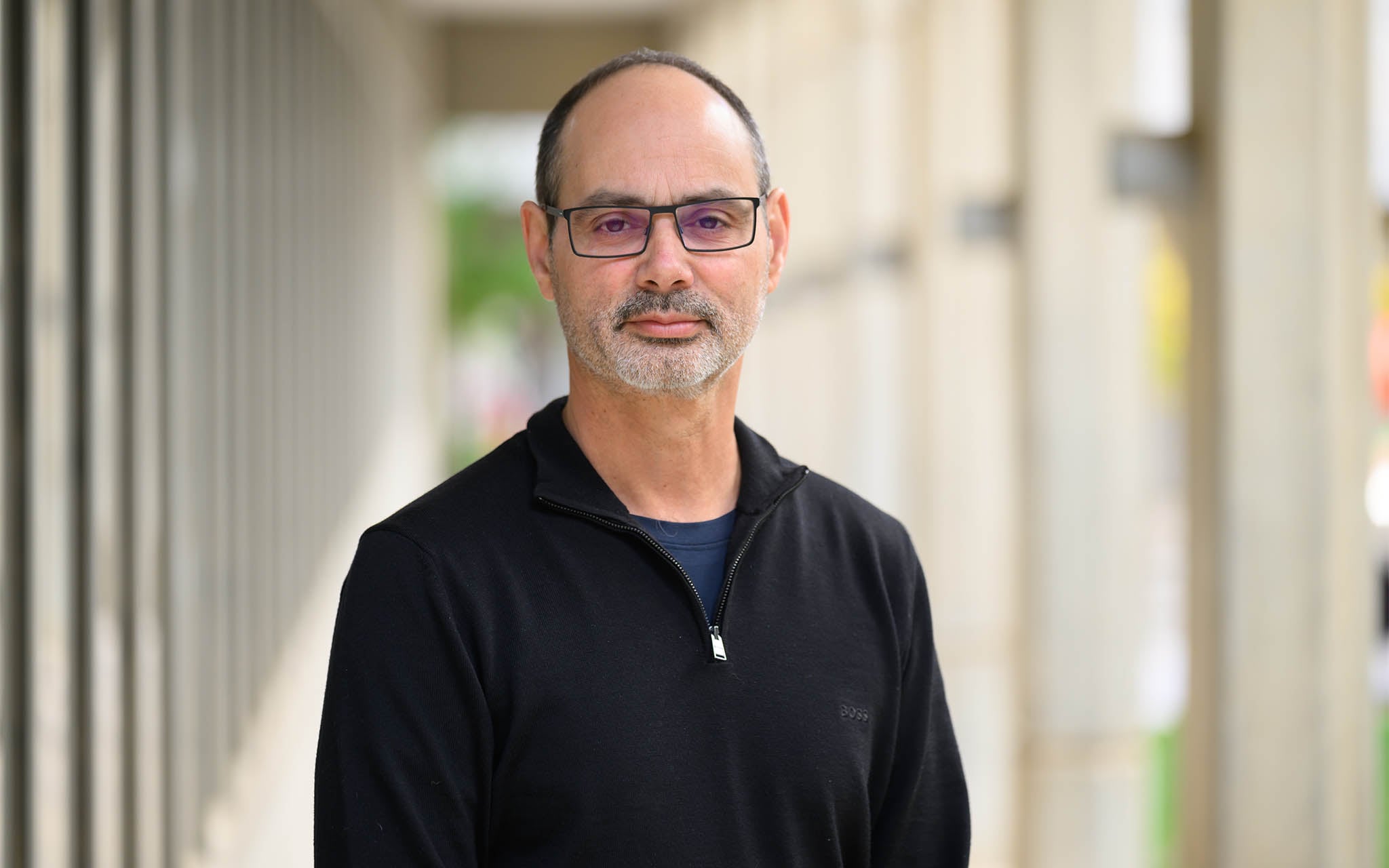
Prof. Alon Monsonego, head of the Neuroimmunology Lab at Ben-Gurion University of the Negev. (Courtesy)
The findings were recently published in the respected peer-reviewed journal Nature Aging, in a paper led by Monsonego’s lab researcher Dr. Yehezqel Elyahu, in collaboration with Ben-Gurion’s Prof. Esti Yeger-Lotem, and Prof. Valery Krizhanovsky of the Weizmann Institute of Science.
“We hope this research will lead to diagnostic tools and then therapy treatments to track and improve healthy aging,” Monsongego said.
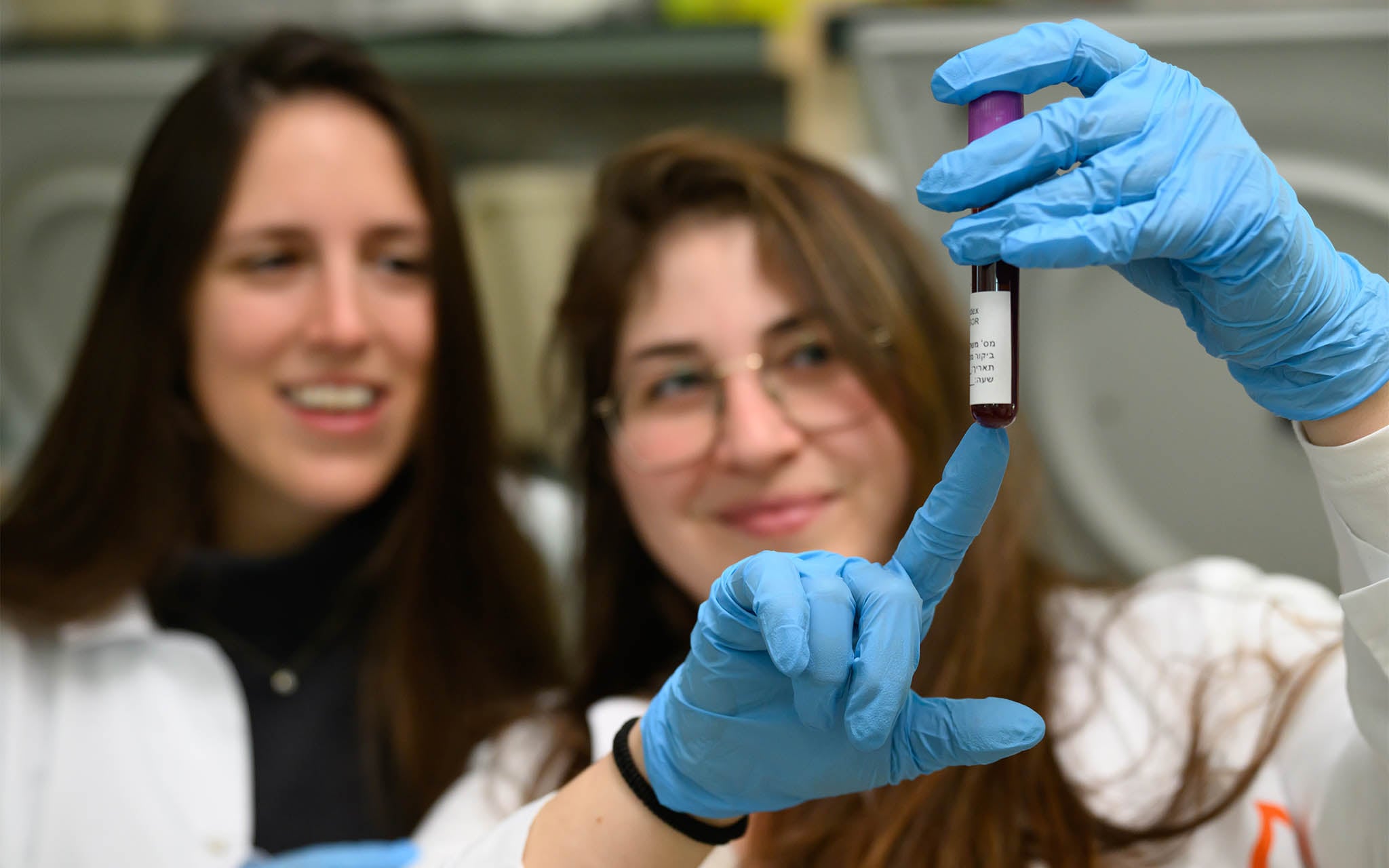
PhD student Michal Grinberg-Bornstein, right, and Master’s degree student Roni Avigdory-Meiri at Prof. Alon Monsonego’s Neuroimmunology Lab at Ben-Gurion University of the Negev. (Courtesy)
Emphasizing ‘health span’ and not ‘life span’
“About five years ago, we started looking at the differences between the lymphocytes of young and old mice,” Monsonego said. “We know that with aging, you get more inflammation and a less capable immune system. We were curious to know why.”
He explained that these days, scientists talk less about life span — how long someone will live — and focus more on health span, which is how long a person remains healthy.
The scientist pointed out that aging-related diseases such as cancer, diabetes, and heart disease often begin in the fourth decade of life.
“When you say ‘aging,’ people think of their seventies, but it actually starts much earlier,” he said. “If you want to preserve health span, you need to start early.”

Thousands of runners take part in the 2017 international Jerusalem Marathon on March 17, 2017. (Yonatan Sindel/Flash90)
“It’s not enough to live to 90 with five different diseases,” Monsonego said. “We need to think about living healthy, not just living long.”
The importance of cytotoxic T helper cells
Monsonego’s earlier work, published five years ago, helped define what he called a “roadmap” for how lymphocytes change with age.
“No one ever did that before,” he said. “We were pioneers in identifying, in detail, the dynamic changes of cytotoxic T helper cells in aging mice.”
“This is when we realized the surprising and significant accumulation of these cells,” he said.
In the latest experiment, the team generated genetically modified mice that did not have the cytotoxic T helper cells and compared them with mice that did.
“Without these cells, the mice lived shorter lives,” he said.
When the researchers first identified these cells, they thought there was some kind of mistake.
“It surprised me, because I used to think that if you have something that appears late in life, it probably means something goes wrong,” Monsonego said.
Illustrative: Elderly people walk together in downtown Jerusalem, September 11, 2022. (Nati Shohat/Flash90)
Monsonego said that he is now attempting to study the immune system of super-centenarians living in Blue Zones, areas around the world where the population has a life expectancy much higher than the global average, since “our study suggests that the immune system of healthy older individuals may have properties which we weren’t aware of before.”
For these super-centenarians, it’s not only a matter of “extremely good genes,” Monsonego said. “For most of us, it depends on how we live. Increasing your lifespan means being aware that you need to work hard at it. You need to make sure that you have a good diet and exercise. People need to change their lifestyle early enough, before they develop a chronic disease. Medicine alone can’t do magic.”
Asya Rolls, professor of neuroscience at Tel Aviv University’s School of Neurobiology, Biochemistry and Biophysics, who was unconnected to the study, told The Times of Israel that Monsonego’s research on the discovery of these T Helper cells suggests that “aging might be more controllable than we thought.”
“Strengthening this natural immune mechanism could eventually open new ways to slow down age-related decline and keep tissues healthier for longer,” she said.
Monsonego said that his lab is continuing the research to see how these cells can slow down age-related diseases.
“That’s the goal,” he said. “To develop a diagnostic tool that can identify the changes in the T helper cells, and then, of course, to follow it with therapeutic strategies.”
You appreciate our journalism

You clearly find our careful reporting valuable, in a time when facts are often distorted and news coverage often lacks context.
Your support is essential to continue our work. We want to continue delivering the professional journalism you value, even as the demands on our newsroom have grown dramatically since October 7.
So today, please consider joining our reader support group, The Times of Israel Community. For as little as $6 a month you’ll become our partners while enjoying The Times of Israel AD-FREE, as well as accessing exclusive content available only to Times of Israel Community members.
Thank you,
David Horovitz, Founding Editor of The Times of Israel