
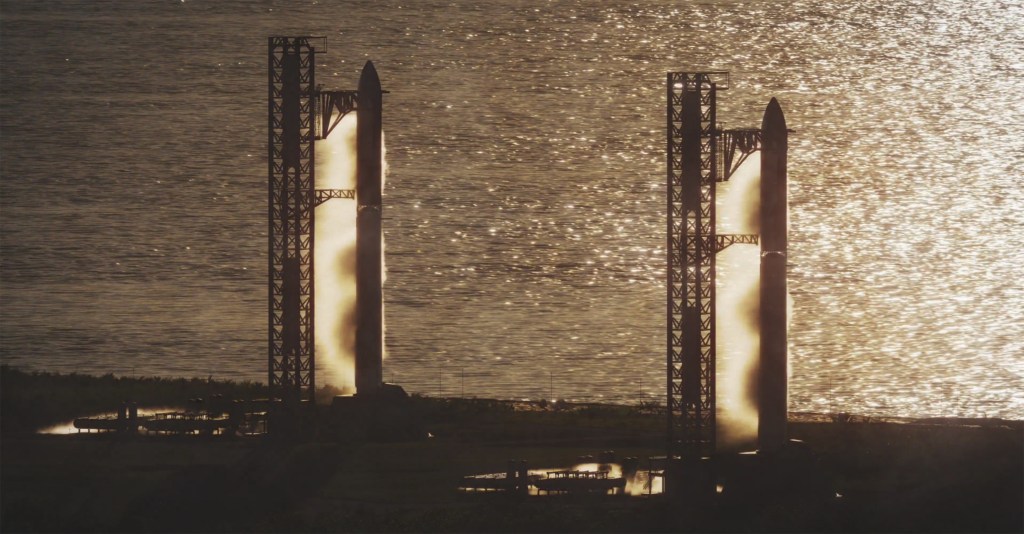
The Department of the Air Force announced it had given the OK for SpaceX to move forward with its Starship and Super Heavy launch pad plans at Cape Canaveral Space Force Station’s Space Launch Complex 37.
A “record of decision” on the Environmental Impact Statement for the proposed Canaveral site was posted to the Air Force’s website late Monday for what has been a nearly two-year approval process.
The decision states the Space Force will execute a property agreement for the site with a primary purpose to support national security missions, but allow for civil missions as well. It says Space Launch Delta 45 would need to set up requirements for Starship launches on the Eastern Range before any launches could happen, though.
The company posted an update late Monday confirming the approval and noting construction is already underway.
The Space Force had already allowed SpaceX to remove the former United Launch Alliance launch infrastructure that supported the now-retired Delta IV Heavy rockets.
Its plans are to have two Starship launch towers at SLC-37 while it also pursues a single tower at neighboring Kennedy Space Center’s Launch Complex 39-A. That site remains under an ongoing EIS being run by the Federal Aviation Administration.
“With three launch pads in Florida, Starship will be ready to support America’s national security and Artemis goals as the world’s premiere spaceport continues to evolve to enable airport-like operations,” SpaceX posted on X.
The Air Force’s EIS for the Canaveral site would allow SpaceX to “conduct up to 76 launches and 152 landings annually once a supplemental analysis of airspace impacts by the (FAA) is completed.”
The Air Force will assess the airspace analysis before finalizing its stance for allowing Starship launches.
The effect of Starship launches and its booster and upper stage returns to the launch site on air traffic was a major concern after details on potential impact was revealed under the KSC EIS. SpaceX is seeking another 44 launches and 88 landings from the KSC site.
Combined, the worse-case scenario among the combined 120 launches and potential 240 landings could lead to 12,000 delayed commercial flights each year. Other concerns include the effect of the more severe sonic booms in store from the massive rocket.
Towering at more than 400 feet tall, the combined Super Heavy and upper Starship stage launch with nearly 17 million pounds of thrust, which is more than twice the power of the Saturn V rockets of the Apollo program.
The boosters are designed to return to the launch site to be captured by the launch tower’s swiveling “chopsticks” arms while the upper stage could return after at least one orbit of the Earth if the mission called for it. Those return flights would cut across Florida, blocking route access to several major airports in the state including Tampa, Orlando, Fort Lauderdale and Miami.
Space Launch Delta 45 officials said the first Starship launches would come as early as summer 2026 from the KSC site, assuming approvals come in.