
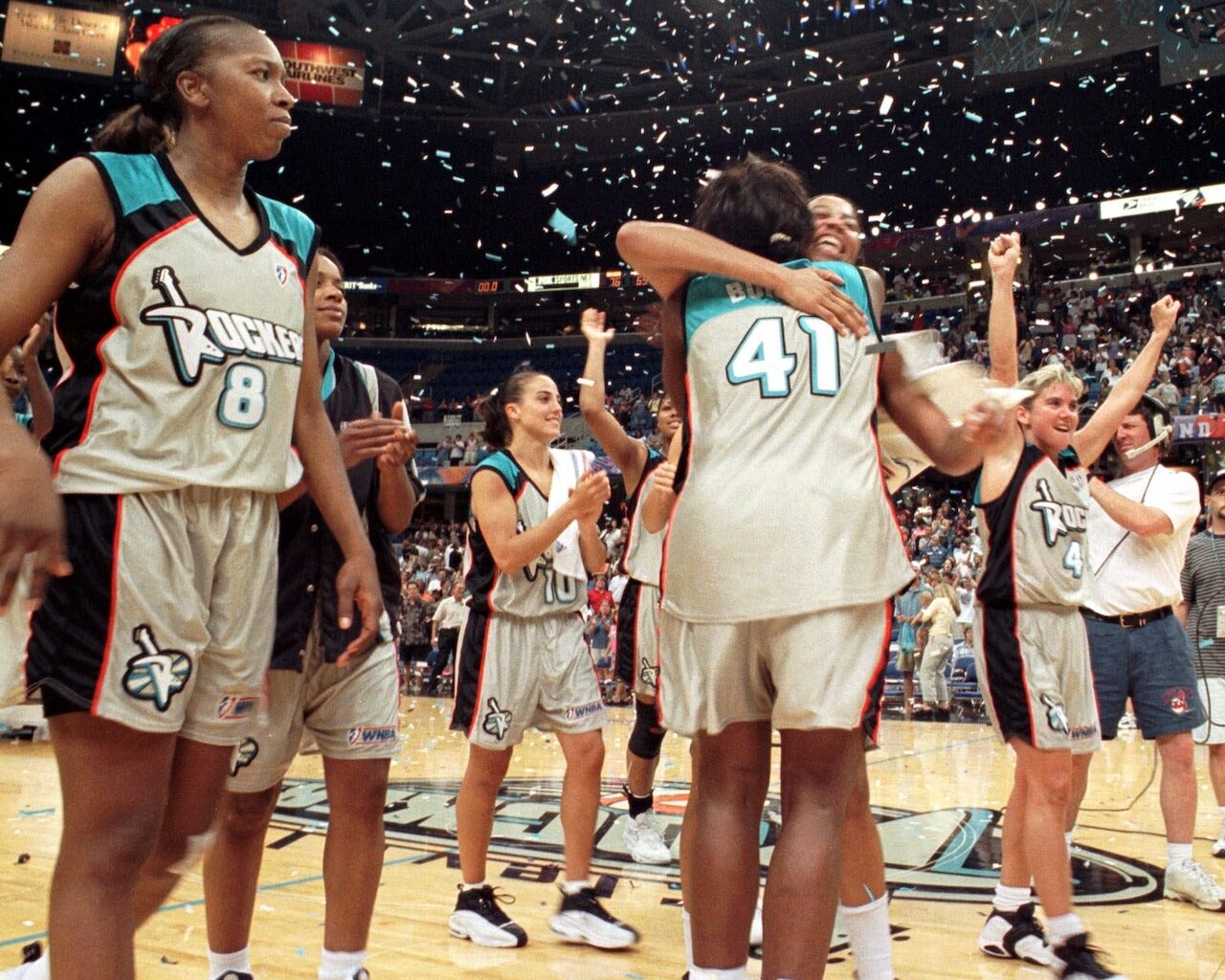
CLEVELAND, Ohio – Cities like Cleveland vying for a WNBA franchise are riding the wave of popularity the sport has enjoyed in recent years thanks to a burst of star power from talented young players like Caitlin Clark and Angel Reese and increased marketability.
But it’s not a new phenomenon.
Two decades ago, the Cleveland Rockers enjoyed success on the court and fans in the seats. The Rockers played in Gund Arena from 1997 to 2003.
Memories from that first foray into professional women’s basketball were revived this year when the Final Four brought its energy – and Clark and Reese – to the same arena.
In talking with players and coaches from those early years, a camaraderie – true friendships off the court, genuine affinity between fans and players, and lasting relationships – comes through today.
Dan Hughes, who coached the team the last four years of its existence, said the Rockers had a definite “identification with the city.”
“I understand the popularity of our game has really grown,” he said. “But there still was an undeniable identification between the teams I had and the city. They do appreciate a hard-working, blue-collar approach to their sport, and somebody they can count on when they go to a game, that they’re going to get their money’s worth. I felt that.”
Hughes said the relationships between players and support staff “was unbelievable.”
“They knew ’em, they followed ’em,” he said. “They had relationships that were beyond, ‘Hello, how are you?’ Women players especially have a great ability to do that.”
Fans “opened their arms” to the Rockers, he said. And players like Rushia Brown were receptive.
“I just remember the fans and how amazing they were and just how great the support was. That first year was really special,” said Brown, who played six of her seven seasons with the Rockers. Being one of the initial 96 players in the nascent league “is something that will last with me forever.”
Brown’s memories focus on her teammates, hanging out, going to dinner in the Flats.
“For me there were always laughs. The best memories I had was the camaraderie because we did everything together. … We’d all get into the minivan and go out to dinner and go out to the Flats and hang out together,” said Brown, who lived at Reserve Square and who this year organized a Rockers reunion during the Final Four.
“Rushia Brown, Janice Braxton, Adrienne Johnson and myself all had this tiny corner in the locker room,” said Raegan Pebley, who played for the Rockers in 1998 and who is general manager of the WNBA’s Los Angeles Sparks. “Every practice, after they would beat me up every day – I had bruises all over me – we would just sit there and laugh and have a good time.”
The Rockers, she said, were a team that “would take our jobs very seriously but didn’t take ourselves very seriously.”
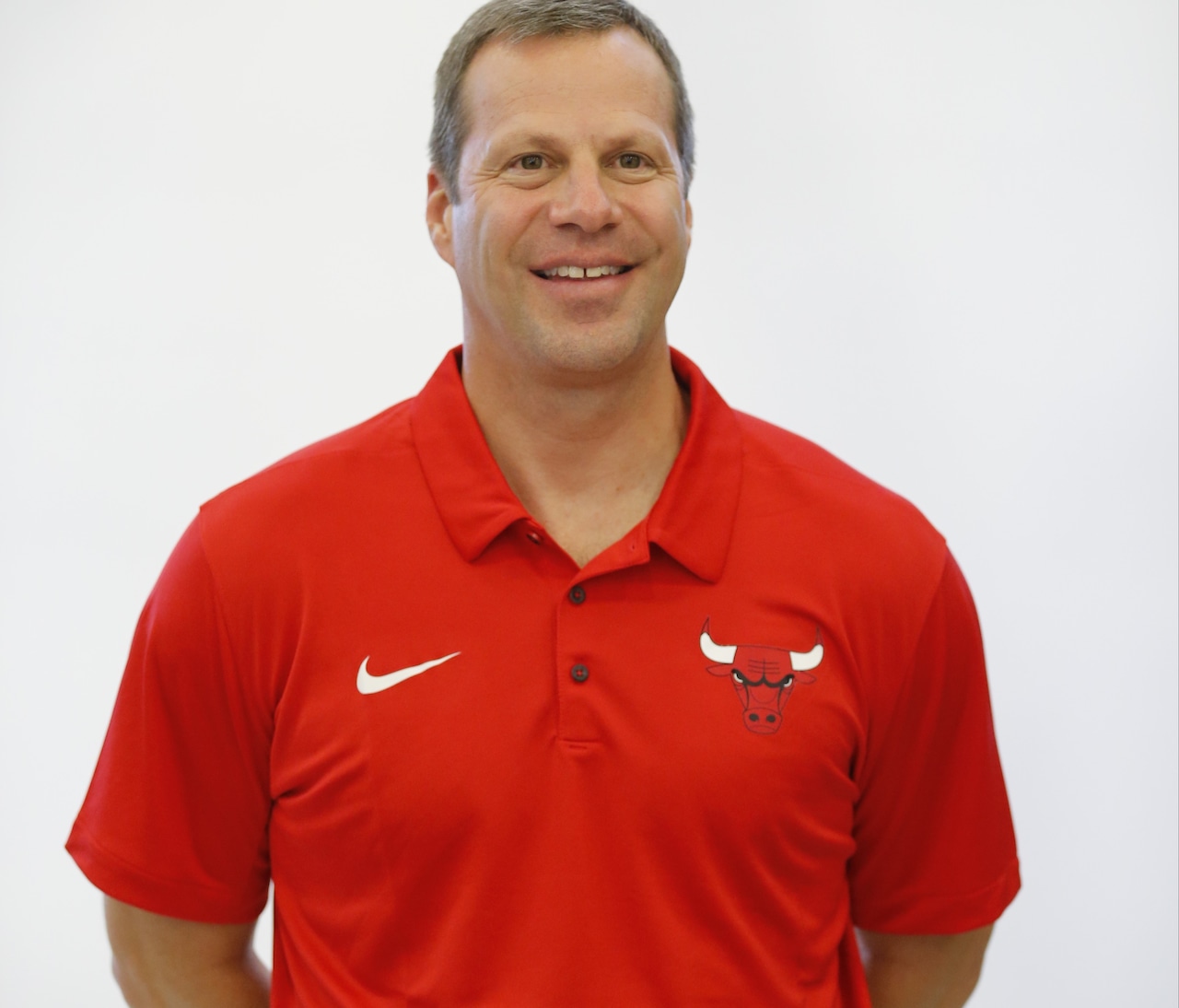 Mike Wilhelm coached with the Rockers and the Cavs before leaving for a job with the Chicago Bulls in 2002.In the beginning
The WNBA’s launch followed the excitement of the 1996 Olympic Games in Atlanta, where the undefeated U.S. squad tore through competition to a gold medal. Cavaliers owner Gordon Gund wanted to bring a women’s team to Cleveland, said Mike Wilhelm, who coached with both the Cavs and Rockers.
“It was a great time,” he said. “I tell you, when we started it, it was bare bones.”
Wilhelm worked for Cavs coach Mike Fratello as one of the team’s first video coordinators. General Manager was Wayne Embry.
“The Big Man summoned me to his office,” he said. “He said, ‘Hey listen, I know you’re busy with the Cavs, but I want someone in there as an assistant.’ ”
So Wilhelm took on double duty between the Cavs and Rockers, something he called “a badge of honor.”
Over time, the league added teams and games.
“It was exciting everywhere we went,” Wilhelm said.
The 1997 draft had three parts, he said.
First: Initial player allocation assigned 16 players to each team. The Rockers received Janice Lawrence Braxton (Louisiana Tech) and Michelle Edwards (Iowa).
Second: The elite draft. The team picked up a talented center in Isabelle Fijalkowski of France (Colorado) in the first round. In the second , they took Lynnette Woodard (Kansas), who had been the first female to play for the Harlem Globetrotters a decade earlier.
Third: The college draft. The team’s first pick was Eva Nemcova (Czech Republic).
On June 21, 1997, the Rockers played their inaugural game at Gund Arena. Among 11,455 fans in attendance were Cavs All-Star guard Terrell Brandon and Cleveland Indians Julio Franco and Kevin Seitzer. Houston defeated Cleveland, 76-56. Nemcova was shown on Page One of The Plain Dealer high-fiving fans.
“Eva could really shoot it,” said Wilhelm, a St. Ignatius High School grad. Nemcova, he said, could shoot off the catch, defend multiple positions because of great footwork, was sturdy and adept at pick and rolls – “just a great pure basketball player.”
The Rockers finished 15-13. They lost a tiebreaker to make the playoffs. But the seeds were planted.
In their seven-year existence, the Rockers had four winning seasons, two losing ones and one at .500. They made the playoffs four times.
They also bonded by sharing stories of their time playing previously in Europe. Lawrence Braxton knew how valuable it was for a kid who grew up in Mississippi to experience the world, said Wilhelm, who still does basketball clinics across the globe.
One time they were at East Tech High School. Wilhelm ran drills, but Lawrence Braxton spoke from her heart to about 150 kids as she held a basketball.
“This basketball, if you treat it with respect, do your very best and do your hardest every time you play the game, it will open up doors for you,” he recalled her saying.
It was those moments that makes Wilhelm remember his friendship with announcer Joe Tait.
“Joe loved calling the games,” Wilhelm said. “He’d say, ‘You know what? The women are just a lot nicer.’ You could talk about social issues. The guys just didn’t have as much time.”
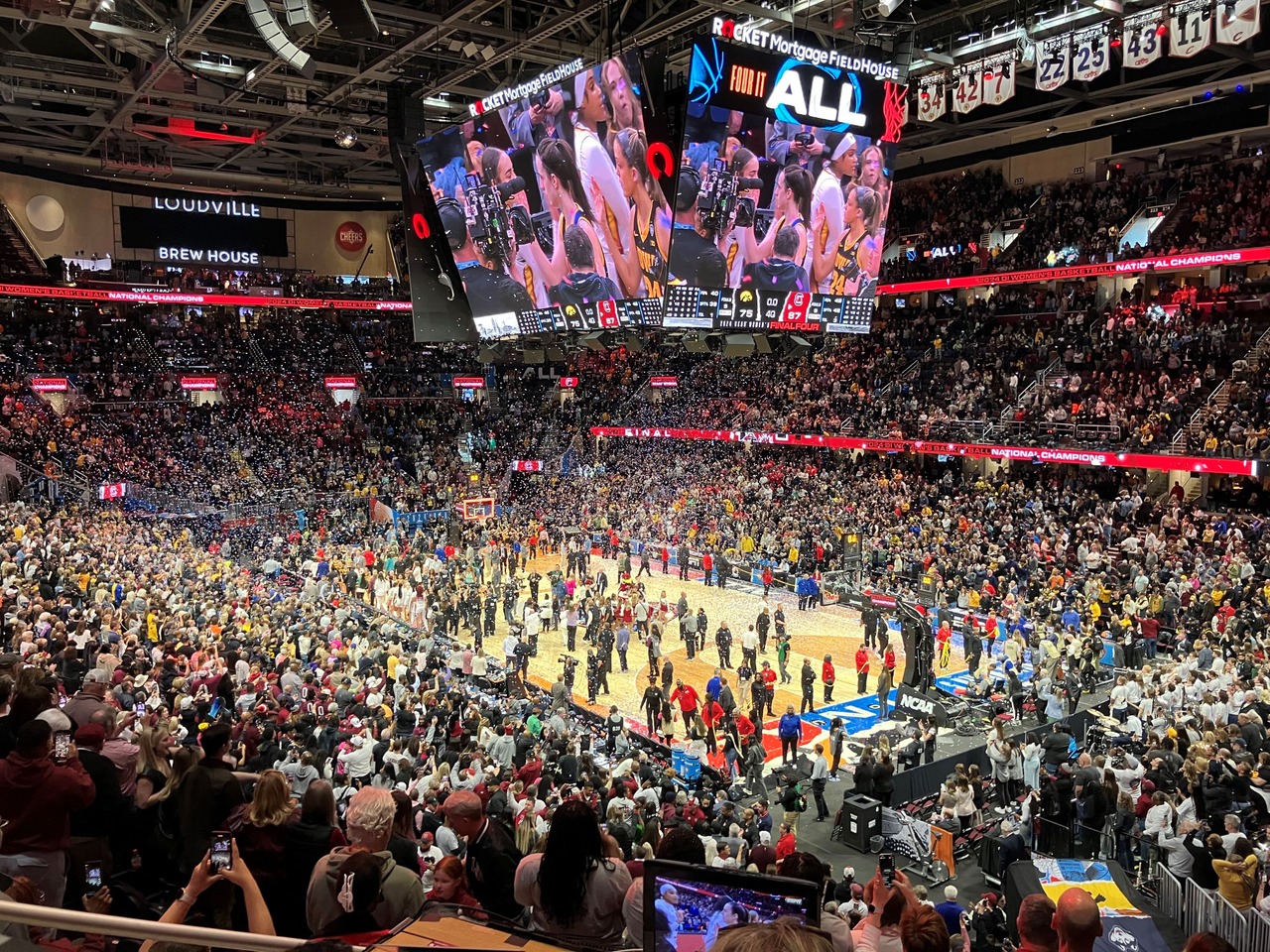 The women’s Final Four was held in April in Rocket Mortgage FieldHouse – the same arena where the Cleveland Rockers played two decades earlier.Marc Bona, cleveland.comGrowth in the league: The game evolves
Time, it turns out, is on Cleveland’s side. The game has improved. Star power continues. And the city is riding the high of the electrifying Final Four. Hughes said he was thrilled when news broke that Cleveland was one of the cities vying for a franchise.
“When I heard that, my phone just kind of blew up,” he said. “For a guy who absolutely loved his time in Cleveland, the chance that would return, that thrilled me.”
Wilhelm sees the women’s game as being in a good place.
“I think the popularity will continue to grow,” he said. “I don’t see it going the other way. It will eventually maybe level off at some point. Obviously, Caitlin Clark and Angel Reese were household names. The social-media aspect has helped because of the younger generation that follows that.”
In the early days, the Rockers had one assistant. Now teams have several, like the NBA. Salaries have more than doubled. More owners want to be involved, envisioning arenas as a revenue-generator, he said.
It’s become uncommon to hear the word ‘sets’ – as in planned plays – in the NBA, which has accelerated its one-on-one game. But the women’s game? Shooting with range has improved. Back-door cuts and give-and-gos are common. And men are watching more, too, Wilhelm said.
Moving forward, more eyes will land on the league. This year, the WNBA signed an 11-year media-rights deal with multiple networks worth more than $2 billion.
In 1998, the team went 20-10 and finished first in the East. That season turned out to be extra special for Wilhelm: The Rockers’ success allowed him to coach in the 1999 WNBA All-Star Game, the league’s first, in New York. Merlakia Jones was the sole Cleveland representative. Wilhelm holds the distinction of having coached in a WNBA All-Star game and an NBA All-Star game, in 2012.
Fans were ecstatic the first few years. Teams were added. After 1999, Wilhelm went full time with the Cavs and couldn’t do double-duty any more. Hughes would go on to coach WNBA teams in San Antonio and Seattle.
“I had a great career,” said Hughes, originally from Lowell, Ohio. “I can’t see myself leaving if the Rockers would have stayed. That was my dream job, to be honest.”
The demise was about the team not making enough money, recalled Wilhelm, who started with the Chicago Bulls in 2002.
Wilhelm is right. The Rockers did not turn a profit in any of their seasons. It was announced on Sept. 19, 2003, that the Rockers were done, financial losses and declining attendance the culprit. For their final season, the team ranked 10th of 14 teams in attendance, averaging 7,400 fans. No new owner was found, so the team folded.
In 2004, the league held a dispersal draft. The team was broken up.
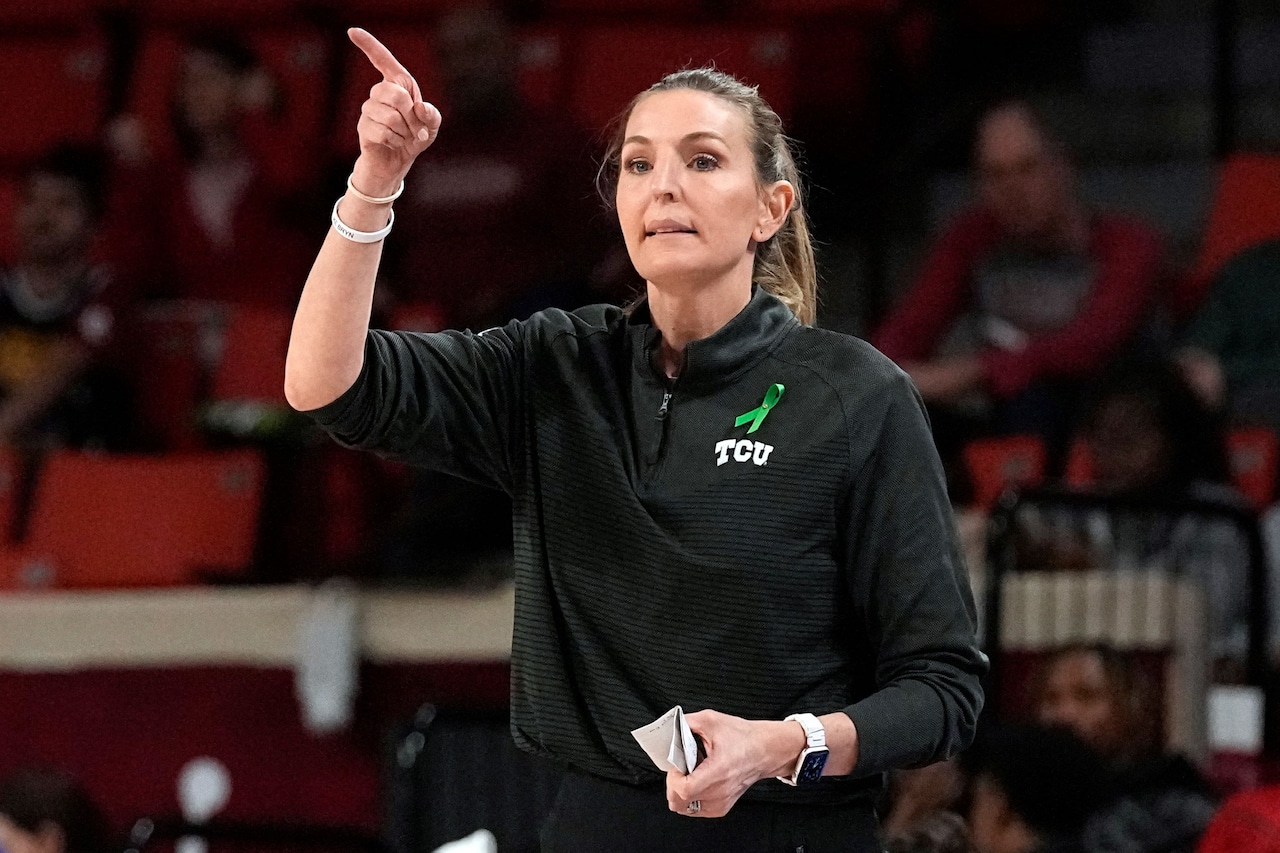 Raegan Pebley, shown when she was coaching TCU, played for the Rockers and is now general manager of the Los Angeles Sparks.Associated PressFast forward to today
What a difference time creates.
The league has franchises coming to Golden State, Toronto and Portland. And Cleveland could be next.
In November, Nic Barlage, CEO for the Cleveland Cavaliers, Rock Entertainment Group and Rocket Mortgage FieldHouse, said Rock Entertainment Group is “actively pursuing bringing a WNBA expansion team to Cleveland.”
Key to viewership, Brown said, is players’ visibility with a boost from social media.
“We’ve always had an amazing game,” she said, “but it wasn’t always able to be seen at the level it is now.”
Player-turned front office executive Pebley says the game and players have always been great and players are “relatable.”
“I really have always felt like women’s basketball did not have a product problem, it had more of a marketing issue. I think the players have done an incredible job over the years continuing to take the marketing into their own hands. I think social media has a lot to do with that. We owe a lot to the women who did everything they could to make sure they were promoting our game. And I think even individual promotion is promotion of our game,” she said.
Hughes, a respected coach in the women’s game, is ecstatic about the possibility of Cleveland gaining a team, saying: “I would be very happy to be the first season-ticket holder.”
“There’s a certain energy,” he said. “People will stop me and they want to know things (about the league) and I just think that’s such a beautiful thing. For an old guy who is about to turn 70, I’m thinking, ‘This is kind of cool that I can feel this with something I have done in my life.’ ”
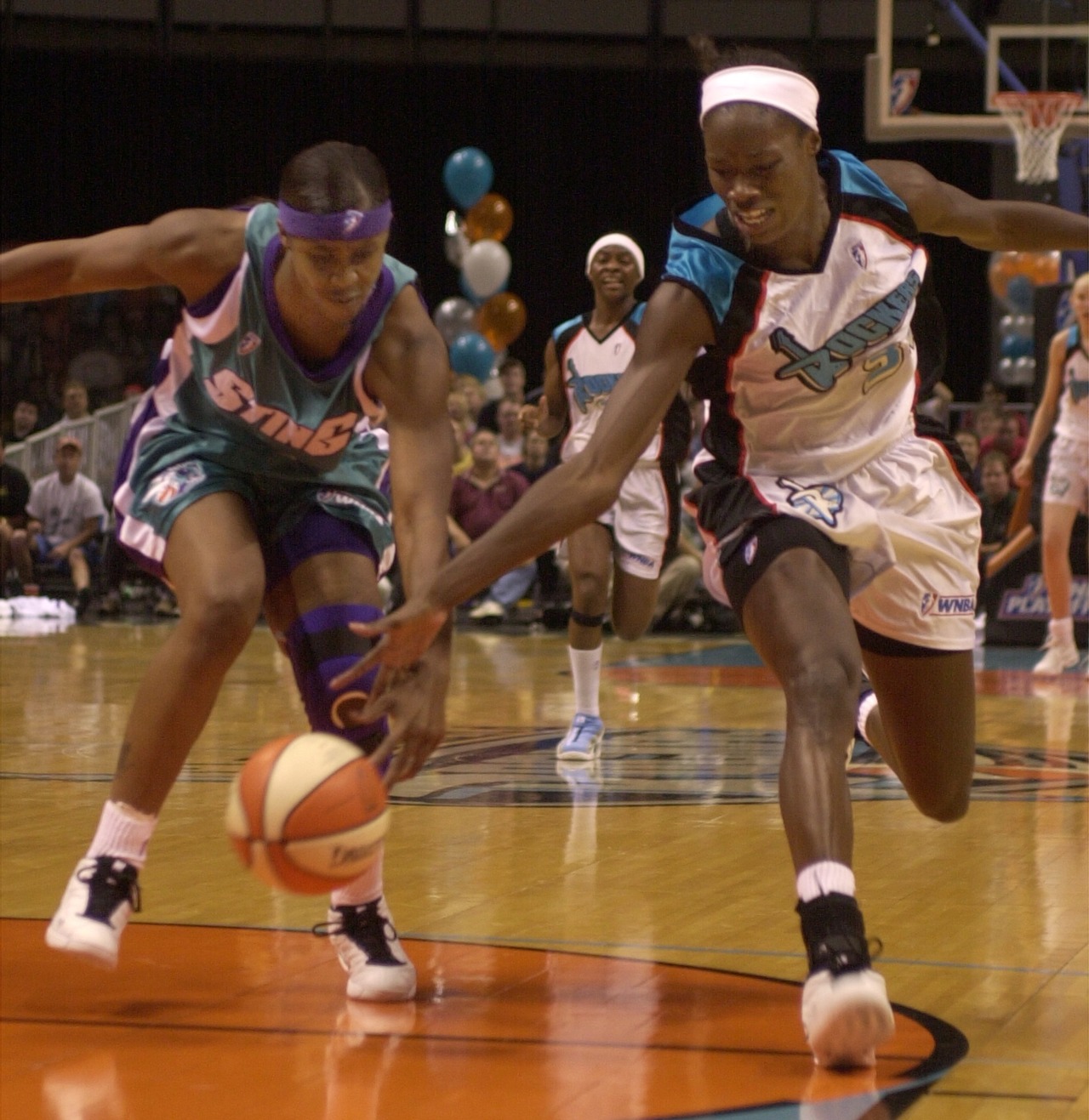 Charlotte Sting’s Shalonda Ellis and Rushia Brown of the Cleveland Rockers battle for a loose ball. Brown played six of her seven WNBA seasons in Cleveland and organized a reunion of Rockers during the Final Four in April. The Plain DealerAbout the Rockers and the WNBA
1997: The original eight: Charlotte, Cleveland, Houston and New York (East). Los Angeles, Phoenix, Sacramento and Utah (West).
Cleveland Rockers: The team compiled a 108-112 record.
1997: 15-13
1998: 20-10
1999: 7-25
2000: 17-15
2001: 22-10
2002: 10-22
2003: 17-17
Rockers coaches: Linda Hill-MacDonald (1997-99); Dan Hughes (2000-03).
WNBA today: The 12-team league plays a 40-game schedule. This year, New York defeated Minnesota, 3-2, in the best-of-five series. It was the most-watched finals in 25 years.