
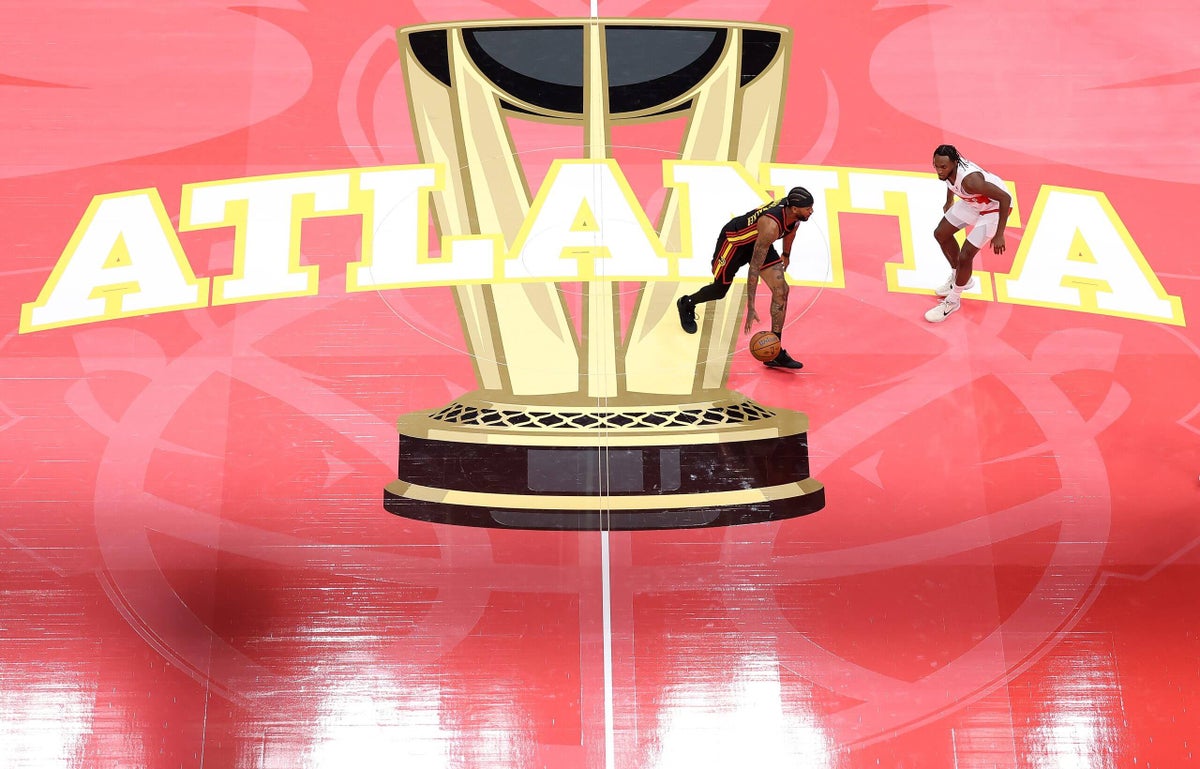
NEW YORK — Tired. Exhausted. Gassed. Drained.
If you’ve been hearing those words come up a lot lately, you’re not alone. On my last two weeks of road-trippin’ through the league, it’s been a common theme as teams reach the end of NBA Cup season and the “second All-Star break” that has been created in mid-December to allow for the completion of the tournament.
Starting next Tuesday, we hit an eight-day span in which 28 of the league’s 30 teams will play only two games; with light schedules on the day to either side of this as well, you can make it a 10-day stretch in which 18 of the league’s 30 teams play only twice, and only three teams (the Minnesota Timberwolves, San Antonio Spurs and, if they make the final, the Oklahoma City Thunder-Phoenix Suns winner) play more than three games.
The big exhale is something teams have already circled as a chance to regroup, evaluate their squads and hopefully allow some nagging early-season injuries to heal. But that time off comes at a cost, and it’s a breakneck first six weeks of the season that has many executives questioning the impact the NBA Cup has on the rest of the season schedule. It’s one thing to hear that the players are running on empty; when staffers and announcers are telling you they’re worn out, it’s fair to wonder if the league turned up the early-season travel dial a little too high.
Here’s the backdrop: The NBA schedule fights the inexorable math problem of trying to squeeze 82 games into a span of 174 days (or, once every four years, 175). That 174 shrinks further once you account for the All-Star break, Thanksgiving, Christmas Eve and other dates when the league is typically dark. So, if you want to have a 10-day span with only two games, you have to cram a lot more basketball into the rest of the days.
In a related story, our season is only 42 days old as of the close of business on Monday night, but five teams — the Atlanta Hawks, Cleveland Cavaliers, Milwaukee Bucks, Phoenix Suns and Dallas Mavericks — have already played 22 games.
I’ll note, too, that this heavy load comes against the backdrop of a preseason in which teams are increasingly disregarding the games, especially for their better players. The upshot: Everybody is going 0 to 50 in record time, and then aims to sustain that through an unnaturally heavy schedule cycle to squeeze in four days in Las Vegas for the NBA Cup semifinals and finals.
Of course, games played are only one element of how the schedule fatigues teams, and perhaps it’s not even the most important one. Another oft-cited scourge, for instance: one-game trips home, when a team comes back, plays a home game and goes right back on the road. That “home” stay turns into just another stop on the road trip. Atlanta will go 27 days without consecutive home games before it hosts Denver on Friday; Memphis will go 29 days this month, and Denver will go a staggering 41 days. Brooklyn has had two homestands the entire season; it’s December!
I don’t think that point gets discussed enough: A schedule optimized to minimize back-to-backs or flight miles can nonetheless be awful. The whole point of “road trips” and “homestands” is to minimize the number of trips through the bus-plane-hotel-arena-bus-plane-home car wash, and back-to-backs in the middle of a trip aren’t necessarily a negative if they allow multiple recovery days at home on the backside.
The NBA Cup is complicit here because of the necessary scheduling maneuvers to accommodate all intraconference matchups on certain nights, without back-to-backs preceding them, and then get everybody back to home base in early December. Unfortunately, it’s a lot easier to do that by giving everybody short trips.
That takes us to the next point in the chain. I can’t definitely prove that the uptick in early-season soft-tissue injuries to key players is connected to the amped-up early schedule, but reasonable people can certainly see how those events might be correlated.
It wounds me to say this as an NBA Cup enthusiast, but I’m wondering if the Cup is worth the cost, or if, at the very least, the league can rethink how it schedules the start of the season to accommodate this event. With teams now openly disregarding the preseason, it would make a lot more sense to have the first three or four weeks of the season be a ramp-up period, with maybe 75 percent of the game volume of the rest of the season. Right now, we’re doing the opposite.
How do we accommodate a Cup competition to allow for that? There are a lot of ways to potentially rethink this, none of which are perfect. What if the Cup quarterfinals were on Christmas and the semifinals and finals were on the Friday and Sunday of All-Star Weekend? What if the Cup group games were the preseason?
Of course, all this presumes that nobody will commit to the ultimate sacrifice, the one that would have by far the greatest impact of all: shortening the schedule to something more manageable in the 65-to-70-game range and living with a quality over quantity mantra.
In the big picture, however, let me leave the discussion here: No sports league depends more on its stars than the NBA, and yet the league keeps getting worse at keeping those stars healthy. And, no, ordering players to show up for 65 games if they want an award isn’t any kind of “solution,” as we’re learning, as much as an open invitation to moral hazard.
Until or unless the NBA can turn the tide on that front, it’s fair to question why the league is putting its most valuable properties at potentially greater risk for the sake of a relatively unimportant extravaganza that only adds a few extra crumbs to the revenue pie.
I say this as somebody who truly enjoys the NBA Cup — the courts, the groups, the random tiebreakers, all of it. But it’s become increasingly difficult to justify its impact when weighed against the early-season impacts on teams to accommodate it.
Cup Geekery: The schedule
Speaking of the NBA Cup, we know who our eight quarterfinalists are after the end of group play, which leads to the other piece of the NBA Cup puzzle: the two additional games that the other 22 teams will have added to their schedule.
To review, the league adds two games for each team that didn’t make the quarterfinals, one home and one away; most will be against conference opponents they were otherwise scheduled to play only three times, except for two interconference games that have to be added to even out the schedule because each conference has an odd number of teams.
The big winner, without a doubt, is the Cavaliers. Their new games are a home contest against the Charlotte Hornets and a road visit to Brooklyn, two teams with a combined record of 10-31 through Monday’s games. Shoutout also to the Chicago Bulls, whose two new opponents are a combined 9-33 … except that the two teams they drew, Charlotte and New Orleans, both recently beat Chicago. Memphis also got a break by adding the LA Clippers and Utah Jazz, two teams that are a combined 12-29 through Monday. Nobody would have thought this before the season, but the Utah game might be the tougher one of the two.
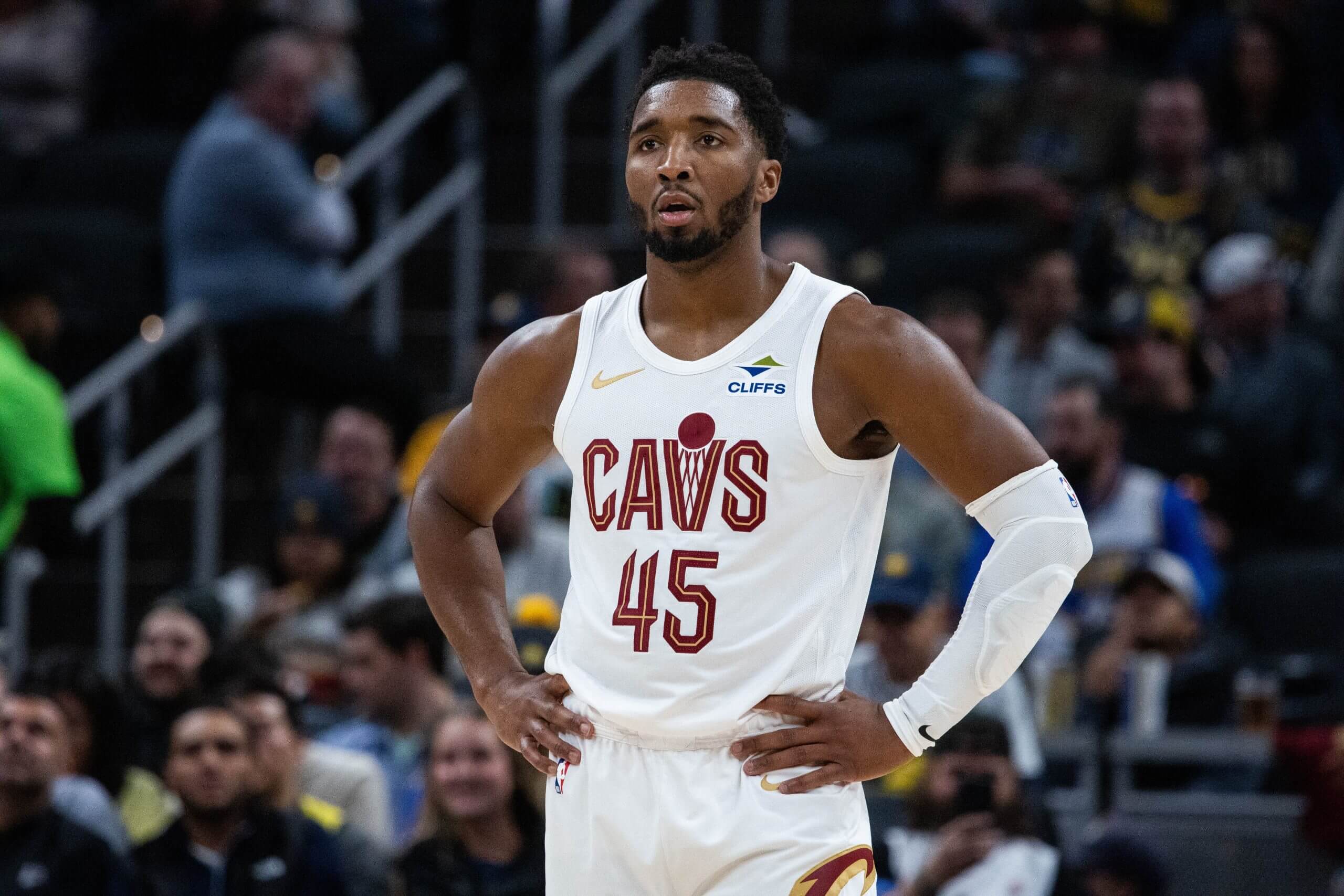
On paper, things could be worse when it comes to the two added games for Donovan Mitchell and the Cavs. (Trevor Ruszkowski / Imagn Images)
On the other side, the Sacramento Kings can’t catch a break. It’s bad enough that they’re, you know, the Sacramento Kings, but they also got the Nuggets and Timberwolves added to their schedule — two teams with a combined 26-14 record and outsized positive scoring margins. Golden State (versus Minnesota and at Portland) and Atlanta (versus Philadelphia and at Detroit) also were done no favors.
Finally, an unfortunate note for the two wild cards in this tournament, Phoenix and Miami. In addition to being guaranteed to face two very difficult opponents in their next two games, those two solar-monikered clubs also face the threat of playing 42 road games and just 40 home games this season, which will happen if they lose their quarterfinal and the third seeds in their conference (San Antonio and New York) also lose next week.
Rookie of the Week: Egor Demin, PG, Brooklyn
Just call him 2-point Egor. Through four games of his NBA career, the Nets’ lottery pick did not make a single basket inside the 3-point arc. In fact, he didn’t register a single attempted 2-pointer until his fifth game and his 85th NBA minute, when he made an 8-foot jump shot in a lopsided loss to the Sixers.
Since then, however, Demin has found his way to the parts of the court inside 20 feet a bit more frequently. That culminated in a veritable torrent of 2-point activity Monday against Charlotte, when Demin registered a putback of his own 2-point miss and then a transition runout in the game’s first three possessions, en route to a nine-point outing that included a career-high nine 2-point shot attempts; his previous best was six.
Ignore, for a moment, the initial results of this pull-up 2, and instead ponder the unlikelihood of him getting off two 2-point shots in three seconds at any point in summer league, the preseason or October:
However, he’s doing that more on the regular of late. Demin only converted eight 2s in his first 13 games in the NBA; in the last 10 days, however, he’s played five games and shot 13 of 26 inside the arc. At one point in the fourth quarter on Monday, he even dribbled to 15 feet and attempted a turnaround jump shot, just because he could. Maybe he should do this more often?
We kid because we care; at 6-foot-8, Demin is a tall wing who can handle the ball, whip cross-court passes and shoot pull-up 3s with aplomb when defenders go under screens. And he has showcased enough defensive instincts that he can likely be a plus on that end before long.
All of that is fairly uninspiring, however, if it doesn’t come with at least some threat of scoring inside the arc once in a while. Demin’s potency as a pick-and-roll operator, in particular, is pretty limited if he never gets a foot in the paint.
Thus, there have been encouraging signs of late, including actual half-court possessions with him navigating into the paint for a finish. His size and wiry strength should theoretically make him a threat in this range before long, and getting the 19-year-old to keep ramping up the 2-point shot rate as the year goes on would go a long way toward the Nets hitting with this pick.