
 Courtesy of The Boundary
Share
Or
https://www.archdaily.com/1036420/visualizing-an-art-deco-icon-the-reimagined-waldorf-astoria
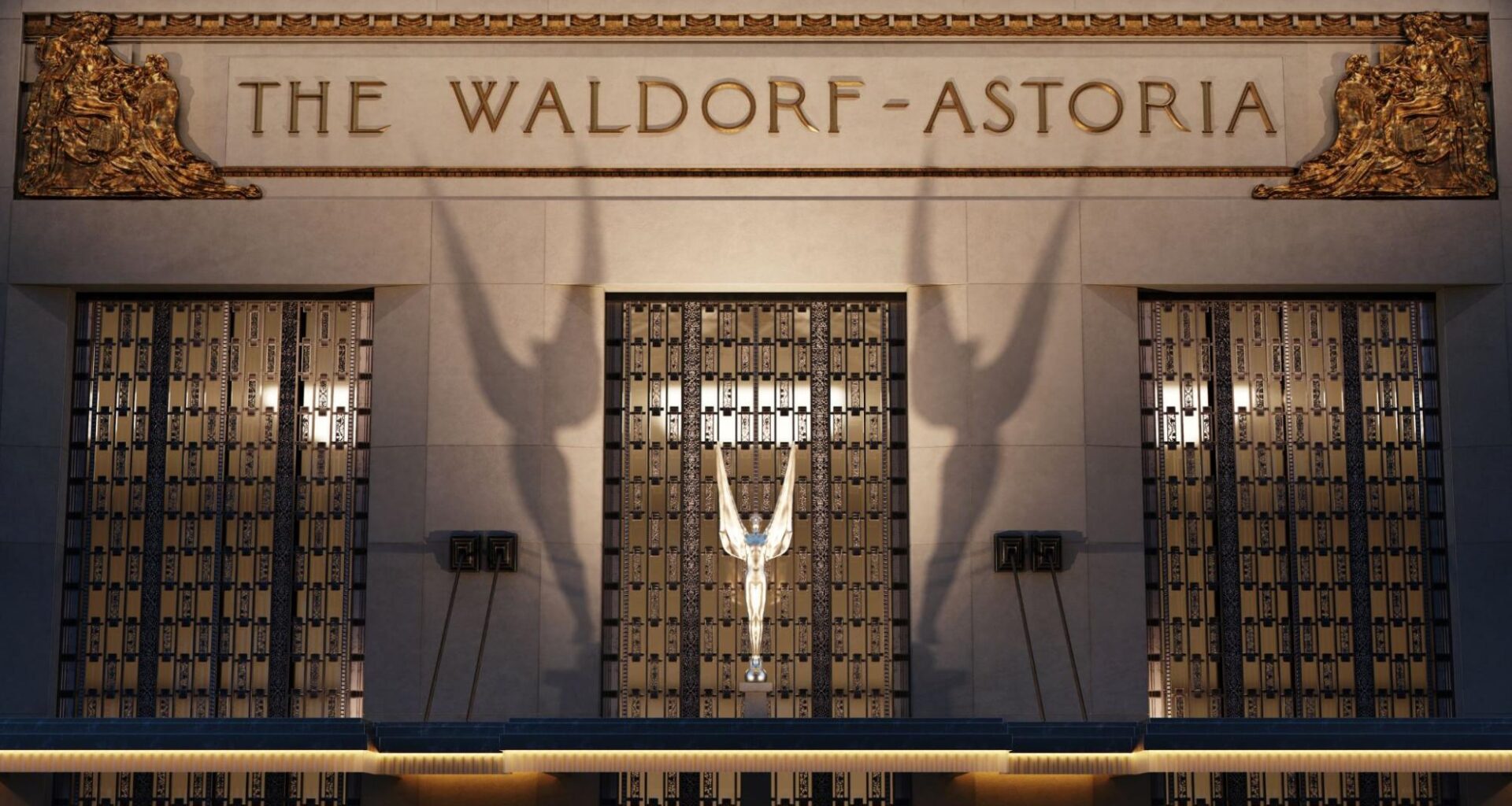
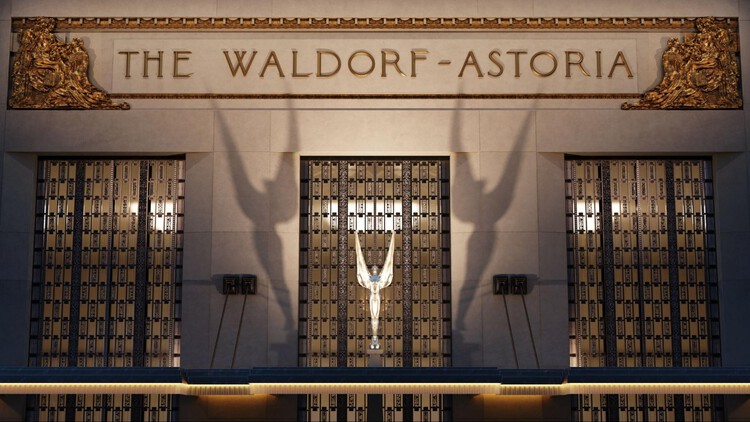
The quintessential symbol of Manhattan, Waldorf Astoria New York officially reopened for the public this year after an extensive renovation. Over its long history, the property has undergone numerous transformations, from its 19th-century beginnings to the modern landmark that stands between Park Avenue and Lexington Avenue.
Reimagining a building that pioneered modern hospitality—a jewel in New York’s skyline—posed a challenge that required close collaboration between preservationists, 3D visualizers, architects, and designers. Together, they worked to preserve its protected architectural heritage while meeting contemporary expectations for craftsmanship and comfort.
 Courtesy of The BoundaryBridging Architectural Heritage and Modern Comfort
The Boundary, a global creative agency specializing in best-in-class photorealistic visuals and immersive experiences, was entrusted with visualizing the restoration and transformation of the iconic landmark. Over the course of six years, the team crafted a suite of animations, virtual tours, and photography that played a pivotal role in the design process and the sales and marketing launch.
As part of its creative process, The Boundary drew inspiration from historic references and contemporary photography that captured the Art Deco style, using moodboards to guide the design direction and ensure a consistent aesthetic and atmosphere throughout the project.
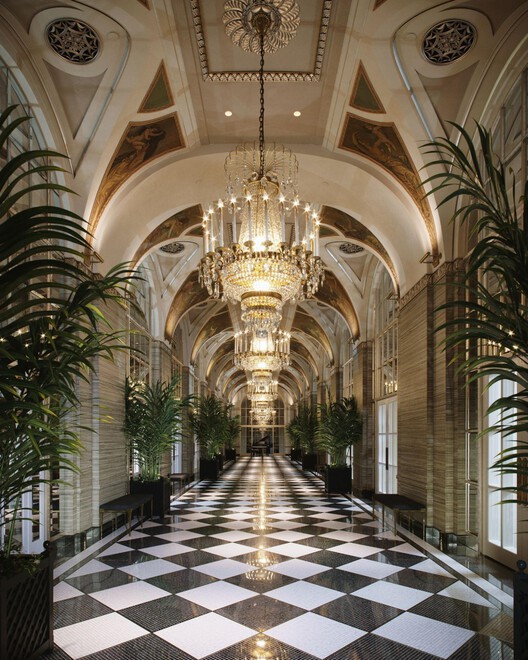
Working alongside the restoration team, The Boundary conducted extensive photographic surveys and collaborated with architects, designers, and preservationists to recreate every original detail in 3D. Consequently, each image was executed with forensic precision, ensuring that the revival of this Art Deco masterpiece remained true to its protected architectural heritage. From the first concept to the final output, the visualizations became a critical bridge between preservation and modern high-end design.
 Courtesy of The Boundary Preserving Legacy Through Technology With Chaos Corona
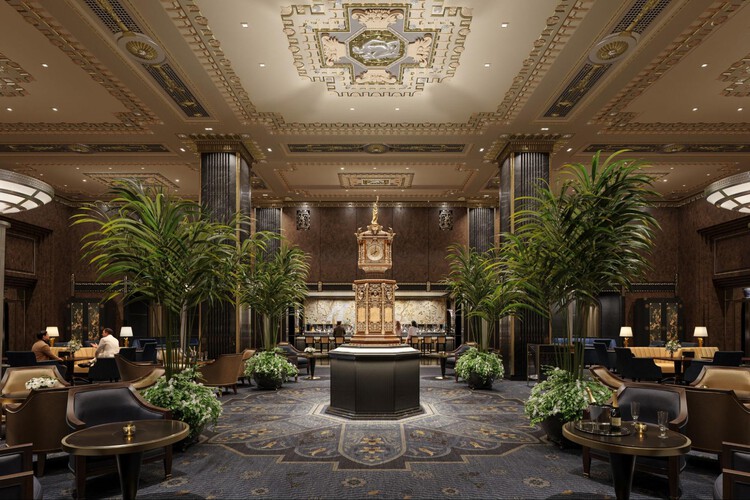
Honoring the legacy of the Waldorf Astoria demanded an exceptional level of accuracy. One of the most significant undertakings was the restoration of the iconic 1893 World’s Fair Clock. The complex process, spanning two years, was documented in detail through more than 50 renders, with three selected to showcase the most intricate craftsmanship. From the Clock Lobby to the renowned Silver Corridor, the team restored murals and mosaic patterns to ensure the core elements that established the Waldorf’s legacy are preserved.
 Courtesy of The Boundary
To accomplish this, The Boundary employed advanced photographic CGI methods to align renders with archival site photography, including simulated flash-bulb lighting. This approach enabled side-by-side comparison of new visuals with historic fabric, maintaining precision in every aspect of modeling and materiality.
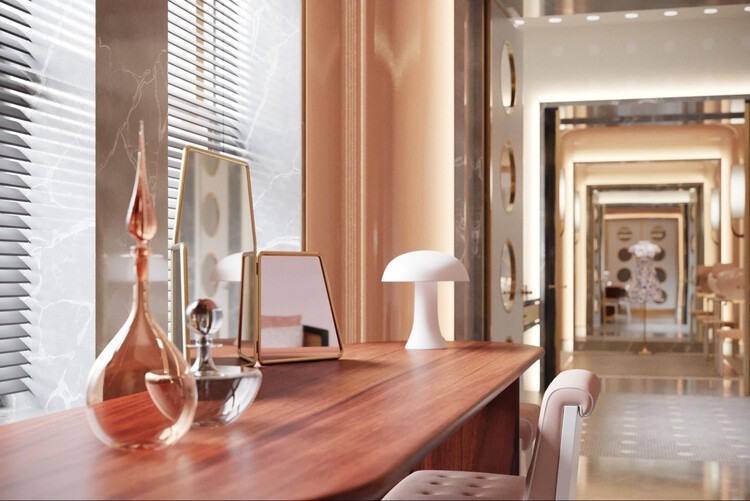
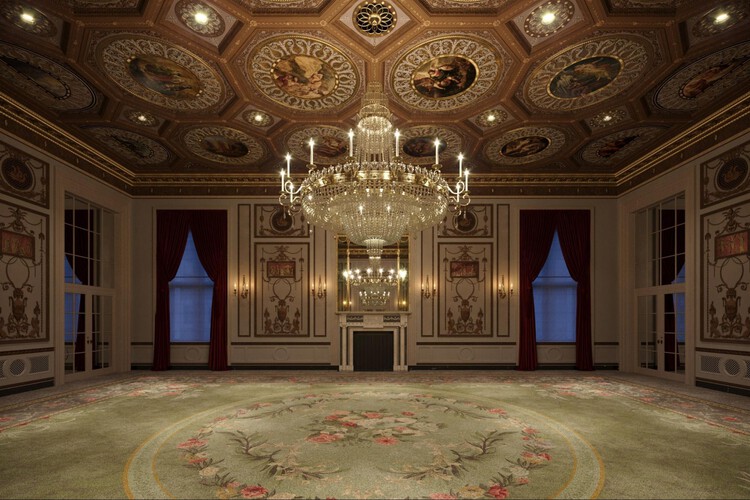
Refining the materiality of a historic restoration proved one of the project’s most demanding tasks. Complicated shaders and materials, along with numerous murals and mosaic patterns, required extensive photographic documentation and cleanup. Utilizing Chaos Corona, a high-performance production renderer for architectural visualization and portfolio rendering in 3ds Max and Cinema 4D, the team overcame these challenges while also boosting efficiency. Additionally, the interactive rendering enabled them to test the process effectively throughout the project’s pipeline.
 Courtesy of The BoundaryBringing Restoration to Life with Precision and Efficiency
Corona’s extensive capabilities enabled The Boundary team to navigate an intricate restoration process with clarity and speed. This was especially important, given the project’s historical significance. Steven Man, Senior Creative Director of The Boundary, said:
Corona is one of the most powerful and relied-upon tools in our studio. Its interactive renderings allow us to test complex scenes with exceptional speed and efficiency, which is fundamental in restoration projects where materials must be constantly evaluated. With Corona, we get the instant feedback we need to work effectively.
The Boundary’s work for Waldorf Astoria New York went beyond creating imagery, offering an immersive visual record of one of the world’s most celebrated restorations. Serving as a lasting testament, it ensures that the cultural icon’s legacy continues for generations to come. With Corona’s photorealistic rendering engine and unmatched accuracy, the team turned the restoration’s complexity into a compelling visual story.
To learn more about how to produce highly realistic visualizations with speed and control, visit Chaos.