


Governors from across the country have long recognized the importance of infrastructure as a foundation of community well-being and economic growth, and 2025 was no exception. This year, states and territories prioritized infrastructure deployment to keep up with rapid AI growth, new advanced manufacturing investments, and rising freight and passenger movements. To this end, Governors’ efforts coalesced around several main policy fronts, and NGA played a key role in advancing this work on behalf of Governors.
Bipartisan Permitting Working Group
A top priority of Governors in 2025 has been reducing the time and cost associated with approving major infrastructure projects. At NGA’s Winter Meeting in February, it was announced that a bipartisan working group of more than a dozen Governors had been established to improve federal permitting and regulatory processes for critical energy infrastructure. In October, the co-chairs of the working group, NGA Chair Oklahoma Governor Kevin Stitt and Pennsylvania Governor Josh Shapiro, released a package of reform priorities focused on ensuring federal permitting processes are streamlined and administered in a technology-neutral and apolitical manner that allows energy projects of all types to move forward.
“This isn’t a Republican or Democrat issue. Every American needs to heat their home and power their vehicle. As the demand for energy rises as we bring new technologies and AI online, we need to complete energy infrastructure projects in a faster, more efficient way.”
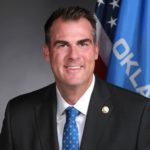 Governor Kevin StittOklahoma
Surface Transportation Reauthorization Efforts
In June, NGA’s Economic Development Task Force sent a letter to Congressional leaders regarding the development of a surface transportation reauthorization bill in the context of the conclusion of Infrastructure Investment and Jobs Act appropriations in September 2026. This letter encouraged the passage of a timely and bipartisan bill that upholds a strong state-federal-territorial partnership and invests in core transportation programs. Governors urged committee leadership to adopt a number of recommendations, including ensuring robust funding levels, promoting certainty and timely release of funds, and increasing flexibility by prioritizing formula programs. In July, on behalf of NGA, North Dakota Governor Kelly Armstrong testified before the U.S. Senate Committee on Environment and Public Works urging policymakers to maintain robust transportation funding, ensure flexibility for states, and take action to ensure efficiency, certainty and transparency in the permitting process.
“In rural states like ours, transportation infrastructure isn’t merely about convenience – it’s a pillar of our communities and thriving local economies. Our highways, roads and bridges are essential lifelines connecting our agricultural producers, energy industry, small businesses and families to markets, healthcare, education and emergency services.”
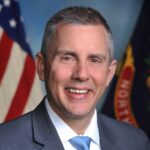 Governor Kelly ArmstrongNorth Dakota
Infrastructure Coordinator Workshops Focus on State Solutions
Beyond advocacy efforts, NGA has supported Governors’ advisors through a series of in-person convenings. This year, NGA convened two workshops in Washington, D.C., for Governors’ Infrastructure Coordinators, who play a pivotal role implementing federal and state infrastructure programs in their states and territories.
These convenings, the first held in April and the second in November, explored a range of topics suggested by Governors’ Infrastructure Coordinators in the lead up to the event, including utilizing right-of-way for energy transmission and linear infrastructure, supporting local governments with infrastructure deployment, the assumption of federal permitting responsibilities, state options for infrastructure funding, and public-private partnerships. Some of the key themes that emerged at the workshop include the need to be doing “more with less” through state policy levers as well as the critical importance of the infrastructure coordinator role in developing a strategic approach to infrastructure and working across agencies to deliver cross-sector solutions.
“The PA Permit Fast Track Program is a game-changer that enhances coordination and communication between the project sponsor and state agencies to cut through red tape, streamline critical projects, and give businesses the confidence to invest and create jobs here in Pennsylvania. We’re proving that government can move at the speed of business and we’re building a stronger, more competitive Commonwealth where folks want to live, work, and build their future.”
 Governor Josh ShapiroPennsylvania
Broadband Leaders Workshop and the Implementation of BEAD
In June, NGA hosted its annual Broadband Leaders Workshop in Columbus, Ohio. More than 65 broadband leaders from 30 states and territories came together with federal officials, NGA Partners, and other corporate and non-profit leaders to share best practices and discuss critical issues in closing the digital divide in the United States. This meeting was held just days after the National Telecommunications and Information Administration (NTIA) released its Restructuring Policy Notice for the $42.5 billion Broadband Equity, Access and Deployment (BEAD) program, giving attendees the opportunity to review policy changes with NTIA, discuss the new guidance collaboratively and plan how to move forward on this critical program. Beyond deployment challenges, Governors are also addressing the growing threat of telecommunications infrastructure vandalism, which impacts 911 systems, healthcare networks, and other critical services, particularly in rural areas.
“We know that the internet is no longer a luxury. It’s a necessity for education, health care and for our economy.”
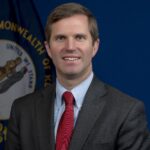 Governor Andy BeshearKentucky
Looking Ahead: Infrastructure in 2026
2026 will be a critical year for infrastructure at the state and territorial level. As Governors advance economic development priorities through infrastructure deployment, they must face several underlying challenges, including declining transportation revenues, high construction costs, project delivery hurdles and federal funding uncertainty in the face of the reauthorization of the surface transportation bill. NGA will be ready to support Governors achieve their infrastructure goals in 2026 through a continued focus on forging strong partnerships with the federal government and the private sector in addition to the exploration of innovative state solutions for infrastructure funding, financing and delivery.