
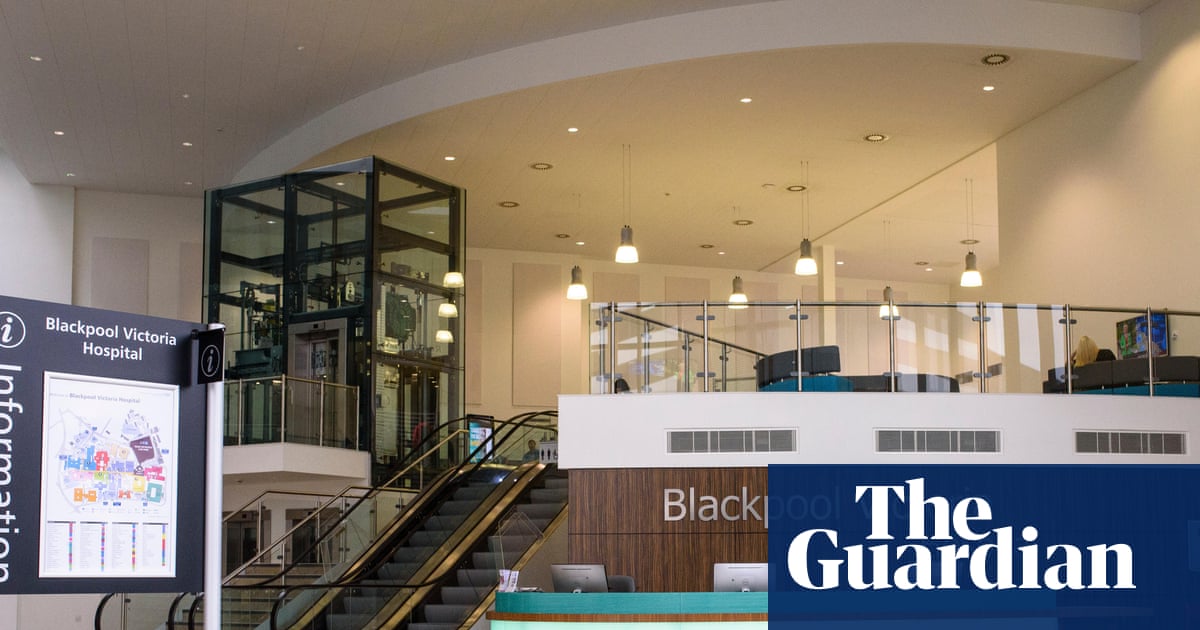
A culture of systemic bullying and harassment has been allowed to flourish among staff at one England’s most scandal-hit hospitals, a damning leaked report reveals.
The safety of patients at Blackpool Victoria hospital was affected as a result of the failings, the report by the Royal College of Physicians (RCP) found.
The report was provided to leaders at the Blackpool teaching hospitals NHS trust in January but its findings were not shared widely with staff until 10 months later, prompting concerns that employees’ ability to take urgent action on its 19 recommendations was compromised.
Staff who spoke to the RCP inquiry team said that excessive workloads were handed to inexperienced doctors, leaving them fatigued and stressed while treating patients. They described a “keeping your head down culture” where their concerns were inadequately addressed. Consultants said that there was “systemic bullying, harassment and racial discrimination among staff”.
The report, leaked to the Guardian, follows a series of devastating incidents at the Blackpool Victoria hospital that have resulted in multiple arrests and six members of staff being imprisoned in the past two years.
Two nurses were jailed for stealing drugs and unlawfully sedating patients to make their shifts easier. The trust’s leading heart surgeon was imprisoned for sexually assaulting five colleagues.
In October, a coroner ruled that an elderly female patient had been sexually assaulted and unlawfully killed in her hospital bed; a murder investigation has concluded without identifying a culprit.
The trust has been accused by the British Medical Association (BMA) of doing too little to combat a “toxic culture of fear” and failing to “make the necessary changes to improve conditions for doctors”. Wes Streeting, the health secretary, described the hospital’s recent failings as “abhorrent”.
The report does not mention the convictions of staff but provides context to the serious issues that have troubled the hospital since 2018, offering a precise account of the culture running through the institution.
The hospital is also the subject of an inquiry into its maternity unit and of a police investigation, Operation Bermuda, into whether corporate failings led to the death, ill-treatment or neglect of stroke patients.
The RCP team visited the hospital in October 2024 and interviewed medical staff who told them about “significant challenges” including “longstanding recruitment and retention issues” across all departments, flagging that these staffing problems were affecting patient safety.
“Significant concerns have been raised about cultural problems, including bullying and harassment, particularly affecting international medical graduates,” the report states.
It notes that frequent leadership changes have led to a lack of institutional memory and accountability. The Trust has had five chief executives since 2018.
The report also heard concerns of “overwhelming” acute care overnight workloads; understaffing at weekends making it “very difficult” to review sick patients; staffing and funding shortages affecting the management of chronic disease and Parkinson’s services; doctors being fearful of airing problems; and poor supervision and training across the hospital.
Understaffing was so chronic that resident doctors – formerly known as junior doctors – were suffering from stress from having to look after the hospital’s sickest patients because consultants were not available, the report suggests.
Dr Neil Hartley-Smith, the trust’s medical director, said substantial changes had been made since the report was delivered in January.
The trust acknowledged that there had been a delay in circulating the report, caused by cancelled meetings and a change in medical leadership, but said improvements were put in place in that time.
The trust has been referred to NHS’s recovery support programme, which replaced the special measures programme. It provides intensive support to NHS providers classified as being in a “critical condition”.
Hartley-Smith said: “Doctors are a vital part of the team here at Blackpool, so we took the feedback seriously. Since the RCP visit in October 2024, we have strengthened education and training for our junior doctors, improved the induction and support we give to doctors who trained overseasand ensured that protected learning time is built into rotas.
“We have also created better ways for doctors to raise issues and see actions taken, and we have made sustained improvements in key areas of patient safety. In addition, we have recruited 116 doctors across the trust, including 32 new consultants. As a result, NHS England has recently stepped down the significant concerns it was monitoring around the learning environment for doctors in training.” The hospital faced an unannounced snap inspection from the Care Quality Commission, the healthcare regulator, last week.
Streeting said patients in Blackpool should continue to come forward for NHS care and said urgent work was already under way to improve the situation. “Not only am I determined to turn the trust around, but to tackle head on the stark health inequalities that have been holding back Blackpool’s communities for too long,” he said. “It is a stain on our nation that a baby girl born in Blackpool will live seven years less than one born in Wokingham, and the NHS should and can act as a leveller for our society.”
Quick GuideContact Amelia Gentleman about this storyShow
If you have something to share about this story, you can contact Amelia using one of the following methods.
Secure Messaging in the Guardian app
The Guardian app has a tool to send tips about stories. Messages are end to end encrypted and concealed within the routine activity that every Guardian mobile app performs. This prevents an observer from knowing that you are communicating with us at all, let alone what is being said.
If you don’t already have the Guardian app, download it (iOS/Android) and go to the menu. Select ‘Secure Messaging’.
Email (not secure)
If you don’t need a high level of security or confidentiality you can email amelia.gentleman@theguardian.com.
SecureDrop and other secure methods
If you can safely use the tor network without being observed or monitored you can send messages and documents to the Guardian via our SecureDrop platform.
Finally, our guide at theguardian.com/tips lists several ways to contact us securely, and discusses the pros and cons of each.
Illustration: Guardian Design / Rich Cousins
Thank you for your feedback.
The BMA’s north-west regional resident doctors committee chair, Dr Madjda Bougherira, called for an external investigation into the RCP’s findings. “As well as the content of this report being incredibly concerning, local representatives at the BMA are worried that the trust are not taking appropriate steps to take accountability and make the necessary changes to improve conditions for doctors,” she said.
“Concerns around systemic bullying, harassment and racial discrimination must be taken seriously or else a toxic culture of fear will continue to prevail, and doctors will feel unable to speak up, ultimately impacting the wellbeing of doctors and delivery of safe patient care. We need to see greater engagement and transparency from the trust.”
The Blackpool Victoria’s seven-year stretch of difficulties began when a student nurse blew the whistle over the behaviour of staff on the hospital’s stroke ward in 2018, leading to the arrest of several workers for inappropriate sedation of patients and stealing drugs. One nurse messaged a colleague boasting that she had sedated an elderly patient “to within an inch of her life”, a court heard.
Last August, a vulnerable 27-year-old man killed himself in a hospital toilet after waiting for 22 hours to be seen by the mental health team; a coroner ruled his death was “contributed to by neglect”. In February, a locum doctor was jailed for 12 months for punching a patient with dementia in the face after he used a racist term. A healthcare assistant was jailed in 2023 on eight counts of sexual assault against colleagues.
Resident doctors told the visiting RCP team they felt there was “often inadequate supervision and poor workload management, which has a negative impact on patient safety”. Trainee doctors were often “handling multiple roles and responsibilities, leading to stress and fatigue”. These members of staff reported that their concerns were not adequately addressed by senior leadership and described “a culture of ‘keeping your head down’”.
Some doctors viewed Blackpool as “a stepping stone rather than as a long-term career destination”, the inquiry team heard, adding that there were “recruitment challenges, exacerbated by geographical location and perceived disadvantages compared with nearby trusts”.