
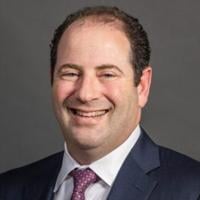
As the Federal Communications Commission finally begins the overdue 2022 quadrennial review. Rick Kaplan, Chief Legal Officer at the National Association of Broadcasters, believes radio — not TV — is at the “front of the line” for modernization.
“No one’s facing more pressure financially than radio,” Kaplan said on “The NAB Podcast.” He argues the three-decade-old local ownership caps no longer reflect the competitive marketplace. “Radio is an incredibly important service,” Kaplan said, “But no one is facing more pressure financially than radio, and these antiquated rules don’t make sense.”
The NAB believes the FCC will prioritize radio in quadrennial rulemaking in the year ahead, but the timing remains difficult to peg. He said broadcasters should anticipate movement “hopefully sometime in the next year or so.”
The timeline may be uncertain, but Kaplan said he has little doubt in that outcome, based on comments by Chairman Brendan Carr, who has said for years he wants to bring “common sense” to the radio ownership rules.
Built For 1996, Not 2025
The Commission voted in September to move forward with the rulemaking (MB Docket No. 22-459), seeking a new round of public feedback on ownership limits. A focus of the quadrennial is the Local Radio Rule, which limits an owner to up to eight stations in the largest markets — with no more than five on either the AM or FM band.
Kaplan said the central problem is the local radio ownership caps were written before the arrival of streaming audio, smartphones, or satellite radio. Yet radio operators remain bound to rules conceived in the early 1990s, which Kaplan said are designed to prevent dominance in an environment that no longer exists. Instead, he thinks they prevent radio from competing against national digital platforms with unlimited scale.
Critics of allowing companies to own more stations predict it will lead to more homogenized programming. But Kaplan pushed back, saying the current rules limit innovation and diminish listener choice because every owner is offering the same formats where a majority of ad revenue can be found. But if station owners could assemble larger clusters, he said programming variety would increase.
He also emphasized that consolidation fears are misplaced. “Our DNA is local. That’s what differentiates us — our commitment to local,” he said.
What Broadcasters Can Do Now
The FCC’s rulemaking is taking comments through Dec. 17. Reply comments — giving the public an opportunity to respond to what was offered in the initial filings — will then be due on Jan. 16, 2026. Kaplan urged owners, general managers, and operators to make their voices heard. “Just telling your story, about why this is important to you — that’s really critical to make sure that they’re able to understand what that means for broadcasters,” he said.