
Dec. 3, 2025
This piece is sponsored by Washington Pavilion Management Inc.
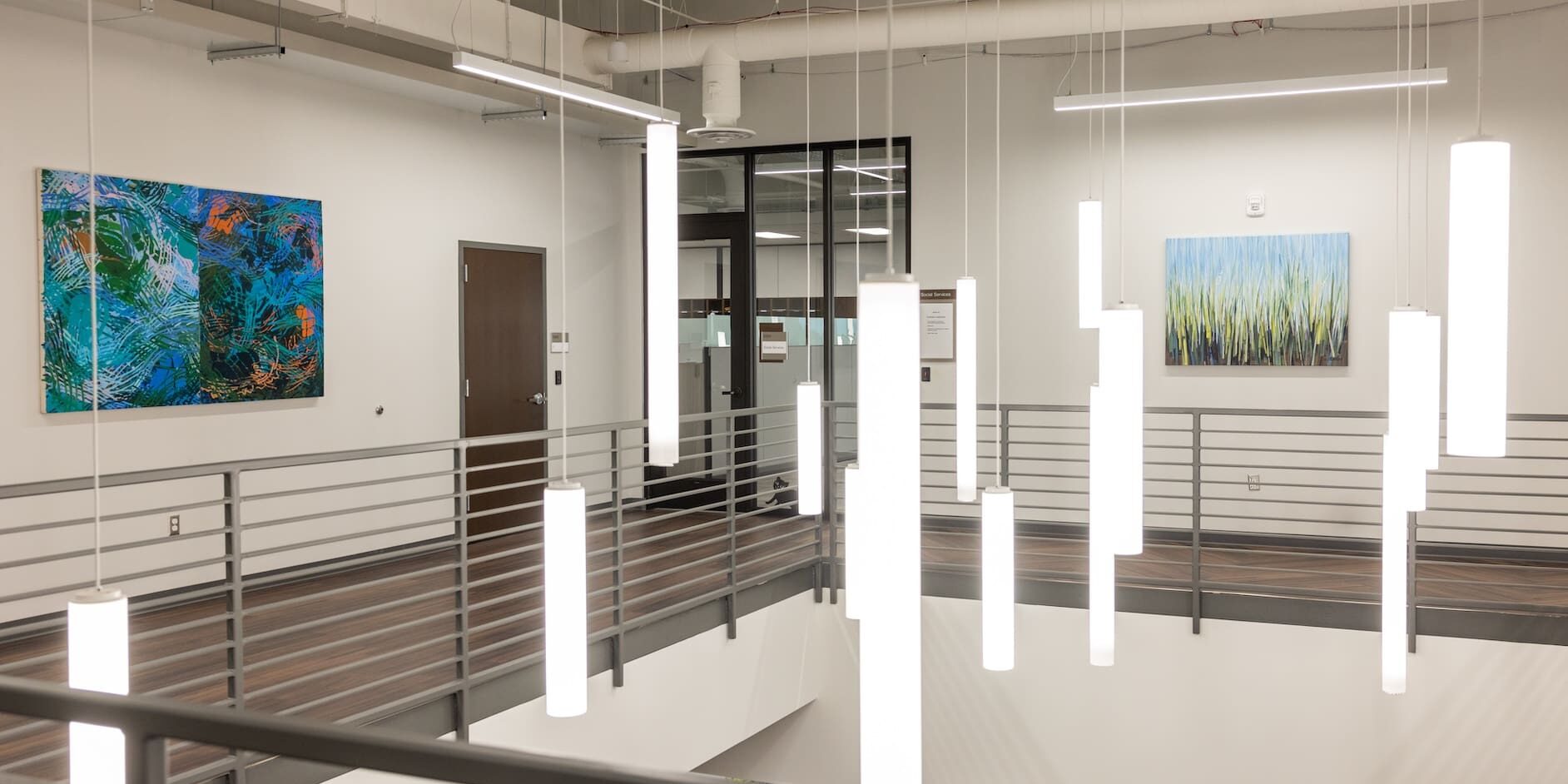
An almost 300,000-square-foot building where hundreds of people work probably shouldn’t have all bare walls.
But state government is limited in what it can spend for things like art, which left facilities acquisition and services director Tom Albrecht in need of some help at the new South Dakota One Stop office building in east Sioux Falls.
“We were trying to figure out a way to brighten up the building, especially in the children’s areas,” he said. “That’s when I happened to get introduced to Darrin Smith, the CEO of the Washington Pavilion.”
Through Smith, Albrecht learned about the Washington Pavilion’s art consulting program, which allows businesses and other organizations to utilize the services of the skilled art curators at the Visual Arts Center.
“We had a very good meeting. I explained what our limitations were and what we were looking for, and they had done things like this before and jumped in with both feet,” Albrecht said. “I left the meeting thinking, ‘Did this just happen?’”
The Washington Pavilion wanted to support the project and did so by loaning artwork to the state from its education collection.
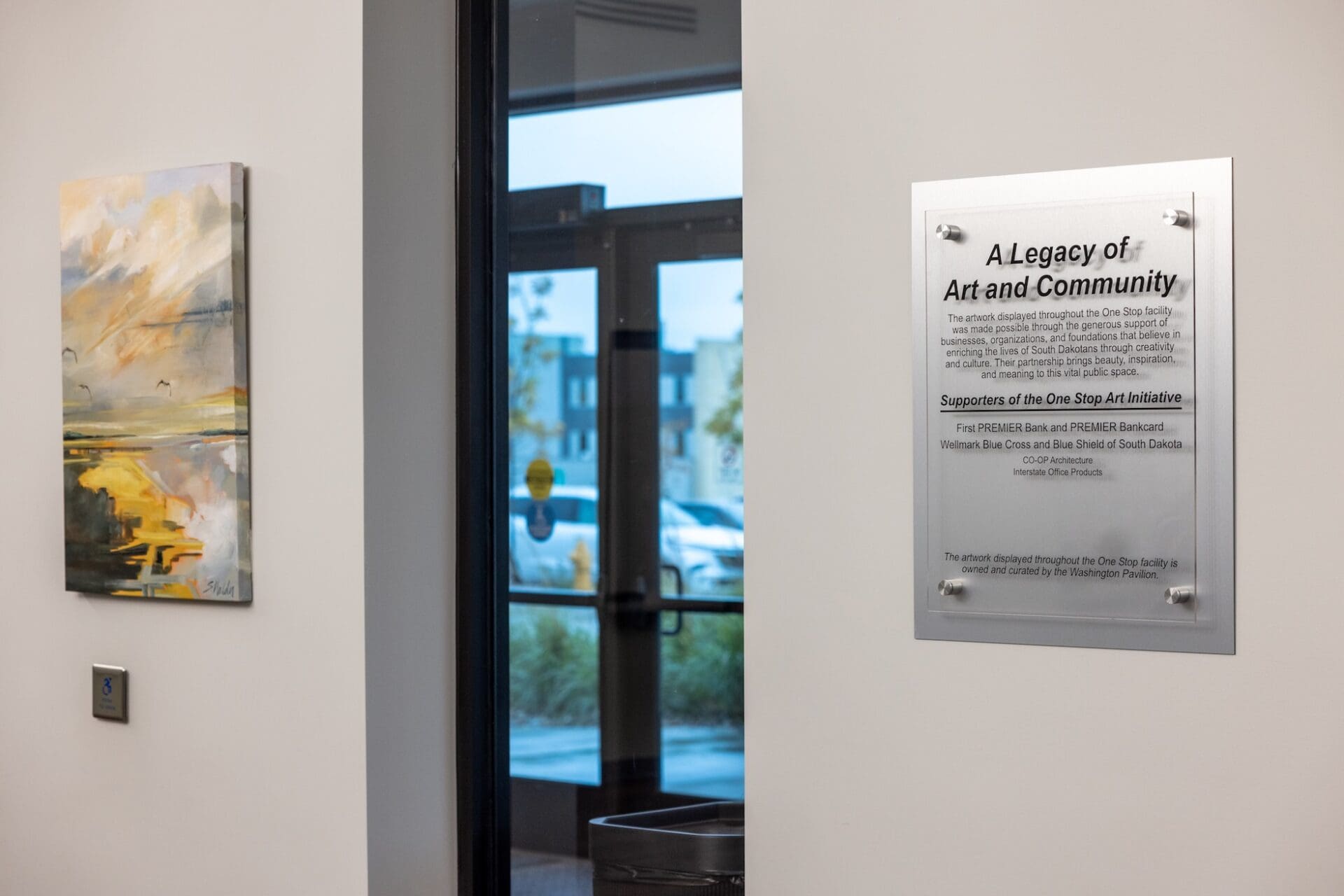
“To curate artwork that truly fit the One Stop story at this scale, we needed to expand that collection. We reached out to key supporters of the arts, our community and the state of South Dakota — and they loved the idea,” Smith said.
A broad cross-section of businesses and industries supported the project, including First PREMIER Bank and PREMIER Bankcard, Wellmark Blue Cross and Blue Shield of South Dakota, Dream Design International, Interstate Office Products, CO-OP Architecture and others.
“We, along with our partners at the state, are deeply grateful for their generosity and proud to be part of this meaningful project,” Smith said.
State officials walked the building with the Washington Pavilion team during construction so they could get a sense for the space.
“We really began to understand how many blank walls there were going to be,” said Jana Anderson, lead curator, who worked with curator Erin Castle on the project.
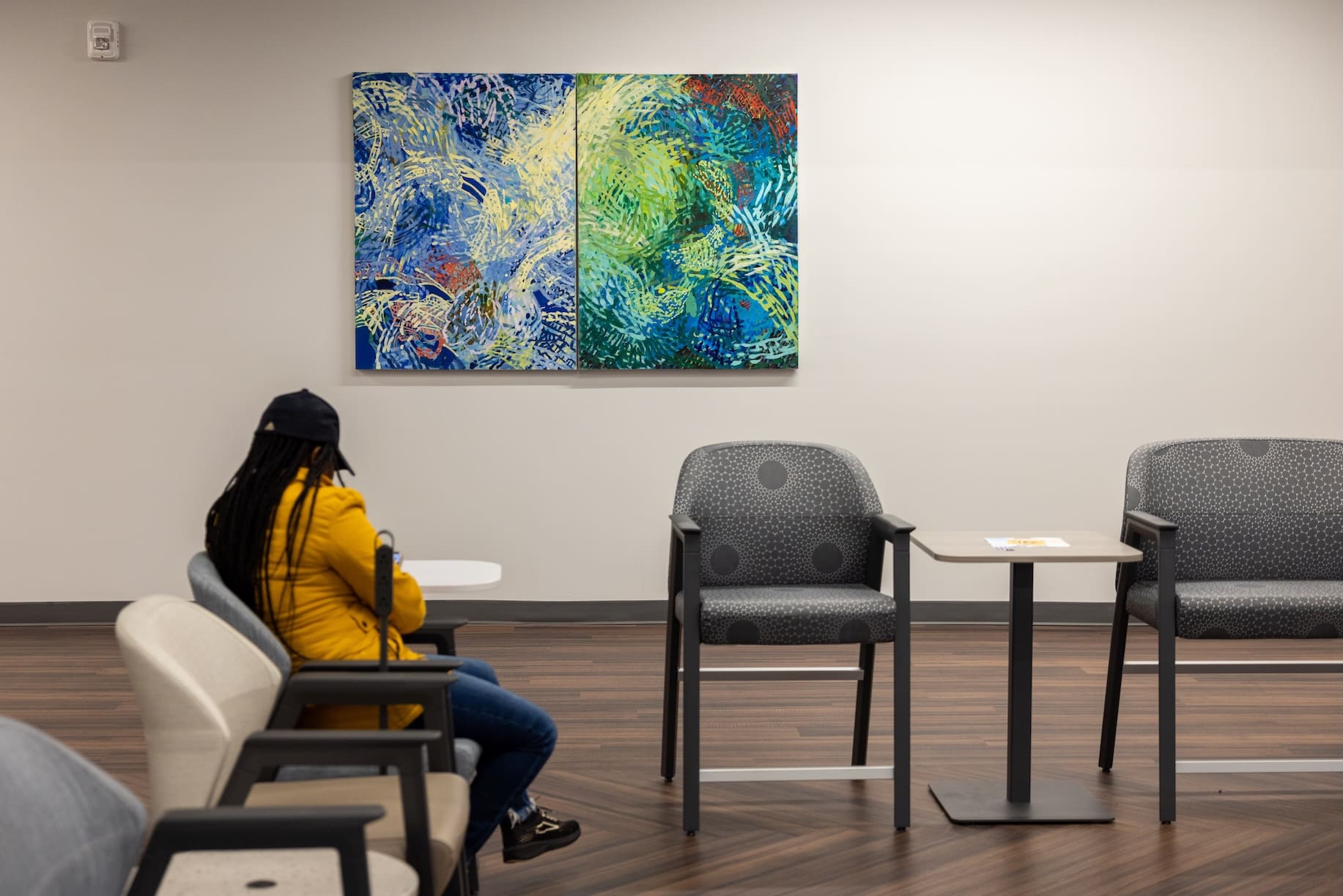
“After walking through again once employees were working in the building and clients were coming through, the space felt very clinical. We understand that art can warm up a space and make it feel more welcoming. That was our initial goal with the artwork.”
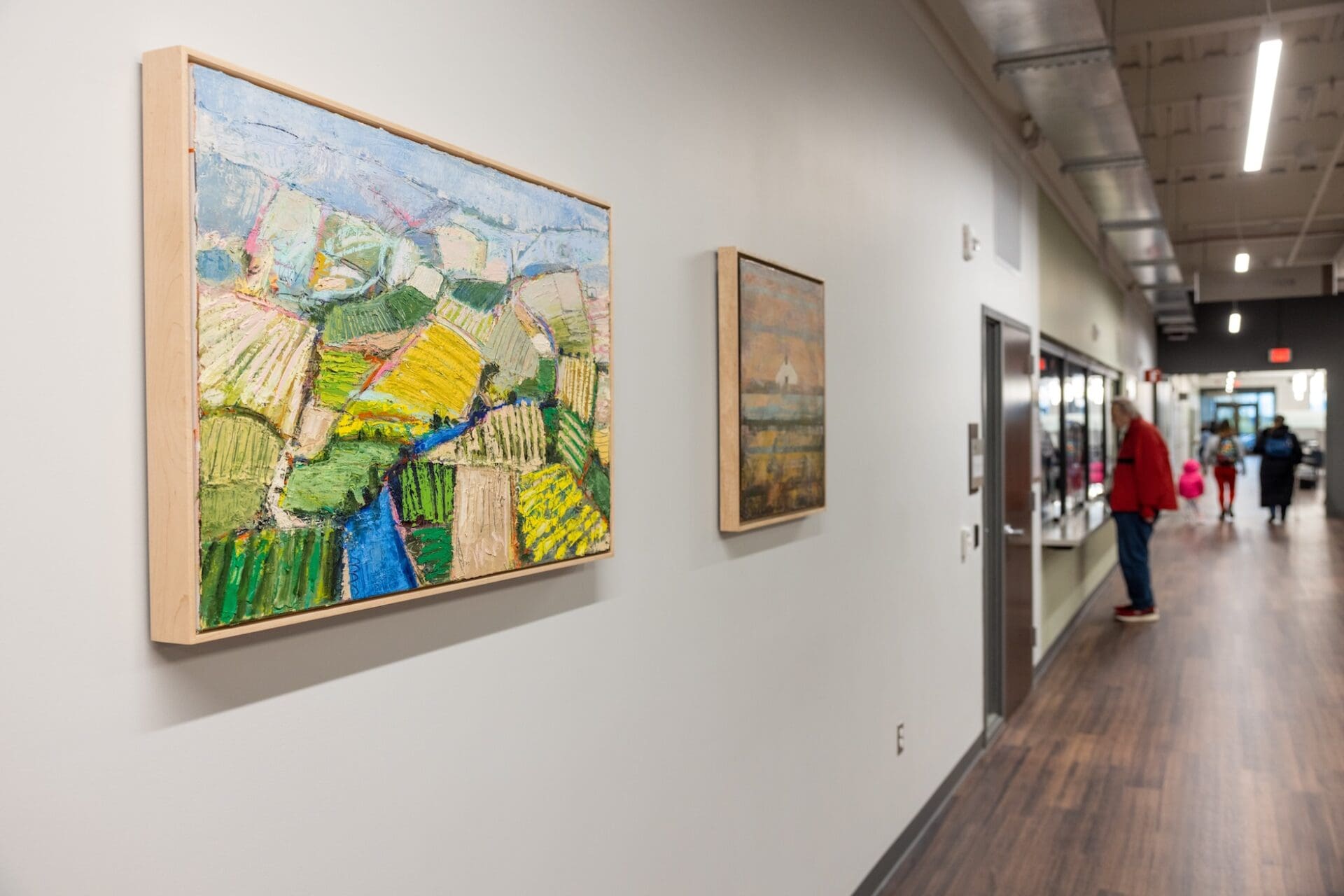
The Washington Pavilion team sought out photography and original artwork that reflected South Dakota and celebrated local talent.
“We spent a lot of time working with a committee of employees on what they would like to see every day. Like all of our art consulting projects, we started by really wanting to understand who works in this building, who is coming to this building and what really occurs here,” Anderson said.
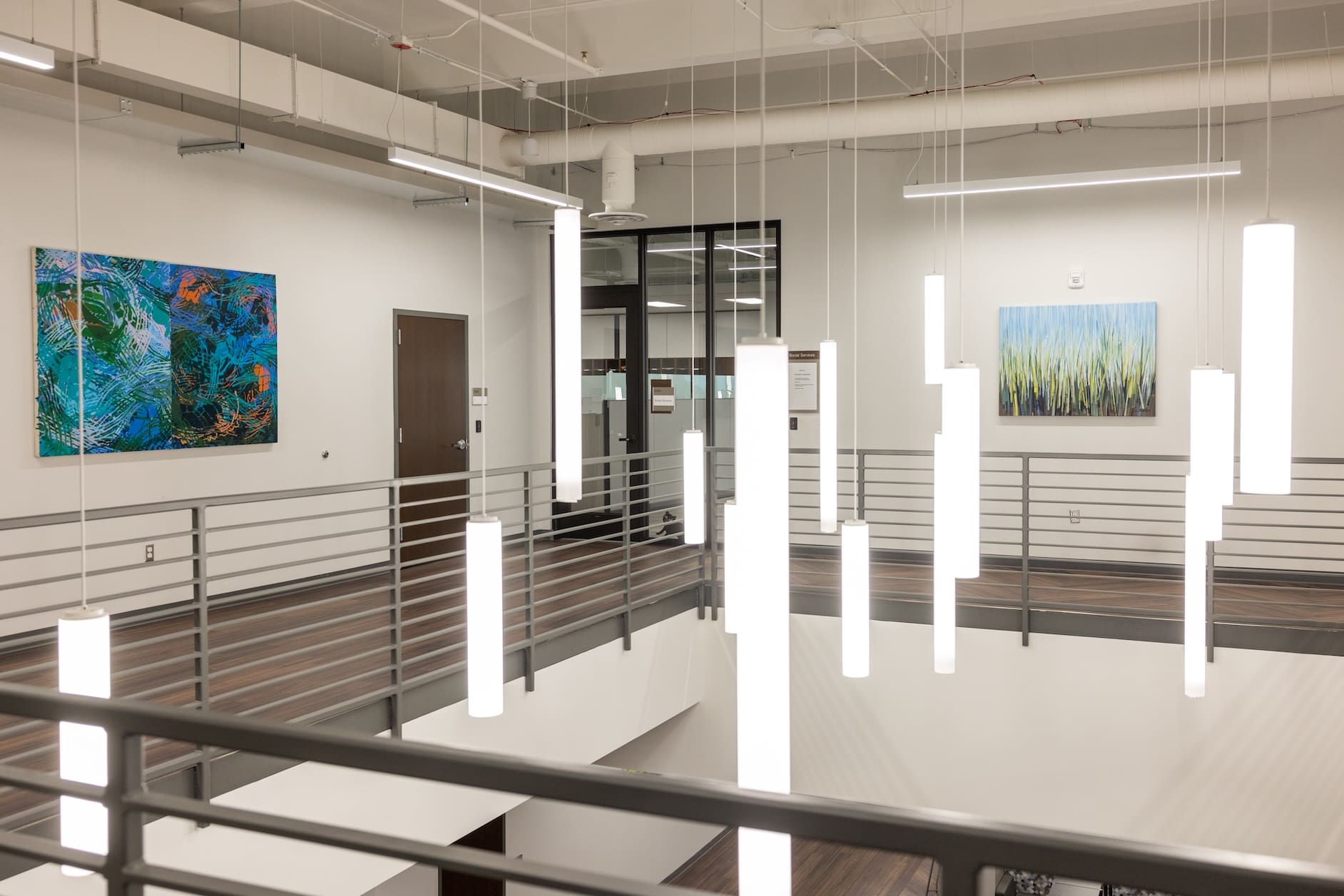
“What came out of those discussions was wanting to display artwork that was welcoming, joyful, peaceful and warm. They wanted the entire state of South Dakota to be represented through its people and landscapes, as well as showcasing local talent.”
The Washington Pavilion coordinated a wide-ranging call for photography and received hundreds of submissions by local photographers.
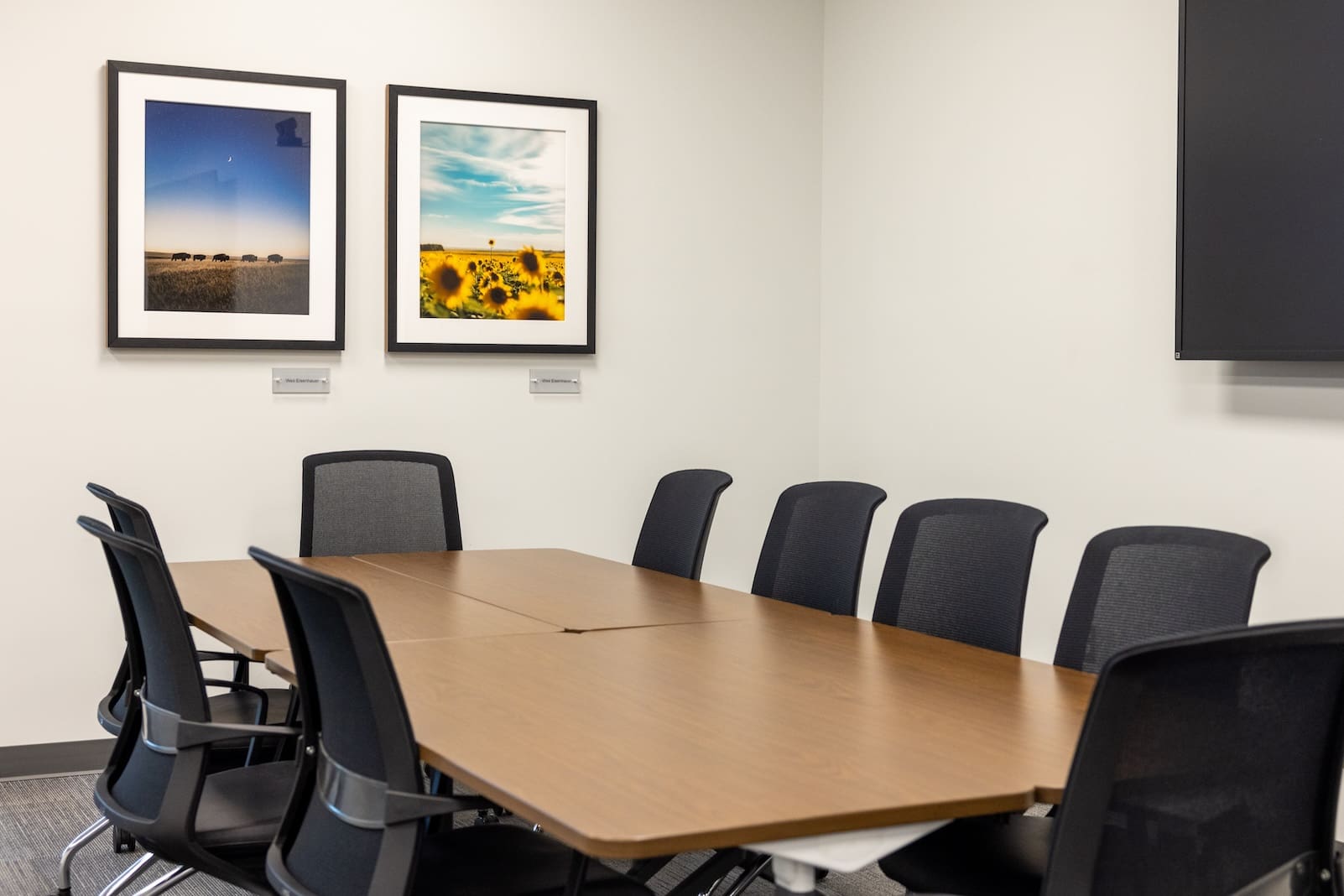
“From there, we included employees in jurying the first round of images. They voted on their favorite pieces, and we were able to incorporate most of the feedback in final decisions,” Anderson said.
“We curated a more targeted grouping of original artwork that we think fit with those initial discussions. A smaller group of stakeholders gave us feedback on the original artworks we presented, and much of that artwork now hangs in the building.”
The state focused first on areas in the building that would be used by children, especially in the Department of Social Services suite.
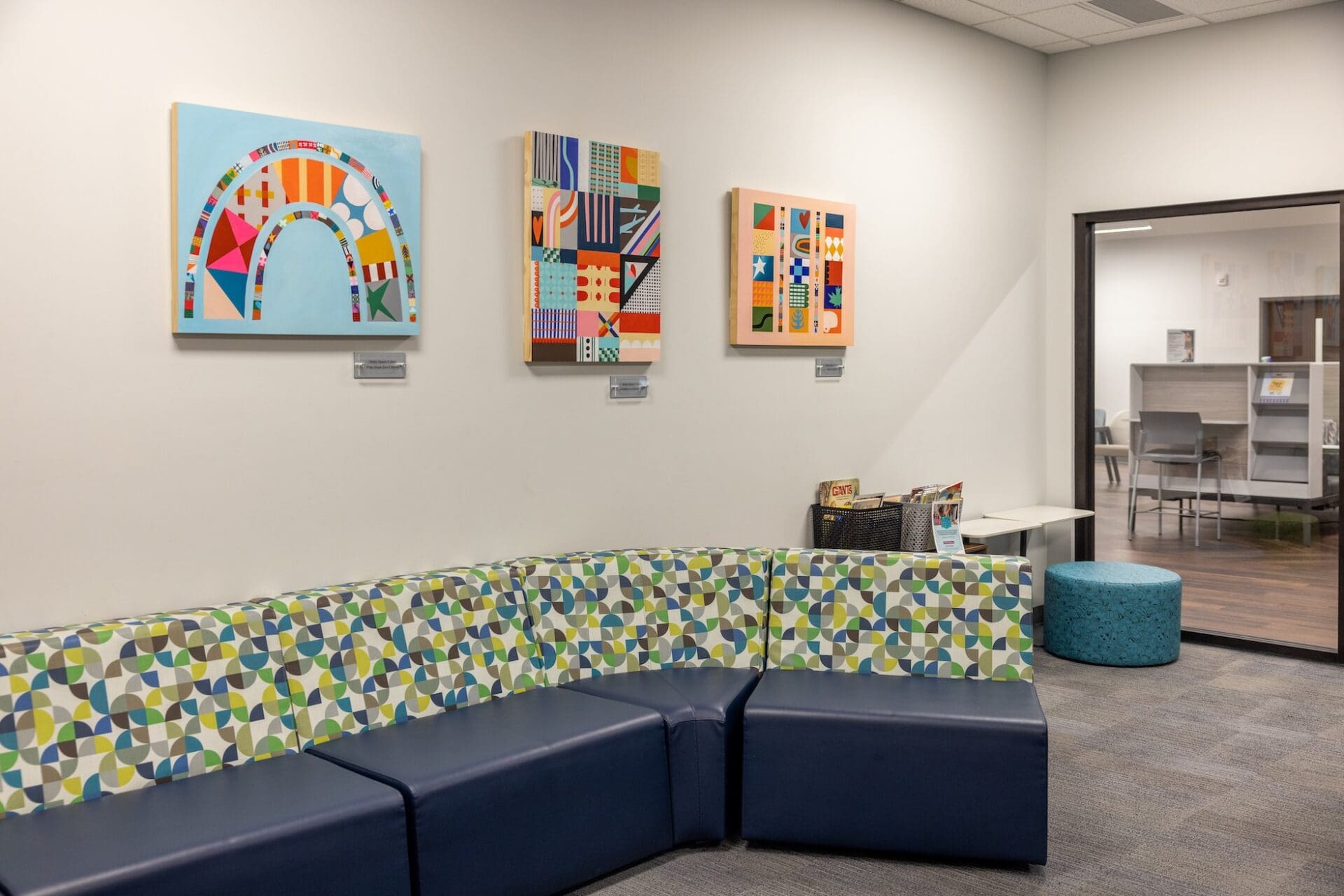
“We wanted it to be a bright, happy, hopeful place for the kids in there, and the Pavilion’s team showed a lot of empathy working in those areas and put a lot of thought into what they were doing,” Albrecht said.
“I’m glad there are people like the ones at the Washington Pavilion who have an eye for that because it was better than we could have put together ourselves and better than what we could have imagined.”
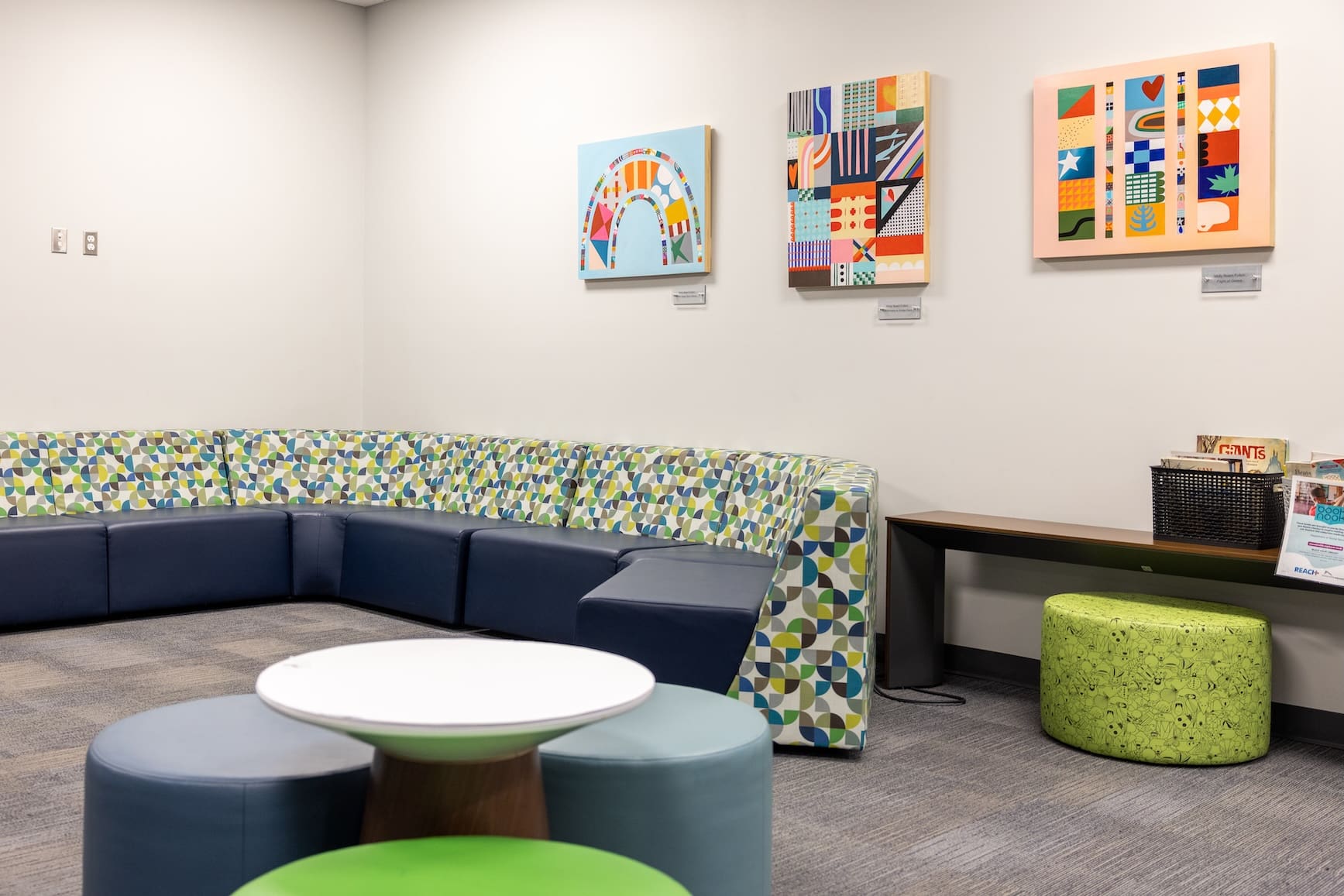
Other areas filled with art include the building’s main corridor, two public first-floor conference rooms and the DSS office area.
“The artwork in the children’s playroom on the first floor in the main corridor has gotten a lot of comments, and there are some really neat paintings in the main corridor,” Albrecht said.
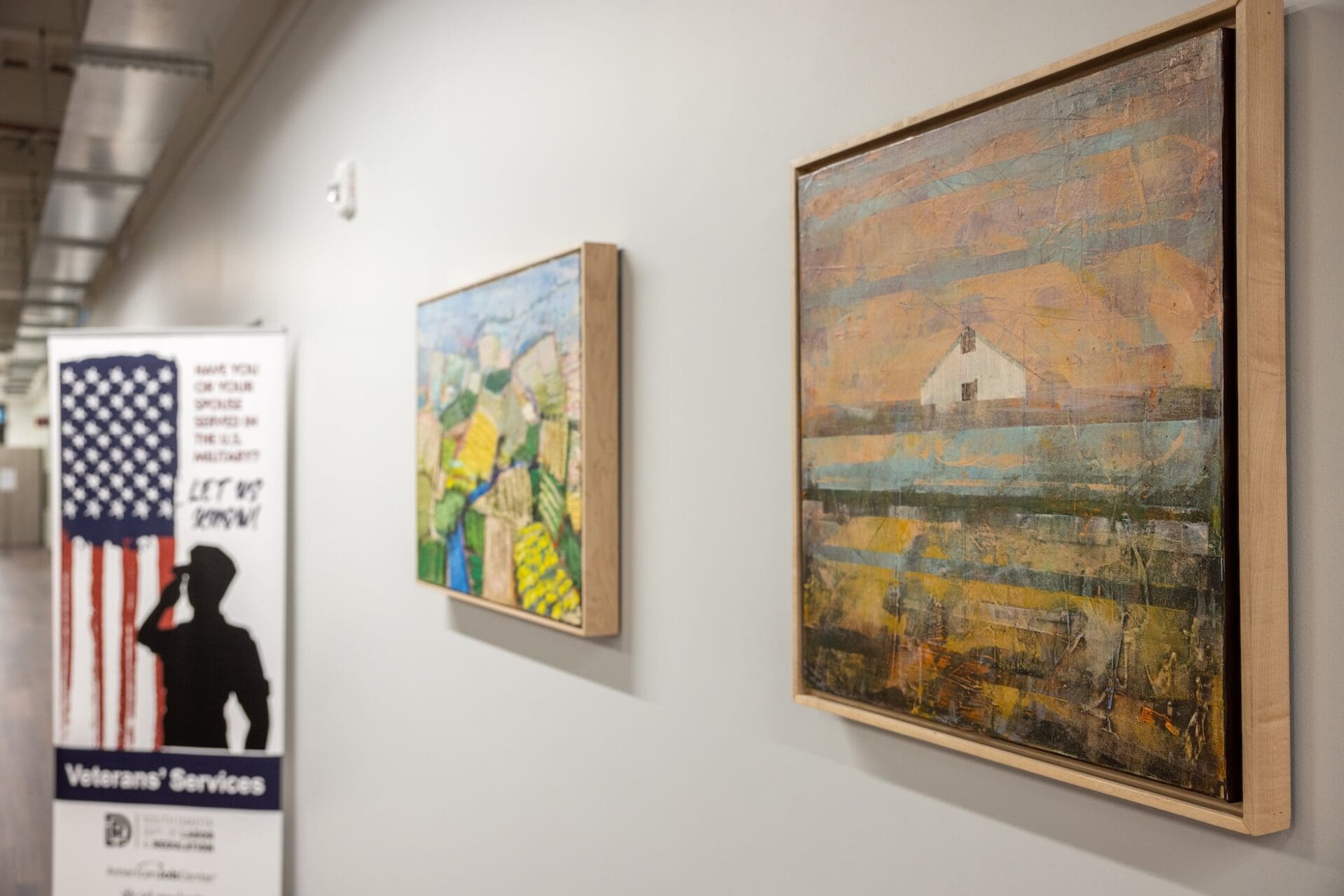
“Paul Schiller has a photo in a conference room called ‘OK’ that’s a really neat look at the downtown area. All of the art has been well received, and everything is just really cool.”
The first 100 pieces have been curated, “but we are not done,” Anderson said. “If we gave each floor and each department similar attention in terms of artwork, I think we could add five times that to be all said and done. Currently, we are prioritizing client-facing spaces, as well as higher-traffic employee spaces.”
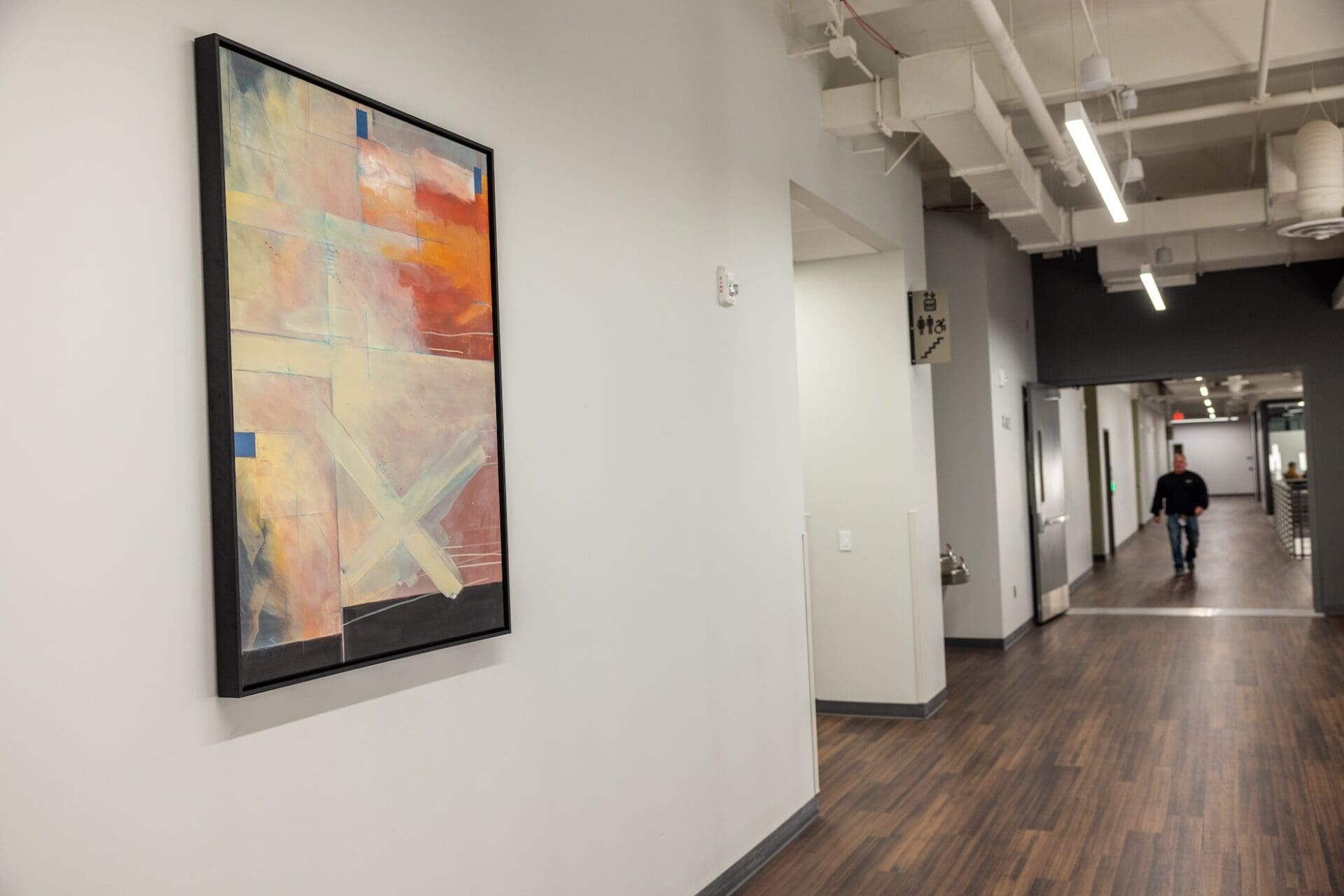
Overall, “this is a fantastic collection of artwork, and the whole space represents diverse styles and artists,” Anderson said.
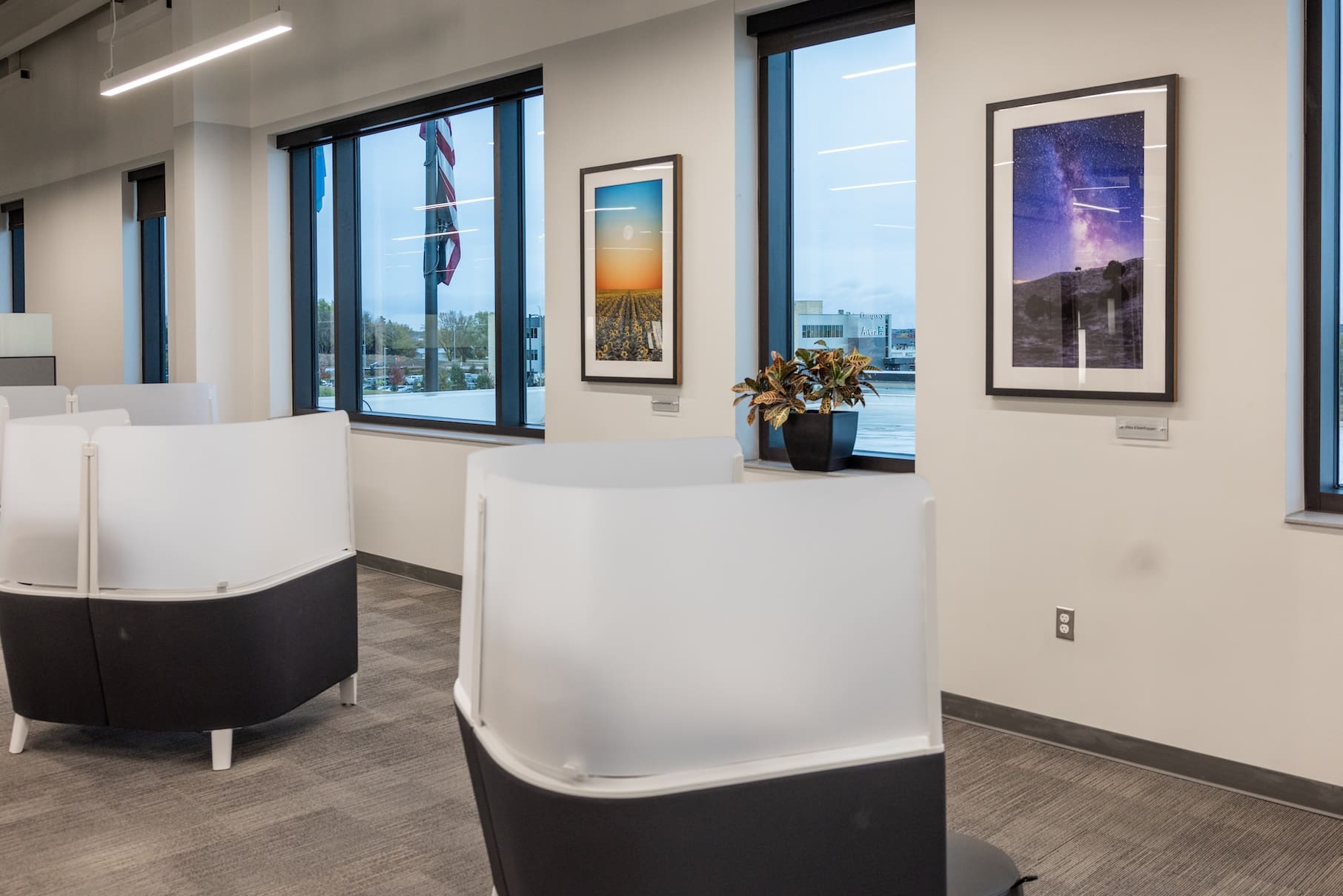
“I think there is something around every corner that may interest anyone that goes into the building. I have my favorites, but I think there is something for everyone, and everyone that encounters this collection of artwork will hopefully find their favorites.”
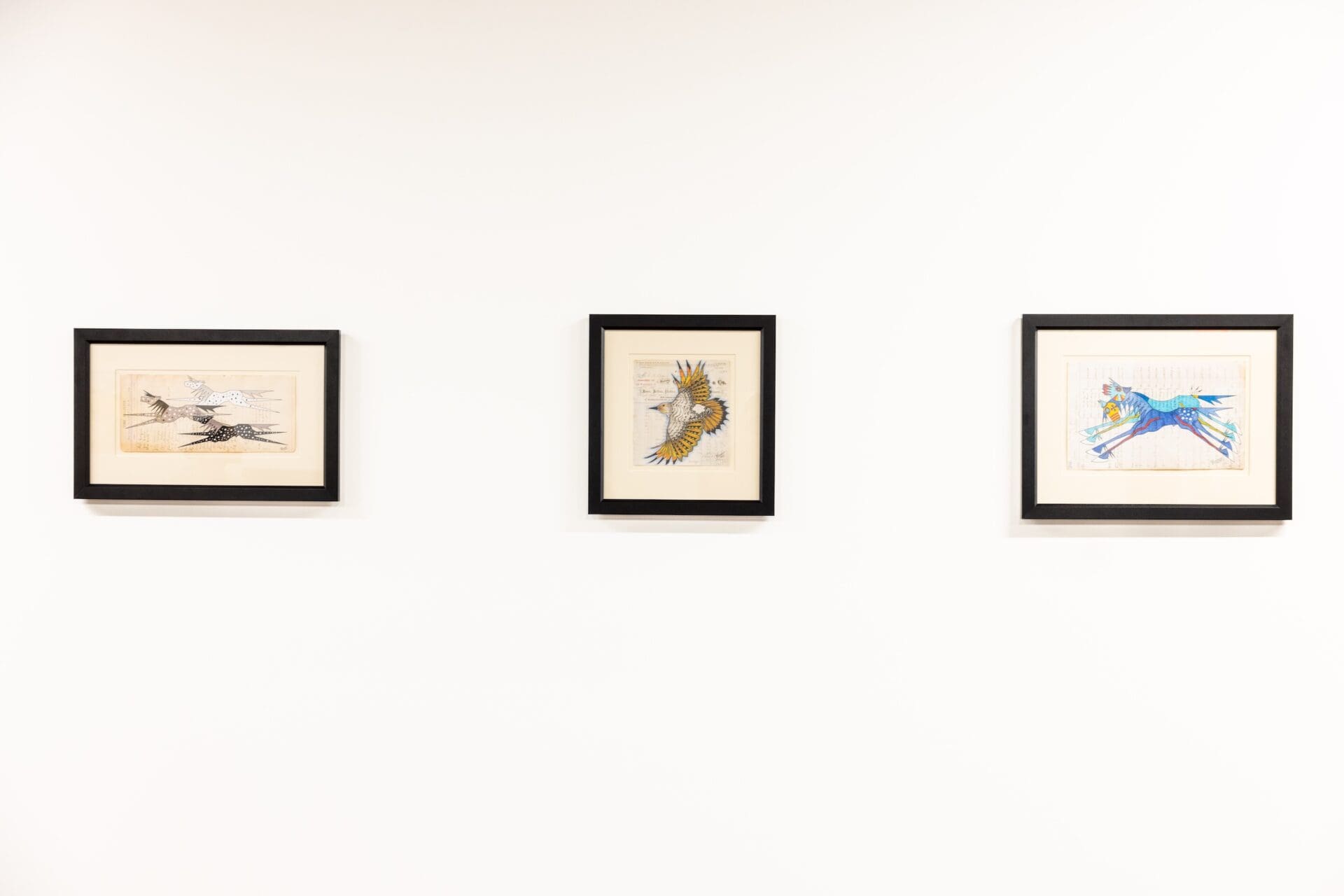
The Washington Pavilion art consulting team offers a full-service experience, including installations. In this project, Anderson and Castle did the installation together and got the benefit of real-time feedback from those working in the space.
“Employees were grateful to see color in their offices and the public spaces,” Anderson said.
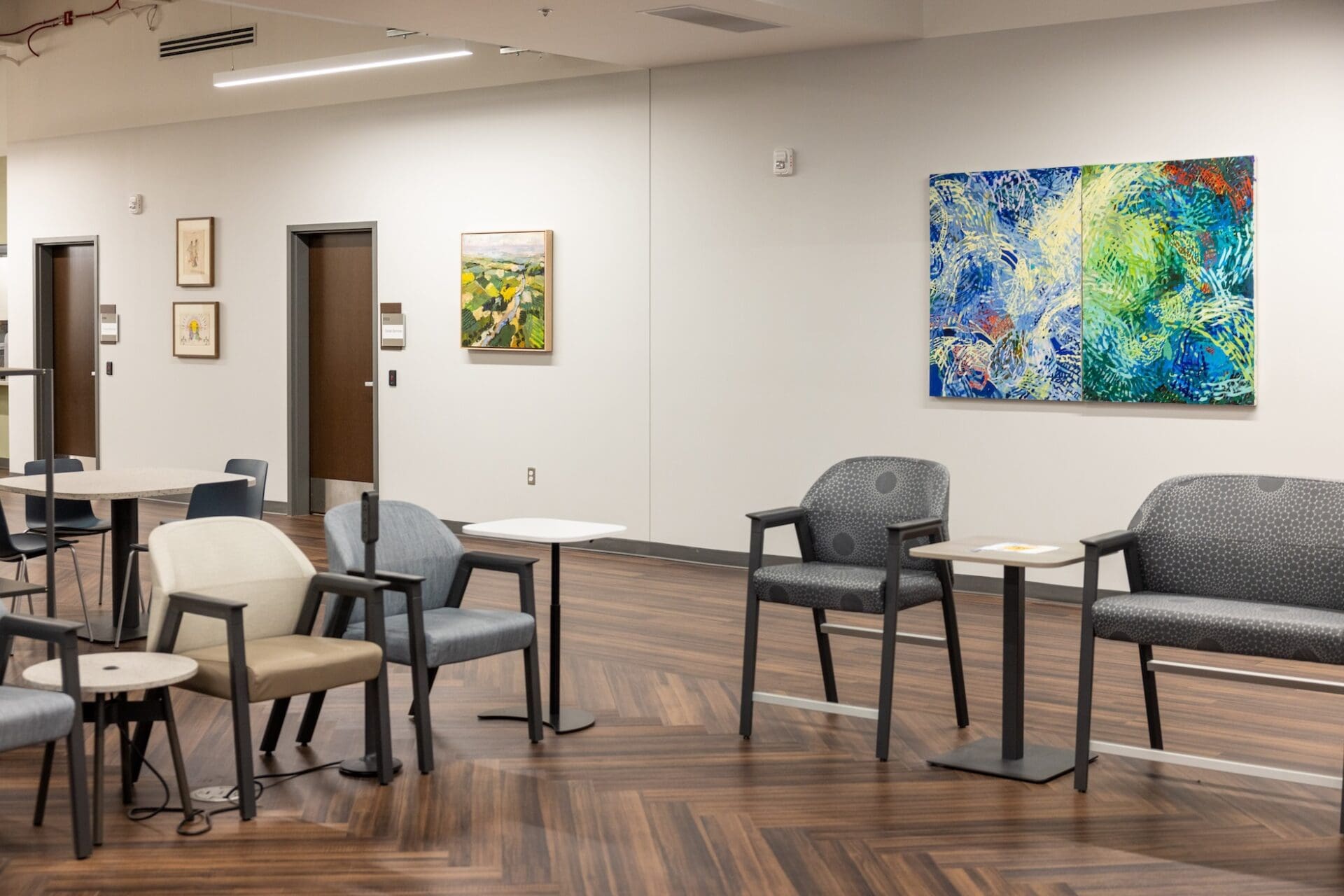
“We could see immediately how artwork can improve employee experience and how artwork elevates a space. It is very gratifying to see a space transformed by artwork and to see a whole collection of photography and original artwork together that reflects our community and celebrates our state’s local talent. We have some great ideas about the next phase in 2026 and are excited to be adding to this collection.”
From Albrecht’s perspective, “the Washington Pavilion’s team saw the vision for how we wanted this to affect the community and staff, and they just linked arms with us and went,” he said. “They were just fantastic. I’d work with them 100 times out of 100 and am just glad there are people in the world who have an eye for art and a heart like they do too.”