
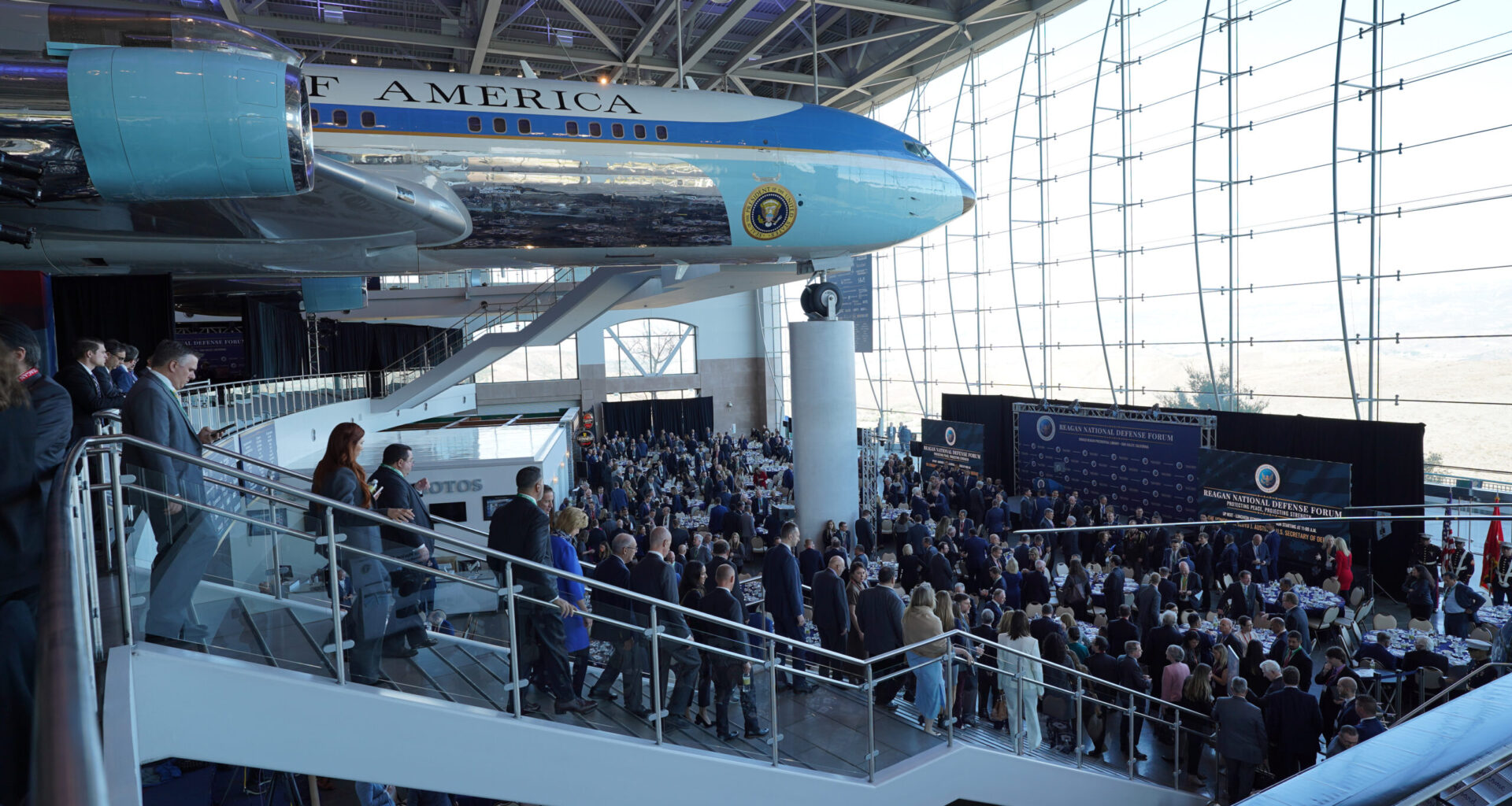
WASHINGTON — As defense leaders head to Reagan National Defense Forum to mingle with Trump administration officials, a new poll finds growing bipartisan support for NATO, sending weapons to Ukraine and Golden Dome spending.
“American people continue to favor peace through strength and active U.S. engagement in the world,” a summary of the poll said. “Majorities want the United States to take the lead in international affairs, believe American military superiority is essential, and support a force sized to deter and, if necessary, win conflicts against more than one major adversary at a time.”
Each year the Ronald Reagan Institute releases its defense and national security poll before high-level officials, lawmakers and defense contractors descend on Simi Valley, Calif., for the weekend forum. This time around, pollsters conducted the survey ahead of the release of a new National Defense Strategy and at a time when the Trump administration is withdrawing from the world stage, striking vessels in the Caribbean and deploying the National Guard to cities around the country.
A bipartisan survey of more than 2,500 people showed that participants are mixed on some of those moves. For example, 64 percent of respondents said the US should be more engaged in international events, up 7 percent from this time last year.
This year has also marked some ups and downs for US support for NATO and the ongoing war in Ukraine; including a 28-point peace plan for Kyiv that caught allies and partners by surprise.
But when pollsters asked respondents about their view of NATO, 68 percent gave a favorable opinion, up 6 percent from last year, and only 34 percent said they would support withdrawing from the treaty.
As for the military conflict in Eastern Europe, 62 percent of respondents said they want Ukraine to win the war, and 64 percent said they favor sending US weapons to Kyiv, a figure up 9 percent from last year. An overwhelming number of respondents — 70 percent — also said they would not trust Russia to honor the terms of any peace agreement with Ukraine.
As for the Middle East, the poll found that 50 percent of respondents support the US sending weapons to Israel, down 4 percent from last year, while 60 percent said they backed the US military targeting Iran’s nuclear facilities this summer.
Out in the Indo-Pacific region, 77 percent of respondents said it is important for the US military to defend Taiwan against Chinese aggression.
Meanwhile, the Pentagon is expected to release a new National Defense Strategy this year that could place an enhanced focus on the homeland and Western hemisphere. The annual poll found that 49 percent of respondents favored the US government shifting a major portion of its global military presence and resources away from Europe, the Middle East, and Africa, and refocusing those resources on the Western Hemisphere. In comparison, roughly 40 percent of those polled said they would oppose such a decision.
Another controversial topic right now, and sure to come up during the weekend forum, is a possible US military intervention in Venezuela. As of Tuesday, there have been at least 21 strikes on vessels in the region.
When pollsters asked about using the US military against suspected drug traffickers in Latin America and the Caribbean, 62 percent of people said they were in favor, while 36 percent said they opposed the operations.
This year’s poll also asked participants about the Trump administration’s new sprawling, multilayered homeland air defense system called Golden Dome. While the details and costs of the program remain guarded, 68 percent of respondents said they support increased Golden Dome spending, while 26 percent said they were in the opposition camp.
Also on the domestic front, the Trump administration’s decision to deploy the National Guard to cities around the country has been hotly contested. When respondents were asked about decisions to use the Guard to “support local police during major civil disturbances and to address violent crime,” 55 percent of respondents said they approved while 43 percent placed themselves in the disapproval category.
“Our findings show that Americans want the United States to lead globally, maintain a military strong enough to deter authoritarian adversaries, and stand by allies who are on the front lines of defending freedom,” a summary of the poll said.