
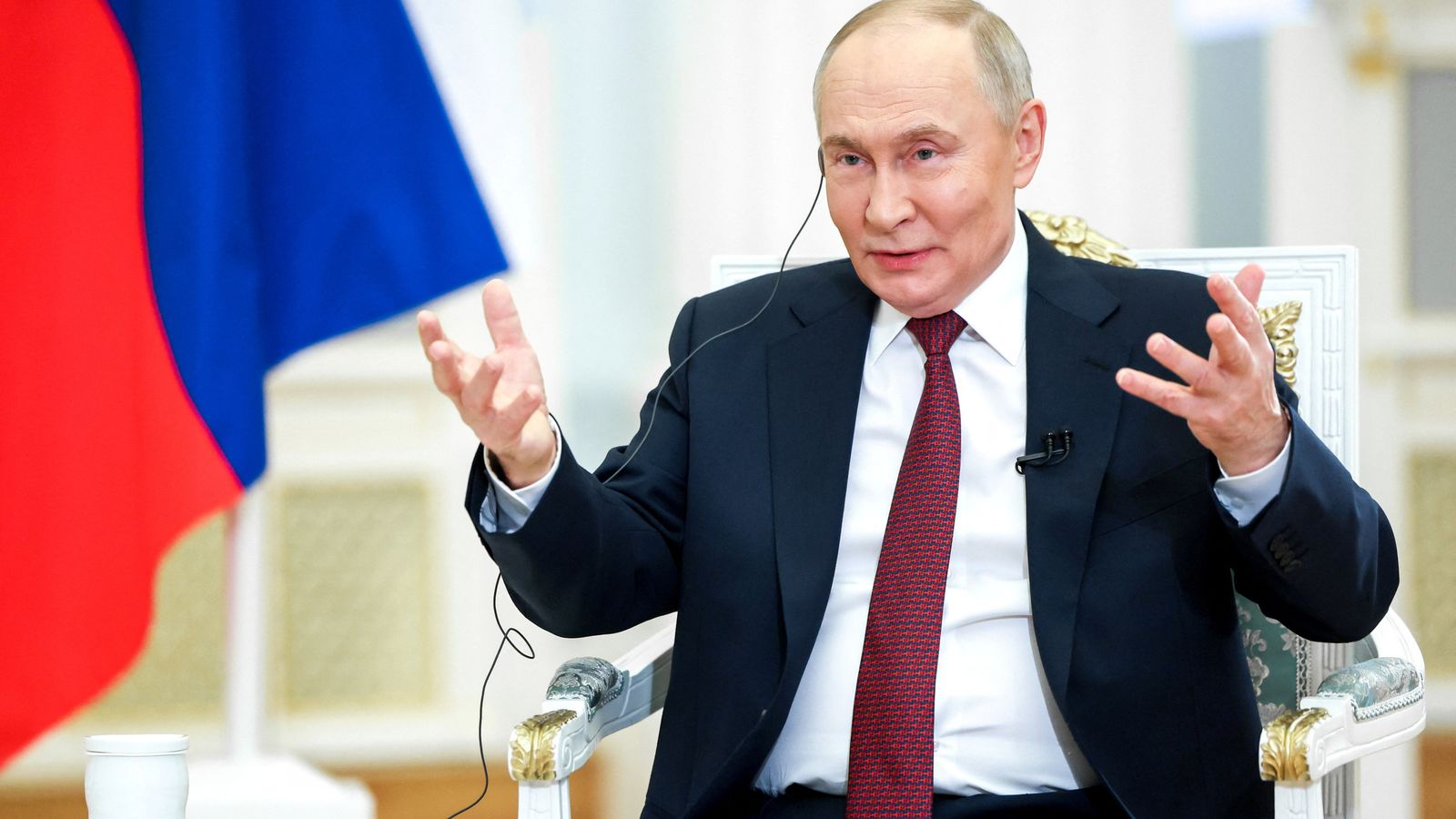
As we’ve been reporting, the EU Commission shared proposals in Brussels yesterday for using frozen Russian assets to fund a reparations loan for Ukraine.
This prompted the Kremlin to warn today that the move would trigger “the harshest reaction” from Moscow (see 14.22 post).
Now Belgium’s Prime Minister Bart
De Wever says he hopes to have positive discussions with German Chancellor Friedrich Merz on the issue tomorrow.
Belgium, which holds the majority of the frozen assets, has previously raised
various legal concerns about the proposals.
“I hope it will be a fruitful conversation and that we will
find a solution that we can then present to Europe over the next
two weeks,” De Wever told local media outlets.
But the prime minster added: “I can still determine my own position, even if there are large, strong neighbours whom I like very much and greatly respect politically, who might ask me (to do) something differently.
“I have only one responsibility: that is the interests of the Belgian taxpayers.”
Speaking about the proposals earlier, Merz said EU members states must share the risks of using the frozen assets to fund the loan (see 10.19 post).
The EU Commission hopes to secure a firm commitment from member
states at a summit on 18 December.