
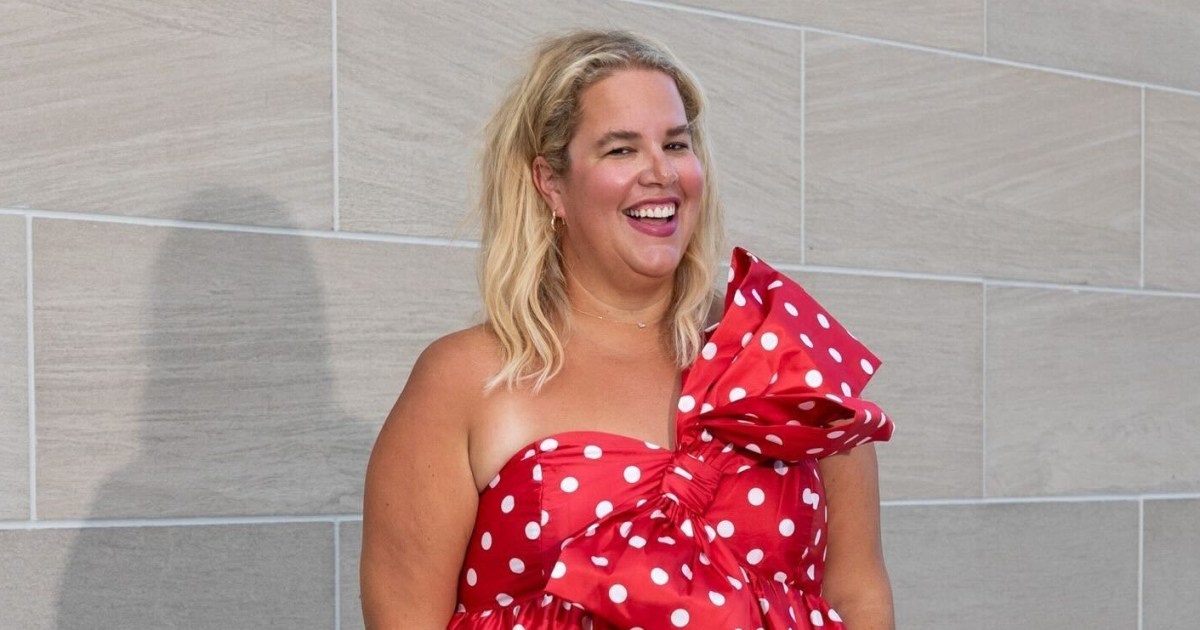
Sabrina Chazen followed the rules. She cut her carbs, counted her calories and walked every day. But after four disciplined months, the scale hardly moved. “I lost maybe a pound,” the 39-year-old content creator tells TODAY.com. “Nothing changed.”
Frustrated, Chazen turned to her doctor for guidance, who recommended an injectable medication as a way to curb her appetite and support her weight loss.
“I thought, ‘This is it, the magic thing that’s going to work where everything else hadn’t,’” she recalls.
But after two years on the drug, she lost roughly 20 pounds, a much smaller percentage of her starting weight than the “average 15%” advertised on the medication’s website.
“It wasn’t magic for me,” she adds.
The limited results left her feeling “like a failure,” despite following the regimen faithfully, she says.
“I took this shot, I did everything right and the weight loss never came. … I’m stuck in this body, and everyone else isn’t.”
One of the most popular classes of weight loss drugs and the kind Chazen tried is called a GLP-1 agonist. These medications, which include Wegovy and Ozempic, work by mimicking the hormone GLP-1, naturally produced by the body after eating, leading to reduced appetite. These drugs are approved by the U.S. Food and Drug Administration to treat obesity, Type 2 diabetes and a few other weight-related conditions.
“Out-Eating” the Medication
Chazen, a former Division 1 water polo player, says she was able to “out-eat” the treatment. While it slightly curbed her cravings, she says it didn’t change her long-standing food habits.
“Because of the popular perception, everyone assumes the weight loss (on GLP-1s) will be dramatic,” Dr. Jennifer Manne-Goehler, an infectious disease and obesity specialist at Brigham and Women’s Hospital in Boston, tells TODAY.com.
But Chazen’s experience underscores a broader and often overlooked reality “that people respond (to weight loss medications) in different ways,” Manne-Goehler adds. And some patients are left feeling ashamed if they don’t lose as much as they’re told they “should,” or if their bodies respond more modestly than those showcased in the media.
“The stigma around weight never ends,” Manne-Goehler says. “People feel like it’s their fault if the medication doesn’t work the way they hoped. That’s something we work against constantly.”
Chazen did notice subtle changes at first. “Maybe the food noise was a little lower, but if there was a pie in the house, or my kids’ fries were in front of me, I’m still eating them,” she says. “I can just eat when I’m not hungry. It’s mindless. That’s my thing. Food is joy and comfort for me.”
In an Instagram reel shared this past October, Chazen, a size-inclusive influencer, addressed the flood of messages from followers recommending GLP-1 drugs after she spoke about her weight being “up.”
“My doctor put me on it two and a half years ago. I lost, you know, 10 pounds, 20 pounds, which is amazing,” she said in the clip. “But I literally could out-eat it.”
While taking the medication and in the years since, Chazen says she’s noticed people around her grow visibly leaner, which also has come with an emotional cost.
“I get mad,” she says. “I’m happy it works for them, but it’s dangerous messaging. Now people think everyone can be skinny.”
As a person in a larger body, she says she’s felt more pressure and fat phobia recently “because people go, ‘Well, you don’t need to be fat anymore. Take the shot.”
When Weight Loss Medications Don’t Work
A spokesperson for Novo Nordisk — the maker of Wegovy and Ozempic, which contain the same active ingredient, semaglutide — tells TODAY.com that clinical trials showed that “most people who used Wegovy have clinically meaningful weight loss.”
“For example, in the 2-year STEP-5 study, 36.1% of adults taking Wegovy lost 20% or more of their body weight, compared with 2.3% of adults taking a placebo. Additionally, in the STEP-1 trial, 47.9% of adults taking Wegovy achieved a weight loss of 15% or more after 68 weeks, compared to 4.8% with placebo.”
However, clinical trials also found that 12-15 % of participants with overweight or obesity taking semaglutide lost less than 5% of their body weight, Manne-Goehler says.
And as GLP-1 medications become more widely used — prescriptions have tripled since 2020 — that could leave a greater number of people surprised when they don’t work as well as they’d hoped.
“Just as individuals respond differently to blood pressure or cholesterol medications, people respond differently to GLP-1s,” Manne-Goehler explains. “We still don’t fully understand why one person loses 5% of their body weight and another loses 20%.”
Chazen’s account of being able to “out-eat” the medication is something Manne-Goehler has seen in her own practice. She says some patients experience “breakthrough” hunger or cravings after months on a stable dose, even if the drug initially worked well.
For another subset of users, she says she’s seen the GLP-1 effect simply diminish over time, leading to a return of food noise or a stronger urge to eat than they had at the start.
Clinical trials have shown that weight loss can plateau around 60 weeks, which, for some people, may mean the hunger signals return.
Ultimately, Manne-Goehler wants people who are overweight or have obesity to understand that a weekly medication injection should be just one part of their treatment plan.
Because obesity tends to behave like a chronic condition that can come back, she says people taking these medications may still need to work with a nutrition professional to figure out what triggers overeating and find forms of movement they can stick with.
“Most patients will need more than one approach over their lifetime,” Manne-Goehler adds. “Medication can be part of the plan, but it isn’t the entire plan.”
The Novo Nordisk spokesperson agrees: “Obesity is a complex disease. You always need a plan that includes behavioral and lifestyle changes, nutrition, meal planning and exercise, but FDA approved tools can be incredibly helpful.”
The spokesperson also explains that Wegovy and Ozempic have uses beyond weight loss, as they are approved by the FDA to treat multiple weight-related conditions, such as heart problems and chronic kidney disease. Novo Nordisk is also testing a higher dose of Wegovy, 7.2 milligrams, according to the spokesperson.
In the end, Chazen says she decided to stop taking the medication because navigating the insurance coverage “just wasn’t worth it” given how little weight she’d lost.
After posting about her experience, Chazen says her inbox filled with messages from people who quietly shared that they, too, had not lost significant weight on GLP-1s. Their stories, she says, made clear that many people are surprised to find these drugs don’t work the same for everyone.
“I realized I wasn’t alone,” she says.