
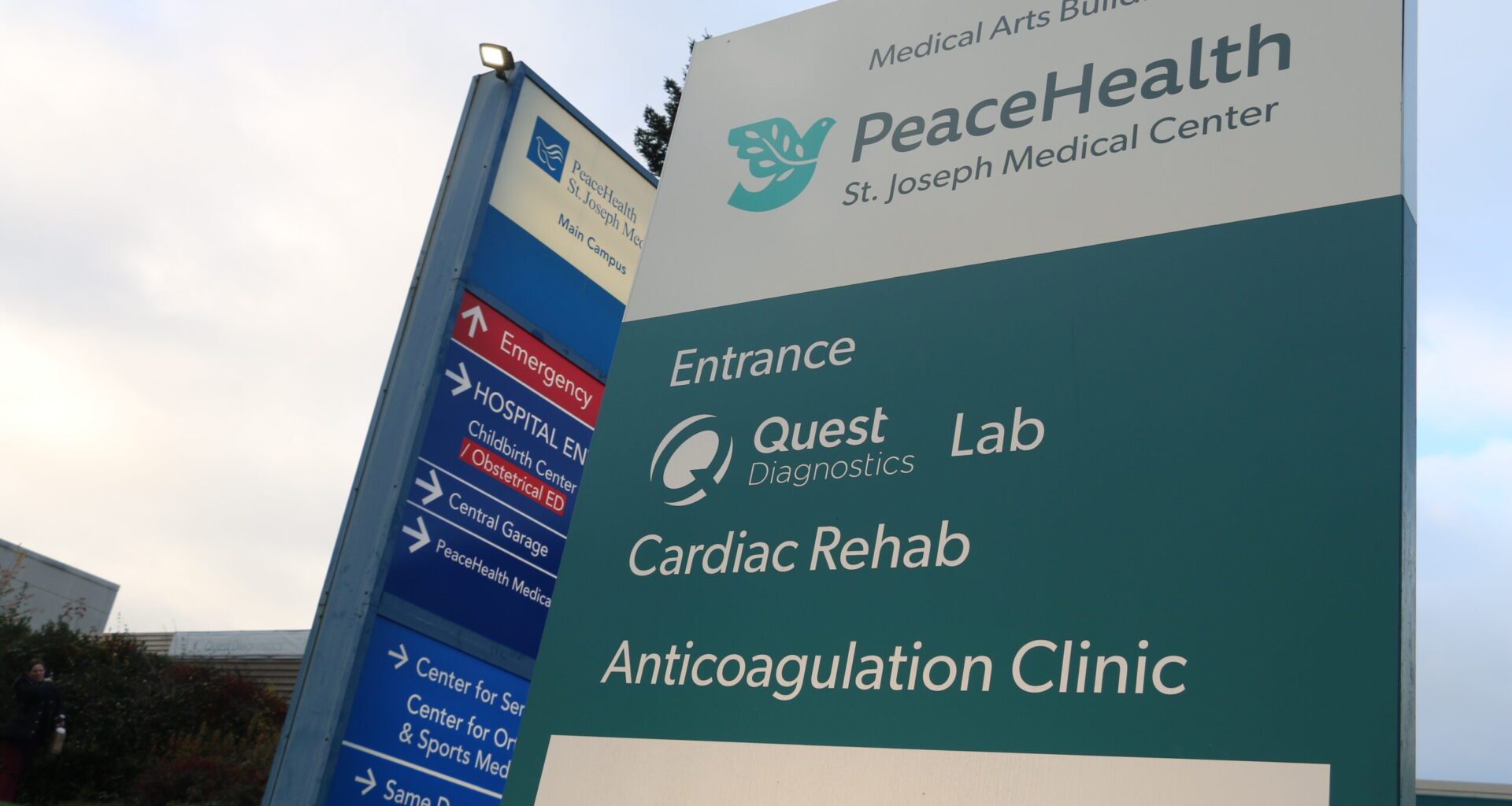
After watching PeaceHealth implement numerous rounds of layoffs this year, patients at the system’s St. Joseph Medical Center in Bellingham said they continue to seek weekly care, while fearing the sustainability and quality of the programs and workforce they depend on.
Dozens of patients in Bellingham signed a petition in recent weeks asking the hospital not to close a portion of its cardiac rehabilitation program, which offers supervised exercise for patients recovering from cardiac events. A supervisor for cardiac rehab in Bellingham was among the 241 positions PeaceHealth cut systemwide in October.
Following the announcement, cardiac patients in the program’s third phase began hearing talk of the entire phase being cut or possibly outsourced, however, PeaceHealth said this week no immediate changes will be made
Jerry Marschke, the head of cardiovascular services at St. Joseph, told patients the hospital needed to close phase three to make room for patients in phase two who need more intense care, according to multiple patients’ recountings of Marschke’s remarks. (Phase two of cardiac rehab is a required 10-week program mostly covered by insurance that occurs closer to a patient’s cardiac event. Phase three is an optional follow-up not typically covered by insurance that patients can utilize for as long as they want to pay to partake.)
After enduring notable cardiac events or procedures, patients can enter multiple phases of outpatient cardiac rehab. For some patients, the third phase, or maintenance, includes weekly vital checks before using the hospital’s supervised bicycles, treadmills and NuStep cross trainer machines during twice weekly open rehab sessions on the hospital’s Squalicum Parkway campus. The program allows mostly elderly people to stay active following cardiac events with a like-minded group, participants say.
A spokesperson for PeaceHealth said phase three “is continuing,” while not specifying in what capacity. On Dec. 4, the spokesperson said the company has heard feedback and isn’t “making any immediate changes.” The hospital’s focus is on phase two and transitioning phase three participants who “are ready” to independent exercise, a spokesperson said. PeaceHealth is “prioritizing resources” for phase two so the hospital “can provide the highest level of support during the period when patients are most vulnerable and require intensive, medically supervised care,” the spokesperson told CDN in a statement.
Matthew Pappas, an attorney in Whatcom County and a phase three patient, wrote to PeaceHealth, saying a closure of the program could run afoul of federal requirements for hospitals receiving Medicaid and Medicare reimbursements.
If PeaceHealth proceeds with the closure without addressing concerns detailed in Pappas eight-page letter to the hospital, he wrote he, “will have no choice but to explore formal complaints with the U.S. Department of Health and Human Services Office for Civil Rights, the U.S. Department of Justice, and relevant Washington state agencies, as well as to consult further about possible legal remedies on behalf of myself and similarly situated patients.”
Patients describe a safe space to exercise
Following a heart attack earlier this year, John Baker started cardiac rehab at PeaceHealth in Bellingham. After receiving a stent and pacemaker, Baker began rehab twice a week for hourlong sessions. Baker was impressed with the staff and environment, he told CDN.
After hearing of potential changes to the program, Baker wrote a letter opposing any changes. Soon, in November, he was speaking with PeaceHealth Northwest Chief Executive Charles Prosper, who assured him the program would not close, Baker said. Prosper said only senior-level staffing would change, according to Baker’s recount of the exchange. (After pastoral education students at PeaceHealth raised concerns in October over cuts impacting their program, they too found themselves on the receiving end of Prosper’s assurances.)
Patients of PeaceHealth’s outpatient cardiac rehab told CDN it is a safe space for older people to exercise with the assurance of supervision. Absent the program, multiple participants said they’d be too fearful to exercise at a public gym without medical supervision.
Suzanne O’Dea, a participant in the program who says she spoke with Marschke, said it is not safe for the more than 100 participants of the phase three program to exercise in conventional gyms.
Marschke said PeaceHealth is considering handing off the third phase program to an outside organization in the community, like the YMCA, according to O’Dea. Multiple participants told CDN they fear a community organization wouldn’t provide the same supervision and assurance from medical staff currently offered at the hospital.
“We are dedicated to being healthy and depend on this opportunity to have the benefit of the highly educated and dedicated staff who encourage and help us,” the patients said in the petition sent to PeaceHealth management.
“The stated justification appears to be cost-cutting and “realignment,” at the same time that PeaceHealth is eliminating hundreds of positions across the system,” Pappas said in his letter. “From the perspective of those of us whose lives and long-term functioning depend on safe maintenance cardiac rehabilitation, this decision appears to prioritize marginal financial savings over patient safety, disability rights, and PeaceHealth’s stated mission.”
Exploring options for Phase 3
PeaceHealth is “exploring options for current Phase 3 patients who are ready to transition to another option more appropriate for long-term, ongoing exercise and maintenance,” a hospital spokesperson told CDN in a statement when asked if they’d inquired with the YMCA or other community organizations to take on phase three, as participants said they were told.
The YMCA is in conversation “with PeaceHealth about how the Y might support cardiac rehabilitation for patients who have been medically cleared to transition into community-based exercise,” Courtney Whitaker, the YMCA’s CEO, said in a statement to CDN. “PeaceHealth would continue to lead the clinical care, while the Y would provide a welcoming environment for supervised exercise, connection, and ongoing wellness.”
Participants of the third phase said they pay less than $50/month to partake in the program through which they access weekly rehab. Due to the low cost of entry, cardiac rehab patients fear the program they cherish has been deprioritized due to the minimal, if any, profit the program earns for St. Joseph in a time of widespread financial upheaval for hospitals.
Should PeaceHealth draw back its cardiac rehab program in Bellingham beyond cutting a supervisor, the hospital wouldn’t be alone, as other hospitals in the region have announced plans to shutter cardiac rehab programs. (PeaceHealth said the cardiac rehab supervisor and others were cut due to challenging financial circumstances facing hospitals.)
“Closing Phase 3 might save a comparatively trivial amount of money in the short term, but it is likely to increase long-term utilization of emergency and inpatient services,” Pappas said.
Owen Racer is a Report for America corps member who covers health care and public health in Whatcom and Skagit counties. Reach him at owenracer@cascadiadaily.com; 360-922-3090 ext. 101. Learn more and donate at cascadiadaily.com/rfa.