
A large Texas oil and gas company broke three federal rules when it improperly transported and dumped hazardous materials while attempting to clean up a 97,000-gallon gasoline spill near the Animas River.
The Environmental Protection Agency cited Houston-based Enterprise Products last month, nearly a year after a gasoline pipeline was found leaking Dec. 5, 2024. The resulting spill contaminated the groundwater near the Animas River, prompted local evacuations and forced some La Plata County residents to move. It is Colorado’s largest refined gasoline pipeline spill since the state health department began tracking such releases in 2016.
“Although significant corrective action progress has been made, cleanup efforts will continue for some time,” the Colorado Department of Public Health and Environment said in a written statement.
Last December, community members reported the ground was soaked in gasoline, prompting a hazmat crew to respond and residents to evacuate homes. Houses in a small subdivision within the boundaries of both La Plata County and the Southern Ute Reservation near the spill received water filters and cisterns.
Some residents had to stay temporarily in hotels or leave the area entirely. Between June and October, 38 Niente LLC purchased five properties near the spill site for a total of about $2.5 million, according to county assessor records.
The company is a subsidiary of Houston-based Enterprise Products, according to the company’s Feb. 1 filing with the U.S. Securities and Exchange Commission.
The cause of the spill was “material failure of the pipeline or welding,” according to the federal Pipeline and Hazardous Materials Safety Administration. The pipeline is part of Enterprise’s Mid-America Pipeline System, which extends through Texas, New Mexico, Wyoming and other states.
The spill is located about half a mile from the Animas River south of Durango, raising concerns that the contaminants could reach the river.
The underground mass of contaminants, called a plume, is mainly moving south on top of a mesa, not southwest toward the river, officials say.
The state, tribal and federal officials are closely monitoring the plume, which was roughly 2,400 feet long and, at its widest, is about 1,000 feet wide, CDPHE said Thursday.
Violations prompt inspection
In September, Enterprise’s contractor, GHD, self-reported problems with how 5,200 gallons of hazardous, gasoline-contaminated wastewater was handled.
The Southern Ute Indian Tribe shared concerns in early November about how Enterprise was managing hazardous waste from the spill, the tribe said in a Nov. 21 news release.
The EPA sent a notice of noncompliance to Enterprise on Nov. 21 saying the company needed to address several violations. State, tribal and federal officials inspected the cleanup site Tuesday to make sure the Enterprise was in compliance.
In one instance, the company shipped 5,200 gallons of hazardous, gasoline-contaminated wastewater to an oilfield waste disposal site in New Mexico run by Gandy Marley.
Enterprise didn’t properly label the waste, which violated federal requirements, according to an EPA noncompliance notice.
A sample of the wastewater had a benzene concentration of 4.8 milligrams per liter. That’s over nine times the benzene toxicity limit of 0.5 milligrams per liter.
Benzene is a component of crude oil products. Short-term exposure can cause headaches and nausea, and longer-term exposure poses a threat of leukemia and other conditions, according to CDPHE.
Enterprise also used the wrong transport documentation, marking it as nonhazardous oilfield waste disposal, rather than hazardous waste. That broke another federal rule. The New Mexico facility was also not permitted to dispose of hazardous waste, which violated a third federal rule, the notice said.
“Enterprise has since communicated to EPA that they have corrected their process to prevent this from happening again,” the EPA said in a written statement.
The EPA is working with the CDPHE to make sure that the cleanup meets federal requirements. There is still a lot of work to do, and the cleanup is mainly happening on-site, the state agency said.
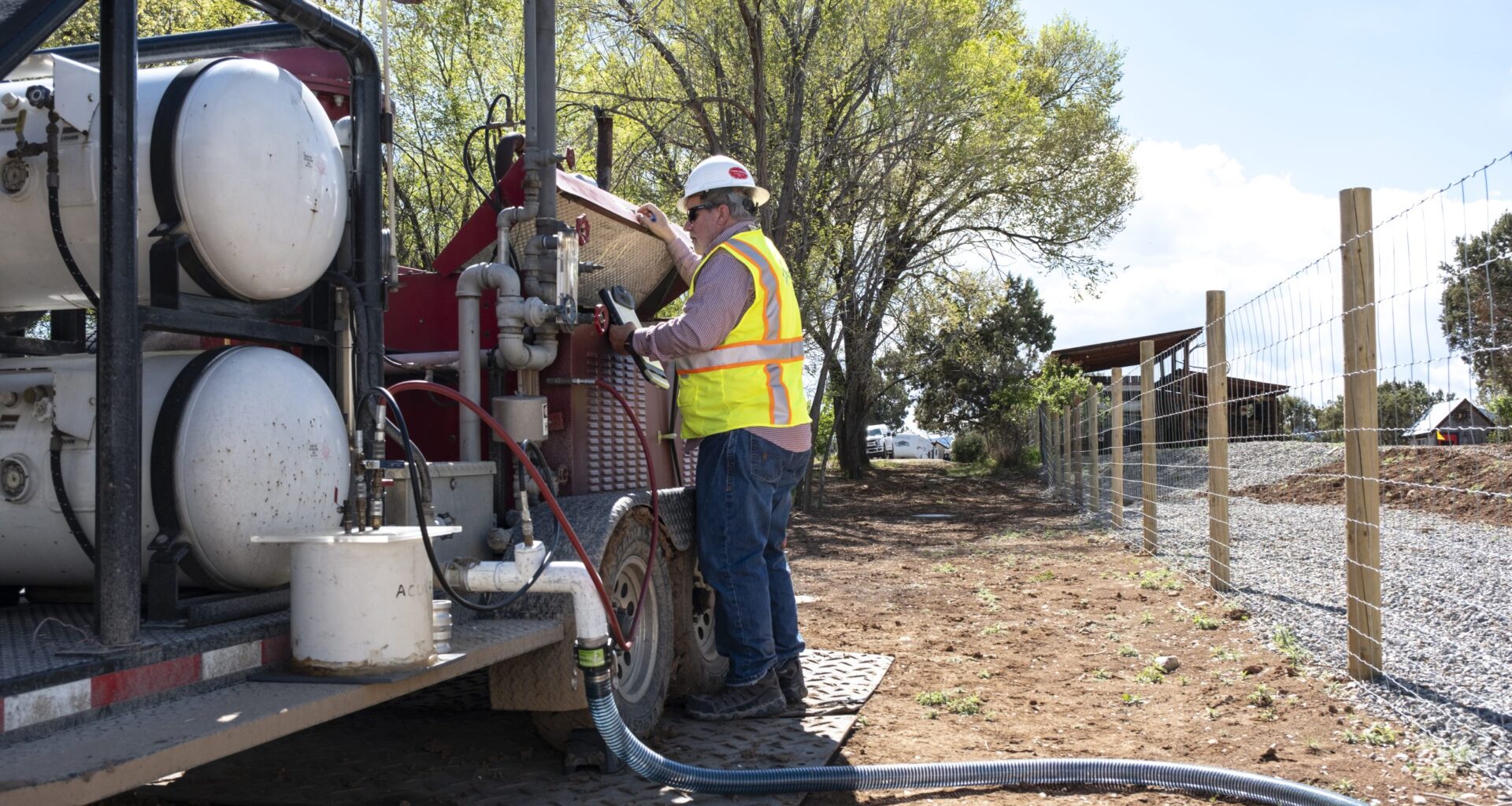
Workers are injecting oxygen underground to nurture aerobic bacteria that can break down dissolved gasoline, a process called biosparging. They’re using wells and vacuums to cut down on the amount of gasoline absorbed into the soil.
The state health department required Enterprise to revise on-site work plans to make sure they comply with regulations. They also required the company to do more hazardous and nonhazardous waste training for on-site workers.
“We take instances of non-compliance very seriously,” CDPHE said in a written statement.
Type of Story: News
Based on facts, either observed and verified directly by the reporter, or reported and verified from knowledgeable sources.