
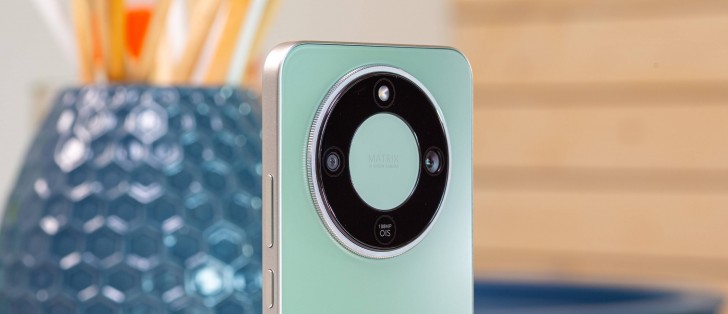
The Honor Magic8 Lite packs a 6.79-inch AMOLED screen with 10-bit color depth and 1200 x 2640 pixels (427ppi). It supports a 120Hz refresh rate and HDR10 streaming.
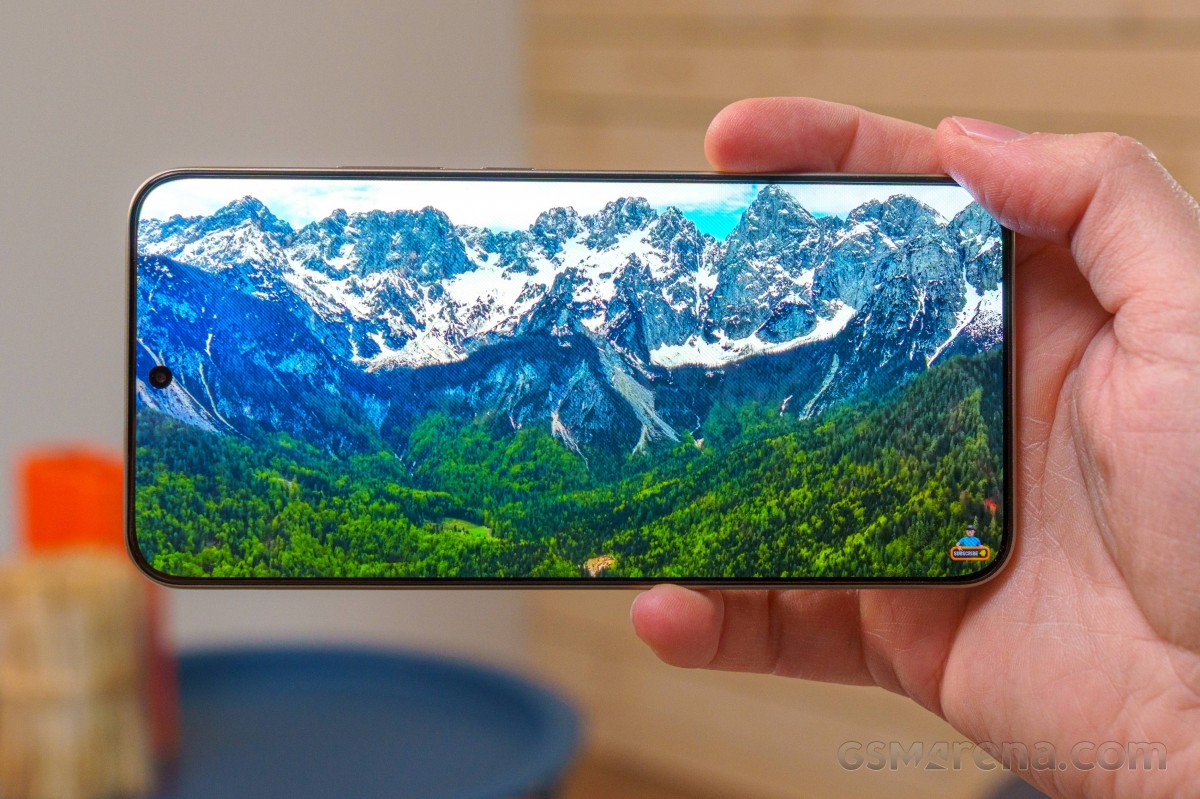
Honor is advertising 800nits of typical, 1,800nits of high brightness, and 6,000nits of peak brightness.
Our display test confirms the typical and maximum automatic brightness – we captured 788nits for maximum manual and 1,771 nits for maximum automatic brightness. The minimum brightness we measured on a white screen was just 1.6nit.
We couldn’t achieve brightness higher than 1,800 nits by lowering the white patch on the screen, though, so if it’s indeed possible, it probably requires HDR content of some sort.
Refresh rate
The screen supports up to 120Hz refresh rate. There are three modes to choose from inside the Display Options menu – Dynamic, Standard, and High.
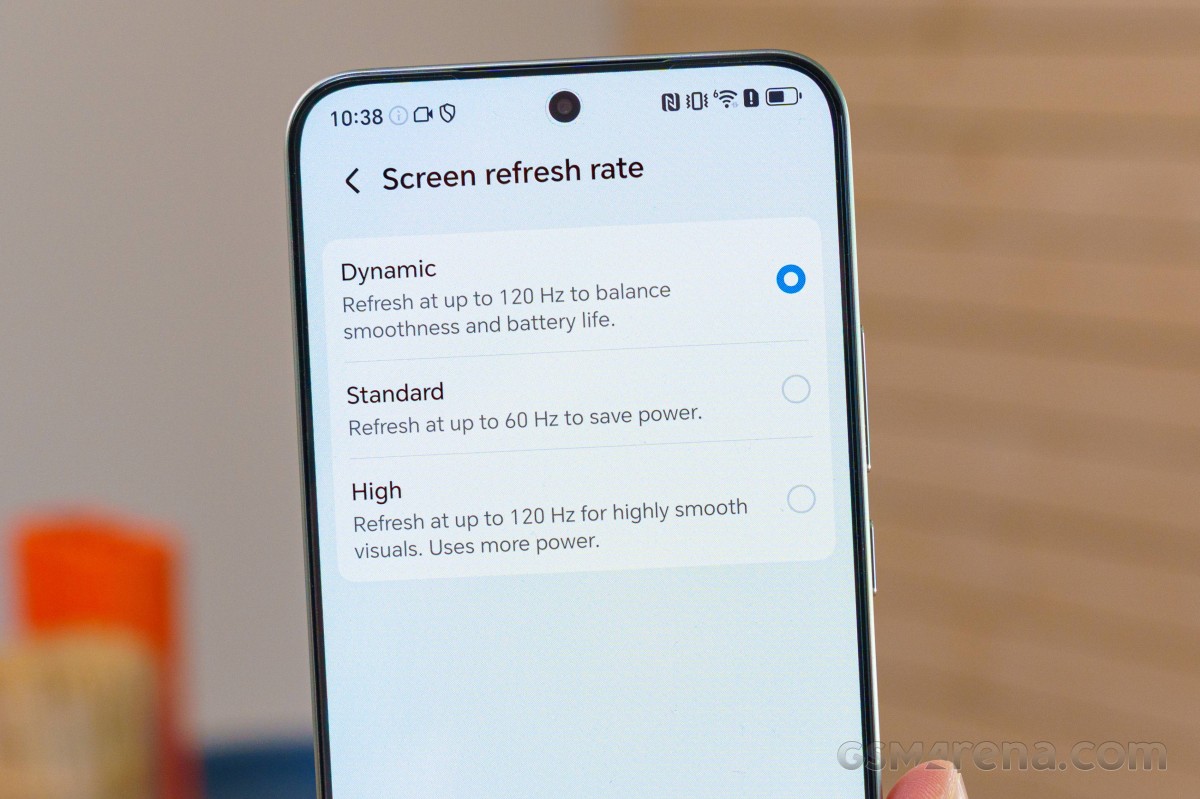
Dynamic switches between 60Hz and 120Hz depending on the app – it uses 60Hz for the idle screen, and also for apps like Play Store, YouTube, Netflix, Music, etc. We also saw it use 90Hz inside Chrome.
High uses 120Hz across all compatible apps and dials down to 60Hz when idling.
Finally, the Standard mode is always fixed at a 60Hz refresh rate.
HDR
The Honor Magic8 Lite screen has been certified for HDR10 and HDR10+ content. And it does stream HDR10 across YouTube and Netflix, among other platforms.
There are two interesting options part of the Video Enhancer. The first one is Super Dynamic Display – enhances brightness and contrast on the go in apps like YouTube, Netflix, Video Player and Gallery. It does a minor but visible improvement, but it also increases the battery draw.
The second one is Vivid Display, which makes for a more vibrant picture with improved color and clarity across streaming apps like Netflix and YouTube, but it also increases the battery draw. And given how vibrant the picture is already in those mentioned apps, we did not feel like it needed more punch.
The Honor Magic8 Lite packs a 7,500 mAh Silicon-Carbon battery. That’s quite large, and we expect pretty good battery life thanks to the quite efficient Qualcomm Snapdragon 6 Gen 4 chipset.
We ran our standard slew of tests and got a great Active Use Score of almost 18 hours.
The Honor Magic8 Lite supports up to 66W Honor SuperCharge. The phone ships with a 3A-rated cable, but without a charger.
To get the maximum 66W, you will need to purchase the Honor 66W SuperCharge combo with the Honor adapter and 6A-rated cable. Getting only the adapter and using your phone’s cable will not charge the phone faster than 30W.
We carried out our charging test with the 66W Honor SuperCharge adapter and a 6A-rated USB cable.
Speakers – loudness and quality
The Honor Magic8 Lite features two stereo speakers – one at the bottom, and an earpiece pulling a double duty with front- and top-facing outlets. Naturally, the earpiece is a bit quieter, but the audio balance is quite alright.
The Magic8 Lite reaches 100% volume, and then there is another 400% boost step. That’s a marketing trick, of course, but on some phones this last step sounds bad. Well, that’s not the case on this Honor, and if you need it, we’d say go for it. It does bring the loudness from Good (on the verge of Average) to Very Good, and you can hear the difference.
The sound has good vocals, a well-presented high-frequency range, and we can even hear some bass.
Use the Playback controls to listen to the phone sample recordings (best use headphones). We measure the average loudness of the speakers in LUFS. A lower absolute value means a louder sound. A look at the frequency response chart will tell you how far off the ideal “0db” flat line is the reproduction of the bass, treble, and mid frequencies. You can add more phones to compare how they differ. The scores and ratings are not comparable with our older loudspeaker test. Learn more about how we test here.
Connectivity
The Honor Magic8 Lite is a dual Nano-SIM device, with support for simultaneous SA/NSA Sub-6 5G on both slots. Unfortunately, there is no eSIM support. For positioning, the phone has GPS, GALILEO, GLONASS and BDS support. Local connectivity is handled by dual-band Wi-Fi 6, plus Bluetooth 5.2 with LE, aptX HD and aptX Adaptive support. There is NFC on board. No IR blaster and no FM radio are present, though.
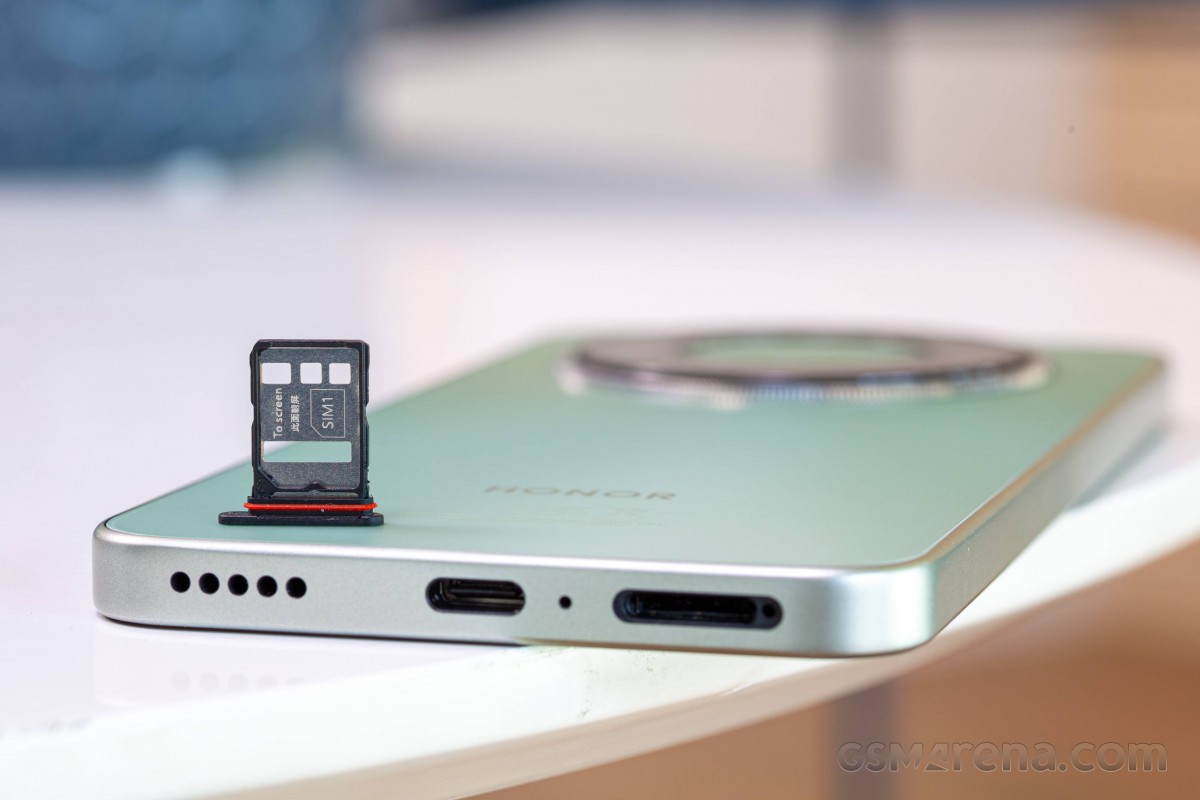
The Type-C port is backed up by a simple USB 2.0 data connection, which means a theoretical maximum of 480 Mbps. There is OTG/Host support. No video output over USB Alt mode, however or anything fancy of the sort.
The onboard sensors include an STMicro lsm6dso accelerometer and gyroscope combo, a QST qmc6308 magnetometer and compass combo, an amsAG tsl2510 ambient light sensor and what appears to unfortunately be a virtual proximity sensor – QTI UPD Proximity Sensor.