
One of the most striking comments from the aftermath of the January 6, 2021, Capitol riot came from Republican Sen. Ben Sasse of Nebraska. Citing private conversations with senior White House officials, the then-senator said President Donald Trump was confused as the riot was touching off.
Not confused about what was happening down Pennsylvania Avenue, mind you, but about why those officials weren’t celebrating it.
“As this was unfolding on television, Donald Trump was walking around the White House confused about why other people on his team weren’t as excited as he was, as you had rioters pushing against Capitol Police trying to get into the building,” Sasse said the senior officials told him. Sasse added: “He was delighted.”
This was a Republican senator saying a GOP president actually enjoyed seeing people violently storm the Capitol on his behalf.
But it’s hardly the only indicator that Trump sees potential utility in political violence or the threat thereof.
And repeatedly in recent weeks, we’ve seen this callousness rear its head in some pretty remarkable ways.
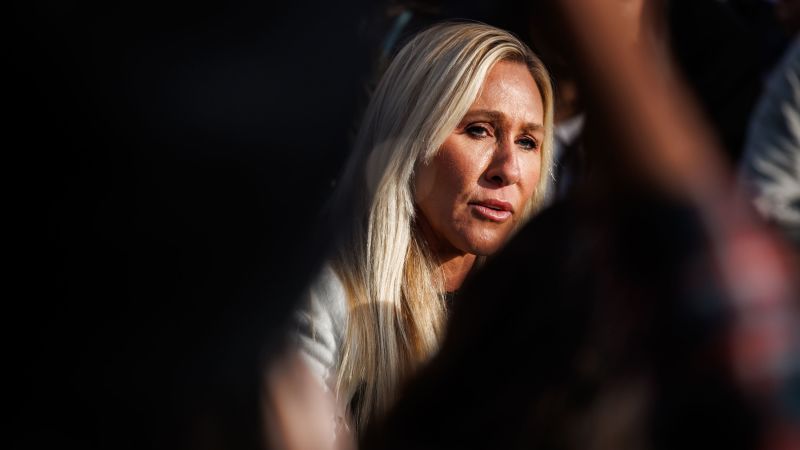
Republican Rep. Marjorie Taylor Greene Georgia has cited an escalating number of threats she’s gotten from the right since she has begun criticizing Trump. And she has tied the threats directly to the president’s rhetoric, in which Trump has labeled her a “traitor.” She said this kind of language could “put my life in danger.”
But when a reporter brought that to Trump’s attention last month, he seemed unmoved. In fact, he quickly used the epithet again.
“Marjorie Traitor Greene,” Trump said. “I don’t think her life is in danger. I don’t think — frankly, I don’t think anybody cares about her.”
Greene made a similar case in an interview that aired Sunday on CBS’ “60 Minutes.” She said the threats directed at her often use the nickname Trump coined, including threats on her son’s life.
“Those were death threats directly fueled by President Trump,” Greene said.
Greene said she brought this directly to Trump’s attention. She told “60 Minutes” that Trump’s response was “extremely unkind.” She then added in a social media post that Trump “responded with harsh accusatory replies and zero sympathy.”
And Trump has now also responded to this episode just like he did the first — by re-upping the nickname that Greene says has fed these threats.
In a post Monday morning, he called her “Marjorie ‘Traitor’ Brown (Green turns Brown under stress!)” and attacked “60 Minutes” and CBS’ parent company, Paramount, for giving Greene a platform.
The situation echoes another that hasn’t gotten as much attention but follows a similar roadmap.
Republicans in the Indiana Senate this week are considering redrawing their state’s congressional map under intense pressure from the administration and from Trump personally. Amid that pressure, about one-fourth of the GOP senators say they have gotten threats or been the subject of swatting or other forms of intimidation. And those are just the members we know about.
(“Swatting,” i.e., calling in a situation that requires an armed response from a SWAT team at a lawmaker’s home, can be particularly dangerous.)
The state Senate has previously resisted this pressure. But the situation raises the prospect of a very troubling precedent in which these threats might convince lawmakers to reverse themselves.
And there’s one very important politician who appears rather unbothered by that potential precedent: Trump.
In fact, the same day Trump shrugged off Greene’s comments about the threats she was facing last month, the president attacked a pair of Indiana GOP senators. Within hours, one of them was swatted.
Despite this, the following day Trump resumed his attacks on the other lawmaker he had cited, state Senate President Rodric Bray, and said he would endorse against anyone who opposed him on the issue.
Unlike the Greene situation, it’s not clear that Trump is actually aware of the threats that have cast a pall over the process in Indiana. But it’s difficult to believe they wouldn’t have registered with someone in the White House. We’ve seen strong statements on this from Indiana’s GOP governor, bipartisan leaders of the state legislature, and plenty of others. And this weekend’s story from CNN’s Eric Bradner makes clear it’s a very big deal locally.
Indeed, at some point it’s probably worth asking — again — whether Trump actually sees utility in such threats, as long as they help get him what he wants.
That might seem pretty unthinkable, especially since Trump himself was a victim of political violence with his attempted assassinations last year in Butler, Pennsylvania, and South Florida.
But both before and after that, we’ve seen plenty that could lead one to draw such conclusions.
Similar to the situation with Greene, Trump has downplayed the threat that his first vice president, Mike Pence, faced on January 6, 2021. Trump told ABC News’ Jonathan Karl that he didn’t think Pence was actually in any danger as the president’s supporters chanted “Hang Mike Pence.” Trump also suggested those chanting such things had good reason to be upset, calling it “common sense.”
And even after the assassination attempts, Trump has done some things that could be read as legitimizing political violence.
When he was sworn in this year, one of the first things he did was pardon virtually everyone who rose up on his behalf on January 6 — including those who assaulted police.
And recently, Trump suggested his political opponents face possible execution. When some Democratic lawmakers cut a video urging military service members not to obey illegal orders, Trump accused them of sedition and treason and noted that can carry the death penalty.
The Democratic lawmakers say they’ve been subject to extensive threats.
“I’m not threatening them, but I think they’re in serious trouble,” Trump told Fox News Radio on November 21. “They’re in serious trouble. In the old days, it was death.”
Trump has also repeatedly spoken in recent years about the idea of justified political violence from his supporters. That includes in September when he suggested that the political right, unlike the left, was “radical” for good reasons.
“I’ll tell you something that’s going to get me in trouble, but I couldn’t care less,” he said. “The radicals on the right oftentimes are radical because they don’t want to see crime. … They’re saying we don’t want these people coming in.”
One of the unhappy realities of our modern politics is that these kinds of threats probably do prevent others from speaking out like Greene is, and they probably do make it more likely that Indiana will pass the map that Trump wants.
Greene’s comments, like Sasse’s nearly five years ago, seem to suggest he might just be OK with that.