
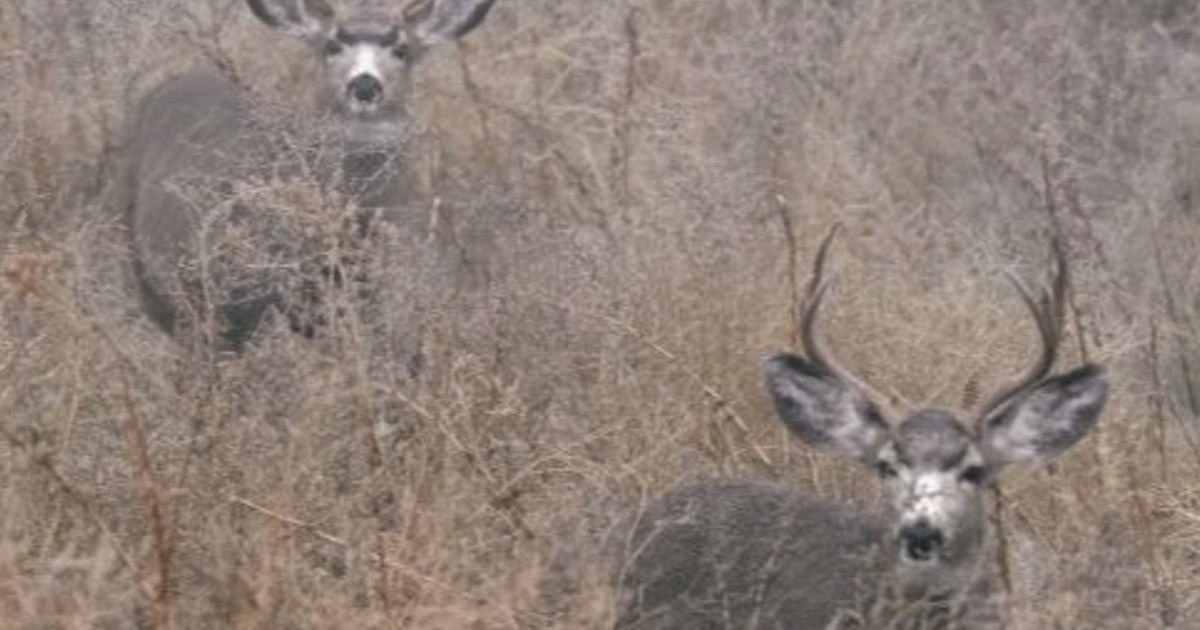
CLE ELUM – Rocky Mountain mule deer—one of the most recognizable species of the American West—remain central to the ecology, culture, and rural economies of eastern Washington. With more than 120,000 state-licensed deer hunters and an annual mule deer harvest between 9,500 and 14,000 animals, the species supports communities from the Cascade crest to the Idaho border. Now, the Washington Department of Fish and Wildlife (WDFW) is releasing a sweeping updated management plan designed to preserve those herds for generations to come, just as new aerial surveys get underway in Kittitas and Yakima counties.
New Aerial Surveys Underway This Week
WDFW confirmed that mule deer surveys by aircraft are taking place this week in the region, beginning south of Cle Elum and continuing toward Cleman Mountain near Naches, including the Yakima River Canyon. The flights—dependent on weather conditions—are part of the agency’s ongoing effort to refine population estimates and improve understanding of herd composition.
Biologists will use the data collected to inform future deer management and conservation decisions, contributing directly to the goals outlined in the new statewide mule deer plan.
A Species of Cultural and Economic Importance
Mule deer have long been woven into Washington’s heritage. They provide food and cultural value to tribal communities, support wildlife viewing and photography, and remain a cornerstone of the state’s hunting traditions. Deer hunters also bring an economic boost to rural communities every fall, particularly in areas where mule deer are abundant.
Shift to a New Management Framework
For more than 124 years, Washington has regulated deer harvest using Game Management Units (GMUs). While GMUs will remain the basis for season-setting and permit allocation, WDFW is introducing a new, broader organizational structure: seven Mule Deer Management Zones (MDMZs). Each zone groups GMUs based on terrain, habitat, and population characteristics rather than county lines.
This approach, officials say, supports more accurate population-level management and better coordination of conservation strategies.
Strengthening Population Monitoring
The agency acknowledges that mule deer surveys vary greatly across eastern Washington depending on terrain and vegetation. Open shrub-steppe landscapes often allow for aerial monitoring, while forested or rugged areas require ground-based surveys on foot or by vehicle.
The new plan commits to refining survey methods for each management zone by 2021, including tracking age and sex ratios, fawn survival, and pre- and post-hunt population trends. The aerial surveys underway in Kittitas and Yakima are part of that effort to close longstanding data gaps.
Habitat Pressures and Climate Challenges
Although mule deer are adaptable, their habitat faces increasing stress. Wildfire severity, land-use changes, and climate impacts threaten key seasonal ranges. Protecting and improving habitat is among the plan’s highest priorities, with a target to enhance or maintain at least 10% of critical mule deer habitats in each management zone by 2027.
Growing deer populations in and around urban areas have also created challenges for several communities, prompting the plan to call for long-term solutions in at least three cities by 2020.
Public Engagement and Safety Initiatives
The plan increases emphasis on educating the public about mule deer conservation. WDFW intends to boost public outreach, establish at least two new mule deer viewing sites with informational kiosks by 2021, and elevate awareness around deer-vehicle collisions. Town hall-style meetings are planned in each management zone by 2023 to identify roadway hotspots and discuss mitigation strategies.
Hunting Regulations and Enforcement
WDFW aims to maintain stable or increasing mule deer populations while ensuring equitable hunting opportunities across modern firearm, muzzleloader, and archery seasons. The agency has set goals to achieve 90% compliance with hunting regulations and prevent increases in poaching or illegal commercialization of mule deer parts.
Funding and Spending Priorities
Meeting the plan’s objectives will require an estimated $935,000 in annual investments, focused on:
Habitat management: $720,000
Population monitoring: $175,000
Research: $30,000
Public education/outreach: $10,000
WDFW is also seeking a 10% funding increase for mule deer management and research by 2022 and plans to integrate mule deer into a multi-species predator-prey study.
Looking Ahead
The new aerial surveys underway this week highlight the state’s commitment to data-driven wildlife management. Combined with the goals outlined in the comprehensive mule deer plan, WDFW says these efforts will help sustain Washington’s mule deer herds—and the communities, cultures, and ecosystems that depend on them—for decades to come.