
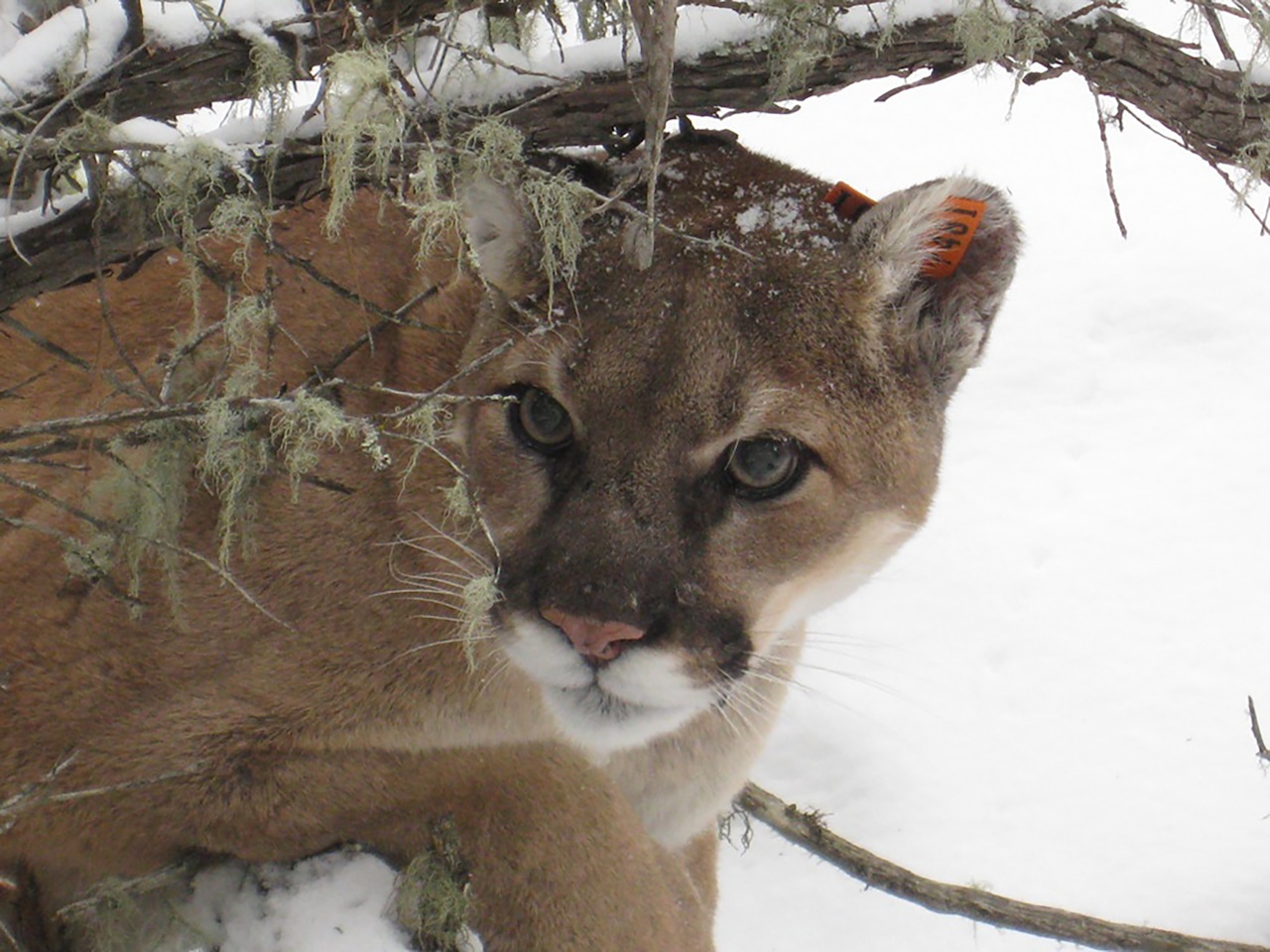
HOUGHTON, Mich. – In a first-of-its-kind incident, state wildlife officials have confirmed a cougar was hit by a vehicle in Michigan’s Upper Peninsula.
The state Department of Natural Resources (DNR) confirmed through DNA analysis that a motorist on M-26 in northern Houghton County struck a male cougar after dark on Nov. 15, the annual deer season firearms opener.
Conservation officers responded to the scene and searched the surrounding area but didn’t find the animal. Though they did collect a small tuft of hair from the vehicle and the outer sheath of a single claw.
Related: Cougar cubs found in Michigan for first time in more than a century
DNR wildlife officials returned the next morning to search the area but didn’t find any additional evidence of the large wildcat.
“We do not know if the animal survived the collision since it was able to at least leave the immediate area,” said Brian Roell, DNR large carnivore specialist.
He said the DNR sent the biological material to a laboratory in Montana for additional DNA research into the animal’s geographic origin. It will be a few months before results are returned.
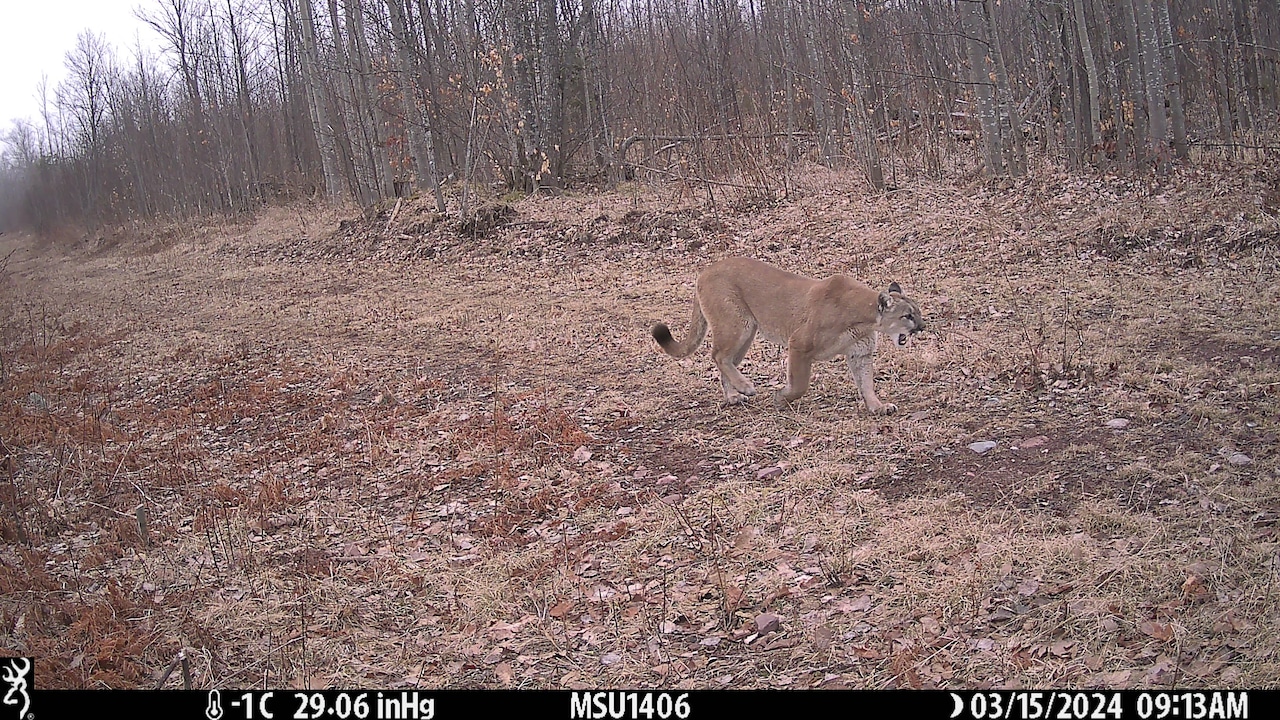
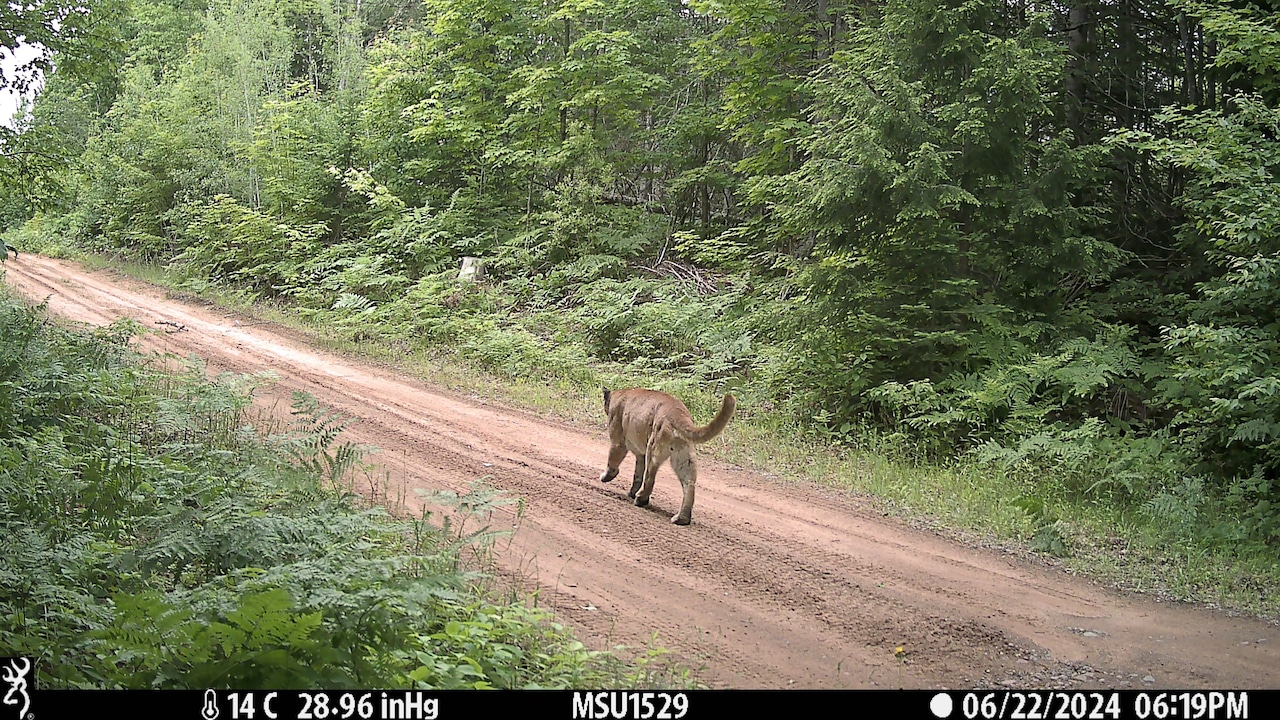
1/4
Cougar sightings confirmed in Michigan’s Upper Peninsula
This year has already marked a record high number of confirmed cougar sightings in Michigan in a calendar year. So far in 2025, state scientists confirmed 30 cougars in 29 official sightings; a pair of young cubs were spotted together on March 6 in Ontonagon County.
This year’s confirmed cougar activity in Michigan surpassed last year’s record by six sightings and seven animals, and there are three weeks of the calendar year yet to go.
Cougars are sometimes called mountain lions, pumas, or panthers and the species disappeared from the Michigan landscape more than a century ago. The large cats began to be spotted again in 2008 and confirmed sightings in Michigan have trended upward over the last six years, according to DNR data.
Related: Michigan cougar sightings hit record high in 2025, DNR confirms
The first year of double-digit cougar sightings in Michigan was 2019 when 11 of the animals were spotted. In the last five years, DNR officials have confirmed different cougar sightings in two places on the same day at least six times.
Michigan wildlife officials have for years thought cougars spotted in the U.P. were young males that migrated into the region from expanding western populations in the Dakotas. However, officials said that increasing trail camera evidence and living kittens now being found in Michigan suggest there may be some resident animals today.
Cougars are large, tan-colored cats that average between 6.5 and 7.5 feet long with a long tail – about one-third of their body length. The species prefers forested or partly forested habitats near streams or rivers and requires a healthy prey base of primarily white-tailed deer but will also consume smaller mammals.