
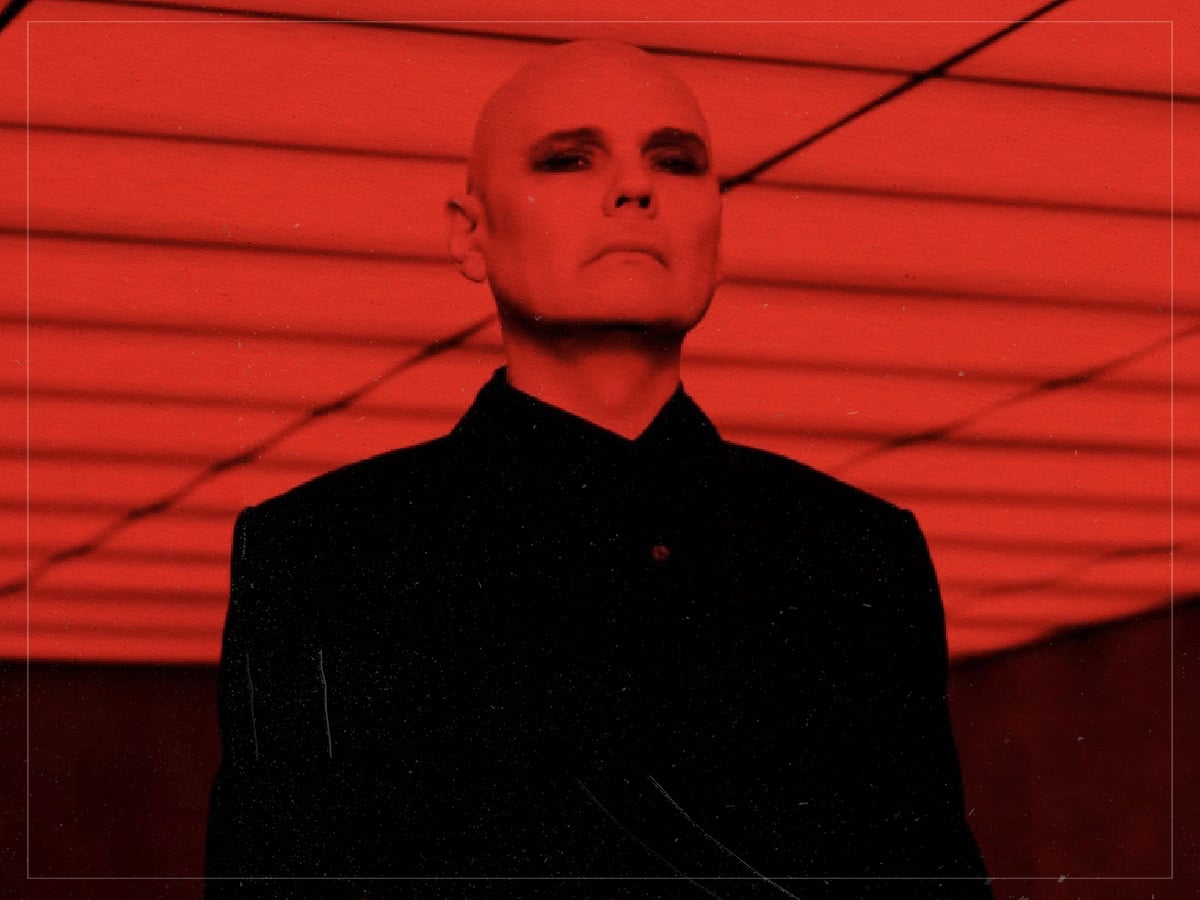
(Credits: Far Out / Billy Corgan)
Wed 10 December 2025 20:30, UK
In 1992, the grunge quartet The Smashing Pumpkins had just wrapped touring their debut album, Gish, but things were far from smooth. Frontman and primary songwriter Billy Corgan was battling writer’s block and severe depression – until he penned one of the band’s most iconic and sarcastic tracks, that is.
The band’s lead singer and guitarist made no secret of his sociopathy. The only constant member recounted feeling pressured by their record label to complete their 1993 album Siamese Dream, and the international gaze added to the mix as he felt the need to follow in the successful footsteps of the likes of Nirvana in marking the Rock and Roll Hall of Fame with alternative music.
On an episode of VH1’s Storytellers in 2000, Corgan said, “I couldn’t write a good song for about eight months… Suddenly, I found myself confronted with all these demons I thought I locked away. I entered into this very horrible period of my life. I lived in a parking garage for a while, and I was completely obsessed with killing myself; it became my primary preoccupation.”
From there, he wrote Siamese Dream’s hit song ‘Today’ at “this critical juncture of my life”. Now (bizarrely) a professional wrestling promoter, he looks back at it as a hopeful song, noting, “At this point in my life, it’s a positive song, it’s about survival”.
The song’s lyrical hook, “Today is the greatest day”, brought many to be uplifted by the song’s message, given that it veered quite markedly away from The Smashing Pumpkins’ usually disheartening tune.
 Billy Corgan and The Smashing Pumpkins. (Credits: Far Out / Paul Elledge)
Although listeners find it meaningful, Corgan never thought much of this song. He considers it a light pop number, even though it lifted him out of the dark pressure he was feeling to live up to expectations of an up-and-coming band.
“I was really suicidal. I just thought it was funny to write a song that said today is the greatest day of your life because it can’t get any worse,” he relayed offhandedly about the track.
He did almost all of the instrumentation himself, partly because of his issues with giving up control, but also because drummer Jimmy Chamberlain had become unreliable and uncooperative, battling demons himself as he became swallowed by drug addiction. Although Corgan’s tempestuous authority could be misinterpreted as folly, he willed the band to stay together and continue their road to success, which was no small feat in a nebulous state of depression.
Thanks to technological advancements in the ’90s and digital tools becoming available, the depth of his despair and solemn lyrics are easily contrasted by the melodic, layered guitar and enigmatic drums, allowing the band to explore grunge out of its traditional raw aesthetic into something deeper. The inexhaustible enthusiasm in the song drew listeners in to forget their own sorrows, and when the terrific juxtaposition of sound and meaning that is ‘Today’ became a radio hit, it was hard to believe the irony behind the breakout triumph.
The struggle to create something good being smeared in a song that actually went far in lifting Corgan out of his stupor, also drove him into professing his healed melancholia in the band’s next album, Mellon Collie and the Infinite Sadness, in 1995, and since then, there’s been no looking back to the dark cloud.
Related Topics