
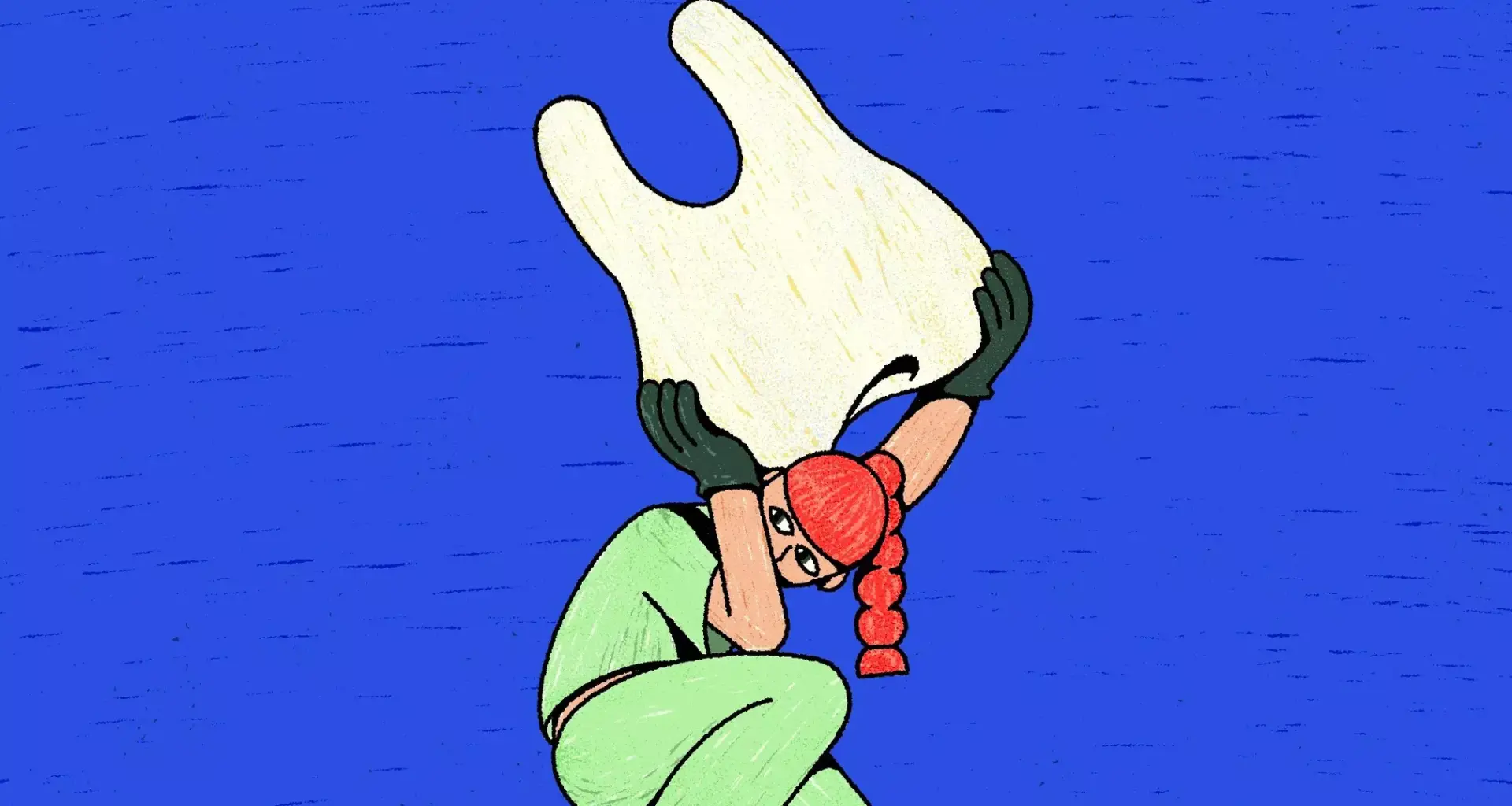
In Elena’s 15 years as a dental hygienist in San Francisco, she has polished the teeth of Fortune 500 CEOs before board meetings, flossed cab drivers between rides, and cleaned molars for cancer patients awaiting chemo appointments.
It wasn’t always the plan. When Elena — who provided only her first name to avoid employment repercussions — graduated from college in 2008, she was eager to break into the fashion industry. But when the Great Recession dried up job prospects, she pivoted, earning an associate’s degree and becoming a dental hygienist. “I wanted a job that was recession-proof and couldn’t be outsourced abroad,” said Elena, who is in her 40s and has worked in several dental offices across the city.
Today, the field she chose for stability faces a shrinking workforce, especially in the Bay Area, where there is only one hygienist for every 2.5 dentists, though most practices function best with three to four hygienists per dentist. Even high wages can’t stem an outflow caused by a lack of support, an unsustainable workload, and policies that are straining the industry. For patients who already dread a routine trip to the dentist, that means longer waits and even more painful appointments as less-qualified staff pick up hygiene duties.
At most dental offices, hygienists handle routine, preventative care like cleaning, polishing, and the gentle reminder to floss regularly.
Between 2019 and 2023, the number of registered dental hygienists in seven Bay Area counties fell 8.6% from 3,262 to 2,980, even as the number of licenses statewide increased by 426, according to the California Department of Consumer Affairs.
The shortage has driven up compensation. Registered dental hygienists in the Bay Area earn an average hourly wage of about $69 or $142,751 annually for full-time work, according to Revelio Labs. Even a three-day workweek pays well above the region’s median annual earnings (opens in new tab). But many hygienists work part time and receive no benefits.
“Once you’re paid top dollar for being a hygienist in the Bay Area, that’s it. It caps out at a certain point, so there’s no real upward mobility of getting bumped up,” says Karen Markopoulos, a hygienist in San Francisco.
Elena has been planning her exit, working toward a master’s degree in nutrition, teaching hygiene classes, and networking with former colleagues who work for dental industry companies like Sonicare.
Benefits and burdens
Unlike other roles in healthcare with similar educational requirements, like nurses, many hygienists do not benefit from employer-sponsored health insurance, sick leave, and retirement accounts.
Markopoulos, who has two children, is an exception as she works part time but collects retirement and sick benefits. Most of her peers, she says, must choose between caregiving responsibilities and qualifying for benefits.
Listen toThe Standard Podcasts
Pacific Standard Time1 day ago

Nationally, women make up 94% of registered dental hygienists but only 38.8% of dentists, according to the Bureau of Labor Statistics (opens in new tab), reflecting the history of male dentists recruiting their wives and daughters to clean patients’ teeth throughout the early and mid-20th century. Part-time schedules are crucial to manage the physical demands of a job in which carpal tunnel and repetitive strain injuries are commonplace.
“You’ll find yourself in really awkward positions for hours,” says Katie, who practices in Santa Cruz and provided only her first name. “Your neck’s craned, you’re twisting your torso. … You’re doing repetitive wrist movements all day, every day.”
 Dental hygienists spend hours sitting in an awkward position. | Source: The Washington Post / Getty Images
To cope, hygienists squeeze in stretches between back-to-back appointments or pay out of pocket for physical therapy and ergonomic tools. Others scale back their hours, disqualifying them from receiving medical benefits to pay for professional pain management.
The workload and physical strain have intensified as dentists try to fit in more patients. “Some hygienists are seen as divas or prima donnas just for asking for fair hours or better instruments or more time with their patients,” Katie said.
She recently started working in public health instead, taking a job at a community clinic for Medi-Cal patients. “I’m a lot happier … giving care to people who need it. I’m not just making one dentist rich.”
Automation and replacements
With the shortage, some dentists and policymakers are looking for alternatives to registered dental hygienists.
While some providers are offering surgeries assisted by an FDA-approved dental robot (opens in new tab), cost and safety concerns make routine robot-assisted cleanings unlikely.
Facing chronic vacancies, some states are letting lower-paid dental assistants take on tasks once reserved for hygienists. Model legislation from the conservative think tank American Legislative Exchange Council and the American Dental Association has opened the door to expanded assistant duties.
In Arizona, assistants can clean teeth with sharp instruments; similar attempts in Nevada and Washington recently failed after dental hygiene groups lobbied against them. “Would you want some random cleaning your teeth? I wouldn’t,” said Katie, who called the law “deeply insulting to dental hygienists.”
California dentists have begun hiring associate dentists to do preventive care.
“[A hygienist] frees up my schedule to do dentistry and deliver better care, but numbers-wise, I just can’t make it work,” says Travis Smith, a dentist who opened an office in San Francisco this year. “Since the shortage is so profound, the salary demands of a per diem hygienist is going to be more than an associate dentist.”
Having less-experienced dentists take up teeth cleaning is far from ideal for both providers and patients, according to Smith. The overload of cleaning appointments backs up dentists’ schedules, which not only prolongs wait times but limits the number of slots available for complex procedures like root canals and tooth extractions.
Economics of dentistry
Many hygienists recognize that the dentists they work for are being squeezed by economic factors outside their control, such as the reimbursement rates paid by insurance companies.
“It’s hard to be a single-doctor dentist in the Bay Area. Things are so expensive,” said Markopoulos.
Some 60% of dentists polled (opens in new tab) by the ADA in 2022, the latest data on record, reported that their rates were stagnant (opens in new tab), and 25% said their rates had decreased over the previous year. Consolidation in the insurance industry has weakened small providers’ negotiating power, and there’s a lack of regulation in dental insurance compared with medical insurance.
Given that backdrop, it’s no surprise that some hygienists have pivoted to nursing. “In nursing, you have the union, you have the support, you have the hospitals that can work for you,” Markopoulos said. “There are more options for nurses, and they have the benefits and retirement.”
When her son told her he was thinking about becoming a hygienist, she loved the idea of passing on her trade to the next generation.
“Then I started thinking about it,” Markopoulos said. “I was like, you know what? Maybe nursing’s a better field for you.”