
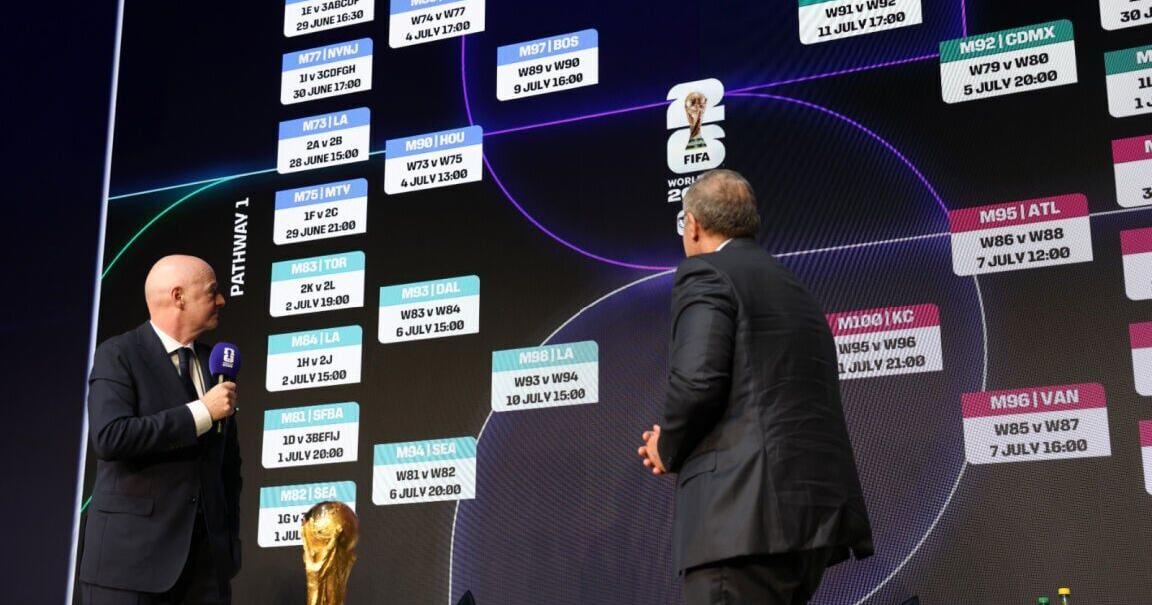
More than five million fans expect to travel for the 2026 FIFA World Cup, according to FIFA’s “500 Days to Go” announcement. Los Angeles will see the first major wave of that movement with the U.S. Men’s National Team’s opener against Paraguay on June 12 at SoFi Stadium. The match release triggered a range of local reaction, with leaders calling the moment “electric” and an opportunity to showcase the region during the tournament.
Los Angeles begins its World Cup saga with eight pulse-pounding matches, summoning soccer’s elite to the City of Angels and pushing local agencies into full operational mode. The announcement establishes a clear schedule for transportation logistics, security planning, and fan programming from the group stage through the quarter-finals. The United States begins with its June 12 face-off with Paraguay, followed by group fixtures on June 15, 18, 21, and 25. Elimination intrigue circles back on June 28 and July 2, before the quarterfinal seals the city’s spotlight on July 10.
Los Angeles Readies for Eight Matches
Teams will arrive in stages, and supporters will be moving through the region for nearly a month. Group contests include June 15’s Iran-New Zealand tilt, June 18’s Switzerland versus an European playoff contender (Italy, Northern Ireland, Wales, or Bosnia-Herzegovina), June 21’s Belgium-Iran duel, and June 25’s European playoff victor (Turkey, Romania, Slovakia, or Kosovo) against the United States—all before the knockout cauldron boils over.
Reflecting on the draw and the teams headed to Los Angeles, Co-Chairman Larry Freedman of the World Cup 2026 Host Committee shared the city’s excitement. “We can’t wait to welcome Belgium, Iran, New Zealand, Paraguay, Switzerland, the United States, and the European Play-Off group A and C winners, for their group stage matches in LA.”
Hotels, transit agencies and event producers continue coordinating as Los Angeles develops watch zones and public activations around high-demand matches. “Knowing which nations are coming to LA allows us to tailor our marketing efforts and create moments that fans will remember long after the final whistle,” says Adam Burke, President and CEO of LA Tourism. The 39-day slate of fan events gives visitors the flexibility to move between stadium matches and neighborhoods across the region.
Custom World Cup ItinerariesLuxury tour operators have started designing match-based itineraries that track with Los Angeles’ schedule, giving visitors structured days around each location and curated experiences between games. Excursionist, known for designing multi-city, privately guided trips, assembled a sample plan for fans wanting to pair World Cup access with high-end travel. The June 10–27 itinerary links transfers and match tickets with elevated local excursions.
The plan starts with two days of guided touring across Los Angeles, including curated city experiences and optional outdoor activities. Game day follows, with transfers and tickets provided for the June 12 match against Paraguay. Excursionist adds recovery time to the itinerary, allowing visitors to book a private Hollywood Sign hike and Griffith Observatory tour or a helicopter trip to Catalina Island for a champagne tasting before heading to additional matches.
The Los Angeles portion highlights shopping appointments with a celebrity stylist, flexible theme park access, guided hikes, and custom touring across the city. Each experience fits between matchdays, so visitors can move through the region without rushing from one venue to another.
The itinerary also offers the option to continue north to the June 19 Seattle match. Private transfers to the airport, guided touring on arrival, and optional seaplane excursions to Olympic National Park or the San Juan Islands allow fans to add another major venue without losing the base of a Los Angeles-based trip.
Tammy Canavan, Visit Seattle President and CEO shared, “The FIFA World Cup is an opportunity to share the story of the Emerald City on the global stage. Football fans wait years for these matches and trips. We can’t wait to be a part of those memories.”
After Seattle, the plan returns travelers to Los Angeles for a late-June fixture and additional luxury touring across the region’s natural and cultural highlights. The structure gives supporters a way to track the U.S. team, incorporate restorative breaks, and move between two host cities without sacrificing comfort or time.
Logistics, Accommodations and TransportationFans can plan flight arrivals through Los Angeles International Airport, Hollywood Burbank Airport, Long Beach Airport, or John Wayne Airport in Orange County, which feed directly into the city’s hotel corridors and transit lines. LAX can handle the highest volume. Burbank and Long Beach offer shorter security lines and quick access to the northern and coastal districts.
Hotels near SoFi Stadium include the Westin Los Angeles Airport, the Hyatt Regency at LAX, the Sheraton Gateway Los Angeles, and boutique properties in El Segundo. Travelers who want luxury bookings often choose to stay in Beverly Hills, West Hollywood, or Santa Monica. Properties such as the Waldorf Astoria Beverly Hills, the Beverly Wilshire, the Pendry West Hollywood, the Proper Hotel Santa Monica, and the Fairmont Miramar maintain strong demand during major events. Downtown Los Angeles offers its own cluster of options, including the Ritz-Carlton, JW Marriott, and Conrad.
Chief Economist Jamie Lane of short-term rental data and analytics provider AirDNA shared new insights following the FIFA World Cup 2026 team draw. “As of December 9th, for the days during the group stage, we see 1680 nights booked on an average day in Los Angeles, and that’s 137% higher than we saw at the same time last year.” Lane also pointed to rising prices, noting that the average daily rate during the World Cup has climbed to $415 per night, up from $278 last year.
Lane said the biggest surprise came from Scotland’s match schedule. “We’ve seen the largest amount of bookings for Scotland’s games in both Miami and Boston. They (Scotland) have two games in Boston and one game in Miami. The top three games that drove the most bookings all included Scotland.” Los Angeles, meanwhile, performed in line with expectations for a host city. The United States’ opening match drew the second-highest number of bookings overall, with Mexico City leading all markets.
To help track shifting demand, AirDNA’s World Cup dashboard is updating daily this week with the latest occupancy, demand, and rate trends at both the city and neighborhood level. The dashboard will shift to weekly updates for the remainder of the run-up to opening day.
“In just six months, L.A. will welcome the world when we host eight incredible matches that showcase the world’s best athletes, unite our diverse neighborhoods and boost our local economy,” said Mayor Karen Bass. “This will undoubtedly be the best FIFA World Cup yet, bringing the entire world together in the name of soccer. Los Angeles is a hub for culture, community, and competition, and our city will shine on the world stage in 2026 and beyond.”
The complete match schedule, containing all 104 matches, can be found at FIFA.com.
Every Exponent article goes through checks for accuracy before publication. If you have a concern or questions about this article, please email editor@purdueexponent.org.