
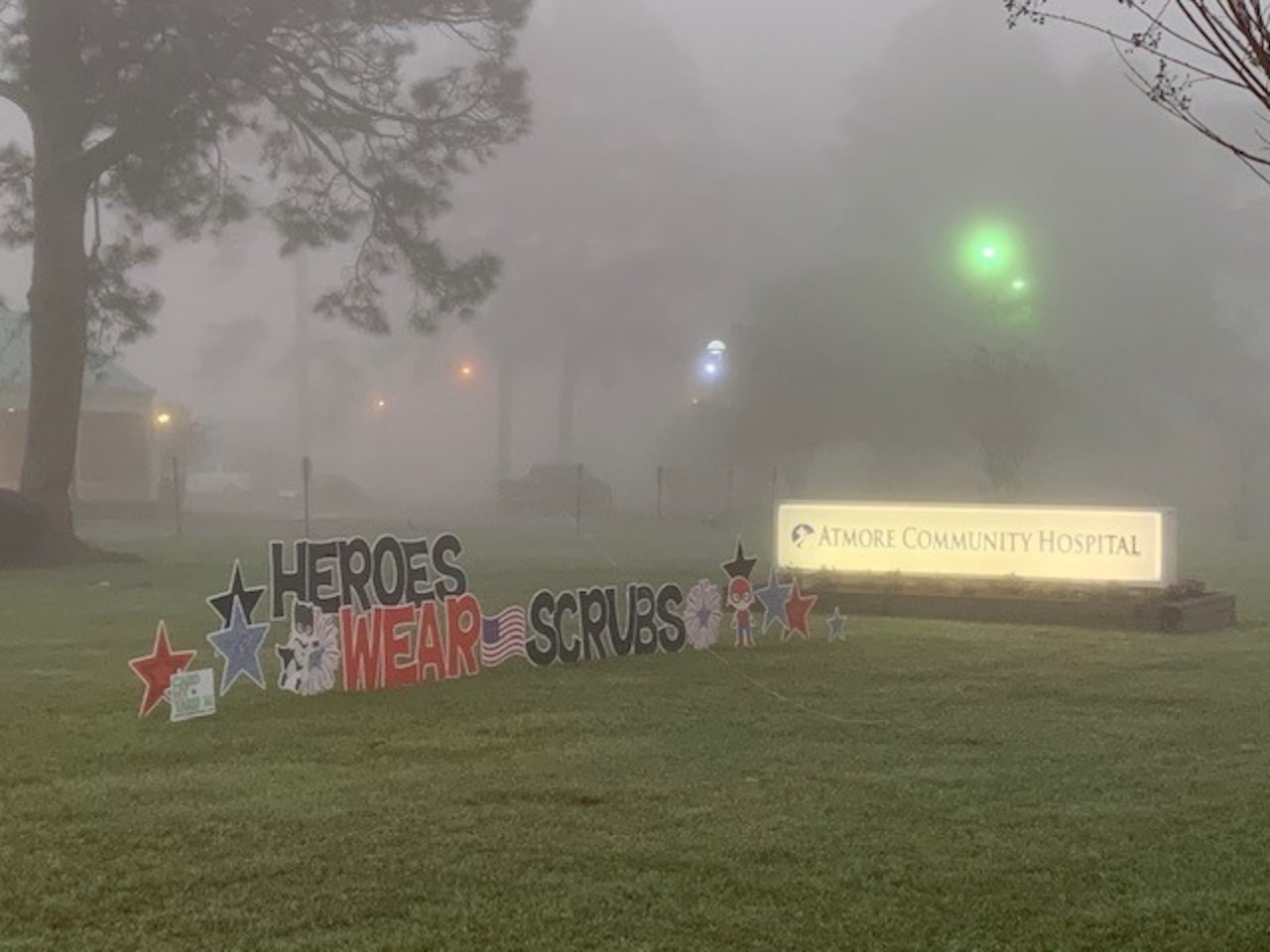
The ominous statistics about the state of rural health care in Alabama hung like a storm cloud as voters in one southwestern Alabama county headed to the polls on Tuesday.
More than two dozen hospitals across the state are at risk of closing, crippled by chronic funding shortages and the nation’s lowest reimbursement rates. Nineteen face “immediate” danger, and seven have already shut their doors since 2011. Just last month, Greenville’s Regional Medical Center of Central Alabama ended inpatient care and cut 90 jobs.
A majority of voters in deep red Escambia County, a county that backed President Donald Trump with 73% of the vote last November, decided they didn’t want to join the list. In a special election with slightly fewer than 3,000 ballots cast, residents approved a 4-mil property-tax increase by a 251-vote margin — 1,647 voting “Yes” (54%) to 1,396 voting “No” (46%).
The measure is expected to generate about $1.8 million in new funding next year to support health care in a county of 36,360 people — roughly the population of Vestavia Hills.
“I would say what this means locally is the people of Escambia County want to do everything they can to maintain health care,” said Keith Horton, chair of the Escambia County Health Care Authority, which pushed for the referendum. He said the foreboding statistics for rural health care in Alabama and throughout the country “got people’s attention.”
Tackle debt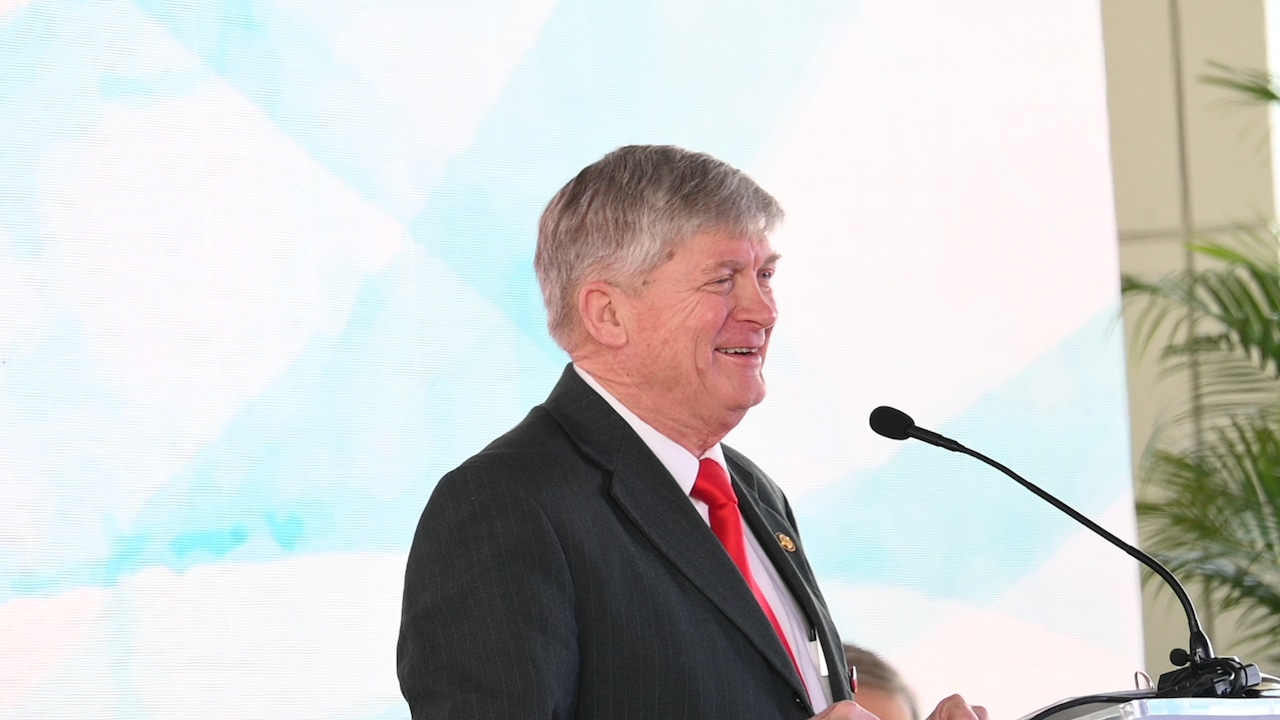 Alabama State Senator Greg Albritton, R-Atmore, speaks ahead of a ribbon cutting ceremony for a new 19,000-square-foot pediatric emergency center. USA Health officials, politicians and other dignitaries dedicated the newly expanded center on Wednesday, Jan. 10, 2024, at Children’s & Women’s Hospital in Mobile, Ala. The $19 million project was mostly paid for through donations and a $1 million appropriation by the State of Alabama.John Sharp/jsharp@al.com
With little help expected from federal or state governments anytime soon, Horton said it was up to the voters to decide the fate of the county’s hospitals – DW McMillan Memorial Hospital in Brewton and Atmore Community Hospital. The two hospitals employ roughly 300 people combined, but existing debt makes it difficult to maintain services.
“All of the small hospitals are suffering,” said state Sen. Greg Albritton, R-Atmore. “Most of it is not their fault. It has to do with how the feds pay and what they are paying, and we have absolutely no control over that. We have no control over who comes in (seeking care), who we treat and what those costs are unlike other businesses.
He added, “Either we complain about it or do something about it.”
The referendum isn’t expected to begin generating revenue until next year. Albritton said new money will help pay down hospital debt, previously reported at around $6 million.
“This millage tax will give us an opportunity to restructure that,” he said, adding that none of the revenues will go toward capital projects.
An additional 4 mills will be added to the existing 4 mills first authorized in the 1950s, with the Health Care Authority charged with allocating the 8 mills to support the hospitals.
For the owner of a $200,000 home, the additional 4 mills will result in an $80 increase in annual property taxes.
Where’s the plan?
Despite the support, the referendum had its skeptics. The Escambia County Commission voted 3-2 in September to support the special election, which is expected to cost $60,000.
Commissioner Larry White said one of his biggest concerns was the lack of a clear plan to close the deficit gap. Even with $1.8 million in new revenues, he is worried there is no strategy address what he said will be $4.2 million in existing debt.
“It was a lot to ask the public to pass a tax (increase) when there was no business plan provided,” White said.
Commissioner Karean Reynolds, the other “No” vote, said he the commission had a duty put the referendum on the ballot. He said he did not have enough information on whether to personally support or oppose the increase.
“We don’t have information on how the money will be spent or how it will solve the problem, if there is a problem to solve,” he said.
Tool in the toolbox
Horton emphasized there is no concern about closing the hospitals, but the authority wanted the funding approved sooner rather than waiting until May when the next regularly scheduled elections will take place in Alabama.
He said the health care authority is “trying to stay ahead of that” with the new funding.
If hospital services are lost, Escambia County residents would face long drives to Mobile, Montgomery and Pensacola for cancer treatments, obstetrics, and other medical care.
“This is a tool in the toolbox to put them on a financially secure position,” Horton said.
Danne Howard, president & CEO with the Alabama Hospital Association, echoed that sentiment, saying the additional revenues are intended to stabilize operations.
“It is part of helping toward some financial stability,” Howard said. “It’s a piece of the puzzle to move give them more resources whether it’s to refinance debt so they have a lower interest rate.”
Federal limits
The additional funding comes at a precarious time for health care funding. Federal health care subsidies under the Affordable Care Act (ACA) are set to expire at the end of the month, and Alabama remains one of 10 states that has not expanded Medicaid under the 2010 health care law otherwise known as Obamacare.
The state is expected to get $500 million for rural healthcare through the One Big Beautiful Bill passed by Congress this year, touted by Senators Katie Britt and Tommy Tuberville. But Howard said none of that money will be available to pay off existing debt or solving Escambia County’s immediate challenges.
Instead, the federal money will be directed toward modernization and innovative care models, while Medicaid cuts and work requirements could further strain rural hospitals.
“This is not (American Rescue Plan Act) or CARES Act money, and it won’t be sent to rural hospitals for operations, and it cannot be spent for capital projects, either,” Albritton said.
With no federal or state lifelines, Horton said the responsibility fell squarely on the residents and officials in his county.
Escambia County Board member Steven Dickey said the decision was an easy one for him, summing up the sentiment: “The hospital is important to me and the community, and I see (the problems) happening in rural areas across the state and across the country. This won’t be the end-all fix to the financial problems we are having. But it’s a start.”