
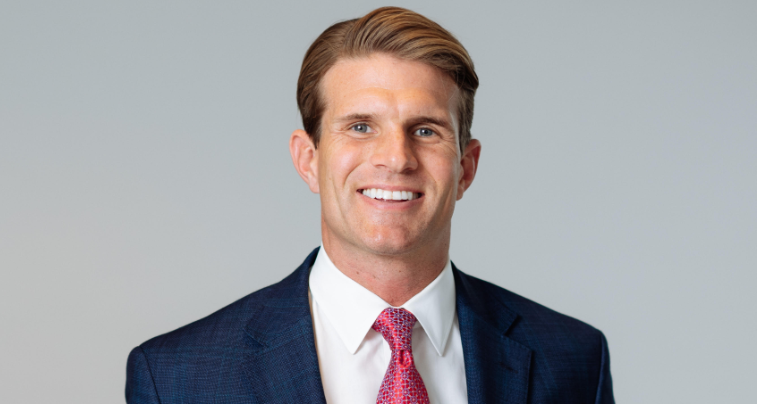
Weatherford Capital, the investment firm founded 10 years ago by former Florida State quarterback Drew Weatherford and two of his brothers, created national headlines this weekend when news leaked that it is teaming up with Redbird Capital to provide up to $500 million in financing to the Big 12 Conference.
The deal hasn’t been finalized, but several media outlets reported that it could be done within the next few weeks.
While many have speculated that Florida State and other university athletics departments will soon turn to private equity as a way to fund the greater financial demands of competing on the national landscape in college football, Weatherford suggested on a recent podcast interview that he does not see that happening in the near future.
“At the school level, I think we’re still many, many years away,” Weatherford said during an appearance on the Momentous Sports podcast with former UCF quarterback Kyle Israel, who also works in the sports investment space.
While private equity firms are certainly interested in tapping into a new sector like college sports, the former Florida State quarterback said his company’s research shows it would be, “very complicated, especially at the university level.”
FSU officials started looking into the possibility of a private equity deal several years ago, but the idea stalled in late 2023 or early 2024 due to “legal hurdles” and other complications, according to Sportico.
However, the idea remains extremely intriguing, Weatherford said, because college athletics programs produce very large and very consistent revenue streams.
Power Four programs like Florida State generate tens of millions of dollars each year in media rights, and that number is essentially fixed, based on long-term television contracts. While ticket sales, concessions and merchandise sales might fluctuate some based on good and bad seasons, Weatherford said the change is seldom greater than 10 percent.
So it makes perfect sense why investment firms would be attracted.
And Weatherford, who also serves on the Florida State Board of Trustees, said universities are equally interested in the concept for several reasons. Not only do they desire to be competitive in the current landscape, while dealing with the financial pressures created by NIL and revenue sharing with athletes, but they want to be well-positioned for the next round of conference realignment.
“It’s arguably more important to have capital today than it’s ever been,” said Weatherford, who operates his firm with brothers Will and Sam. “And the stakes are way higher too. Because if you don’t win over the next five years — when the Big Ten, the SEC and the Big 12 media deals come up — there’s going to be another reshuffle of all of these schools, and you don’t want to be on the outside looking in. So the stakes are really high.”
With that in mind, Weatherford Capital and Redbird Capital announced in June the forming of Collegiate Athletics Solutions, a partnership designed to, “directly address the ever-expanding need for smart capital investment in athletic departments across the country.”
During his podcast interview, Weatherford said CAS is, “the only dedicated fund for collegiate athletics. We’ve actually raised real capital that’s ready to be deployed.”
He also hinted that a financial deal with a conference could be coming in the, “not too distant future.” And that indeed came to fruition with Friday’s news of a CAS partnership with the Big 12.
According to reports, though, that will not be an equity play. Collegiate Athletics Solutions instead will be providing $500 million in credit — around $30 million for each school in the conference.
The Big Ten Conference, meanwhile, is reportedly considering a $2.4 billion deal that would transfer 10 percent equity of the league’s lucrative media rights to the University of California pension fund. That concept was paused last month following objections from Michigan and Southern Cal, but Weatherford said he thinks there’s a good chance the deal eventually goes through.
“It’s not done, but there’s a high likelihood that that thing gets done,” he said, adding that the Big Ten would have to extend its current Grant of Rights agreement to make it feasible.
As part of the agreement, Weatherford said, each school would receive a cash infusion of at least $100 million, with some of the top revenue-generators receiving much more.
Here is the full Weatherford interview on the Momentous Sports Podcast:
SIGN UP: Join Warchant’s FSU Community for $1 today
Talk about this story with other die-hard Florida State football fans on the Tribal Council.