
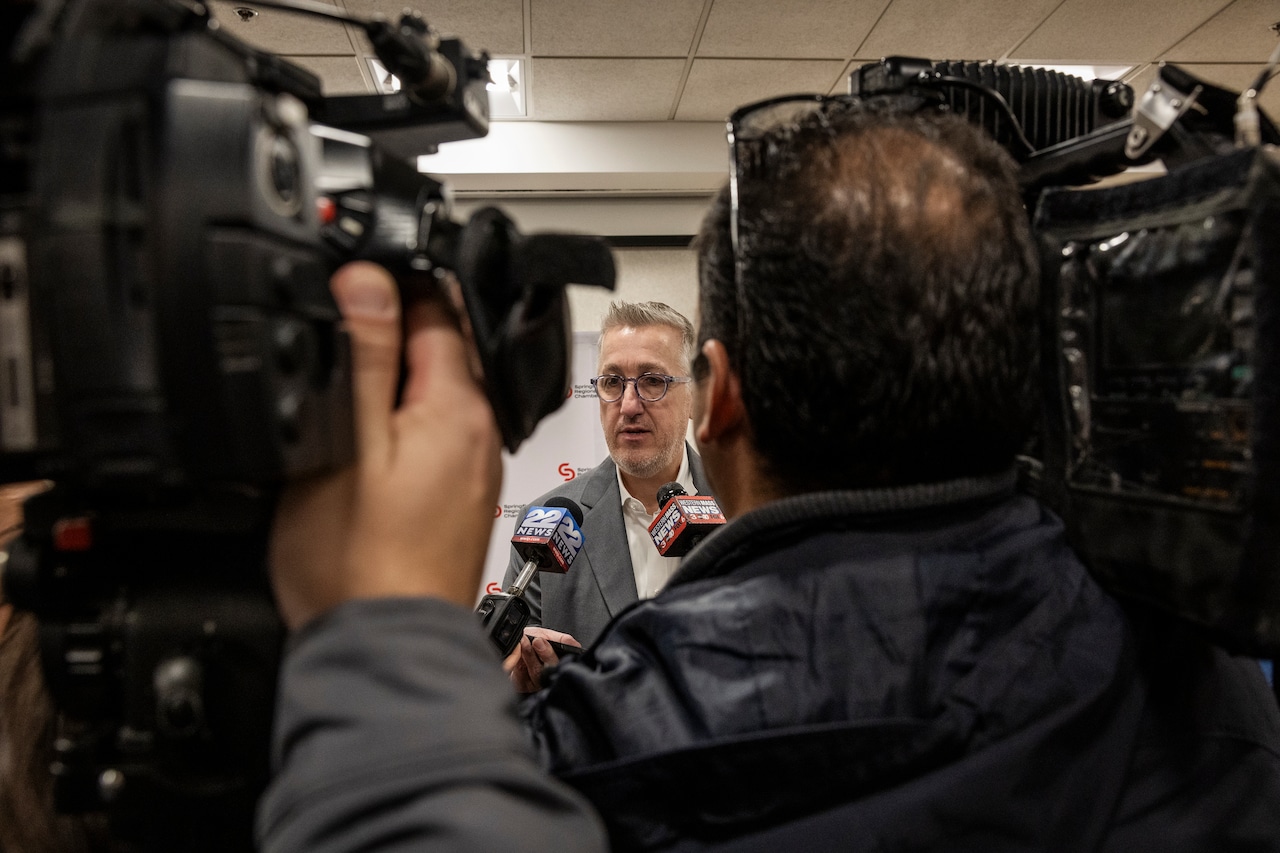
SPRINGFIELD – President Donald Trump’s signature domestic policy bill, passed this summer, will cost Baystate Health $146.7 million a year, its president and CEO told business leaders Monday.
Peter D. Banko called the measure the single biggest rollback of health care in American history. Balancing the nonprofit’s books will require more cuts – including eliminating jobs, he said. And it will drive an intensified search for new revenue and as-yet unspecified mergers and acquisitions with other health care providers in an effort to gain scale and market share.
If the cuts contained in the new law happen, the $146.7 million in lost federal money will represent 4.8% of Baystate’s bottom line. Last year, the profit margin Baystate relies on to fund capital projects and as a cushion against future misfortune was 3.5%.
Many of the new law’s provisions are not scheduled to take force until just before the midterm elections in 2026.
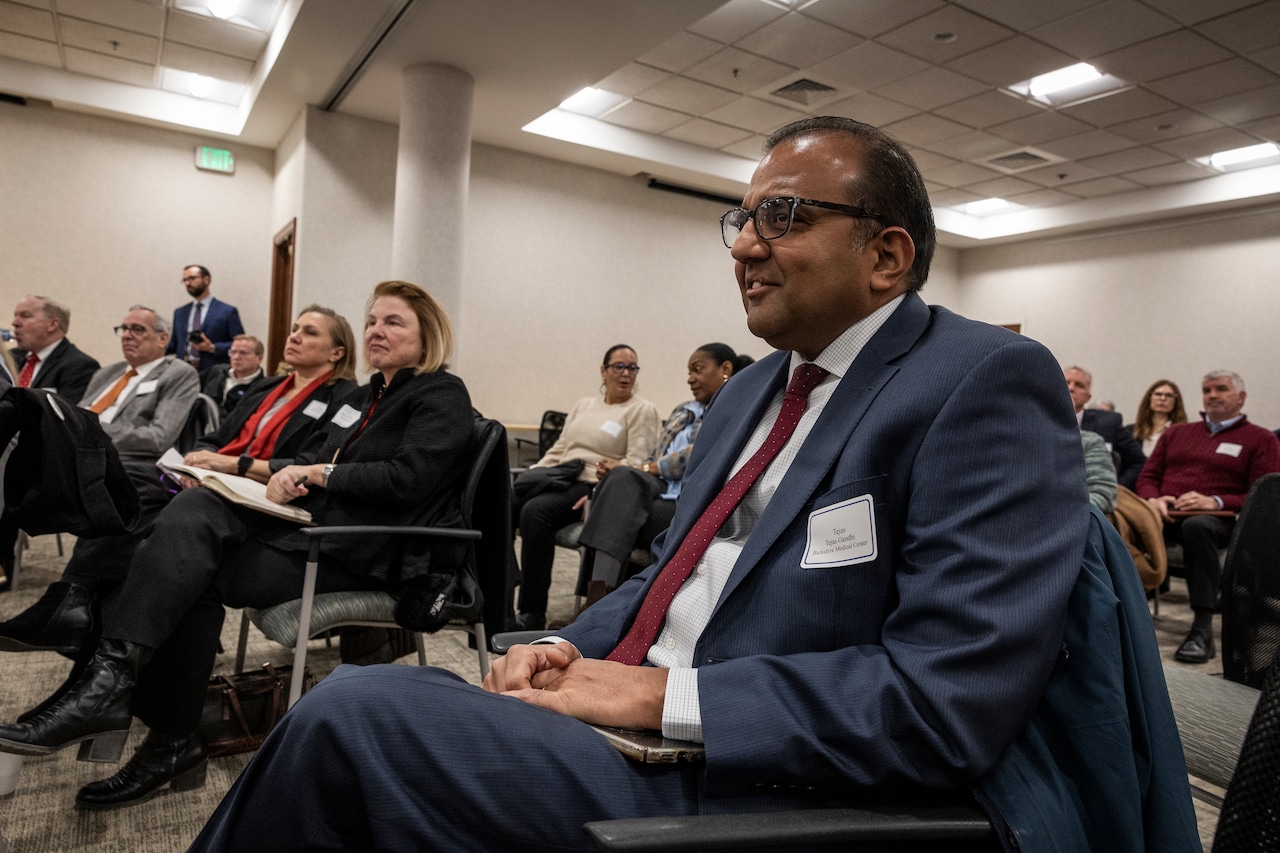 The chief operating officer of Berkshire Medical Center, Tejas Gandhi, listens to the discussion between Baystate Health President and CEO Peter Banko and U.S. Rep. Richard E. Neal over health care in Massachusetts on Monday in Springfield. Dec. 15, 2025. (Douglas Hook / The Republican)Douglas Hook
To achieve its 3.5% profit margin, Baystate pursued more than a year of budget- and job-cutting and revenue enhancements that Banko instituted after taking the job in June 2024.
“So all the work you see in the newspaper that I get criticized for — (it’s) wiped out with One Big Beautiful Bill and we start all over,” Banko said.
He spoke Monday in conversation with U.S. Rep. Richard E. Neal, D- Springfield at an event in Springfield hosted by the Western Mass. Economic Development Council and attended by business, academic and health-care executives.
Also present, but not on the speaking program, were executives from Berkshire Medical Center in Pittsfield, UMass Memorial Health – Harrington Hospital in Southbridge and Mercy Medical Center / Trinity Health New England in Springfield.
Neal recounted bruising battles over health care going back to the failed fight over “Hillarycare” in the 1993 and the successful passage of the Affordable Care Act – Obamacare – in 2010.
On Monday, with votes looming in Washington this week and next, Neal said is pushing for a “clean” two-year extension of tax credits under Obamacare that help make insurance coverage affordable to millions. Those credits are set to expire at year’s end.
“It’s a question if we can get 218 (votes),” said Neal, the ranking Democrat on the Ways & Means Committee.
Neal said Democrats want to get the issue settled before an election year, when positions harden. But to pass anything, they’ll have to make an arcane, procedural end-run around Republican leadership.
“I think it’s uphill right now,” Neal said.
Without the Obamacare subsidies, health care insurance costs will go up dramatically, prompting people to opt out of insurance.
Banko estimates that an increase in the uninsured population from the ACA will cost Baystate $10.4 million a year. In his calculations, an increase in the uninsured population for Medicaid will cost Baystate $53.5 million a year.
Further, an expected increase in cost sharing from Medicaid will cost the institution $9.2 million a year. And a decrease in funding from Medicaid (MassHealth) will cost $28.6 million a year, while the loss of funds from what’s known as the 340B Drug program will cost $45 million.
Neal laid out numbers of his own: 287,000 residents in the 1st Congressional District rely on Medicaid. Of those, 106,000 are children under the age of 19. In all, Neal said, more than 31,000 residents in the district could lose health insurance.
More than 30,000 residents in the congressional district receive coverage through the ACA marketplace. They can expect their premiums to double or triple, with an average increase in premiums of $1,970, Neal said.
He provided these examples:
– For a 60-year-old couple earning $85,600 a year, annual premiums will rise by $16,847. That is a a 264% increase.
– For a family of four earning $66,000 a year, annual premiums will rise by $2,651 or a 439% increase.
– For a family of four earning $133,750 a year, annual premiums will rise by $11,704, for a a 111% increase.
Banko warned the executives in the room that costs for health care coverage will rise for them and their employees.
Baystate’s board is committed to avoid cutting entire programs, Banko said. But he said the health care landscape in Western Massachusetts is certain to change.
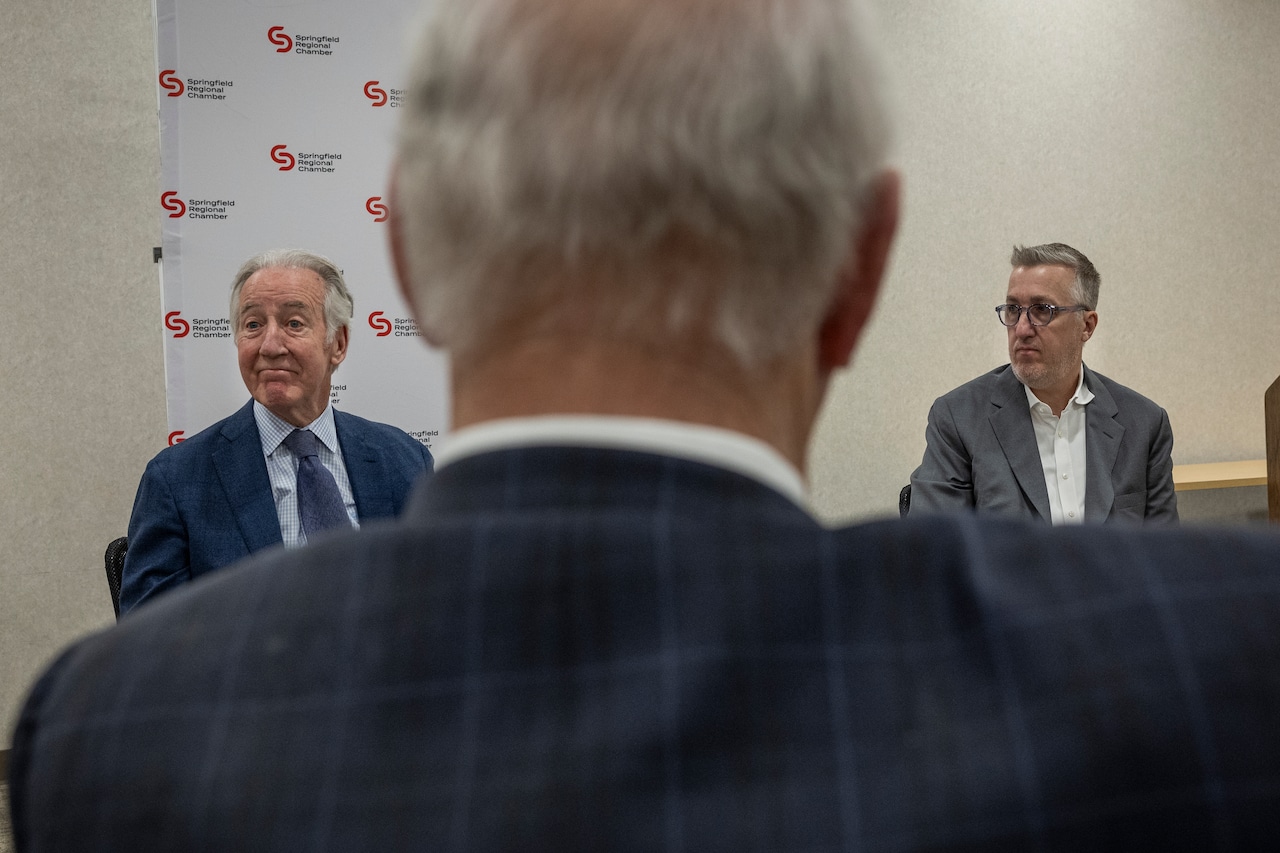 Baystate Health President and CEO Peter Banko, right, met with U.S. Rep. Richard E. Neal at the TD Bank building in Springfield Monday morning to discuss the state of health care in western Massachusetts. Dec. 15, 2025. (Douglas Hook / The Republican)Douglas Hook
“You’re going to see valuable programs that don’t make money closed in our community. What are those? Behavioral health, women’s services, pediatric health care, emergency services,” he said. “Those are going to close.”
“I don’t think you’re going to see it in western Mass., but hospitals around the country are going to close,” Banko said.
Mercy Medical Center in Springfield closed its childbirth and newborn services unit this month. It said the change is temporary to deal with staffing gaps, but union nurses believe the hospital will not be able to rebuild the programs.
Of mergers or acquisitions, Baystate and Mercy have been in talks that could result in an acquisition or merger of the two leading Springfield hospitals.
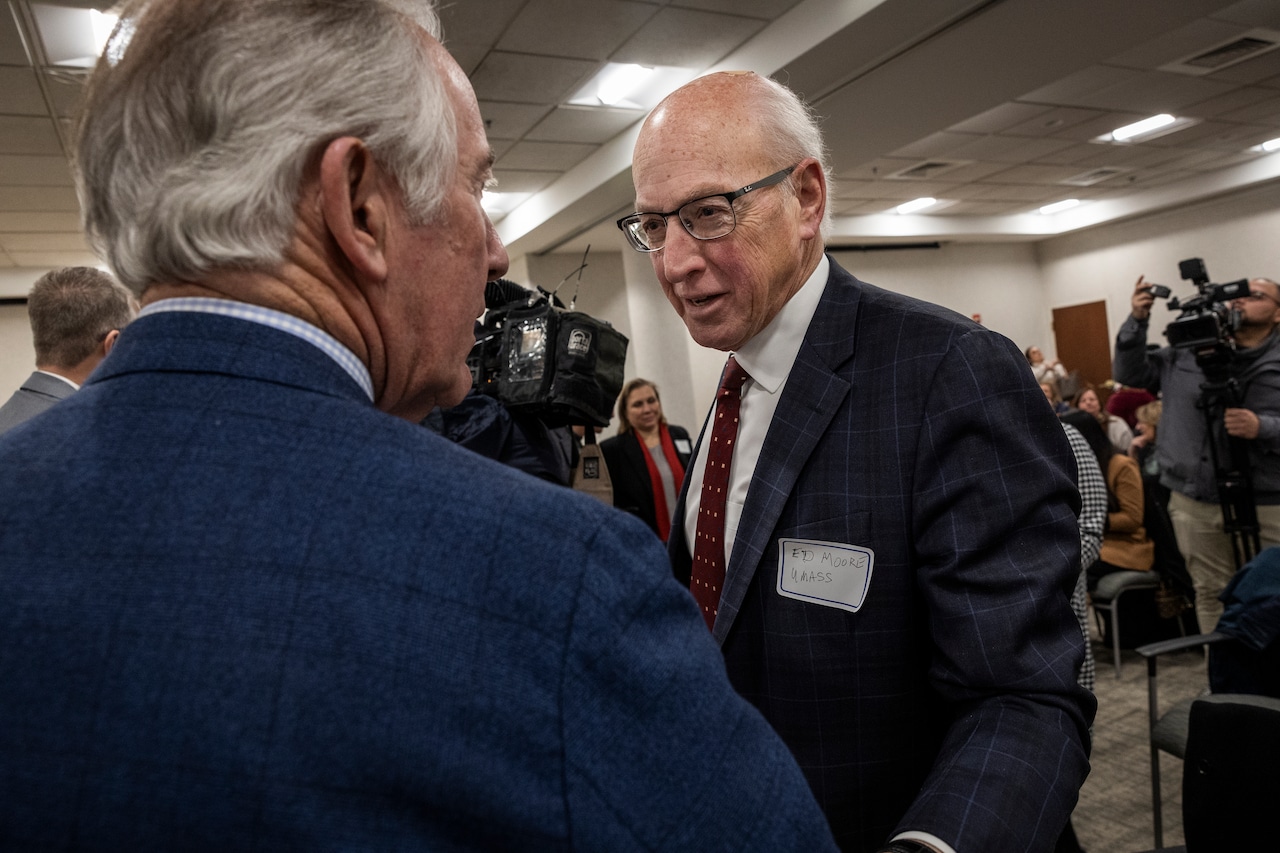 President of UMass Memorial Health Harrington Ed Moore speaks to Rep. Richard Neal at the TD Bank building in Springfield on Monday morning. Dec. 15, 2025. (Douglas Hook / The Republican)Douglas Hook
Banko declined to address Baystate’s plans regarding Mercy, citing a confidentiality agreement.
Baystate is the largest employer in the region, with 13,000 employees.
Taken together, the hospitals run by Baystate Health, Trinity Health, Berkshire Health and UMass employ tens of thousands, Neal said.
“This is about economics for those of us who live in western Massachusetts and central Massachusetts,” he said. “This is the engine of so much of our economic growth.