
We work for you — and we’re matching your donation 1:1! Our journalists attend city council and school board meetings, follow tips and make the calls to keep you informed on the important issues in Berkeley. Will you chip in today?
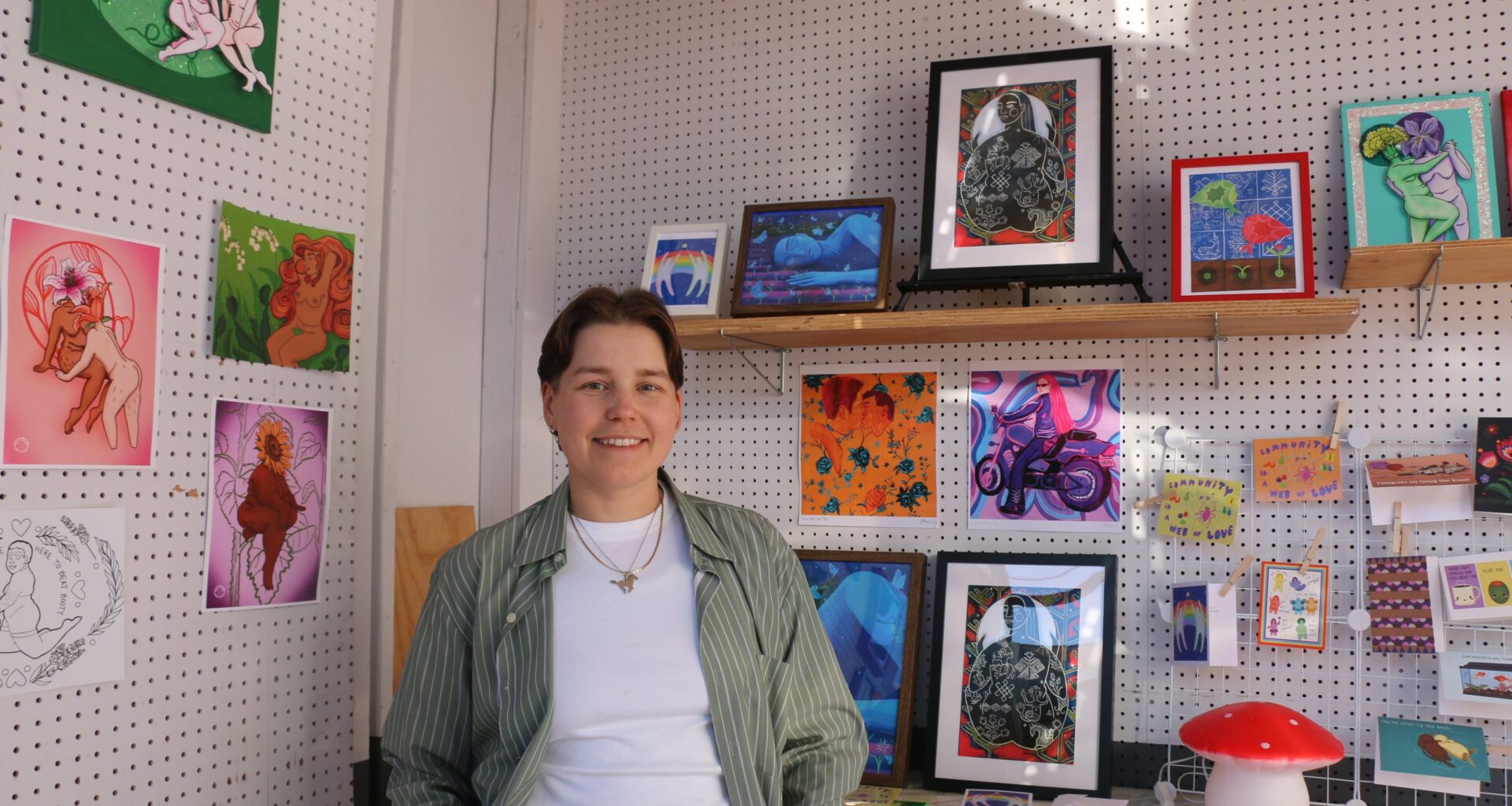
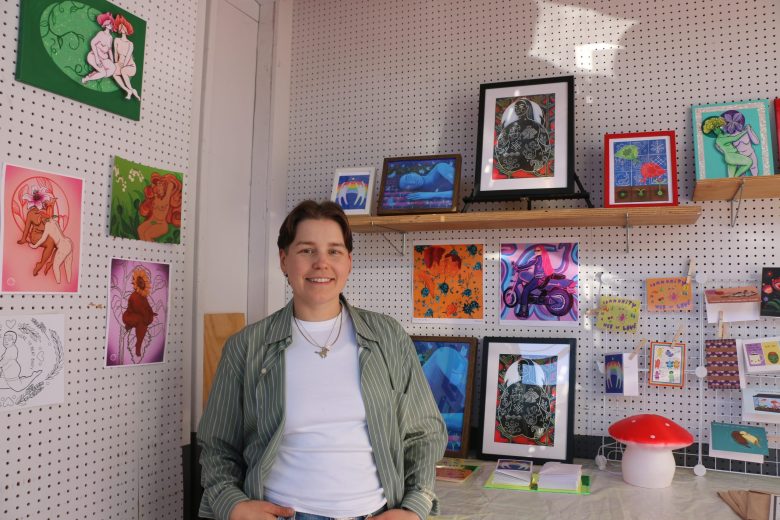 Painter and artist Nadya Voynovskaya vending in their booth at Maker’s Row, an artisan market on Berkeley’s Fourth Street, on Saturday, Dec. 6. Credit: Chloe Swedberg for Berkeleyside
Nadya Voynovskaya knew it was risky to leave a career teaching art for one devoted to making art. But the Oakland-based painter and muralist did not predict the sea change that would occur under the Trump administration.
Like many artists, Voynovskaya, is trying to navigate a rocky economy and policy shifts that could make health care harder to attain. Voynovskaya is insured through the Affordable Care Act marketplace, also known as Covered California. The ACA subsidizes insurance premiums through tax credits, making coverage affordable to many. But some of those tax credits are set to expire at the end of the year, raising premiums for more than 74,600 people in Alameda County. The Congressional Budget Office has estimated insurance rates will increase by 8% over the next eight years.
At a pop-up holiday market for artisans and entrepreneurs on Berkeley’s Fourth Street earlier this month, Voynovskaya said they were worried about what losing the subsidy would mean in terms of their ability to pay for insurance coverage.
In addition, Voynovskaya is seeing customers reluctant to purchase art because of concerns about the economy. And they are dealing with the ripple effect of grant cuts to arts programs. Voynovskaya was scheduled to paint a mural in San Francisco earlier this year, but the project got pushed back by over two months due to funding concerns. Ultimately, the organization raised enough money to continue.
“I really feel like people’s budgets are a lot tighter and that people are more reluctant with their money right now, and it’s just hard because as a society and a country people don’t really value art,” said Voynovskaya. “You’re trying to make your money providing something that is and can be very valuable and such a benefit to the collective, so it’s just a tricky predicament to be in.”
Many artists take second jobs to get health care
While independent artists can turn to private sources to support their work, many have no other health care choice but the ACA or Medicaid. Gradual cuts will reduce the federal insurance program for low-income people, called Medi-Cal in California, by 15% over the next eight years, forcing more than 11 million to lose coverage, the Congressional Budget Office estimates.
Not all subsidies are going away. Congress passed a spending bill in July that cut only enhanced tax credits that have increased ACA subsidies for many since 2021 and expanded the program to include higher income levels.
Covered California said that for the 2 million Californians getting insurance through its marketplace, monthly premiums will double on average without those subsidies. Self-employed people such as many artists and artisans, can expect to pay about $131 more per month.
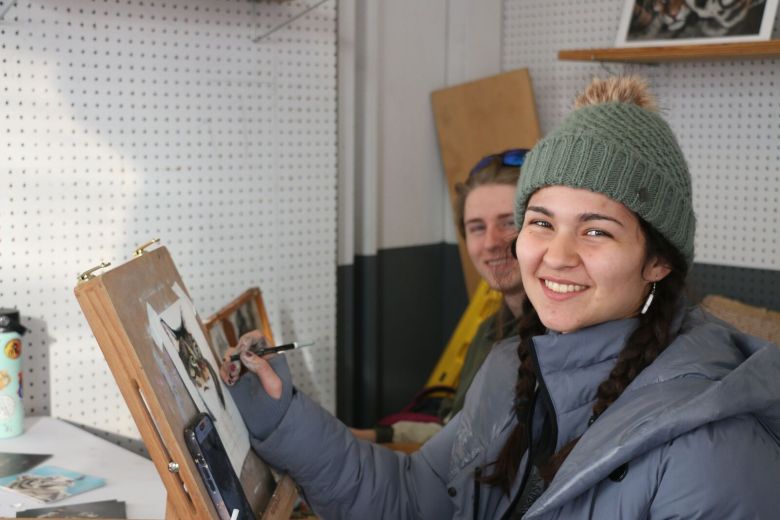 Ece Eris works on an illustration of a cat in her Maker’s Row booth alongside her boyfriend, Luke. Credit: Chloe Swedberg for Berkeleyside
The U.S. House is expected to vote on a Republican health proposal this week that would not extend ACA subsidies..
Many artists and artisans rely on government-backed programs because they don’t get insurance through their employers. In a national survey of artists released by the Mellon Foundation in November, 84% of artists reported having health care, though only a third received it through their main job. Many took second jobs to get health care, or were covered through a partner. But 21% relied on Medicaid and 15% bought insurance through the marketplace.
‘Health care shouldn’t bankrupt people’
Mike Andriola was at Maker’s Row selling the birdhouses he started making to occupy himself during the COVID-19 pandemic. Like Voynovskaya, he had yet to receive word about his Covered California premium. And, like Voynovskaya, he was afraid of being priced out of coverage.
“Health care shouldn’t bankrupt people,” Andriola said. “The state of health care in the United States is a mess whether you’re an artist or not.”
Andriola found out this week that he won’t be paying more. Voynovskaya said they’ll have to pay only slightly more. But neither can breathe a sigh of relief, yet, because ACA benefits are based on projected income, using information from the previous year. That puts people like artists and artisans in a precarious situation — the more money they make, the less subsidies they receive to cover their insurance premiums.
For some, the situation isn’t urgent yet. Ece Eris, a 20-year-old pastel artist from Menlo Park, is still on her parents’ plan. Eris has learned to navigate taxes, shipping and social media marketing for her art business. Anticipating that health care will soon be added to that list, Eris is majoring in math at UC Berkeley and is setting her sights on becoming a tattoo artist because it offers more financial stability than illustrating.
But, given the choice, she’d prefer to stay in art. Though it’s the same amount of effort to apply to galleries as math internships, said Eris, she’s doing something she cares more about. “It’s more rewarding and less draining,” she added.
Artists also concerned about artificial intelligence
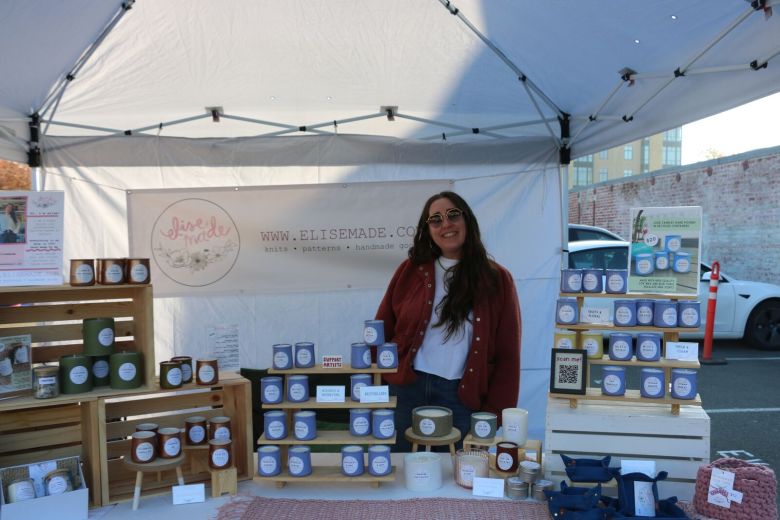 Elise Lopez selling candles, sewn and knitted wares in her tent. Credit: Chloe Swedberg for Berkeleyside
Elise Lopez receives health care benefits through her spouse, who works full time while she teaches knitting and crocheting part time at a store in Los Altos. She is known for knitting hats with turkey legs on them, a popular item around the holidays.
Lopez noted that artists and artisans also are dealing with the proliferation of artificial intelligence, which is being used to create — some say steal — art works. Given all the forces working against them, Lopez said markets — such as the one on Fourth Street last week and the Telegraph Holiday Fair — offer a chance for artists to connect with the public and for the public to meet artists.
“It’s definitely a really hard time to be an artist right now, especially with the rise of AI and all of these things.” Lopez said. “I think it’s really important to support people who are making real things with their hands.”
This story is part of “The Stakes,” a UC Berkeley Journalism project on executive orders and actions affecting Californians and their communities.
Let’s be real …
These are uncertain times. Democracy is under threat in myriad ways, including the right of a free press to report the truth without fear of repercussions.
One thing is certain, however: Berkeleyside was built for moments like these. We believe wholeheartedly that an informed community is a strong community, so we’re doubling down on our mission of reporting the stories that empower and connect you when it matters most.
If you value the news you read in this article, please help us keep it going strong in 2026.
We’ve set a goal to raise $180,000 by year-end and we’re counting on our readers to help us get there. And a bonus: Any gift you make will be matched through Dec. 31 — so $50 becomes $100, $200 becomes $400. Will you make a donation now in support of nonprofit journalism for Berkeley?
Tracey Taylor
Co-founder, Berkeleyside
“*” indicates required fields