
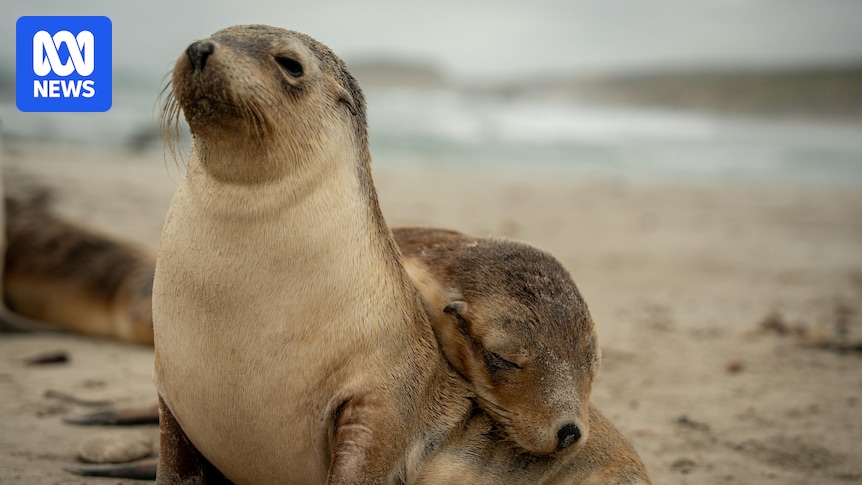
It’s been a difficult breeding season for Australia’s unique sea lions with reports of a large jump in pup mortality in the algal bloom-affected waters between Kangaroo Island and the South Australian mainland.
A sea lion expert said less than 10,000 animals of this unique species are thought to remain in the wild with 85 per cent of the declining population living along South Australia’s coastline.
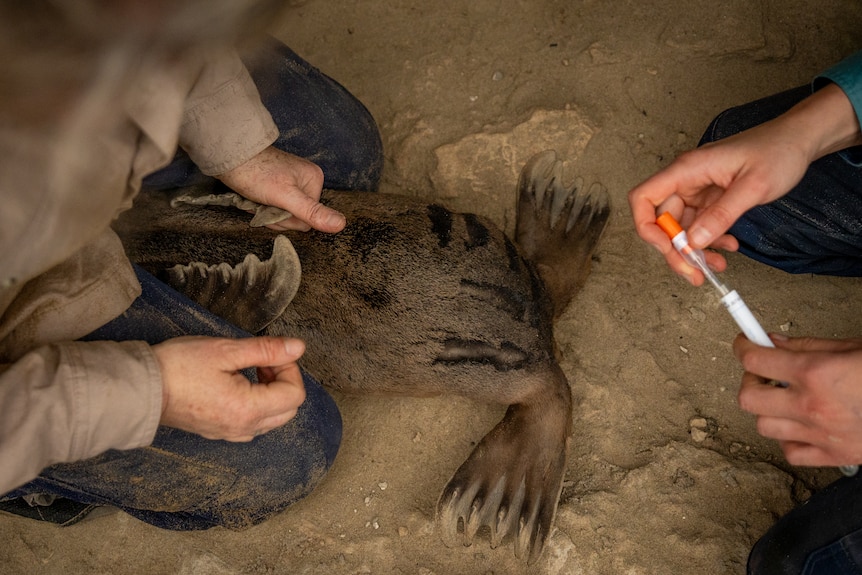
Within 10 minutes the pups are weighed, measured, wormed, microchipped and have fur, blood and faeces samples taken . (ABC News: Che Chorley)
One of the largest breeding colonies — and one of the few rated as stable — is located on the tiny and remote Pages Islands between Kangaroo Island and the South Australian mainland.
That colony experienced a “significant” jump in pup mortality rates in the recent breeding season.
Government observers from the South Australian Research and Development Institute (SARDI) counted 84 dead pups across two visits in August and September, a mortality rate of 34.1 per cent compared to a recent colony average of 4.9 per cent.
The waters around the colonies were badly affected by the height of South Australia’s ongoing harmful algal bloom.
SARDI’s executive director Mike Steer confirmed that the deaths had been attributed to nutritional stress in the mothers of the pups, however it was also observed that the body condition of the live pups was “within the normal range”.
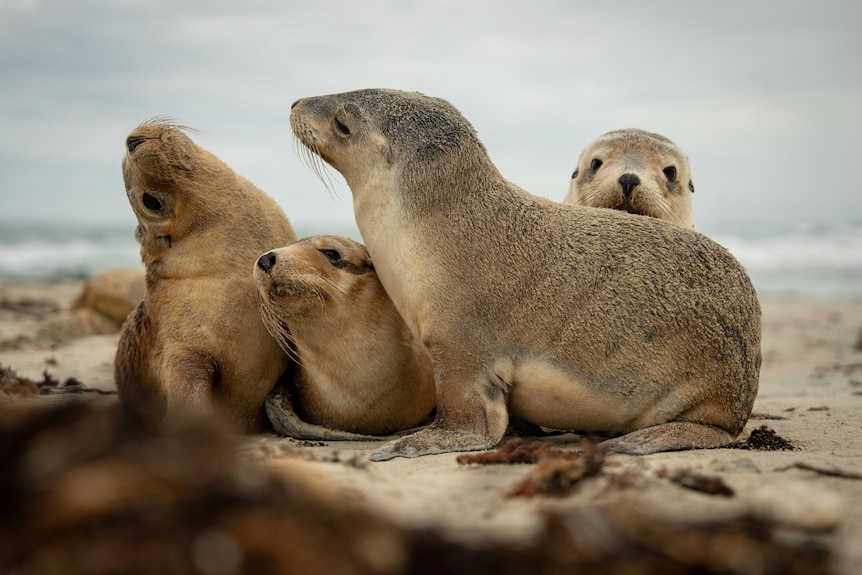
The sea lion pups at Seal Bay play and rest together while their mothers hunt for food. (ABC News: Che Chorley)
In response, the state and federal government recently announced a joint funding of $1.4 million to continue a program of worming pups against hook worm infestation, and to erect shelters in an attempt to provide shade and refuge from other adult sea lions at the nearby sea lion colony and tourist attraction at Seal Bay on Kangaroo Island.
Ten minutes to help save a pup’s life
Veterinarian and University of Sydney Associate Professor Rachael Gray has been scaling the cliffs and dunes of Seal Bay for 20 years, microchipping pups and recording the lives of the sea lions that breed here.
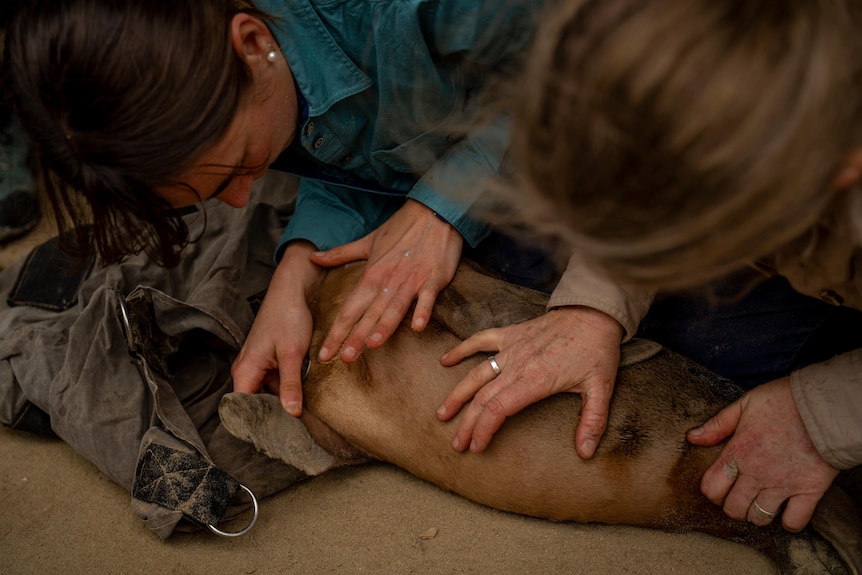
The pups are measured, weighed, microchipped and treated for hookworm. (ABC News: Che Chorley)
For the past six years, she and her team have also been administering hook worm treatment to the pups at a very young age, to try and give them a better chance of reaching adulthood.
She has had a few bites along the way but thinks it is a very cheap price to pay for helping the pups have a greater chance of survival.
The young sea lion pups play in the shallows at Seal Bay (ABC South East SA: Caroline Horn)
“It’s a pretty tough life for these pups. They’re beautiful and cute and gorgeous, and they play around and they look, you know, they look like they’re having a lovely time but they have an uphill battle to make it to 18 months,” Dr Gray said.Infected by their mothers’ milk
Dr Gray said the sea lion pups become infected with hook worm through their mother’s milk and there is only a short window in which the treatment is effective.
The team does regular sweeps of the beach, to find lone pups, left on the beach while their mothers hunt.
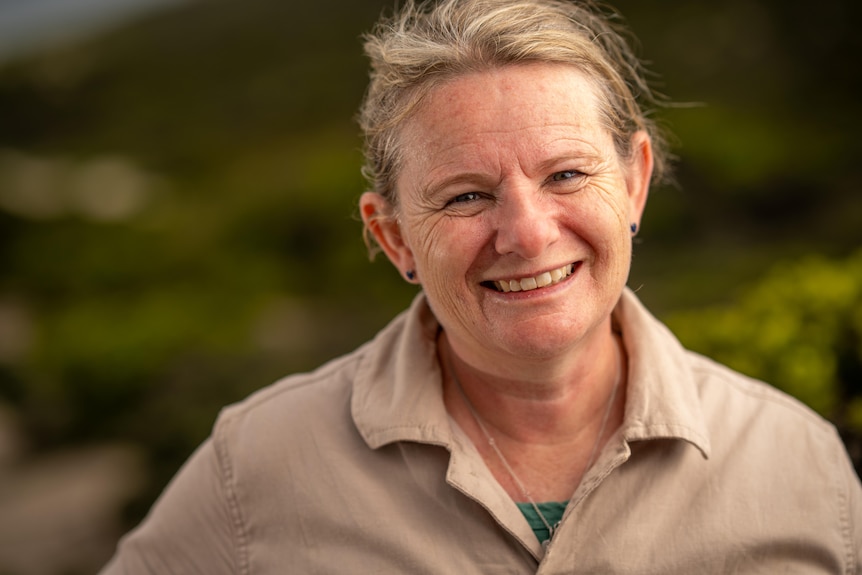
Dr Rachael Gray and her team have been worming sea lion pups at Seal Bay since 2019. (ABC News: Che Chorley)
The earlier the pups can be treated, the better.
Once a pup is found in a cave, under a bush or rounded up, the team only has 10 minutes under their code of ethics to conduct a rapid health check and worm them if they’re in the right age range.
The teamwork is well practised and impressive. Within minutes the pups (some rudely awakened from a snooze) have been measured, weighed, microchipped and wormed.
Fur is taken for samples of PFAS and other contaminates, blood is taken along with a sample of faeces taken to see if it is already suffering from the effects of hookworm.
“It [the hookworm] basically gets into the wall of the intestine, and it causes a lot of inflammation. It causes haemorrhage,” Dr Gray said.
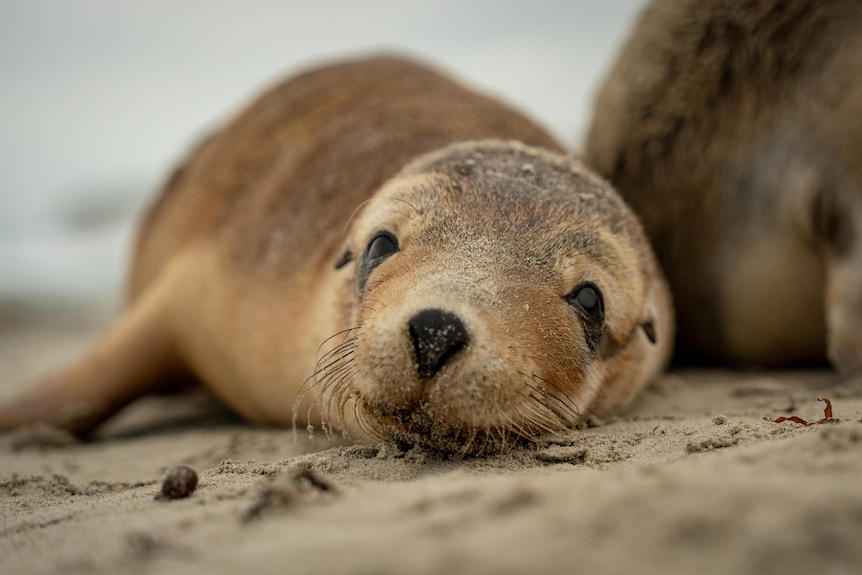
The colony at Seal Bay is described as being in long-term decline but its hoped the hookworm treatment will help to address this. (ABC News: Che Chorley)
The infected pups then get diarrhoea, lose nutrition and weight and become slow and lethargic.
Dr Gray said this made them much more vulnerable to other forms of mortality such as trauma from other animals and of course, starvation.
While the pups might not appreciate the treatment, particularly the faeces swab, once treated as pups however they are protected against hook worm “for their whole pup life”.
Multiple threats
The love that Dr Gray and her team have for these playful and curious animals is evident in how they handle them and how they speak about their concerns for their future.
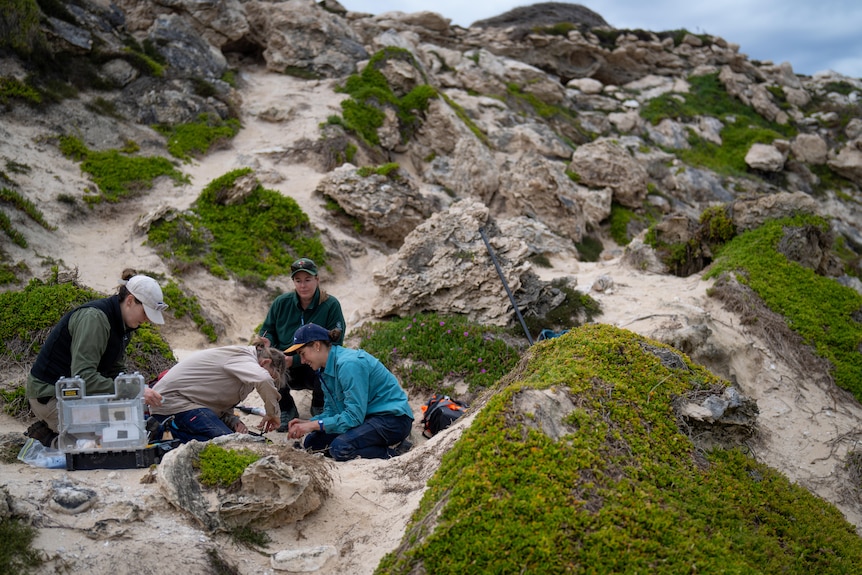
The University of Sydney team works with the Department of Environment and Water to treat and monitor the pups. (ABC News: Che Chorley)
Some of the pups they first treated for hookworm back in 2019 have now returned and given birth to their own pups, providing hope for the future.
This brings hope that the treatment will help the long term existence of the colony but the shadow of what bird flu could do to this struggling population, and the impact climate change is already having concerns the team.
A recent Department for Environment and Water publication noted that the tractable population of sea lions at Seal Bay, 95 per cent of which are microchipped, may prove invaluable should any vaccine be able to be developed and tested.
Melanie Stonnill is research and operations coordinator at Seal Bay and has worked there for 13 years.
She likens her job to working inside a wildlife documentary and sees an importance in linking science, conservation and public awareness.
She conducts several checks of the pups and sea lion population weekly.
“It’s a really special spot where these sea lions basically see us like a flock of seagulls. It gives that opportunity for people to observe their natural behaviour in the wild,” Ms Stonnill said.A stormy year
Ms Stonnill said this year had been particularly hard for the sea lions at Seal Bay with “peak pupping” coinciding with a series of king tides and high swells that battered the South Australian coastline over winter.
Under normal conditions sea lions will return to the exact site of their birth to have their pups.
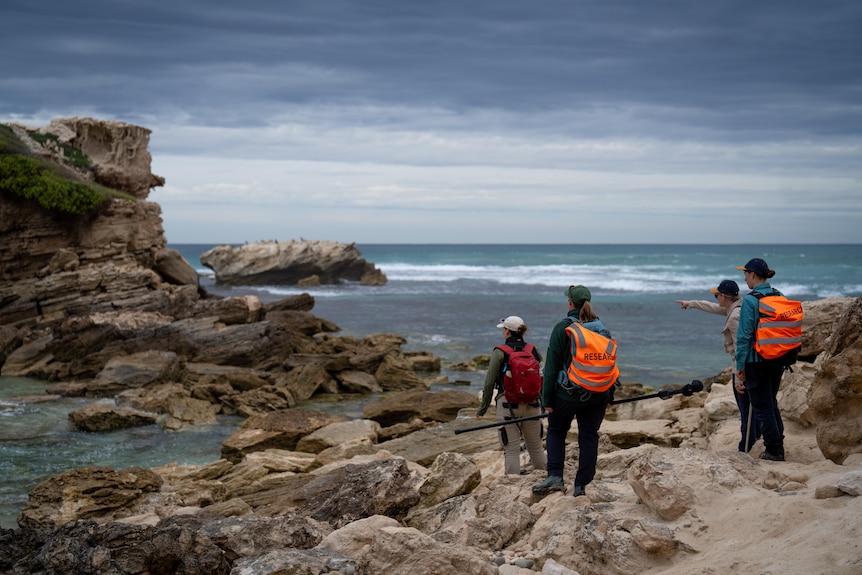
Seal Bay is thought to be the third largest sea lion breeding colony in the world. (ABC News: Che Chorley)
Ms Stonnill said the changes had led to more displacement between mothers and pups with devastating effects.
“It certainly has driven the mortality for this season,” she said.
“It was pretty eye-opening,” Dr Gray agreed.
“It’s been really dramatic. Just some really key breeding habitats that are just gone, and gone really quickly.”
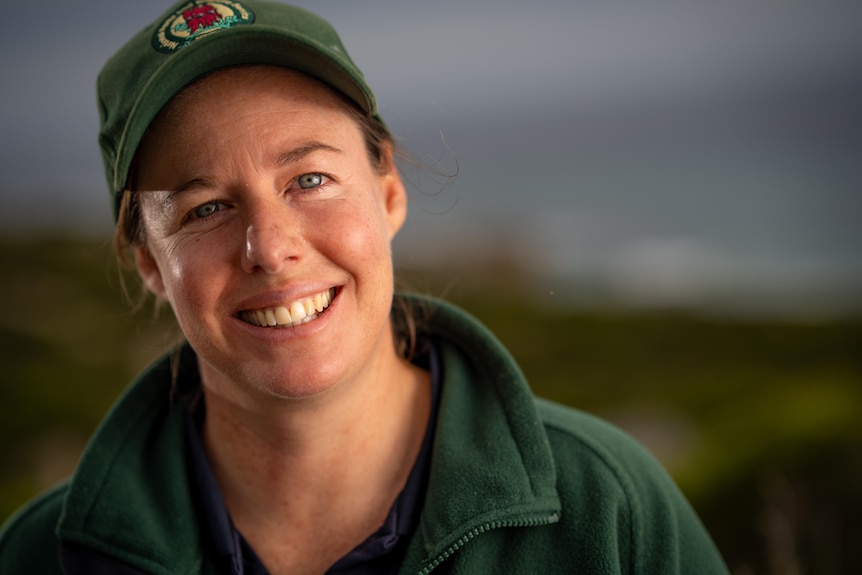
Mel Stonnill said her job working amongst the sea lions of Seal Bay on Kangaroo Island was like working in a wildlife documentary (ABC News: Che Chorley)
Ms Stonnill has been supervising the installation of the first trial pup shelters funded under the new sea lion resilience program.
The shelters have been fitted with temperature gauges and cameras and it is hoped they will provide a refuge for pups from the heat and other adults and help them survive in the face of coming threats.
“They’ve been along this coastline for thousands of years,” Ms Stonnill said.
“Their stories started long before us, and so, every pup born at Seal Bay is a reminder that there’s still wilderness out there.
“And, it’s all about the choices that we make now.”