
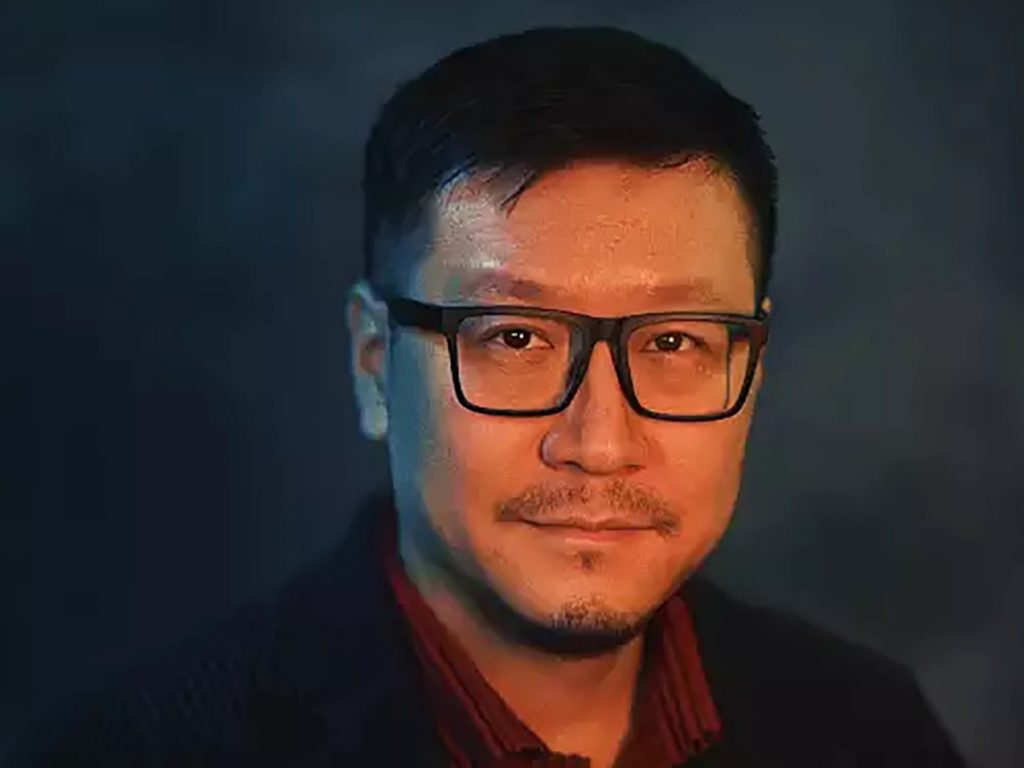
The Syracuse University community, and the global architecture community as a whole, has lost a dynamic architect, mentor and a connector of people. Fei Wang, associate teaching professor in the School of Architecture, passed away in a traffic accident in London on Dec. 8, leaving behind a legacy of connection, collaboration and tireless dedication that transformed countless lives across continents.
“Fei Wang’s legacy endures in the students he mentored, the collaborations he facilitated, the exhibitions he curated and the bridges he built between East and West,” says Michael Speaks, Syracuse Architecture dean and professor. “His life reminds us that architecture’s highest calling lies not in buildings alone but in the connections we forge and the opportunities we create for others.”
Wang embodied a combination of roles: architect, educator, critic, curator, entrepreneur and, above all, a connector of people and ideas. As director of China programs and M.S. program coordinator in the School of Architecture, Wang managed numerous responsibilities.
During the pandemic, he organized studios and classroom spaces for 150 of the school’s students who could not leave China, ensuring they could continue their education remotely. This effort earned him the University’s prestigious Chancellor’s Citation for Outstanding Contributions to the Student Experience and University Initiatives in 2022.
Wang was a dedicated advocate for students, personally guiding hundreds through internship applications, graduate school preparations and the transition into professional practice. He connected students with opportunities across China and introduced his colleagues to an extensive network of architects, deans, professors, curators and editors throughout Asia, many of whom became lifelong friends and collaborators.
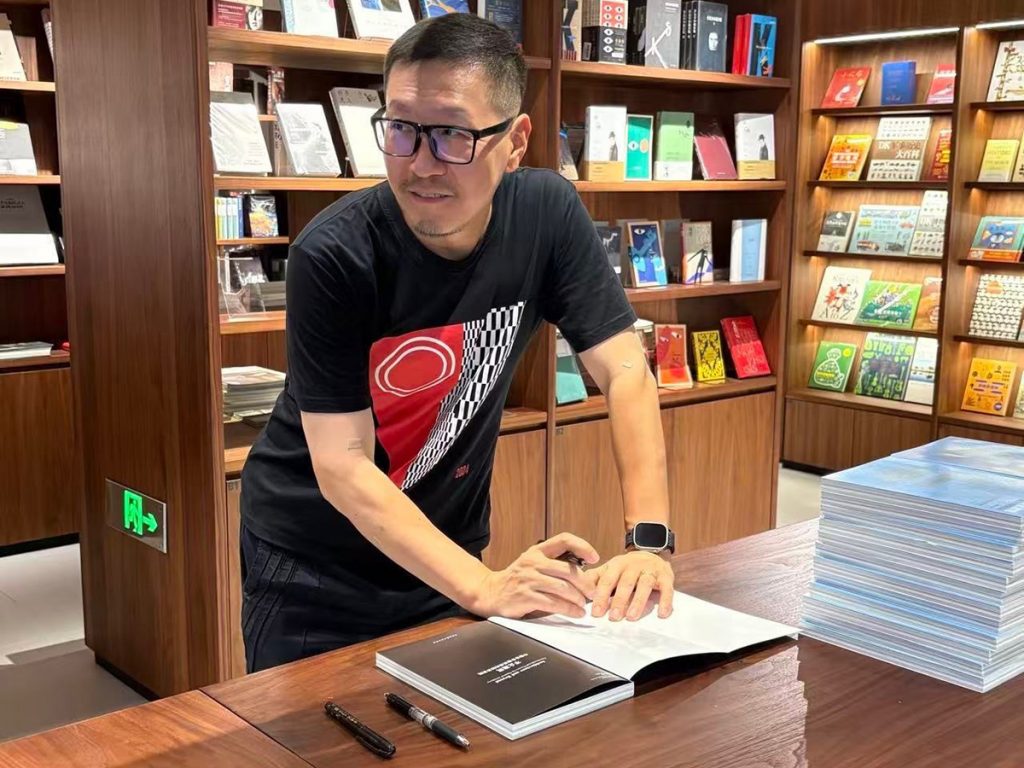 Wang at a book signing
He worked closely with Vittoria Buccina, assistant dean for enrollment management in the School of Architecture, to recruit students from China, Hong Kong and Canada.
“Fei represented Syracuse University and the School of Architecture with unwavering pride. He always put students first and was a mentor to many, ensuring their work was entered into major design competitions, biennales and curated for museum exhibitions,” Buccina says. “He often shared his belief that the future of architecture in China would be shaped by Syracuse alumni, and he spoke passionately about the school’s commitment to its students. ‘Fei’ means ‘to fly,’ and that is exactly what he taught his students to do: to become the very best versions of themselves.”
“To know Fei, even a little bit, was to be immersed into a global matrix of design culture. He was on the pulse—one of its muscles,” says Ted Brown, professor emeritus of architecture. “Fei was Superman—always moving, always planning, teaching, writing, curating, recruiting, designing.”
Brown says that at a time of increased global tension, Wang was a crucial link between Chinese and U.S. design culture.
“Syracuse Architecture was a critical conduit for this cultural exchange. Student work was exhibited in Shenzhen, Beijing and Shanghai. Prominent Chinese architects were brought to the U.S. to teach, give workshops, lecture and join design reviews. Students traveled to China and had the opportunity to study in the Three Cities Asia summer program,” says Brown. “What Fei did to help transform the school, with Michael Speaks at the helm and Vittoria Buccina at his side, was quite extraordinary.”
Brown says that Wang’s efforts made the School of Architecture more global in its outreach, extracurricular events and curriculum. “I hope Fei’s vast network of friends, colleagues, students, artists and architects will remain part of Syracuse architecture for decades to come,” he says.
Wang’s scholarly work demonstrated the same commitment to fostering dialogue between cultures. He wrote extensively for Chinese publications as well as Western journals. Wang was the curator of “Decoding Eisenman: Beyond Form,” a landmark exhibition that opened this fall at the China Design Museum in Hangzhou.
As a designer and entrepreneur, Wang co-founded FWStudio and the URSIDE Hotel Shanghai—an unconventional hospitality project that embodied his interdisciplinary approach. His work earned numerous awards and was exhibited globally.
Throughout his career, Wang taught at prestigious institutions, including the University of Hong Kong, Tongji University, China Academy of Art, University of Michigan and the Architectural Association and lectured worldwide. Wang held degrees from Tongji University (B.Arch.), Virginia Tech (M.Arch.) and McGill University (M.Arch. in history and theory).
A memorial service in Syracuse has been tentatively planned for January. More details will be forthcoming.