
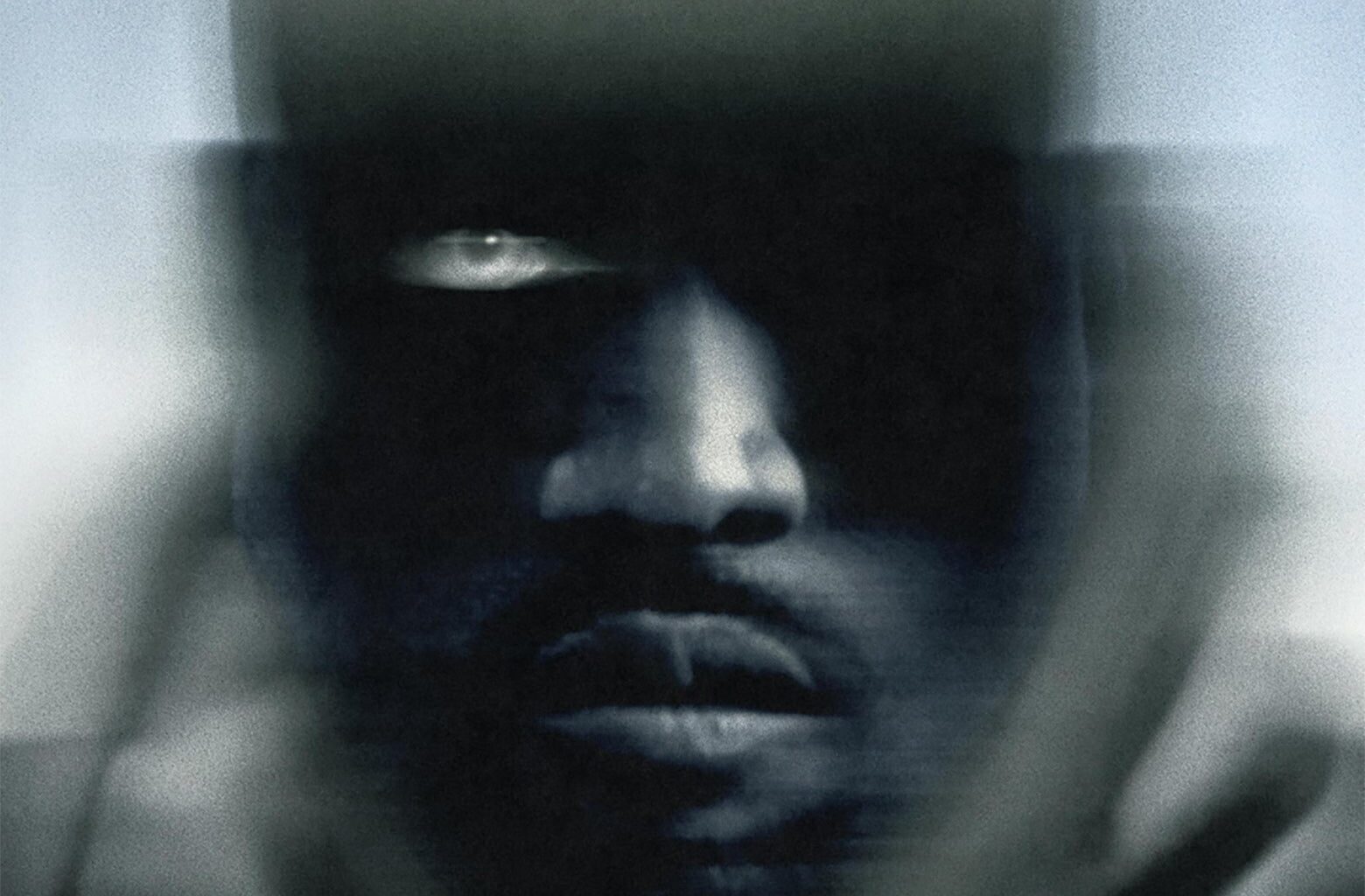
In 2016, Kanye West gave an aspiring young filmmaker a chance, which is how Nico Ballesteros, a teenager from Orange County, was given unlimited access to West’s life for the span of time in which the rapper’s reputation would irrevocably, fundamentally shift. Ballesteros shadowed West, who goes by Ye, for six years, collecting over 3,000 hours of footage depicting unbelievable highs and lows for one of entertainment’s most controversial figures. West has publicly dealt with mental health issues and a bipolar diagnosis that has colored his erratic, and often politically incorrect, public behavior—conduct that has, in recent years, included everything from threatening his ex-wife, Kim Kardashian, and her other partners to spouting antisemitic language on various forms of social media. All of this and more was captured in the footage, which was then distilled into a concise documentary—titled In Whose Name?—that originally premiered in theaters in September and is newly available to stream on demand. Ballesteros aimed for something closer to cinéma vérité than conventional documentary-making about a public figure: There are no talking-head interviews or commentary, and the vast majority of the movie was shot on iPhones, allowing the young filmmaker to become a fly on the wall during West’s more destructive private moments. The result is a documentary that perfectly encapsulates the difficulty of meaningfully evaluating a complex cultural figure like Kanye West.
In Whose Name? tries to be honest—or, as honest as an offering of less than two hours out of 3,000 can be. Where most documentaries would spend a significant amount of time recapping the incredible creative merits West should be exalted for, Ballesteros assumes you know all of that already. The film traces the growing severity of West’s mental health issues; toward the beginning of the documentary, he claims that he has been off his “meds for five months now.” It’s a common outcome for creative people who suffer from demons many wouldn’t understand. While medicated, they don’t necessarily feel like themselves, or like they can reach their full creative potential. West acknowledges as much, toting how much work he’s done as an artist since being off his meds, proclaiming, “I would rather be dead than be on medication.” But, in the six years of filming days that took 15–18 hours, what is shown is mostly an insider look at a music titan’s volatile descent.
It’s not hard to find a chronology of how West went from one of music’s heroes to one of the industry’s largest thorns over the years covered in the documentary. During this time, West launched a full-throated pivot to Black conservatism, donning MAGA hats and befriending Donald Trump, spouting conspiracy theories about modern-day slavery and lambasting the Black Lives Matter movement, doxxing a journalist, compromising the safety of Kardashian and their children via erratic social media posting, and spewing antisemitic comments so severe that multiple brand partnerships cut ties, ruining the billion-dollar reputation he had built with his clothing brand Yeezy when his brand partner, Adidas, ended the collaboration. The documentary includes inside looks behind some of his most infamous moments, such as him butting heads with Michael Che over his pro-Trump Saturday Night Live rant in 2018, meeting with Charlie Kirk and Candace Owens to disparage the Black Lives Matter movement and introduce his divisive White Lives Matter T-shirts, announcing his own presidential campaign (which came to naught), and the moments before his controversial 2022 live album performance with Marilyn Manson (who has battled a number of assault and abuse allegations over the years). All of this was a far cry from the pro-Black multihyphenate fans had gotten accustomed to in West’s earlier years, the one who was raised by a prominent activist, the one who said with brutal honesty on live broadcast that George W. Bush “doesn’t care about Black people” after his administration became known for botching the relief response to Hurricane Katrina.
But underneath all of it is a palpable sense of paranoia, sadness, and rage. In a black SUV pulling up to the White House to meet Trump, West insists, “I need to go in the exact way that a foreign dignitary would go.” He continues: “I’m not going to step outside and put my life in danger. … There’s people who potentially want to kill me for wearing this hat.” We watch him unleash vocal tirades against his family members a number of times, bellowing at Kris Jenner and snapping at Kardashian. In a particularly tense moment in Uganda in 2020, after blowing up on one of his family members and then claiming that his tantrums and outbursts are a part of his personality, Kardashian responds in tears, “Your personality was not like this a few years ago.” And alongside the paranoia and rage is a healthy level of delusion. In an on-camera interview with the podcast Drink Champs, West is shown boasting: “I can literally say antisemitic shit and Adidas can’t drop me.” A mere cut later in the documentary, the fashion company does just that, officially tarnishing West’s recently minted billionaire status.
We have known for years that West has been warring with his mental illness, but it’s one thing to know it and another to see it. Those of us who know or have known people dealing with similar struggles would find the scenes within In Whose Name? familiar, but those of us who haven’t would find the sight rather eye-opening. Yet, notably, the documentary doesn’t tell us what to do with that conflicted feeling of squaring away someone’s illness with the harm they’re doing to others (and the significance they carry as a cultural and artistic hero). Perhaps that’s what West likes about the film, evidenced by an alleged text conversation Ballesteros posted to his Instagram in 2024, which shows the rapper telling the director, “That doc was very deep. … It was like being dead and looking back on my life.” Simran A. Singh, the film’s producer, told the Hollywood Reporter that “this film presents a raw and often unsettling portrait, without commentary or conclusion, leaving viewers to interpret the events for themselves.” And this much is certainly true, but the idea that we haven’t already tried to sit with the complex position West holds in culture is a misguided one. We’ve had this conversation as a culture many times over, and the discourse always circles the same drain: West is unwell, still harming people, and occasionally still culturally innovating in enticing ways for hip-hop and music fans. The issue isn’t that we haven’t asked ourselves how to deal with these conflicting vertices of his complex matrix—the issue is that there is no good answer.

Luke Winkie
It Used to Be the Coolest Band in the World. How Did It Get So Cringe?
Read More
The Truth About the Avatar Movies That No One Wants to Accept
The Movie of the Year Was Also a Surprise Blockbuster
And still, despite his endless cascades of public controversies—just this year he revived his antisemitic remarks, even releasing a single titled “Heil Hitler,” just to apologize weeks later—West has been successful, blazing a trail with his iconic 2019 Sunday Service performances and releasing popular albums Donda and Donda 2. Yeezy still exists independently, while Adidas just sold its last pair of Yeezy sneakers (leftover backstock from the initial partnership) in March. At the start of the year, West bullishly claimed he was a billionaire again, though no external outlets have supported the claim. He’s currently working on his upcoming 12th studio album, Bully, which is set to release in January and is highly anticipated. If he has been able to amass this type of cultural significance and attention despite continuing to threaten his loved ones online, disparage ethnic groups, and show a blatant disregard for the safety and humanity of others, I think that’s proof that we’ve made up our minds about him: He’s been relegated to a kind of purgatory where the public will be sad about his actions and maybe even resent him for them, but not enough to stop streaming his music or buying his monochromatic attire.
In the documentary’s epilogue, showing footage from 2024, West tells Ballesteros, “If you’re documenting every, almost, waking moment, and sometimes sleeping moments, of my life and you don’t understand the through line, then the world’s not going to understand the through line.” But we do—we have. In Whose Name? is afraid to make a decision about West, as are we as a culture. If anything, the doc only proves that the through line is the same as it always has been: West has become our own beautiful dark twisted fantasy.
Get the best of movies, TV, books, music, and more.