
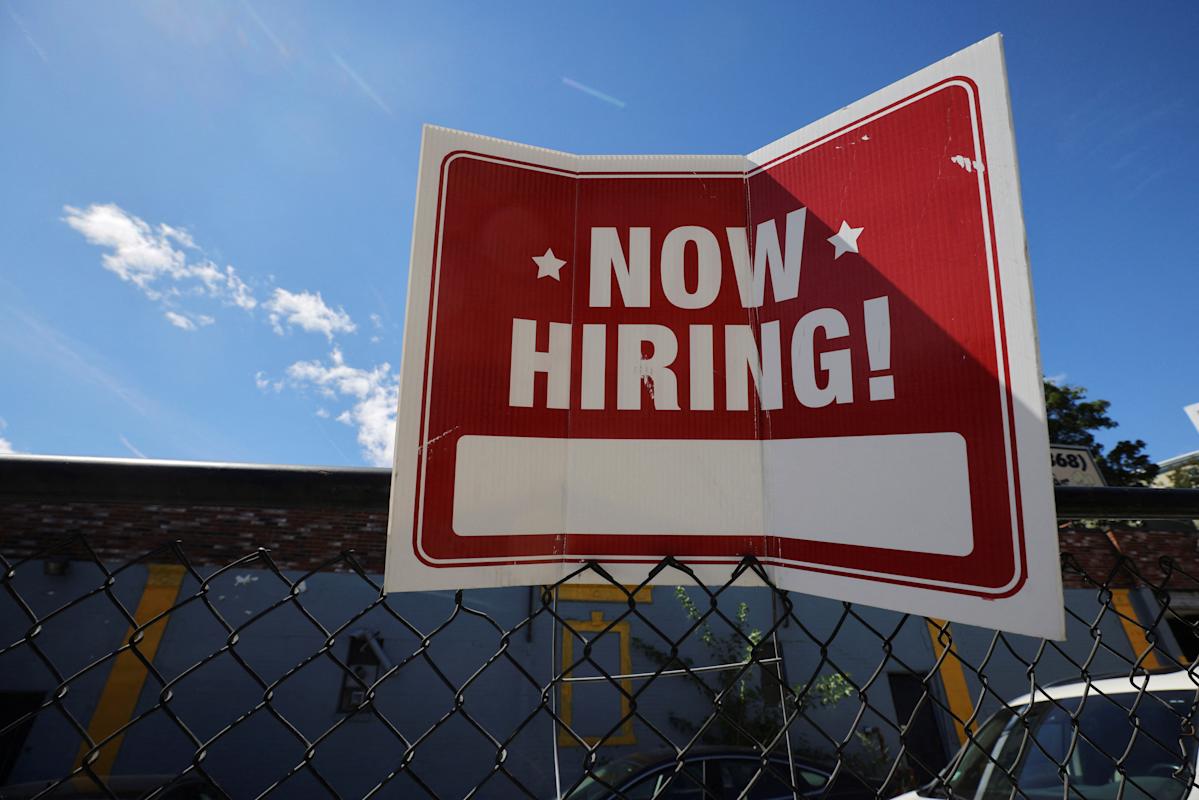
The pace of job changes has slowed in recent years, resulting in fewer people entering new roles. About four of every 1,000 workers changed jobs each month in late 2025, down from roughly seven per 1,000 in the years preceding the pandemic, according to Statistics Canada data.
Economists attribute the recent decline to a drop in job vacancies, worsening housing affordability, and a more cautious workforce, following years of economic shocks.
For job seekers, opportunities aren’t as plentiful, says Brendon Bernard, senior economist at Indeed. The job-change rate, which spiked in 2022 when vacancies were “through the roof,” has declined as vacancies decreased. Job-hopping is substantially lower than it was at pre-pandemic levels, he says.
 The monthly job-changing rate in Canada. · Yahoo Finance
When the labour market is functioning well, workers — particularly those early in their careers — are finding better jobs and creating opportunities for new entrants to fill the gap.
“When people stop changing jobs, a sort of traffic jam develops,” Bernard said. “If there are fewer opportunities for those to move up the ladder, it might mean fewer entry-level opportunities for those looking to just get in the workforce.” For a job market that’s showing signs of weakness for youth, it’s concerning, he adds.
Job mobility is also important for workers, more generally, because it typically provides an opportunity to gain more responsibility and earn higher pay.
Job vacancies are likely only part of the reason job changes have slowed, Bernard adds. There are other factors, he says, such as whether employers are actually making a concerted effort to fill roles through recruiting and other means.
A low job-change rate isn’t always negative. In fact, job quality may have improved in recent years, making workers less inclined to seek new opportunities. Indeed’s own data reveal that, on average, urgent job seekers rate their current employment situation noticeably worse than others, which suggests that workers who stay are likely to be more satisfied.
Bernard suggests that if employers increased the amount of information on their job postings, it could lead to a more dynamic labour market. For instance, Ontario’s forthcoming pay transparency rules could help job seekers who have been underestimating their outside options, he said.
Colin Mang, an assistant professor of economics at McMaster University, notes that the Canadian housing market also influences job mobility. Prior to the pandemic, major cities like Toronto and Vancouver were still experiencing a housing crisis, but the rest of the country felt more affordable, said Mang.
Now, moving may not seem as worthwhile, he adds.
“If you want people to be willing to take greater risks and to change jobs and to find something where they might be more productive and earn more money, you have to make it easy for them to move from one place to another,” he said. “Without that piece, it’s going to be harder to convince more people to go on the job market and to look.”
Canadians are also grappling with a series of economic shocks, leaving them uncertain about the future.
“We’ve gone through a really difficult time with the pandemic and then with the inflation that followed, and now we’ve gone sort of basically right into a trade war,” Mang said.
As a result, people are more hesitant to take risks, he said, especially since U.S.-Canada trade negotiations are ongoing.
“People are more likely to move jobs when they have optimistic views about the economy and about the direction of the country. I don’t think that we’re in a state right now where that are a lot of optimistic people out there.”