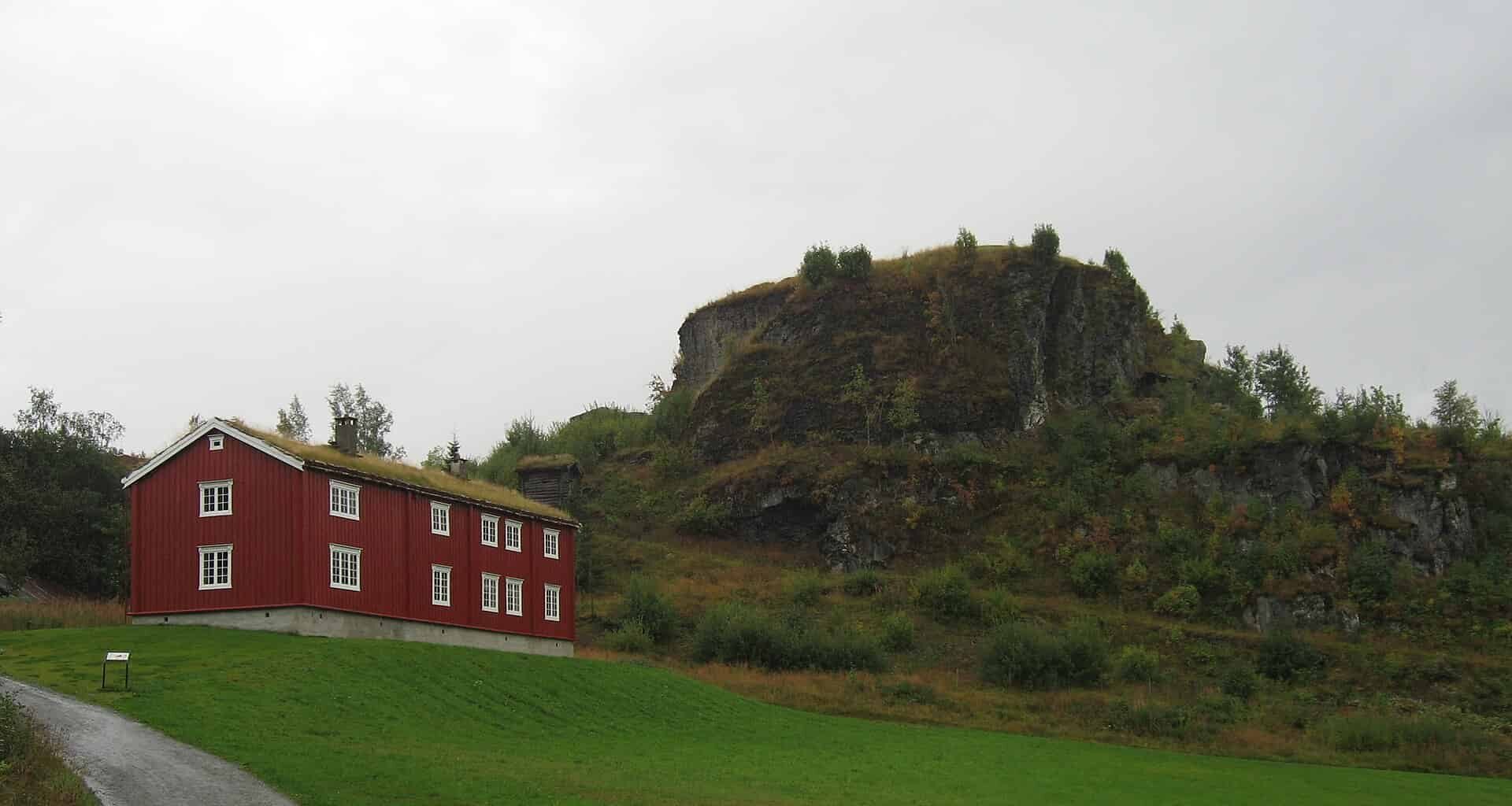
King Sverre Sigurdsson had a tumultuous reign, but perhaps the darkest day for his stronghold came when he wasn’t even there. In 1197, while the King was wintering in Bergen, his enemies (a faction known as the Baglers) launched a sneak attack on his stronghold, Sverresborg Castle.
According to Sverris Saga, the Baglers didn’t just burn the castle to the ground; they left a parting gift to ensure the fortress remained uninhabitable. The saga states they seized a dead man and threw him headfirst into the castle’s drinking well, filling it with stones to poison the water supply.
For centuries, that story was treated as a grim legend. Now, researchers have managed to confirm it.
“This is the first time that a person described in these historical texts has actually been found,” says Professor Michael D. Martin of the Norwegian University of Science and Technology’s University Museum in Trondheim, Norway. “There are a lot of these medieval and ancient remains all around Europe, and they’re increasingly being studied using genomic methods.”
 View of the former castle hill today. Image via Wiki Commons.
Fact Checking a Saga
Sagas from the medieval era, like the Norse sagas, are a fascinating mix of fact and fiction. They weave together real historical events, larger-than-life characters and mythic embellishments. The problem is, you never really know what’s fact and what’s fiction.
The Sverris Saga, written in the 12th century, describes King Sverre’s rise to power and his conflict with the Baglers. The Baglers were backed by the church and nobles from southern Norway, while Sverre’s men—the “Birkebeiners”—were often commoners from central Norway.
The “Well-man” mentioned in the saga was a historic mystery until modern archaeology intervened. Excavations in 1938 first uncovered a body at the base of the old well, but it wasn’t until 2016 that deeper digs unearthed the rest of the skeleton.
Radiocarbon dating confirmed that the body is around 900 years old, and previous studies suggested it was a man aged 30-40 years old. But a little correction was required.
Pinpointing the date of the remains required a bit of scientific correction. Isotope analysis of the Well-man’s bones revealed that seafood made up about 20% of his diet. Because carbon from the ocean appears ‘older’ than carbon from the land, the researchers had to correct the radiocarbon date to account for his marine diet. Once corrected, the date range (1153–1277 CE) aligned perfectly with the saga’s account of the 1197 raid.
Who Was the “Well Man”?
The skeleton itself tells a violent story. When archaeologists recovered the remains, they found the left arm was missing and the skull had been separated from the body. Analysis revealed a blunt force injury to the back of the head, along with two sharp cuts to the skull. These wounds suggest the man was likely killed in combat or executed before being cast into the well.
It’s hard to say exactly who this unfortunate man was, but researchers have deducted some aspects about him.
For starters, the Well-Man’s physical traits, reconstructed through genetic markers, offer a glimpse into what he might have looked like. Using DNA-prediction models, researchers believe he likely had blue eyes and light-colored hair, both common traits in modern Scandinavian populations.
The researchers also tested the Well man’s DNA for signs of infectious disease. Ancient skeletons are valuable sources of information about past epidemics. DNA from pathogens like Yersinia pestis (plague) can sometimes be detected in the teeth or bones of old skeletons. In this case, no significant pathogens were found. However, researchers noted that DNA degradation or contamination could have affected this outcome.
The Well man’s southern Norwegian ancestry makes him a likely member of the Baglers. This suggests the Baglers may have thrown one of their own dead men into the well, or perhaps the Well-man was a southern sympathizer living in the castle.
“The unique genetic drift seen in present-day southern Norwegians was already existing 800 years ago,” the study notes, highlighting how stable these populations have been over centuries.
The Cost of Discovery
Getting these answers required a difficult trade-off. To sequence the genome, the team had to grind part of the tooth into powder, destroying that portion of the sample.
“It was a compromise between removing surface contamination of the people who have touched the tooth and then removing some of the possible pathogens … there are lots of ethical considerations,” says Ellegaard. “We need to consider what kind of tests we’re doing now because it will limit what we can do in the future.”
For historians, however, the sacrifice was worth it. The discovery of the Well-man provides a rare moment where “biological data” and “written history” align perfectly, turning a line of text in an ancient saga into a tangible human reality.
Ancient DNA offers a rare chance to test historical narratives that were often written centuries after the events they describe. By using similar methods, scientists now hope to reconstruct the genetic history of more regions and possibly link genetic data with other historical events, from migrations to epidemics.
The study was published in iScience.
This article has been edited. The original version wrongly claimed that the king had attacked the castle. Additional information from the study has also been added to the article.