
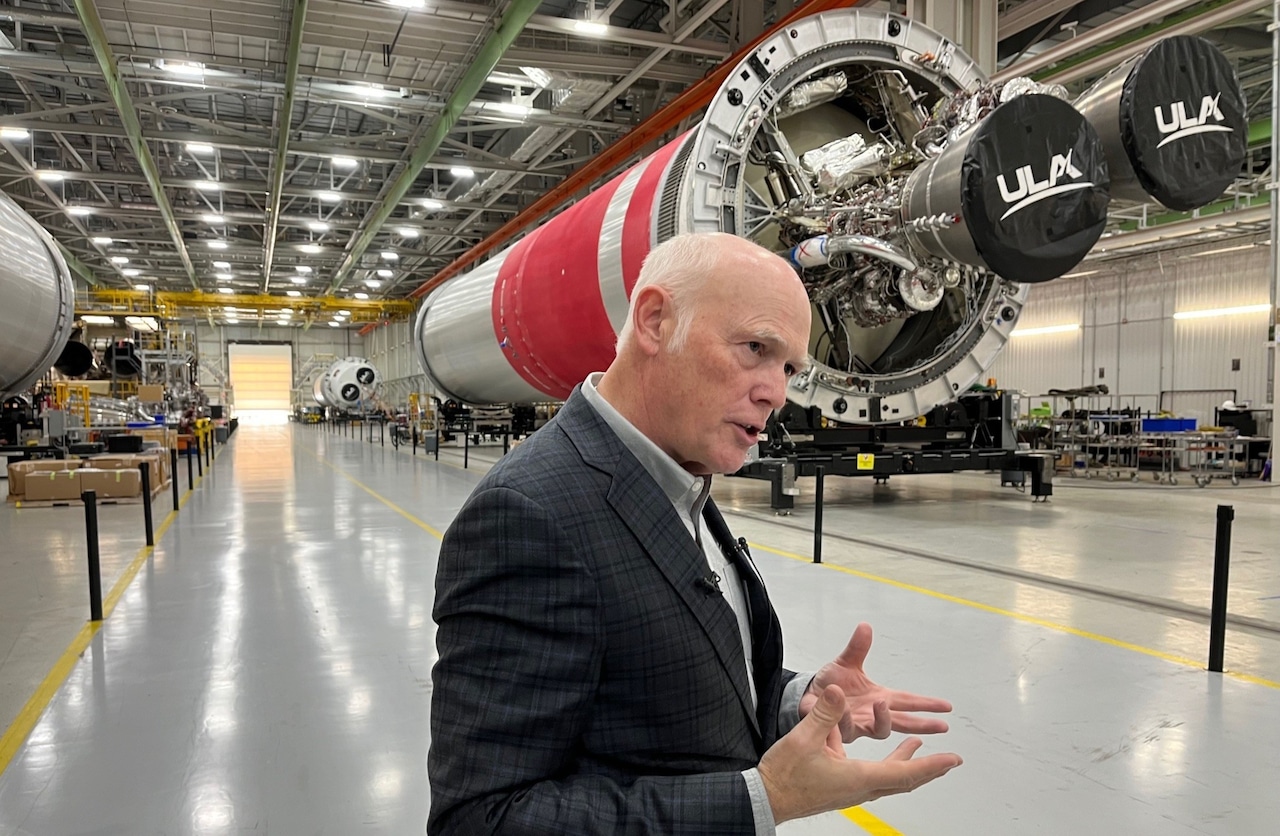
The president and CEO of the company that operates the world’s largest rocket factory in Decatur has resigned.
Lockheed Martin Space, which is equal partners with Boeing in United Launch Alliance, thanked Tory Bruno for his leadership of the company for the past 12 years in a post on X.
“After nearly 12 years with @ulalaunch, we’re grateful to @ToryBruno for his leadership as he departs for a new opportunity,” the post read. “And we congratulate ULA’s COO, John Elbon, as interim CEO and look forward to his leadership and exciting milestones ahead for the Vulcan rocket.”
The company is transitioning to Vulcan only rockets being built at the Decatur facility. The facility previously built Atlas V and Delta IV rockets. The final Atlas V rockets built in Decatur are awaiting launch, Bruno told AL.com during a visit to the facility last fall.
“Thank you for the opportunity to lead this amazing team,” Bruno said in a post on X. “They have put ULA in a great position to do important things for our customers and Nation.”
Bruno had been president of Lockheed Martin Strategic and Missile Defense Systems before becoming CEO of ULA. He worked on space and missile programs for 30 years.
ULA operates a 2.2 million-square foot facility not far from the Tennessee River in Decatur that opened in 1999.
The Vulcan rocket now being built in Decatur is designed to go deeper into space, travel faster and carry a heavier payload. It has been designed to meet the needs of one of ULA’s largest clients, the U.S. government. ULA and competitor SpaceX both have national security contracts with the government.
The workforce has grown from about 600 to more than 1,000 in the last five years.
“We’re not done yet,” Bruno said during his interview at the plant. “There is a giant global shortage of launches, so it is really important to the country that we ramp up this launch rate. We’re building rockets here as fast as we can.”
Bruno said the plant produced Atlas V rockets at a rate of 10 to 12 per year. The goal now is to produce 20 to 25 Vulcan rockets a year.
Some of the rockets could be used for manned space missions in the future, he said.