
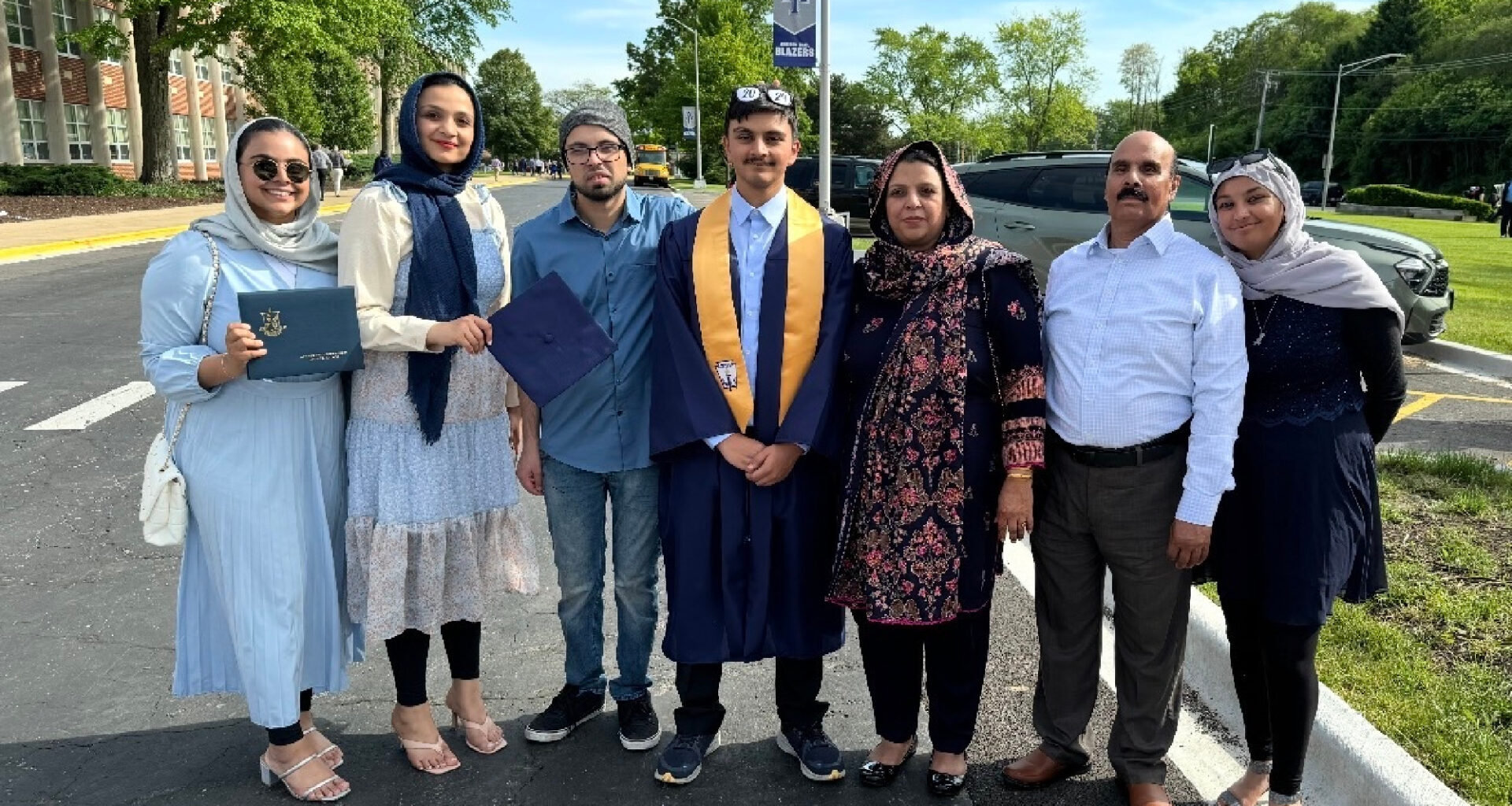
HUMBOLDT PARK — The family of a Humboldt Park business owner says he was mistreated while in federal immigration custody last week — and was set to be deported without their knowledge.
Asif Amin Cheema, 63, is a longtime Chicago-area resident who owns the fast food lunch restaurant Best Sub #2 in Humboldt Park, 2653 W. North Ave. Originally from Pakistan, Cheema has been in the United States since the ’80s, going back and forth between countries with a visa until about 1997, said his daughter, Rabia Amin.
Cheema has been in ICE custody since Sept. 17, when Border Patrol agents stopped him while he drove in suburban Addison, where he lives, his family said. During his time in detention, his health has quickly declined, his daughter said. Cheema, who has had two heart attacks, has several health issues, including diabetes, high cholesterol, problems with his heart and thyroid and glaucoma.
Cheema’s family has been fighting to stop his deportation to Pakistan over a 1993 removal order that Amin said they “had no idea” about until her father was detained as part of Operation Midway Blitz.
“It was the worst day of my life,” Amin said, recalling the day she checked his location and found him at the Broadview processing center. “He’s not going back — we will fight tooth and nail before we let him go back to Pakistan.”
The Justice Department argued that Cheema has been subject to a final order of removal since 1993, according to a court filing last week provided by Amin. A previous attorney representing Cheema failed to make him aware of the order and give him the opportunity to clear it, his daughter said.
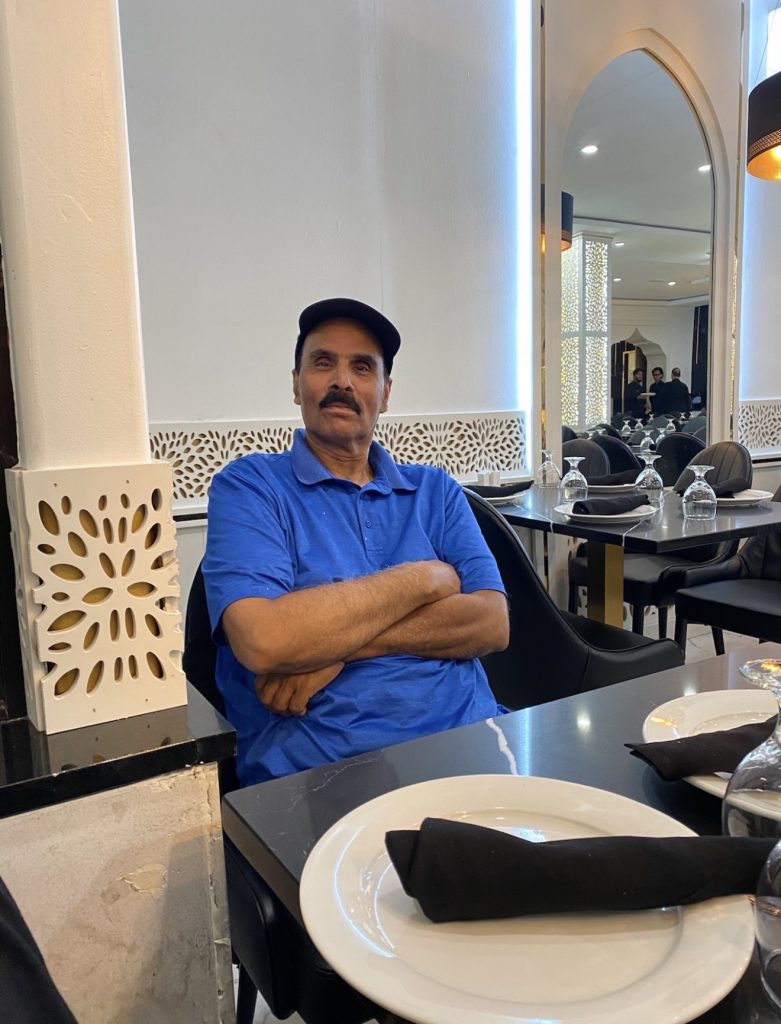 Asif Amin Cheema, 63, seen sitting at a table. Credit: Provided
Because of the order, Cheema, who was being held in Indiana, was transferred to another jail for three days last week. This occurred without the family’s knowledge, and Cheema was denied the ability to make phone calls, Amin said. While at the Frankfurt, Indiana, jail, Cheema was denied his medication for at least three days, his daughter said. He repeatedly asked for help and medicine from guards to no avail, she said.
On Wednesday, Cheema was taken to O’Hare Airport for a flight back to Pakistan, but he was held in a basement waiting room of the airport for over five hours before his 5 p.m. flight, Amin said. During that time, he began to feel dizzy and unwell, calling on guards and waving his hands at the video cameras for help, Amin said.
“He was like, ‘I need help. I don’t feel good. I need help. I need help. I need help. I need help. I need help,’ but he was ignored the whole time,” his daughter said, recalling what her father told her that evening.
No one came until Cheema collapsed on the ground, prompting agents to rush him to Resurrection Hospital, his daughter said. That’s when a nurse called to inform the family of Cheema’s condition and said he had been about to be put on a plane, Amin said.
At the hospital, Cheema was treated for a headache, underwent testing and was given anti-pain medication, according to an after-visit summary from the hospital shared with Block Club. But the hospital did not have access to Cheema’s previous medical history, so it’s unclear if he was treated properly, Amin said.
Resurrection doctors suspected Cheema’s collapse was due to poor nutrition, lack of sleep and minimal hydration, per the summary document.
“We still have no idea why he collapsed,” Amin said.
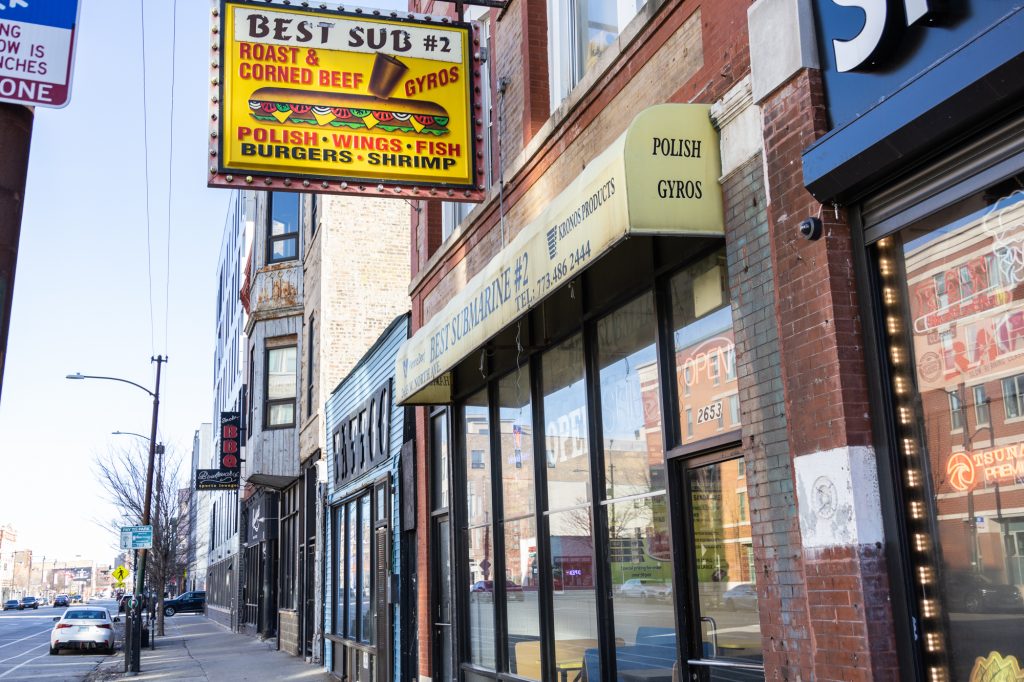 Best Sub sits at 2653 W. North Ave. on Friday, Dec. 19, 2025. Credit: Jeremy Battle/Block Club Chicago
Cheema is back in the Indiana jail and has told his daughter he again felt dizzy with blurred vision Friday. On Monday, she said he’s back to being given his daily medication.
The federal appeals court in Chicago blocked Cheema’s deportation last week — the same day he collapsed — on a temporary basis as it considers a longer-term order, according to Amin and court records. A response by Cheema’s lawyer was due Monday, and the family is now waiting to hear from a judge.
Tricia McLaughlin, assistant secretary with the Department of Homeland Security, denied that Cheema was denied medication.
“At the airport, when officers attempted to board him for his flight, he claimed chest pains,” McLaughlin said in a statement. “Out of an abundance of caution, Cheema was immediately transported by ambulance to a hospital, where he was medically cleared within hours.
“… Cheema received all medications and received prompt and appropriate medical attention, as evidenced by his ambulance transport and hospital evaluation.”
‘This Is Wrong’
The situation has put the family in limbo as they work to fight for Cheema’s future, keep the Humboldt Park business afloat and support each other. Cheema, who was the family’s breadwinner and had no criminal record, has a wife and five children who depend on him emotionally and financially, Amin said.
Not having Cheema around, not knowing how he’s being treated while in custody and with little to no transparency from federal authorities has turned life upside down for the family, Amin said.
The adequacy of medical care for people in detention, and the continued detention of a “non-violent, long-established community member” whose sudden arrest has caused emotional, physical and financial harm to his loved ones, is also concerning, Amin said.
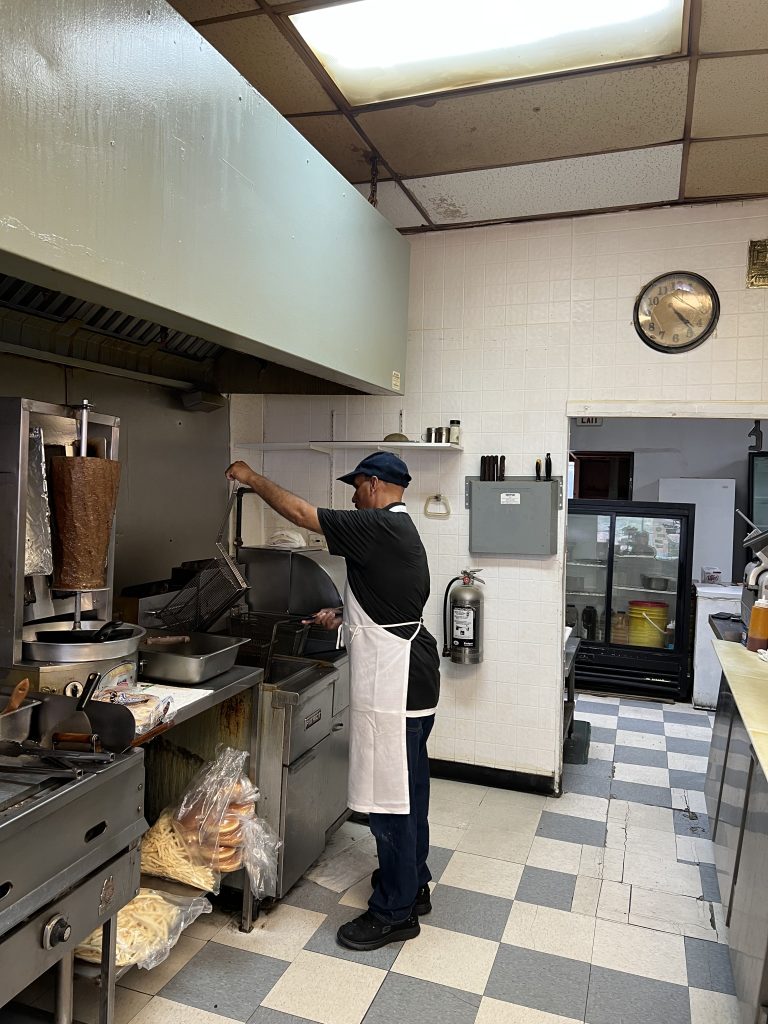 Asif Amin Cheema seen working at Best Sub, 2653 W. North Ave., his fast food shop in Humboldt Park. Credit: Provided
Cheema is known as Amin Choudry to some in Humboldt Park, and he has helped other Pakistani immigrants open businesses around the city and suburbs since the ’90s, Amin said.
“If this happens to my dad, this is happening to hundreds of people — this is what they are doing to people,” said Amin, who went to law school. “Due process was violated. The government needs to be held accountable. Denying medical attention and access to his family is disgusting and wrong. The judge needs to hold them accountable.”
Amin said her family also wants neighbors who may not understand the immigration system to educate themselves on the lengthy steps it can take for someone like her father to become a citizen. Because of the work authorization and visa Cheema had, he was eligible to begin the path to citizenship after one of his U.S.-born children turned 21 to sponsor him. Earlier this year, he was interviewed by immigration officials for his green card, Amin said.
“Don’t be mad at a person for not being able to get their citizenship — be mad at the government for not making it accessible,” she said.
What’s keeping Amin going is talking to her father twice a day as he usually calls about 1 and 9 p.m. from the detention center, she said.
“We are a religious household, so he turns to God during really hard times. … That is what pushes him and keeps him grounded,” Amin said. “We’ve always been a house that prays, but we’ve definitely been doing it more so during these times. As Muslims, it brings us relief.”
Listen to the Block Club Chicago podcast: