
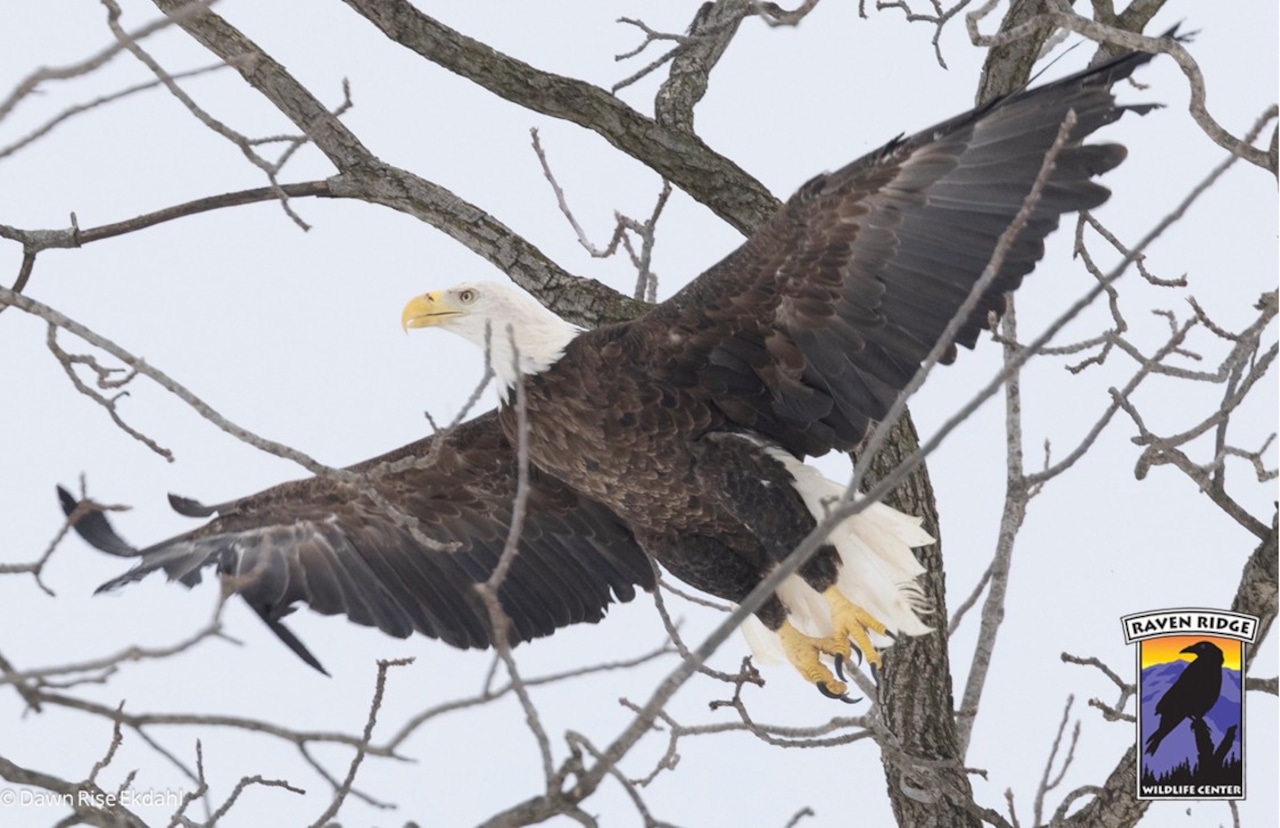
It started with a bald eagle named Halifax.
Then came a baby eaglet. Then eagles named Hellam, Quarryville, Felton, Millersville and Delta, named after the towns where they were found wounded.
In all, that meant seven bald eagles were in the care of Raven Ridge Wildlife Center in Lancaster County at once, something that hadn’t happened before. Usually the center cares for two or three at most at a time. But they are seeing an increase in the number of bald eagles who need their help every year.
Of their recent rescues, the seventh and final eagle was recently released back into the wild.
“We’re all looking back, and we’re like how did we ever do this? How did we do this?” Raven Ridge Wildlife Center Director Tracie Young said. “They just kept coming in, and we’re like, we can do this. It was just amazing, but it was a lot of work.”
The center typically doesn’t name their patients, but they had so many bald eagles at once that they needed to so they wouldn’t get mixed up. One of the most emotional releases was Halifax on August 19th, after more than 100 days in care.
Halifax was shot in the leg with a slingshot, and couldn’t stand or walk. He had chest tubes in and workers had to pull air out of his cavity so he could breath.
“To have Halifax released, we just all stood there and cried, because it was blue open skies,” Young said. “Halifax took to the thermals [a wind current] and two more bald eagles came in and joined him, so they were all three flying around together up in the thermals, and it was just so emotional.”
When eagles are released, Raven Ridge Wildlife Center invites a veteran to join them and pull the covering off the eagle’s crate, in a program called Wings of Legacy. As the eagles take to the sky, everyone holds their breath, Young said.
Before a bird’s release, the center puts them in 100-foot flight pens for several weeks to make sure there isn’t severe organ or heart damage and that they can perch and find food. Still, it’s nerve-racking.
“It’s all going to be different when there’s no more cage, so we get nervous. Is this bird going to come out and crash? What’s going to happen?” Young said. “When that veteran pulls that towel or blanket off the crate and the bird comes out and takes to the sky, its a sigh of relief. We did our job, and now this eagle has a second chance.”
None of the other eagles were shot: the eaglet had its nest destroyed and the others had lead poisoning, a dangerous and deadly substance for bald eagles. Lead poisoning can lead to gastrointestinal dysfunction, neurological impairment, weakness and emaciation and reduced activity. Young said two BB-sized pieces of lead ingested by a bald eagle will kill it.
But how does an eagle end up ingesting lead?
Like many things in nature, it has to do with the food chain and human interference.
Eagles are scavengers and “kind of lazy hunters,” Young said, so they opt for easy meals like roadkill or carrion before they would expend energy to get a rabbit or a fish.
In Pa., you can shoot a groundhog seven days a week. When farmers prepare their property for planting, they shoot groundhogs on site because it can be dangerous for their farm equipment and livestock to have holes in the ground. They don’t typically pick up the groundhog, as it’s not a common meal for humans, instead, leaving it for scavengers. It’s not a farmers-only problem: Many private land owners don’t want groundhog holes in their lawn.
The problem comes in the ammunition groundhog hunters usually use: lead, which is cheaper than other ammunition. lead is a soft metal, so when it hits a target, it fragments. With something as small as a groundhog, it fragments throughout the entire animal, which is an easy meal for foxes, hawks and bald eagles.
Another way lead gets into bald eagles is during hunting season. When a sportsman field dresses a dear, they leave the dressing in the field for scavengers and the dressing has lead in it. Sometimes, the sportsmen never find a deer, and the deer keeps running with lead ammunition in it before it eventually dies.
“It’s going to be a great meal and an amazing food source for this time of year, so the eagles are going to hang out at that dead deer for days scavenging on it, and the whole time they’re scavenging on it, they keep taking in more lead because it’s throughout the meat,” Young said.
Lead ammunition for water fowl hunting is illegal because fragments can get into the water. However, many fishermen use lead sinkers and lead jigs.
Loons, swans, ducks and geese use pebbles as grit to break down their food, and many times, they pick up a lead jig and ingest it. Then, the bird gets sick and dies, and the eagle comes in and eats the dead goose.
When bald eagles are brought into the shelter with lead poisoning, staff uses Chelation, an expensive medication, to pull the metal out of the eagles body.
“They need fluids, they need injections of medication, they need oral medication, a lot of them need hand fed because they can’t stand, they can’t eat on their own,” Young said. “So it’s a very taxing and demanding rehab, even for one, and seven was unbelievable.”
The Raven Ridge Wildlife Center is trying to raise awareness and educate the public and sportsmen on the dangers of lead for wildlife.
“We aren’t saying don’t hunt,” Young said. “What we are asking for is to change your ammunition. There are alternatives, like copper, steel, bismuth and tungsten.”
Raven Ridge Wildlife Center currently covers 17 counties across the state. Young said game wardens have driven over two and a half hours to the center with bald eagles because it has such a good reputation and success rate with the raptors.
Here’s a list of each bird and the date they entered and left the care of the center:
Halifax: Arrived April 18 and released Sept. 7, 143 days in care.Baby eagle: Arrived April 30 and released Aug. 19, in care for 112 days.Hellam: Arrived May 4 and released July 26, 84 days in care.Quarryville: Arrived May 24 and released Dec. 17, 208 days in careFelton: Arrived May 30 and released Aug. 21, 84 days in care. Millersville: Arrived June 18 and released Sept. 7, 82 days in care Delta: Arrived June 22 and released Sept. 7, 89 days in care.
Bald eagles, the U.S.’s national bird, were removed from the list of threatened and endangered species in the U.S. in 2007, but are still protected under federal law. Killing, selling or harming eagles, their nests or eggs is illegal.
Using lead ammunition was going to be illegal on most federal land in 2017 under a directive from President Obama because of its toxic effects on wildlife but the Trump administration quickly repealed the policy.
You can learn more about Raven Ridge Wildlife Center or make a donation on their website.