
Proposed changes by the Trump administration to the federal Endangered Species Act are raising alarm among conservationists working to save Hawaii’s plants and animals.
While the current administration says the rule changes are needed to reduce regulatory overreach, conservationists say the rollbacks will open the doors to destroying the natural world and driving many species to extinction.
Maxx Phillips, Hawaii director for the Center for Biological Diversity, said the islands would be drastically affected by the changes, as the 1973 Endangered Species Act has been instrumental to their survival, protection and recovery. The public comment period for changes ended Monday.
“We’re already in an extinction crisis,” Phillips said, “so rolling back key provisions of what has been a very monumental and successful statute at this time is mind-boggling.”
In late November, the Department of the Interior’s Fish and Wildlife Service announced four changes to ESA to “advance President Donald J. Trump’s directives to strengthen American energy independence, improve regulatory predictability and ensure federal actions align with the best reading of the law.”
Under the new rules, Phillips said, the process for listing a species as endangered would be more difficult due to a narrowing of how far into the future agencies can look while evaluating threats. Basically, she said, they discount concepts such as habitat loss, climate change and invasive species, all of which are scientifically proven to already be harming species.
Don’t miss out on what’s happening!
Stay in touch with breaking news, as it happens, conveniently in your email inbox. It’s FREE!
The process of establishing critical habitat protections — key to species survival — also would be weakened by a new rule allowing places to be excluded if economic impacts outweigh the benefits.
Furthermore, the Fish and Wildlife Service must consider economic and national security factors before designating critical habitat and prioritize habitat already occupied by the species at the time of listing.
“I think about the military carve-outs Hawaii has repeatedly seen, and how economic and military used to override environmental protections,” she said. “It places more weight on speculative economic claims while discounting scientific evidence.”
The sad reality, Phillips said, is that “once habitat is destroyed here, it really cannot be replaced.”
The Center for Biological Diversity said the rollbacks are similar to those proposed by the previous Trump administration in 2019 and 2020, which the center challenged in court and remain in litigation.
Hawaii, due to its geographic isolation, has witnessed the evolution of many unique species found nowhere else in the world. But this also makes the Hawaiian islands vulnerable, accounting for about 500 of the nation’s threatened and endangered species that need ESA protections, according to conservationists.
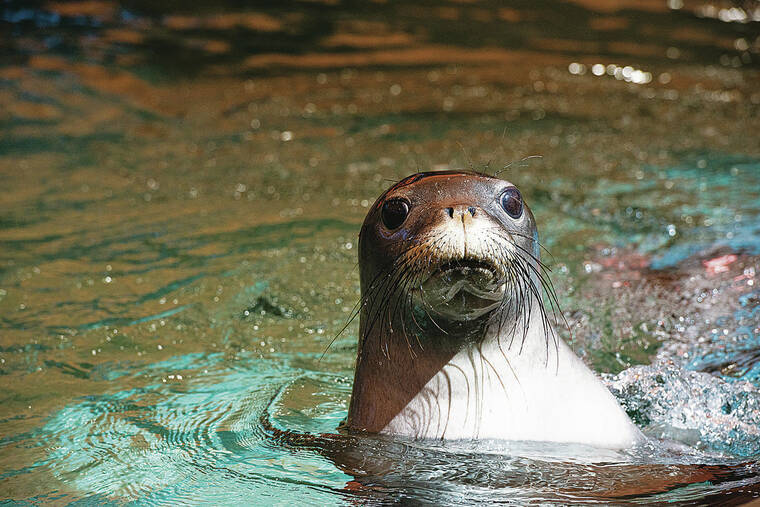
The state’s endangered species include Hawaiian monk seals, yellow-faced bees, dozens of forest birds such as the alala (Hawaiian crows), the Hawaii akepa, and the Oahu elepaio, along with hundreds of plants and ferns.
Threatened species include the green sea turtle and the iiwi, or scarlet honeycreeper, which was once found throughout the islands but is now reduced to a narrow strip of forest in East Maui and Hawaii island’s windward slopes.
The nene, or Hawaiian goose, which is Hawaii’s official state bird, was once endangered but was down-listed to threatened status in 2019 due to decades of recovery efforts.
In addition to weakening habitat protections, the new rules would eliminate an existing “blanket rule” for all threatened species.
The rule automatically extends endangered-level protections to threatened species, which is needed because obtaining endangered status could take years, Phillips said, or end up not being listed at all.
“Many species listed as threatened are just as vulnerable as endangered species,” she explained, “so removing the automatic protections mean they can strip safeguards for species already on the brink.”
These delays in protections can be fatal, according to Phillips. For many Hawaiian forest birds, such as the akikiki, obtaining endangered species status came too late.
The akikiki now faces imminent extinction due avian malaria and habitat loss. Climate change continues to drive mosquitoes that carry avian malaria upslope, forcing native forest birds to move to higher elevations for survival.
The American Bird Conservancy said the rule changes would severely weaken one of the most effective laws ever enacted to prevent extinctions.
“Every passing day seems to bring more threats to these already imperiled birds, and reducing the protections they are entitled to will only make fending off extinction harder,” said Hardy Kern, the conservancy’s director of government relations, in a statement. “Without the (ESA) as a backstop, the incredible forest birds of Hawaii may be pushed further towards extinction.”
He added, “The proposed changes would undermine the conservation efforts being undertaken. Despite the threat of invasive species, increased development, and a shifting environment, iiwi, akikiki, and dozens of others are still part of Hawaii’s unique ecosystems. The proposed rule changes will undoubtedly test the limits of what these birds can endure.”
The nonprofit Marine Mammal Center, which runs the Hawaiian monk seal hospital in Kailua-Kona, called the changes significantly damaging, with the potential to threaten decades of progress.
“Now is not the time to remove protections for endangered and threatened species,” said the center in a statement. “These changes would slash protections, making it easier to drill for oil or harvest timber in areas where endangered species live. These changes would lead to more marine mammals being needlessly killed or injured, pushing some populations past a point of no return.”
Secretary of the Interior Doug Burgum has said the administration’s proposed changes would restore the ESA to its original intent of “protecting species through clear, consistent and lawful standards that also respect the livelihoods of Americans who depend on our land and resources.”
“These revisions end years of legal confusion and regulatory overreach, delivering certainty to states, tribes, landowners and businesses while ensuring conservation efforts remain grounded in sound science and common sense,” Burgum said.
Proposed changes to the Endangered Species Act of 1973
>> Revise criteria for listing, delisting and reclassifying a species that allow consideration of economic impacts. Narrow “foreseeable future” time frame that potentially excludes long-term factors such as climate change.
>> Eliminate “blanket rule” for all threatened species that automatically extended endangered-level protections to threatened species.
>> Revise interagency consultation. Federal agencies would no longer have to consult with the U.S. Fish and Wildlife Service regarding actions that might affect listed species.
>> Reinstate economic considerations. The Fish and Wildlife Service would be allowed to exclude areas from critical habitat designation if economic impacts outweigh the benefits. Prioritize habitat already occupied by the species at time of listing.
Source: Center for Biological Diversity