
Architecture unfolds slowly. Big plans take years, sometimes even decades, to complete. And yet some years come with lots of surprises, and 2025 included a few head-scratchers: a papal pilgrimage site in suburban Dolton, an entire wing of the White House demolished, and likely landmark protection for the mediocre office building that replaced Louis Sullivan’s Chicago Stock Exchange. Nobody had any of these on their bingo card when the calendar last rolled over.
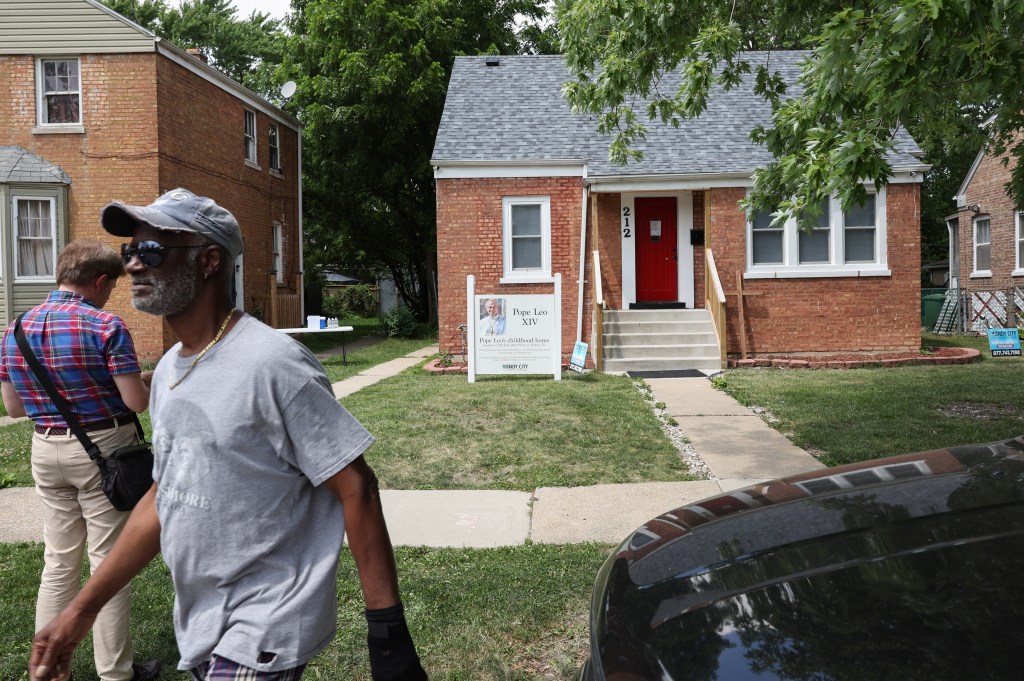
A new local pilgrimage site: Pope Leo XIV’s modest childhood home in Dolton was acquired by the town in July, just two months after the favorite son became pontiff. Declared a historic landmark earlier this month, plans to open the house to the public are still being developed. While the designation has nothing to do with the building’s architecture, the single-family brick structure epitomizes suburban tract development that was built in the years immediately following World War II.
General Services Administration in the crosshairs: Now more than 11 months into Trump 2.0, the developer president has had startling effects on building culture. The teardown of the White House’s historic East Wing in October was probably the most startling unannounced demolition since Mayor Richard M. Daley’s middle-of-the-night bulldozing of Meigs Field in March 2003. Earlier in the year, the General Services Administration, which owns and operates most federally owned structures throughout the country, showed interest in disposing of many properties, including portions of the Ludwig Mies van der Rohe-designed Federal Center complex in the Loop and the recently landmarked Century and Consumers Buildings on State Street. It’s almost guaranteed that these will be revisited in the next year.
Residential renovations on LaSalle Street: The residential conversion of older office buildings along LaSalle Street continued, albeit with one unfortunate new precedent. Earlier this month, the banal 1970s office structure at 30 N. LaSalle St. received preliminary landmark status from the Commission on Chicago Landmarks. It’s a laughably nonsensical move by the city to help the developer tap into public subsidies. Stopping demolition through thoughtful reuse of older buildings is almost always good, but landmarking is not the correct tool for this project. Here, the city is encouraging good development the wrong way.
Google glass: Google’s remake of the James R. Thompson Center continues to provide construction watchers with fodder for social media. The full exposure of the building’s structural frame was a highlight of the past year, but the continuing installation of clear glazing is proving that the renovation by Jahn/ — the successor firm to Murphy/Jahn, the original architects — is a more dramatic makeover than initially revealed. New terraces have been created under the sloped glazing, which now appears as a series of bustling skirts rather than part of the main body of the building.
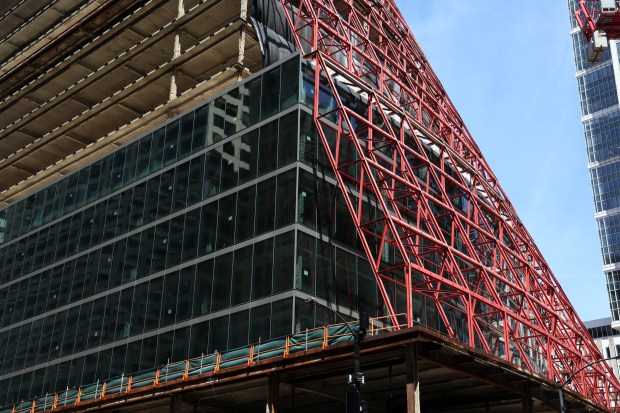 Glass is installed on part of the exterior of the Thompson Center building in Chicago as its redevelopment into office space for Google employees continues May 7, 2025. (Terrence Antonio James/Chicago Tribune)
And Google wins no awards for its lack of transparency as to the design’s scope. The entire year passed with no updates to the handful of renderings that the digital behemoth released in 2024. We’re finding out what we’re getting as it’s being built.
A New Lincoln Yards: There’s no reason to lament the demise of the overwrought plans for Lincoln Yards. Following a change in ownership, the northern portion of the parcel has now been dubbed Foundry Park and sports a new master plan by Hartshorne Plunkard Architecture. The scale remains too large for this swath of the North Side, but the new renderings indicate a more textured and nuanced architecture than previously proposed. And the end of the year has a possible buyer for the southern tract where we’ll be waiting for new plans in the new year.
Assorted stadiums: In November, the Chicago Architecture Center (CAC) released “Win/Win: The New Game Plan for Urban Stadiums” that notes it’s an auspicious moment for stadiums in Chicago, as active development exists around the future homes for the Bears, Fire, White Sox, Bulls and Blackhawks. The study argues for the integration of stadium and community benefits and assets — an approach that’s been developed and honed by New Urbanists for more than 30 years.
Earlier, the City Council approved the Gensler-designed Chicago Fire Stadium at The 78, just south of Roosevelt Road on the east bank of the Chicago River. And we’re no closer to finding out where the Chicago Bears will play in decades to come. After abandoning Chicago for Arlington Heights (again) earlier in the year, the team ended 2025 with the announcement that it’s now considering northwest Indiana for the Bears’ next home. The CAC should send a few copies of its report to the McCaskey family …
In memoriam: Frank Gehry’s death in early December was just one of several losses to the Chicago architectural scene. Leon Krier and Robert A.M. Stern, both winners of the Richard H. Driehaus Prize, passed away this year. Krier, the inaugural laureate in 2003, was best known as the urban planner of Poundbury, working for now-King Charles III, but he was the initial director of the Chicago-based SOM Foundation in the late 1980s. Stern won the Driehaus in 2011 and built One Bennett Park and the bus shelters.
David Childs of SOM passed in March. His sole Chicago design, 400 North DuSable Lake Shore Drive, continues to rise on the lakefront just north of the Chicago River. Ricardo Scofidio of Diller Scofidio + Renfro designed the David Rubenstein Forum at the University of Chicago; he also died in March. The forum’s memorable stack of boxes will soon be in dialogue with the nearby Obama Presidential Center. Marilyn Hasbrouck, the longtime proprietor of the Prairie Avenue Bookshop, passed away in March as well. Her shop was a haven for architects from around the globe.
And in the year ahead: The architecture world will turn its collective eyes to Chicago in the new year with the June opening of the Obama Presidential Center in Jackson Park with architecture by Tod Williams Billie Tsien Architects and landscape design by Michael Van Valkenburgh Associates. And there’s another presidential library with Chicago connections. Studio Gang was selected in August to develop extensive renovations for the Clinton Presidential Center in Little Rock, Arkansas. Designs are expected early in the new year.
And since 2025 was hardly predictable, it’s hard not to expect more architectural surprises in 2026.
Edward Keegan writes, broadcasts and teaches on architectural subjects. Keegan’s biweekly architecture column is supported by a grant from former Tribune critic Blair Kamin, as administered by the not-for-profit Journalism Funding Partners. The Tribune maintains editorial control over assignments and content.
Submit a letter, of no more than 400 words, to the editor here or email letters@chicagotribune.com.