
For many architects practicing today, the systems, institutions, and ideas that define the profession were shaped by people who passed away in 2025. Schools, awards, cultural platforms, and even entire ways of thinking about cities and buildings bear the imprint of figures whose influence has been deeply ingrained in our industry. Their work helped establish the frameworks within which architecture is now taught, debated, funded, and practiced.
From educational models and curatorial institutions to landmark buildings, public spaces, and global definitions of architectural value, these individuals helped construct the terrain that younger practitioners now navigate. Some of those systems continue to enable experimentation and critical thought, while others are increasingly questioned as the profession confronts climate urgency, labor instability, technological change, and shifting cultural expectations.
This year’s reflection on those we lost marks a generational handoff. It is an opportunity to acknowledge how much of contemporary architecture is inherited, often invisibly, and to ask what responsibility comes with that inheritance. As these leaders leave the stage, their ideas do not disappear, but they do become newly available for reassessment. What remains fixed, what can be reinterpreted, and what must be fundamentally rethought is now a question for the next generation to answer.
Hiroshi Hara
Died: January 3, 2025, aged 88.
Hiroshi Hara was a major figure in postwar Japanese architecture whose work combined theoretical speculation with monumental public architecture. His projects, including Kyoto Station, Umeda Sky Building, and the Sapporo Dome, challenged conventional ideas of infrastructure, scale, and urban symbolism.
Dennis Crompton
Died: January 21, 2025, aged 89.
Dennis Crompton was a founding member of Archigram and one of the most important figures linking architecture, technology, and speculative thinking in the late 20th century. While many Archigram projects were never built, Crompton’s influence was profound, helping redefine architecture as a field that could engage media, computation, mobility, and systems thinking long before these ideas became mainstream. His legacy also includes decades spent preserving, digitizing, and interpreting the Archigram archive.
Prince Karim Al-Hussaini, Aga Khan IV
Died: February 4, 2025, aged 88.
Prince Karim Al-Hussaini, Aga Khan IV, was one of the most influential patrons of architecture in the modern era. As the founder of the Aga Khan Award for Architecture, he reshaped global architectural discourse by prioritizing social impact, cultural continuity, climate responsiveness, and local knowledge, particularly across the Global South. His leadership expanded the definition of architectural excellence beyond form and authorship, elevating housing, infrastructure, landscape, and community-driven projects that might otherwise have been overlooked by Western-centric institutions.
David E. Sellers
Died: February 9, 2025, aged 88.
David E. Sellers was a pioneering American architect whose work helped define environmentally responsive design decades before sustainability became a mainstream concern. As the founder of Woodland, Jensen, Sellers & Associates, a predecessor to SERA Architects, he integrated energy performance, material efficiency, and climate-sensitive form into everyday building types, demonstrating that ecological responsibility could be embedded in architecture rather than applied as an afterthought.
Ricardo Scofidio
Died: March 6, 2025, aged 89.
Ricardo Scofidio was a pioneering American architect and co-founder of Diller Scofidio + Renfro, a multidisciplinary design practice that helped redefine what architecture could be by fusing conceptual art, performance, and built form. His work ranged from early experimental installations and multimedia pieces to high-impact public projects that transformed how people experience urban space. Scofidio’s influence is felt in projects that blur boundaries between art and architecture, and in his role mentoring generations of architects as an educator and thought leader.
Cindy Pritzker
Died: March 15, 2025, aged 101.
Marian “Cindy” Pritzker was a major American philanthropist and civic leader whose support helped shape both architectural culture and the public realm in Chicago and beyond. She served as president of the Chicago Public Library Board and led the effort to build the Harold Washington Library Center. With her husband Jay Pritzker, she co-founded the Pritzker Architecture Prize, now regarded as architecture’s most prestigious global award. She also commissioned Frank Gehry’s Jay Pritzker Pavilion in Millennium Park, blending civic ambition with architectural excellence.
David Magie Childs
Died: March 26, 2025, aged 83.
David Magie Childs was a senior partner at Skidmore, Owings & Merrill and one of the most influential corporate architects of the late 20th and early 21st centuries. His work shaped skylines and civic identities through large-scale commercial and institutional projects, including One World Trade Center in New York, the Time Warner Center, and the U.S. Embassy in Ottawa. Childs’ career highlighted the lasting impact of corporate architecture on public life, symbolism, and urban form.
Shelly Kappe
Died: March 29, 2025, aged 96.
Shelly Kappe was a foundational figure in architectural education, co-founding the Southern California Institute of Architecture with a group of radical educators in 1972 and shaping its culture of experimentation, dialogue, and community engagement. She coordinated the influential Design Forum Public Lecture Series, curated exhibitions, developed the original SCI-Arc library, and championed architectural history and preservation in Los Angeles and beyond.
Kristin Feireiss-Commerell
Died: April 22, 2025, aged 82.
Kristin Feireiss-Commerell was one of the most influential architecture curators of the past half-century. As co-founder of Aedes Architecture Forum in Berlin, she helped establish exhibitions as a central engine of architectural discourse, shaping how emerging and established practices were introduced to the world.
Léon Krier
Died: June 17, 2025, aged 79.
Léon Krier was one of the most influential and controversial architectural theorists of the late 20th century, best known for his uncompromising critique of modernist urbanism and his advocacy for traditional city form. Through writing, teaching, and built work, including Poundbury in Dorset, he argued for walkable, human-scaled cities rooted in classical principles.
Helmut Swiczinsky
Died: July 29, 2025, aged 81.
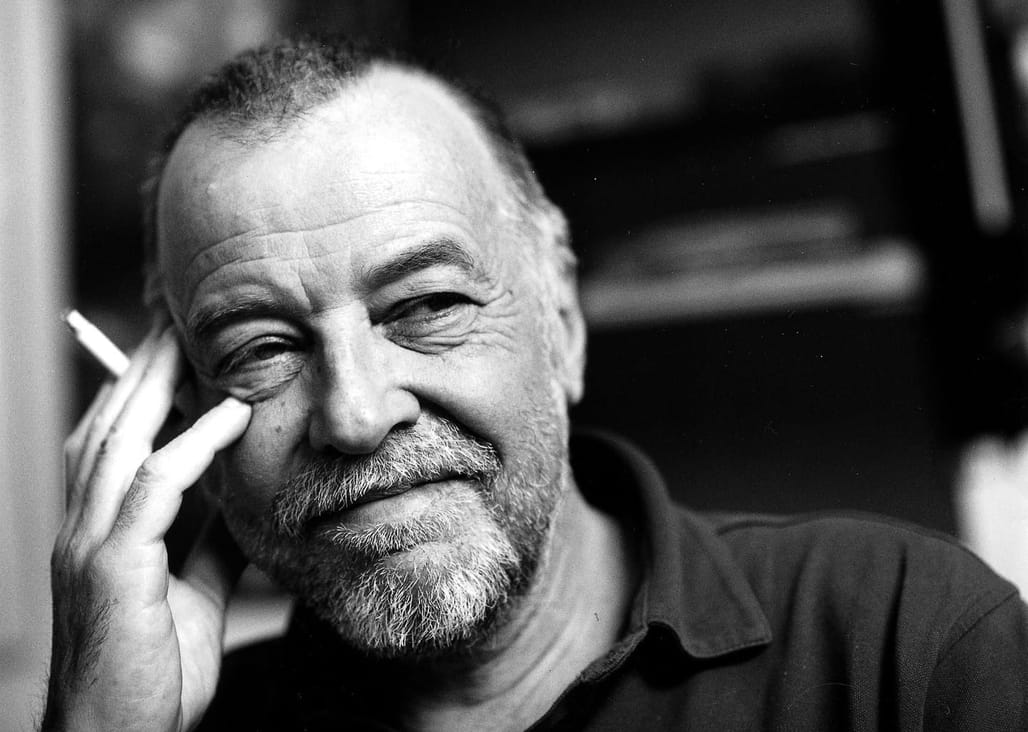
Helmut Swiczinsky was a co-founder of Coop Himmelb(l)au and a central figure in the development of deconstructivist architecture. Through drawings, manifestos, and built work, he pushed architecture toward fragmentation, instability, and emotional intensity. His work includes the Rooftop Remodeling Falkestrasse in Vienna, the BMW Welt in Munich, and the Musée des Confluences in Lyon.
Nicholas Grimshaw
Died: September 14, 2025, aged 85.
Nicholas Grimshaw was a leading figure of high-tech architecture, known for pairing engineering precision with an optimistic belief in architecture’s civic role. His work, including the Eden Project in Cornwall, Waterloo International Terminal in London, the British Pavilion at Expo 92 in Seville, and the Southern Cross Station redevelopment in Melbourne, demonstrated that innovation and restraint could coexist.
Kongjian Yu
Died: September 24, 2025, aged 61.
Kongjian Yu was one of the most influential landscape architects of his generation. As founder of Turenscape and a professor at Peking University, he advanced the concept of sponge cities, with projects such as Qunli Stormwater Wetland Park, Houtan Park, and Yanweizhou Park demonstrating how landscape architecture could operate as urban infrastructure.
Terry Farrell
Died: September 28, 2025, aged 87.
Terry Farrell was a central figure in British postmodern architecture and later a leading advocate for adaptive reuse. His work, including TV-am, the MI6 Building, and Charing Cross Station, reflected a belief that architectural value accumulates through continuity rather than replacement.
Lars Lerup
Died: November 20, 2025, aged 85.
Lars Lerup was an architect, educator, and theorist whose influence was felt primarily through ideas. As dean of the Rice University School of Architecture, he emphasized conceptual rigor and critical writing, and through books such as Building the Unfinished and After the City, challenged architects to engage complexity rather than seek totalizing solutions.
Robert A.M. Stern
Died: November 27, 2025, aged 86.
Robert A.M. Stern was one of the most influential architects and educators of his generation. As founding partner of RAMSA and former dean of the Yale School of Architecture, his work, including 15 Central Park West, 220 Central Park South, and the George W. Bush Presidential Center, demonstrated how architecture could operate within tradition and institutional power.
Frank Gehry
Died: December 5, 2025, aged 96.
Frank Gehry was one of the most recognizable and polarizing architects of the late 20th and early 21st centuries. His work, including the Guggenheim Museum Bilbao, Walt Disney Concert Hall, Fondation Louis Vuitton, and the Weisman Art Museum, reshaped public expectations of architectural form and authorship.
Be sure to follow Archinect’s special End of the Year coverage by following the tag 2025 Year In Review to stay up to date.