ST. PAUL, Minn. — After Sweden beat Czechia in the gold medal game, we wrap up our 2026 World Juniors coverage with a look at the standout and disappointing performances of the event. This was an unusual tournament, without true elite statistical performers or a team that truly took control. Still, there are plenty of things to take away.
StandoutsCzech forward group
The Czech team wasn’t star-studded, but their top nine forwards collectively all played very well. Vojtech Cihar (LAK), Petr Sikora (WSH), Vaclav Nestrasil (CHI), Tomas Poletin (NYI) and Max Curran (COL) competed hard and won a ton of battles. Sikora and Adam Benak (MIN) also had the skill to make high-end plays. Cihar and Sikora, in particular, were leaders for this group.
Tomas Chrenko, RW, Slovakia (2026 draft eligible)
Cherenko has had a so-so season in Slovakia’s top pro league, but his performance in this tournament was very similar to his great play at the U18’s last spring. His stick skills are high-end, he’s a good skater and he’s a shot threat from distance who was co-leading the tournament in goals when Slovakia was eliminated. He looks like a top two round pick in the upcoming draft with a chance to sneak into the late first despite his smaller stature.
Viggo Bjorck, C, and Ivar Stenberg, LW, Sweden (both 2026 draft eligible)
Sweden’s two draft-eligible forwards, Bjorck and Stenberg, have arguably been among the best and most consistent players for the team in this tournament. In the semifinal against Finland, they were both leaned on excessively and came up big. Stenberg made a lot of creative plays and drove offense at even strength. Bjorck also created a lot while competing very hard and being a major factor all over the ice. He also had four (4), not a typo, breakaways in the overtime period, although he didn’t convert. Bjorck’s excellent tournament has cemented his name in the conversation as a lottery pick, and Stenberg hasn’t hurt himself when it comes to the No. 1 pick debate.
Anton Frondell, LW, Sweden (Chicago)
Frondell was a constant in Sweden’s offense in the tournament. He combined his great skill level with a heavy element that made life difficult for opponents at even strength. His great shot was evident throughout the event as he probably had the best one-timer of anyone present. There are times you wish he made a few more plays to his teammates, but he’s good enough in that area.
Adam Jiricek, RHD, Czechia (St. Louis)
Jiricek was outstanding for Czechia from the first puck drop against Canada through the medal round. He competed so hard, being the best shutdown defender in the event, breaking up a lot of plays with his physicality and stick and laying his body on the line constantly. Jiricek also contributed significantly to the Czech attack. He’s not a high-end skill type, but he has legit touch for the NHL level. He looks like a potential top-four type at the next level for the Blues.
Zayne Parekh, RHD, Canada (Calgary)
Parekh was everything for Canada’s blue line, at times being the only one who could reliably make a play, and the plays he made were often high-end. His vision and shot are both excellent, making him a constant threat on the power play and on breakouts. His defense will never inspire; that’s just what his game is. But the hope is that he provides so much offense that, on balance, he’s a positive player.
Chase Reid, RHD, USA (2026 draft eligible)
There were some questions entering the tournament about how big a role Reid would play on a USA blue line with Cole Hutson. The answer was a large one. By the end of the tournament, Reid was one of the few players USA’s coaches trusted consistently. He played a lot on both special teams, showing a level of defending I didn’t think he had from seeing him in junior. He combines that with great skill, offensive creativity and a lot of natural athleticism. He looks like a premier pro prospect who will be among the very first players called in the draft.
Will Zellers, LW, USA (Boston)
Zellers was a late addition to the USA team and became one of their best players by doing what he’s been doing a lot of for the last two years in the USHL and college, scoring goals. Zellers is talented with good speed and skill, although I wouldn’t describe him as the most dynamic smaller player. His shot is legit, though, and he has a path to the NHL if he continues to play the way he has.
Michael Hage, C, Canada (Montreal)
Hage was a leading scorer in the tournament and the center on Canada’s best line. He drove play in most games with his speed and playmaking and was a critical part of the power play, too. He faded a bit in the highly physical semifinal (although he still notched two points), which is a minor criticism of his game, but otherwise it was a successful tournament in what’s been a very positive season for Hage.
DisappointmentsUSA’s first-round picks
USA entered the tournament with five first-round picks on the roster: Forwards James Hagens (BOS), Cole Eiserman (NYI), Will Horcoff (PIT) and Ryker Lee (NSH) and defenseman Logan Hensler (OTT). Between all of them, they totaled seven goals and 15 points over the five games. That simply wasn’t good enough. Hagens and Lee had good moments. Eiserman and Hensler were borderline awful all tournament. Still, they had nobody who could step up and take over a game for them. Cole Hutson (WSH) was the closest thing, but he was injured for most of the tournament. Their best scorer was Zellers, who was a late addition, and while productive, I wouldn’t describe him as spectacular, either. Their workers in players like Brodie Ziemer, Teddy Stiga, A.J. Spellacy and L.J. Mooney played well, but they are not natural scorers. There were a bunch of reasons you could pinpoint for the lackluster US tournament, including their goaltending, blue line depth and injuries, but the most notable one was that their best players didn’t step up.
Michael Misa, C, Canada (San Jose)
Misa, the No. 2 pick in 2025 who dominated the OHL, was expected to be a leading player for Canada. Often, though, he found himself in the background and not a major part of Canada’s offense. His great skating was evident, but he struggled to make plays or look dangerous with any consistency. It’s easy to write it off as just a bad week for him, but unfortunately for Misa, this is not a one-off; he has a history of underwhelming performances at international events over the years. He was great in junior, and is a great pro prospect, but it’s reasonable to be concerned about how much he has disappeared in big games.
Canada’s blue line
Outside of Parekh, it felt like nobody on the Canadian blue line could make a tape-to-tape pass. Kashawn Aitcheson (NYI), Ben Danford (TOR), Cam Reid (NSH) and Harrison Brunicke (PIT) all competed fine and could make stops, but when it came to making a play, they were nowhere to be found. Brunicke, in particular, underwhelmed for an NHL loan. By the end of the tournament, his ice time started to dwindle.
The 2026 NHL Draft and Gavin McKenna debate
Coming into this tournament, one of the looming questions was whether McKenna, the one-time presumptive No. 1 pick in the upcoming NHL Draft, would elevate and dominate the competition after a so-so first half at Penn State, or would the questions about his game become more glaring. The result is somewhere in between. Overall, McKenna was very good and was among the tournament’s leading scorers. There were times he made elite-caliber plays with the puck and displayed the skill and IQ that make him a special talent. There were also stretches, particularly at even strength, where he faded into the background. We leave the tournament mostly where we started: There’s a tight group of talent at the top of the draft, McKenna is in it, but he’s not alone up top. NHL teams will have to sort out where he fits relative to Stenberg, Tynan Lawrence and the plethora of great defense prospects in this class.
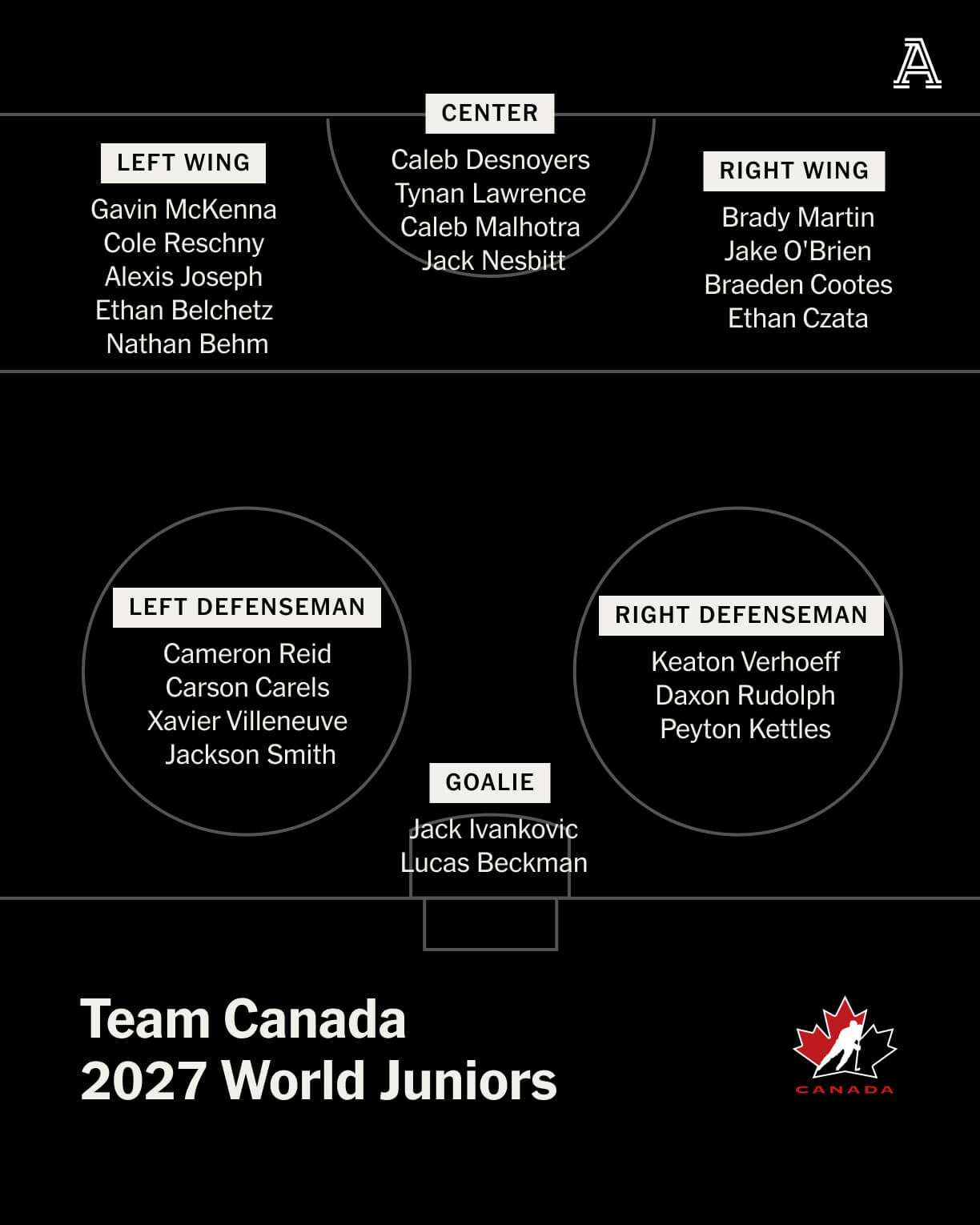
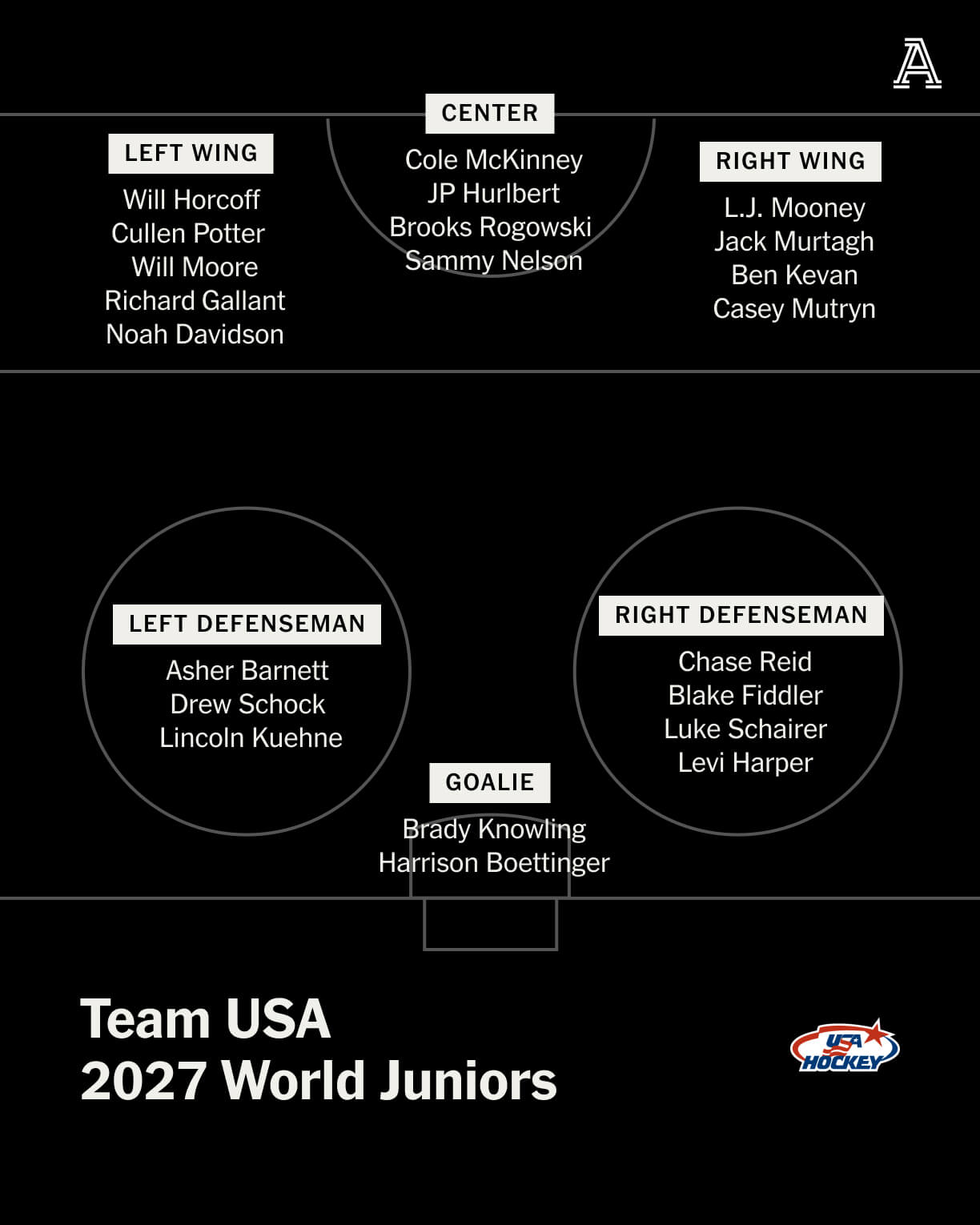
It wouldn’t be a World Junior article without a roster projection, so let’s jump ahead to the 2027 tournament and what I think Team Canada and Team USA could look like.