
Paul-Henri Talbot/La Presse
When Montreal police raided a grimy flat on St-Dominique Street in the city’s Plateau-Mont-Royal neighbourhood in March of 1969 searching for a bomber belonging to the terrorist Front de Libération du Québec, they quickly realized they had found their man.
“When they opened the door, they saw a picture of Che Guevara,” recalled Bob Côté, the celebrated Montreal police bomb disposal expert, who at 89 still has vivid memories of the time, “… and they found bits of red and yellow wires, characteristic of detonators.”
It turns out that the suspect, Pierre-Paul Geoffroy, a 24-year-old college dropout, was in the middle of assembling a bomb. Called in to defuse the contraption, Mr. Côté and his fellow officers immediately got to work. Prying open a large metal trunk, they discovered two more live bombs lying atop a pile of dynamite. The whole stash was enough to blow up a city block.
“It was obvious that his apartment on St-Dominique was a warehouse where the bombs were being made,” Mr. Côté said. And the suspect proved to be to be the most prolific bomber in the decade-long terrorist campaign conducted by the Marxist-inspired separatist movement.
Mr. Geoffroy died in obscurity from pneumonia in a hospital just outside Montreal on Dec. 6 at the age of 81. He never had the high profile of the FLQ’s ideological founders, Pierre Vallières and Charles Gagnon, or the notoriety of Paul Rose, convicted of the kidnap and murder of Quebec cabinet minister Pierre Laporte. (All three are now dead.) But Mr. Geoffroy’s impact will never be forgotten by Mr. Côté.
Over a 10-month period in 1968 and 1969, police had to cope with a tidal wave of 31 FLQ bombs planted by Mr. Geoffroy and members of his cell. Mr. Côté, who was awarded the Order of Canada for his bravery, defused most of them but an explosion on Feb. 13, 1969, at the Montreal Stock Exchange was a notable exception. The blast injured 27 people, three of them seriously.
“It was an absolute miracle that nobody was killed,” said D’Arcy Jenish, author of The Making of the October Crisis: Canada’s Long Nightmare of Terrorism at the Hands of the FLQ, who chronicled Mr. Geoffroy’s actions in the book, published in 2018.
Mr. Geoffroy was self-taught in bomb-making, picking up the craft from an FLQ pamphlet. Mr. Côté jokes that Mr. Geoffroy was a “local talent” not nearly as accomplished in bomb-making as the terrorists in the Irish Republican Army. “Bomb-making is quite simple and his systems were quite basic. … If you have basic knowledge of electricity, you can make a bomb.”
The raw materials were readily available. Montreal was in the midst of a construction boom, with the building of the Metro and Expo 67, so dynamite was in ample supply. And lax regulations meant it was poorly secured. Mr. Geoffroy stole plenty from construction sites and quarries.
When it came to timers, Mr. Geoffroy favoured a Westclox brand alarm clock, available for $3.95 at the local Pascal’s hardware chain.
Mr. Geoffroy and his accomplices generally planted the bombs in the middle of the night and called in warnings to French-language radio station CKAC, giving the police bomb squad enough time to get there and avoid injuries or the loss of life. In most cases, the strategy worked.
In a 2020 interview with the CBC, Mr. Geoffroy insisted that he had warned the stock exchange of the attack but his calls had been ignored. But unlike the bombs he set that were timed to detonate when nobody was around, this one was placed in the exchange’s visitors’ gallery and designed to explode in the middle of the afternoon.
Despite his claims that he tried to save lives, Mr. Geoffroy’s modus operandi was terrifying.
“Apparently he prepared bombs in his room in an apartment we once shared,” before the move to St-Dominique Street, said his older sister Louise. “But I never saw it happen. I had no suspicion.”
Mr. Geoffroy didn’t own a car so he would transport the explosive devices by bus or on the subway to their ultimate destinations, sometimes in a shopping bag.
The FLQ’s anti-Ottawa, anti-anglophone and anti-capitalist ideology drove the choice of targets, including a statue of Sir John A. Macdonald, Eaton’s department store, a federal building and the offices of Noranda Mines, as well as strike-bound manufacturing plants, provincial liquor stores and the homes of wealthy businessmen.
Pierre-Paul Geoffroy was born on July 25, 1944, in the town of Berthierville, Que., midway between Montreal and Trois-Rivières. He was the youngest of three children of Maurice Geoffroy and his wife, Flora (née Desjardins). (A fourth child died as a young boy in a traffic accident.)
Maurice was a successful grocer and the family lived a comfortable life. Pierre-Paul went to a Catholic boarding school in Montreal and spent time in high school in Ottawa where he became fluent in English.
The family patriarch was active in Liberal Party politics, but teenaged Pierre-Paul became a follower of the nascent Quebec separatist movement and joined the Rassemblement pour l’indépendence nationale (RIN). He became frustrated by the party’s failure at the ballot box.
Like other Quebec radicals at the time, Mr. Geoffroy saw parallels between the struggle of Quebec francophones and those of Algerian and Latin American liberation movements, and followed the writings of Frantz Fanon and Fidel Castro.
Frustrated with the failure of separatists to make progress at the ballot box, Mr. Geoffroy saw FLQ bombs as a “detonator” that would awaken the conscience of the Quebec people to fight for radical change. “We were anti-capitalists but our first goal was to become independent,” with communism coming later, he told the CBC in 2020.
Pierre-Paul trained to be a printer but decided to study political science at Collège Ste-Marie in Montreal. He dropped out when he joined the FLQ.
After his arrest, Mr. Geoffroy was quickly brought to trial. He shocked the court when he pleaded guilty to dozens of charges related to 31 bombings and was later sentenced to 124 life sentences. He never gave the names of any accomplices, taking the rap for all of the crimes.
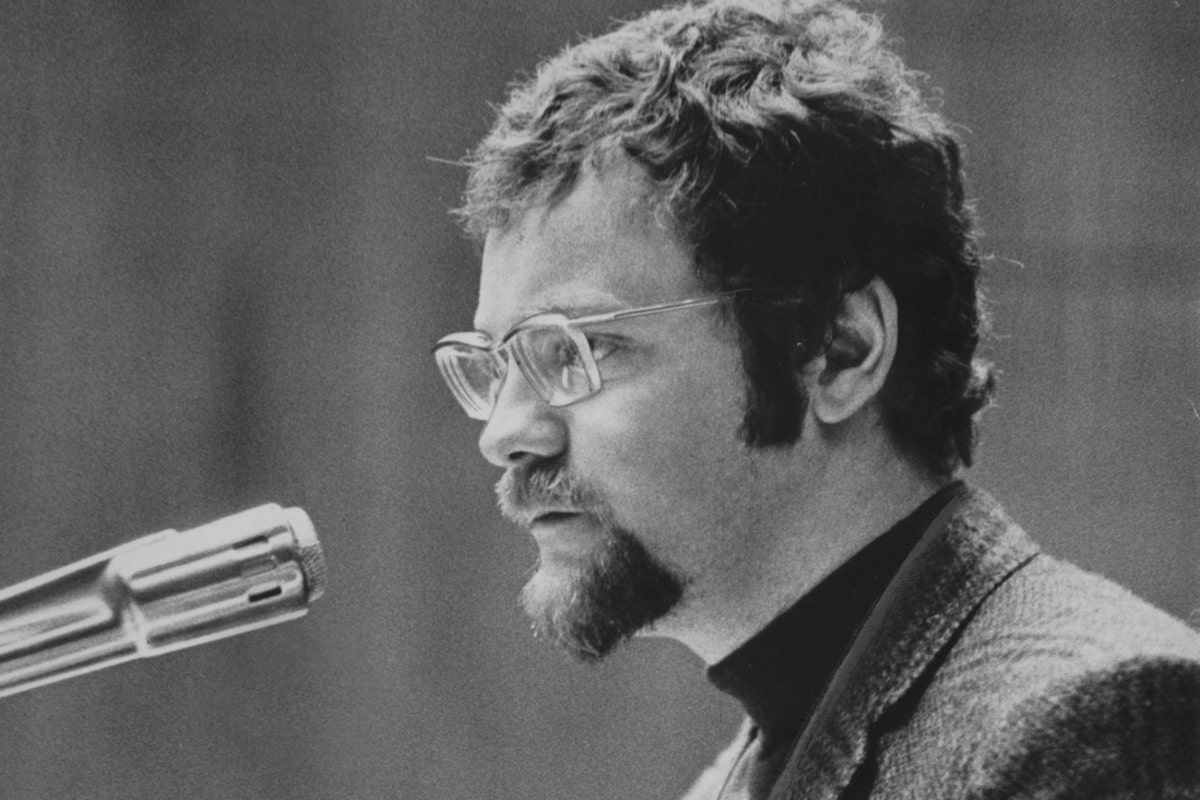
Appearing in court sporting a goatee and wearing a green turtleneck, Mr. Geoffroy grinned and raised his right hand with a V for Victory sign when the sentence was handed out. In passing sentence, Judge André Fabien described Mr. Geoffroy as “a serious danger to society” with little chance of rehabilitation. Mr. Geoffroy told the CBC that he was “proud to have done what I did.”
Despite the gravity of his actions, it was the length Mr. Geoffroy’s sentence that got much of the press attention. In the months that followed, sympathizers held news conferences in support of his release, calling him a political prisoner. When the FLQ later kidnapped British diplomat James Cross, sparking the October Crisis of 1970, liberation of Mr. Geoffroy and other FLQ prisoners was high on the list of their demands.
Members of the family were assiduous in visiting Pierre-Paul in prison, setting up a rota to make sure he had regular contact with them. Nicolas Langelier, Mr. Geoffroy’s nephew, can remember accompanying his mother on regular visits when he was a child. Mr. Geoffroy’s parents also came regularly even though his father, Maurice, saw it as “a failure that his son had chosen violence” rather than the democratic system as a path to change, said Mr. Langelier, an independent journalist and publisher in Montreal.
Mr. Geoffroy applied several times for parole before he was freed from prison in 1981. He ended up serving just 12 years. Other members of his cell, who were eventually caught after escaping to Cuba and the Mideast and returning home, served only months.
Prison affected Mr. Geoffroy seriously. For a year after his release, he hardly left the halfway house where he was living.
“Outside, you’re supposed to be free except that you don’t know what to do with your freedom,” he told Le Devoir in 1984, when he was working at a Montreal gallery that displayed prisoner art. “You’re frightened. Everything moves too fast. You no longer have confidence in yourself.”
Mr. Langelier said his uncle was “broken” by prison and never really recovered. Asked if his uncle regretted his actions, including wounding a victim who apparently lost her legs, Mr. Langelier said, “we don’t know how Pierre-Paul felt because he never opened up.”
Asked if her brother had any remorse about the serious injuries he caused, his sister Louise said, “I never heard him say he had any regrets,” but added that “he probably regretted it internally.”
Mr. Geoffroy later ran a cleaning business and worked at a centre for youth in crisis. And he kept up with some of his old contacts. On the day before he died, a group of former FLQ associates turned up at his hospital bed for a final sendoff. According to Louise, the atmosphere was “warm” and it was a “good moment” for everyone.
Mr. Geoffroy leaves his sister Louise; brother Jacques; his long-term partner, Dominique Garcia; and four nieces and nephews.
As for Mr. Côté, he has one regret. “I would have loved to meet Pierre-Paul Geoffroy only to ask him if he was as afraid in making his bombs as I was in dismantling them.”
You can find more obituaries from The Globe and Mail here.
To submit a memory about someone we have recently profiled on the Obituaries page, e-mail us at obit@globeandmail.com.
Editor’s note: A previous version of the headline of this story incorrectly said Mr. Geoffroy terrorized Quebec during the October Crisis. He was involved in bombings in 1968 and 1969, before the October Crisis began.