
We independently select these products—if you buy from one of our links, we may earn a commission. All prices were accurate at the time of publishing.
I recently moved to a new apartment in Los Angeles, and ever since I’ve been on a mission to make my home feel not just cozy and inviting, but also sophisticated. I tend to stick to neutral color palettes — my living room, in particular, has white walls and a white sofa — so I was looking for ways to add some intrigue to the space through texture as opposed to color. I just wasn’t quite sure how or where to start.
I knew, at least, that I couldn’t be entirely random about introducing new textures to the space. I still wanted it to feel cohesive. “When developing a strong design concept,” explains interior architect Alyssa Anselmo, “materials should be repeated and echoed throughout a home so they feel connected.” This repetition is what allows a space to feel like a unified story rather than a collection of random decorative moments. But achieving a balanced look is a lot easier said than done.
Then, one fateful day, I came across this Instagram Reel from designer Sarah Ames on the “70-20-10 Rule” — and I knew I’d found the formula for success.
What Is the “70-20-10 Rule”?
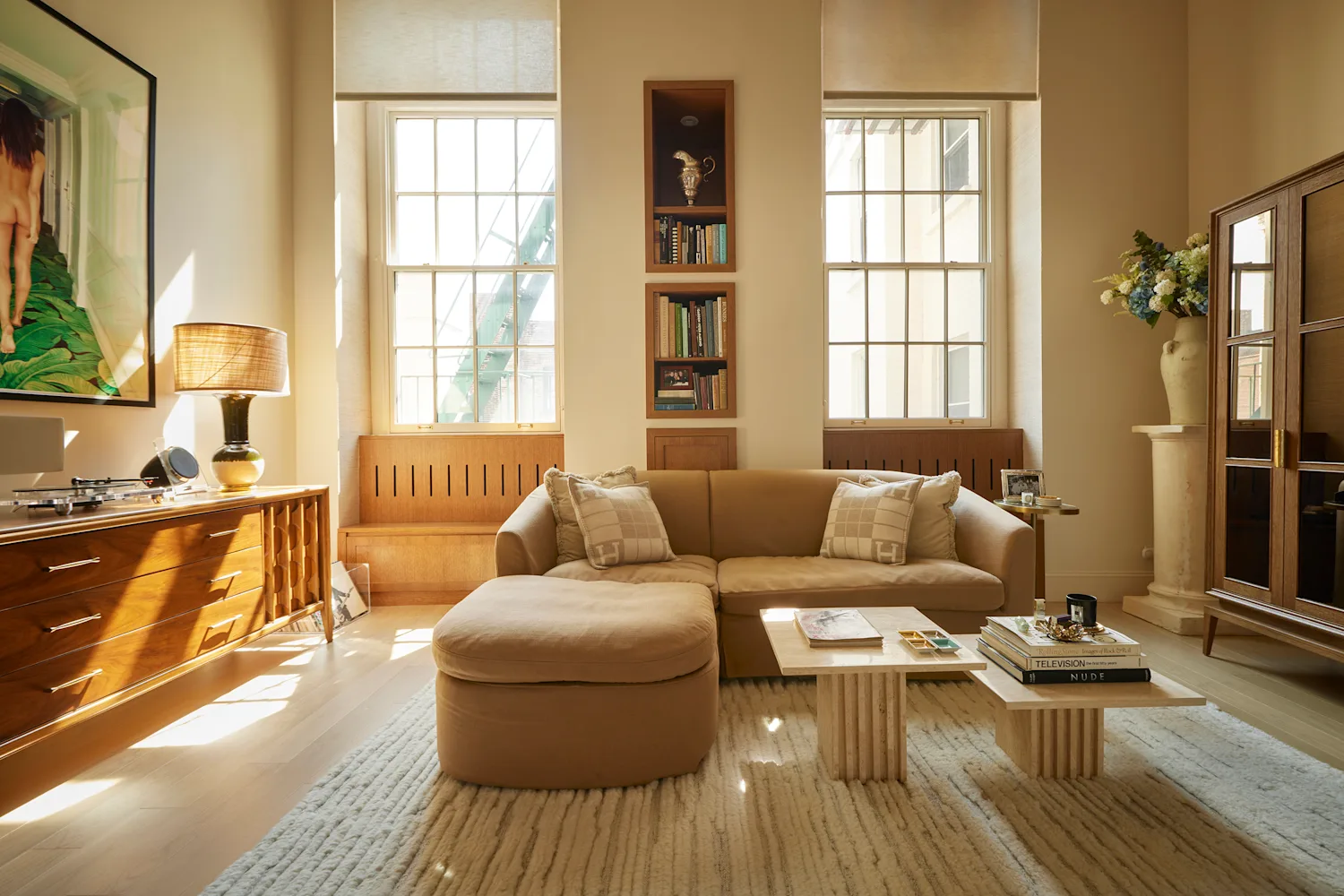
The 70-20-10 Rule is simple: 70% of a room’s textures should be smooth or matte, 20% should be plush or soft, and 10% should be hard, shiny, or raw. The dominant matte texture is calming and provides the visual base (think: matte painted walls, smooth wood floors, or a linen sofa). The plush or soft elements, such as a bouclé or velvet chair, a chunky knit throw, or a deep-pile rug, invite touch and add warmth.
Last but not least, the “accent textures” catch the light to add drama and sparkle, or provide necessary contrast. These can be incorporated via polished metal hardware, raw carved stone, ribbed glass, hammered bronze, and more.
Experts agree that this rule helps add visual interest to a space. “The 70-20-10 Rule ensures a room feels cohesive yet dynamic. Smooth, matte surfaces provide calm; plush fabrics add warmth; and shiny or raw accents give visual interest. Even subtle touches, such as velvet furniture or bronze accent pieces, can make the space feel intentional and layered,” explains estates agent Alicia Rivett.
Sheffalie Jhaveri, interior designer and founder of Rutam IntArch, says, “Basically, this rule is quite useful while designing because one might find a bold texture exciting, but it helps you to use it sparingly so that the entire design doesn’t become overwhelming. This further helps to provide the required balance, keeping the design from being too bland or too loud.”
How to Incorporate the 70-20-10 Rule in Your Own Home
Back in my own living room, applying this rule was a revelation. I kept my matte white walls and hardwood floors as the foundation texture. My plush textured sofa and armchair, along with a couple of cozy throws, became the perfect dash of softness. And finally, I chose to accent the space with a glass coffee table and candle stand for that 10% of shine.
Using the 70-20-10 Rule as a North Star, I managed to transform my living room into an elegant space that’s warm and welcoming. While I kept the overall color palette subtle and neutral, the added textural elements created that luxe, layered look I was after. I can’t wait to apply the same formula to the rest of the space!