
A rare gas, invisible to the eye and nearly absent from Earth’s atmosphere, has captured the interest of nuclear physicists, defence agencies and quantum computing engineers alike. It has been a focal point for speculative lunar mining missions. For decades, serious conversations about helium-3 often ended at the Moon.
Now, that conversation may shift.
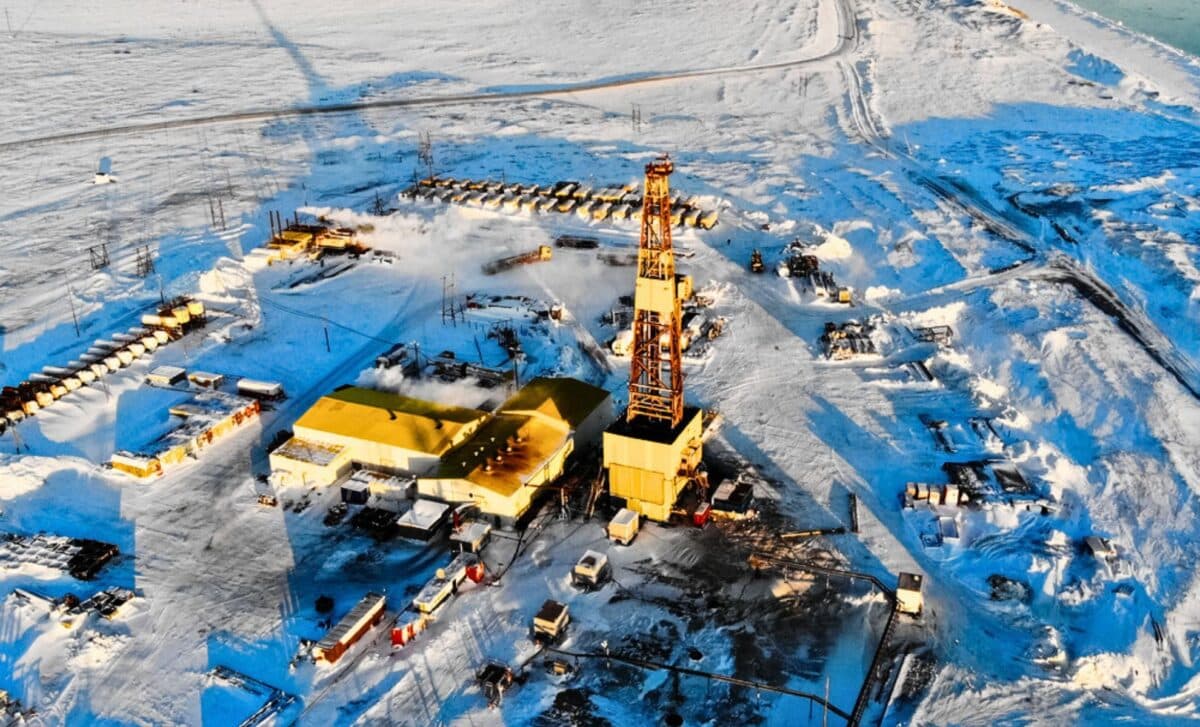
Beneath the surface of northern Minnesota, a well drilled in a remote, forested region has yielded data that challenges conventional thinking. The findings point to the possibility of extracting this isotope here on Earth, in commercially meaningful quantities, for the first time.
Topaz Reservoir Yields Helium-3 at Concentrations Rivaling Lunar Samples
The Topaz Project, located near Babbitt, Minnesota, is operated by Pulsar Helium Inc. In October 2025, the company announced that gas samples taken from the Jetstream #1 well contained helium-3 concentrations up to 14.5 parts per billion (ppb). That value matches or exceeds levels found in lunar regolith, based on samples brought back by the Apollo missions and data cited in NASA-backed research on lunar helium-3 reserves.
Helium-3 is a non-radioactive isotope of helium with one neutron instead of two. It plays a central role in a range of advanced systems, from neutron detectors to quantum refrigeration. Despite its utility, helium-3 is exceptionally scarce. Most of the supply originates from tritium decay in decommissioned nuclear weapons, with minor contributions from natural gas fields. Annual global production remains low, as outlined in materials from the Woods Hole Oceanographic Institution, which helped confirm the findings at Topaz.
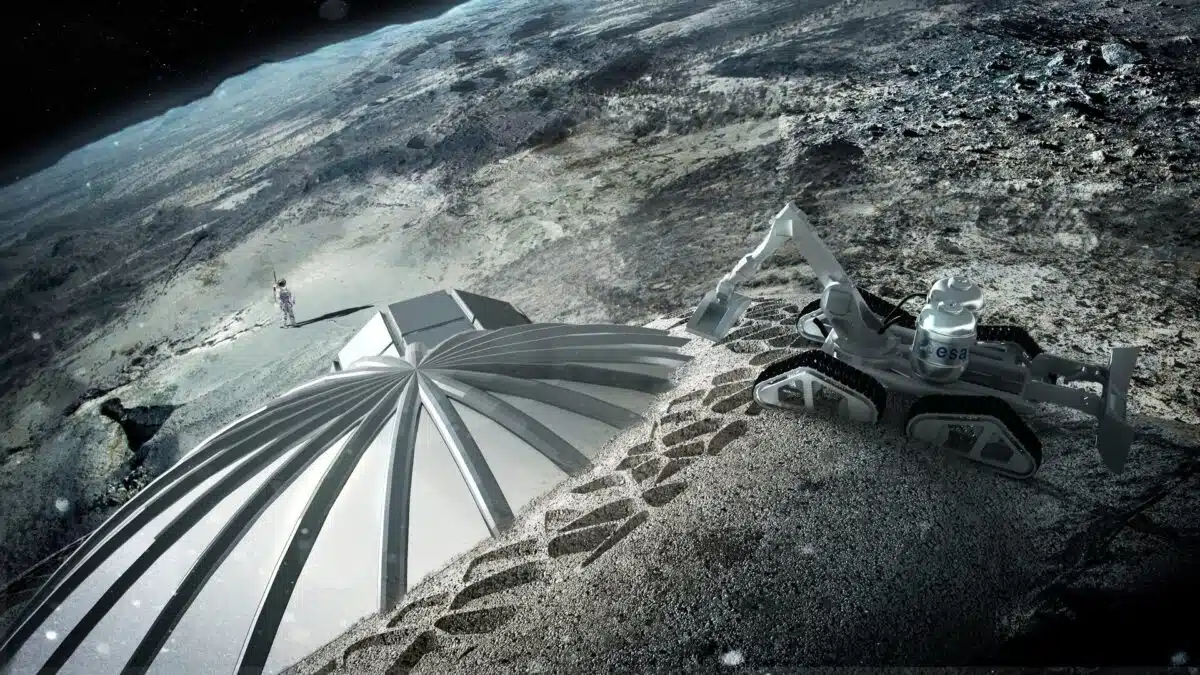 Multi-dome lunar base being constructed, based on the 3D printing concept. Credit: ESA/Foster + Partners
The gas samples were analysed by Smart Gas Sciences LLC and Woods Hole, both of which verified the helium-3 concentrations and isotope ratios. Across all tested intervals, the ³He/⁴He ratio remained consistent at approximately 0.09 Rₐ, suggesting a single, stable helium source in the reservoir.
The consistency of this ratio across gas samples with varying helium-4 content strengthens the case for a reliable, extractable reservoir. According to Pulsar Helium’s official release, the geological setting includes ancient uranium-bearing crust and fault structures that likely allowed helium to accumulate over geological time.
In the company’s public statement, Thomas Abraham-James, CEO of Pulsar Helium, said: “To encounter helium-3 concentrations of this magnitude at our Topaz Project in Minnesota is nothing short of extraordinary.”
Critical Isotope for Fusion, Security and Quantum Innovation
Helium-3 is viewed as a strategic material. Its ability to capture neutrons without becoming radioactive makes it essential for neutron detection systems used in nuclear monitoring and scientific instrumentation. It is also a key component in ultra-low temperature refrigeration required in quantum computing environments.
Helium-3 is also being studied as a clean fuel for nuclear fusion, offering a potential energy source with minimal radioactive byproducts. Although commercial fusion remains a long-term goal, the isotope’s role in next-generation technologies is already well-established.
Its scarcity drives value. Prices in scientific and commercial markets have reached over USD 18 million per kilogram, due to rising demand and limited availability. Historically, supply has been managed by the U.S. government through restricted stockpiles.
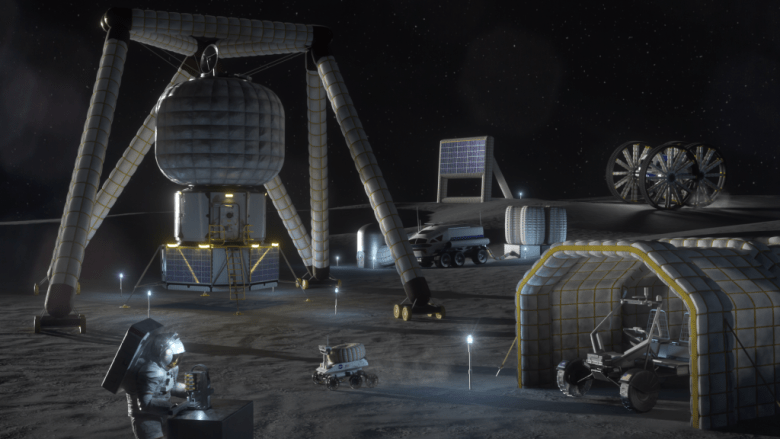 Illustration of a moon mining operation. Credit: NASA
NASA and the U.S. Department of Energy have both explored the idea of extracting helium-3 from the Moon. A number of lunar mining initiatives have proposed harvesting regolith with helium-3 concentrations averaging around 4 ppb, though reaching and processing that material remains a significant technical challenge.
In contrast, the Topaz reservoir offers terrestrial concentrations in the same range, and in some cases higher. The absence of hydrocarbons in the host gas stream further simplifies potential processing. Pulsar has described the gas as nitrogen-rich, reducing environmental complexity compared to fossil-fuel-based helium sources.
Regulatory Uncertainty and Community Oversight
Minnesota lacks a legacy of oil or gas production, and the emergence of a helium-3 resource places new responsibilities on local authorities. State agencies are currently drafting policies to regulate gas well operations, emissions management, and land restoration.
Local residents and tribal governments have raised environmental concerns, particularly regarding groundwater safety and ecosystem impacts. These discussions are unfolding in parallel with growing interest in the potential economic benefits of helium extraction.
The Topaz site is seen by supporters as a possible source of critical materials for advanced industries, while providing tax revenue and employment in a rural area. However, community members have asked regulators to assess flaring protocols, noise levels, and the long-term footprint of any industrial development.
Implications for Global Rare Gas Supply
Unlike helium-3 sourced from tritium or trace natural gas fields, the Topaz reservoir contains helium in a nitrogen-rich matrix, easing the challenge of separation. Still, extracting pure helium-3 remains technically difficult. The isotope behaves nearly identically to helium-4 under standard conditions, requiring cryogenic separation or adsorption techniques to isolate.
No commercial-scale facility currently produces helium-3 directly from gas streams. Pulsar Helium has invited institutions and technology developers to propose and test separation methods at the Topaz site. Its call for collaboration underscores the complexity and significance of bringing this isotope to market.
Ongoing drilling at the site is expected to clarify reservoir size, quality, and economic feasibility. The company’s next phase includes a multi-well programme and detailed gas modelling. If commercial viability is confirmed, the project could alter how helium-3 is sourced globally.
The presence of extractable helium-3 in a stable, inland US location may offer new pathways for securing strategic materials. How that potential is realised will depend on technical innovation, regulatory clarity, and sustained collaboration across public and private sectors.