
If you have seen the monkeys, please contact Animal Care and Control by calling 314-657-1500.
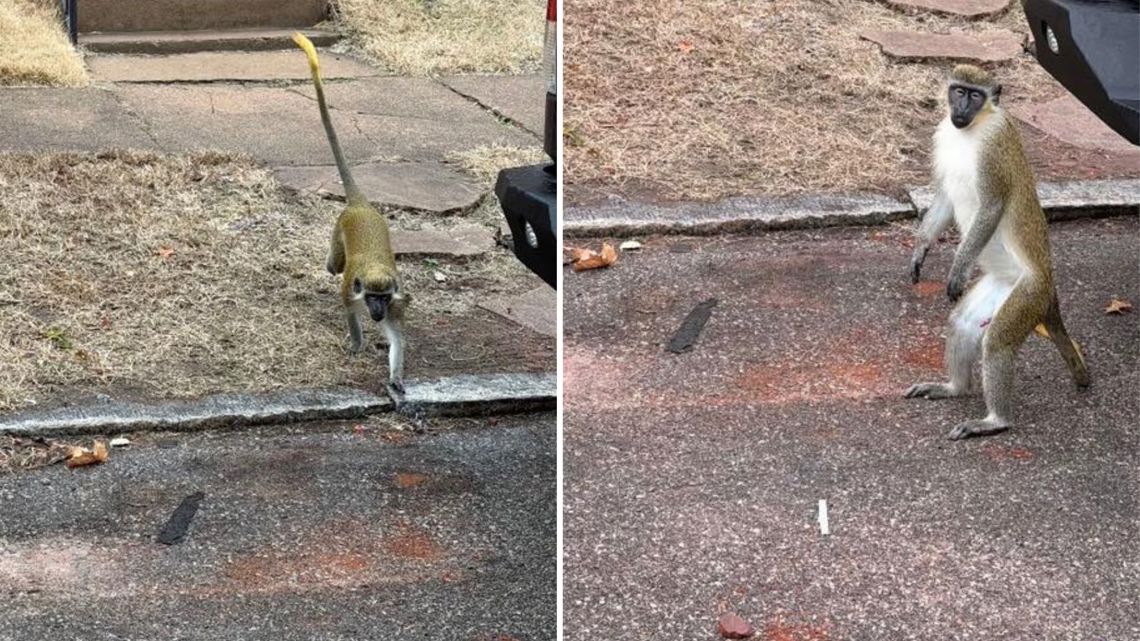
ST. LOUIS — Several monkeys are loose in St. Louis, the Animal Care and Control Division shared on Friday afternoon.
Where the monkeys came from remains unknown, but the department said that exotic animals are prohibited in the city of St. Louis.
“This is the first time we’ve had a situation dealing with monkeys at large in the city of St. Louis,” Justen Hauser, Environmental Health Bureau Chief with the St. Louis Department of Health said.
In a press update, Hauser said initial reports suggested four monkeys were on the loose near O’Fallon Park in north St. Louis. They were first spotted by neighbors on Red Bud Avenue on Thursday afternoon.
He said the exact number and gender of the monkeys is not known, but the department knows multiple are on the loose. Neighbors were shocked to learn of the monkeys escaping.
“I think of danger because that’s a wild animal. We have dogs, cats, and mice around here in this area and now we have to worry about monkeys! I’m scared because I now have to keep my dog inside at certain times because I don’t want him to get attacked,” said Marva Young.
“When I look at these photos, I look at those doggone fingers on them monkeys and they got sharp teeth. They look like orangutans,” said Young.
However, the health department said Saint Louis Zoo helped identify the loose primates as Vervet monkeys. Known for their grayish, green fur, black faces and white eyebrows, they are often called green monkeys and are native to sub-Saharan Africa.
“That’s crazy. I just know their teeth look like fangs. I like animals and I don’t want anything to happen to them or any people. I sure hope they find them,” said Lew Glass, who was working in the neighborhood today.
Hauser stressed that people should not approach the monkeys if they see them.
“The monkeys can be intelligent but also unpredictable at times,” he explained.
Hauser said once the monkeys are found, they will be trapped by animal experts.
“At this point, we don’t know where the animals came from. We have engaged with multiple partners across, so that once the location of the monkeys is confirmed, those agencies that are properly trained and equipped can work to capture the monkeys,” said Hauser.
If you have seen the monkeys, please contact Animal Care and Control by calling 314-657-1500.