
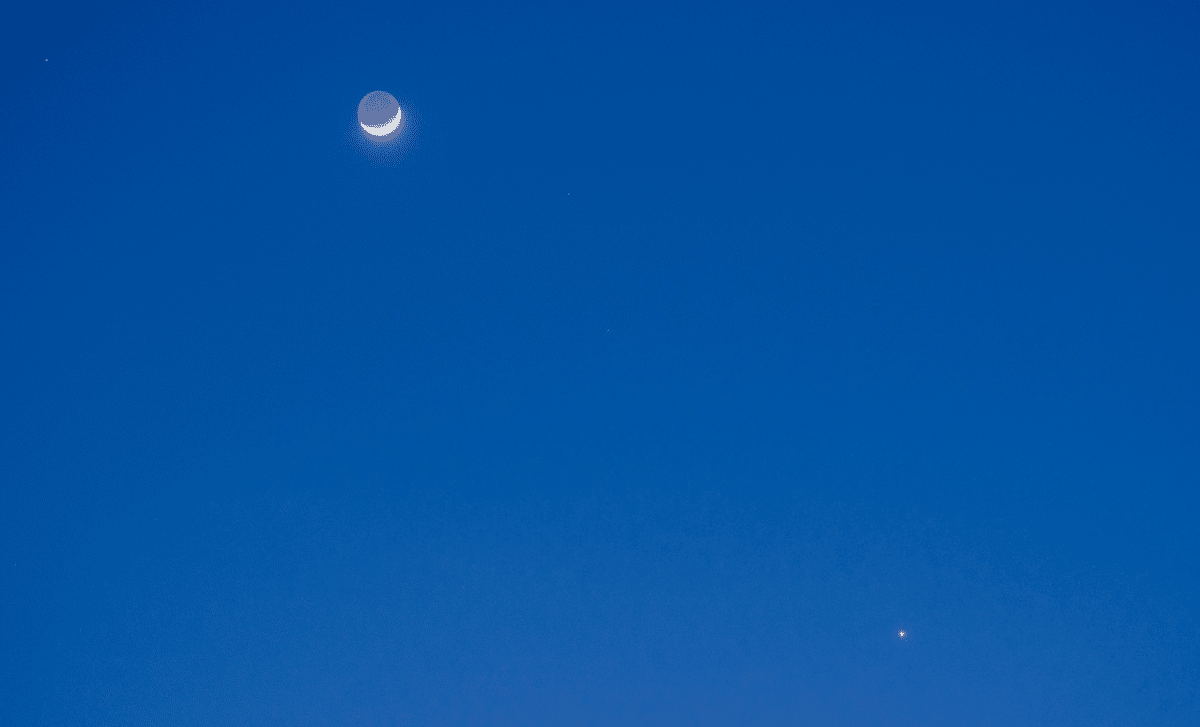
The night sky on January 10 and 11, 2026, offers two spectacular events that will captivate both casual stargazers and seasoned astronomers. Whether you’re an early riser or simply someone who enjoys the beauty of the stars, these two nights will not disappoint. With the last quarter moon lighting up the sky and Spica, the brightest star in the Virgo constellation, close by, the celestial display promises a delightful experience for skywatchers.
The Last Quarter Moon: January 10-11, 2026
The main event for the mornings of January 10 and 11 will be the last quarter moon. This phase occurs when the moon is about half-illuminated, appearing as a perfect half-circle. According to Space.com, on the morning of January 10, the moon will shine brightly as it rises in the west, with its illuminated side gradually waning.
For early risers, the half-lit moon offers a stunning view, especially when paired with Spica, the brightest star in Virgo. This close pairing makes for an enchanting sight, as the moon’s soft glow contrasts beautifully with the sharp brilliance of Spica. For those who enjoy capturing the night sky through photography, this is an excellent opportunity to take stunning images, especially when the two celestial bodies are positioned so closely together.
The Moon and Spica: A Beautiful Celestial Pairing
On the mornings of January 10 and 11, the moon will appear to be in close proximity to Spica, creating a captivating visual display in the pre-dawn sky. The last quarter moon, which will be about 50% illuminated on January 10, will shine in the southern sky, with Spica sitting nearby, offering a remarkable pairing of the moon and a bright star.
On January 10, the moon will be at its peak half-illumination, providing a crisp and clear view for anyone looking to spot it. As the two objects rise higher in the sky, they will become increasingly prominent, making them impossible to miss. By January 11, the moon’s illumination will have decreased to about 42%, but it will still be an impressive sight, especially in the company of Spica.
This celestial conjunction is a great reminder of the dynamic nature of the night sky, where even seemingly simple events like the movement of the moon can create strikingly beautiful visuals. For stargazers and photographers, this pairing is a moment to appreciate the fine details of the heavens above.
 See a last-quarter moon and Spica on Jan. 10 and 11. (Image credit: Starry Night)
Early Morning Stargazing: Perfect Timing for Viewing
Both January 10 and 11 offer fantastic opportunities for early risers to enjoy some of the best views the night sky has to offer. The pairing of the last quarter moon with Spica is best viewed before dawn when both objects are still high in the sky and visible in clear detail. The contrast between the moon’s pale, silver hue and the vivid blue glow of Spica will be a sight to behold, especially for anyone who enjoys celestial photography or simply wants to bask in the beauty of the night sky.
If you’re new to stargazing, these events are an excellent introduction to the wonders of the winter sky. The easy visibility of the moon and Spica, paired with the clear skies often found during winter months, make these mornings an ideal time to step outside and enjoy the celestial show.