
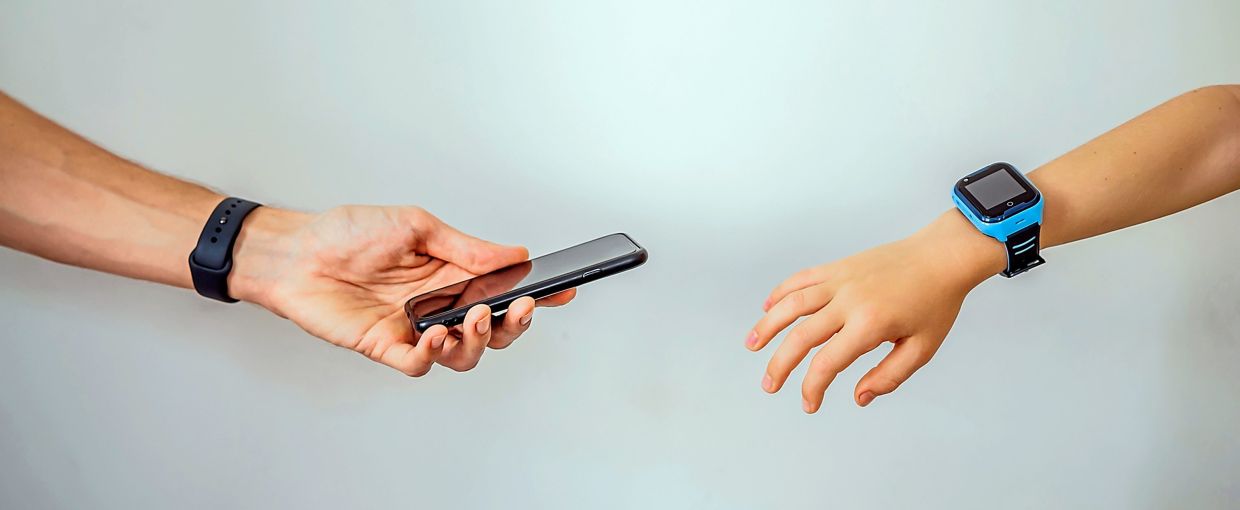
Mayo Clinic researchers in the United States have developed a smartwatch-based alert system that signals parents at the earliest signs of a tantrum in children with emotional and behavioral disorders – prompting them to intervene before it intensifies.
In a new study published in the medical journal Jama Network Open, these alerts helped parents intervene within four seconds and shortened severe tantrums by an average of 11 minutes – about half the duration seen with standard therapy.
In this system, a smartwatch worn by the child detects physiological stress signals, such as rising heart rate, or changes in movement or sleep, and sends them to an artificial intelligence-enabled app on the parent’s smartphone.
The app analyses the data in real time and sends an alert as a cue for the parent to connect with their child.
The findings demonstrate how smartwatch technology can help bridge a gap in paediatric mental healthcare by giving parents actionable support when professional help isn’t immediately available.
That need is widespread – nearly one in five American children has a mental, behavioural or emotional health disorder, according to the US Centers for Disease Control and Prevention (CDC).
The approach shows how wearable technology, paired with patient-centric AI design, can support families beyond the clinic.
In the randomised clinical trial, 50 children aged three to seven years receiving Parent-Child Interaction Therapy at Mayo Clinic participated over 16 weeks.
Half were assigned to use the smartwatch system, and half continued standard therapy.
The study evaluated whether families would use the technology as intended and whether immediate alerts could measurably change parent response times and children’s behaviour.
Notably, children wore the smartwatch for about 75% of the study period, demonstrating feasibility and family engagement.
“This study shows that even small, well-timed interventions can change the trajectory of a child’s emotional dysregulation episode,” says child psychiatrist Dr Magdalena Romanowicz, who co-led the study.
“These moments give parents a chance to step in with supportive actions – moving closer, offering reassurance, labelling emotions and redirecting attention before a tantrum intensifies.”
This work builds on the team’s earlier study, which used a machine learning algorithm to analyse smartwatch data – including heart rate, sleep and movement – to predict disruptive behaviours in hospitalised children receiving psychiatric care.
That study, published in the Journal of Child and Adolescent Psychopharmacology, showed the algorithm could predict a child’s behavioural state with 81% accuracy and provided a 30- to 60-minute advance warning of an impending outburst.
“This work shows how basic science and clinical research can come together to transform patient care,” says Dr Arjun Athreya, who co-led the study and serves on the engineering faculty in Mayo Clinic’s Department of Molecular Pharmacology and Experimental Therapeutics.
“We’ve translated inpatient findings to outpatient care, and the results show how data from everyday smart devices can help families in real time.”
Child and adolescent psychiatrist and study co-author Dr Paul Croarkin says the findings highlight the power of data-driven care.
“A smartwatch may seem simple, but when it’s backed by evidence-based treatments and advanced analytics, it becomes a lifeline for families trying to manage severe behavioural symptoms at home.”
Mayo Clinic’s Child and Adolescent Psychiatry Inpatient Unit medical director and study co-author Dr Julia Shekunov says the work addresses an urgent need.
“We’re seeing more children in crisis, and the severity is increasing.
“This system gives parents tools they can use immediately, even outside the clinic, to help their child regain control.”
Future studies will refine the system’s predictive accuracy, test it in larger groups and assess its long-term benefits in routine outpatient care. – Mayo Clinic News Network/Tribune News Service