
Hello from 38,000 feet in the air, somewhere between Fiji and New Caledonia! The flights to Australia are long and disorienting, but I am super stoked to be headed back to begin Bounces’ second lap of the tennis circuit this year. If you’re not yet subscribed to Bounces, this would be a great time to do so.
As the tennis world comes back together on all sorts of flight paths for a new season’s beginning, the biggest headlines continue to be about breakups and endings.
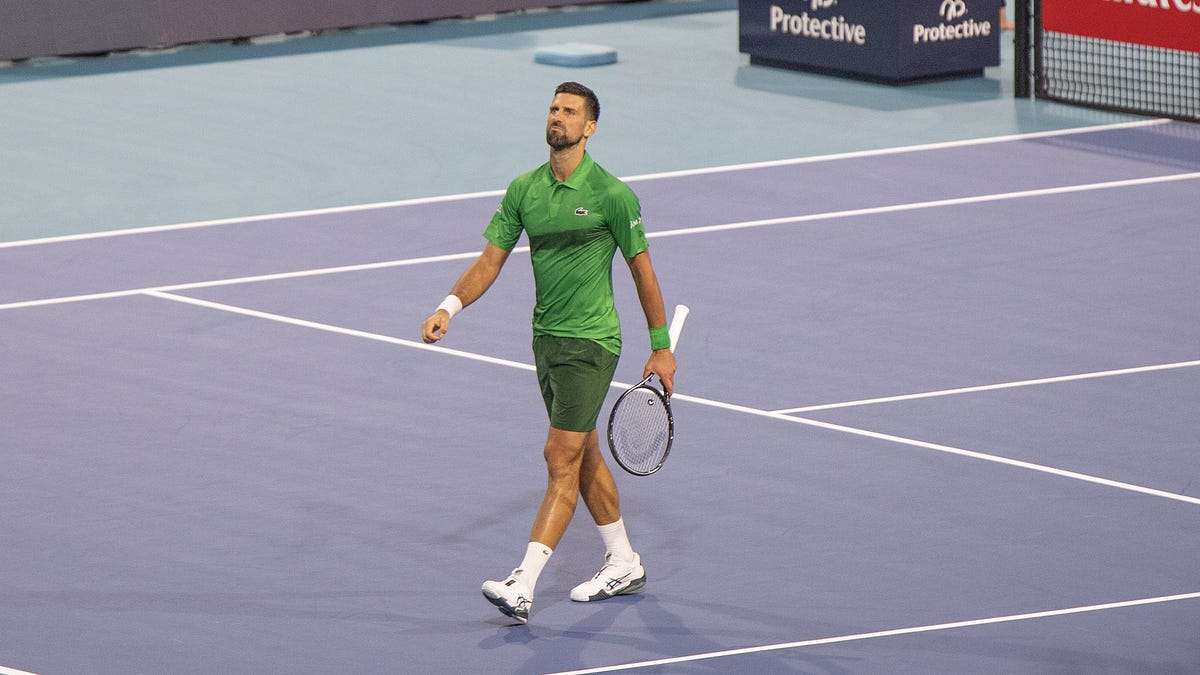
Following Alcaraz-Ferrero and Osaka-Evolve, the latest split might be the most striking: Novak Djokovic, whose 24 major singles titles are the most in the history of men’s tennis, announced last Sunday that he is disavowing the Professional Tennis Players Association, the insurgent organization he co-founded in 2020 after leaving the ATP Player Council.
Here is the text of Djokovic’s pointed-if-not-detailed statement on Twitter from Sunday:
After careful consideration, I have decided to step away completely from the Professional Tennis Players Association. This decision comes after ongoing concerns regarding transparency, governance, and the way my voice and image have been represented.
I am proud of the vision that Vasek [Pospisil] and I shared when founding the PTPA, giving players a stronger, independent voice – but it has become clear that my values and approach are no longer aligned with the current direction of the organization.
I will continue to focus on my tennis, my family, and contributing to the sport in ways that reflect my principles and integrity. I wish the players and those involved the best as they move forward, but for me, this chapter is now closed.
On one level, Djokovic separating from the PTPA isn’t entirely surprising. Djokovic co-founded the quasi-union with Vasek Pospisil, who had also served with him on the ATP Player Council; the two were together at the helm of the organization since its launch at the 2020 U.S. Open, most memorable for the infamous all-male member photo at the PTPA’s outset.
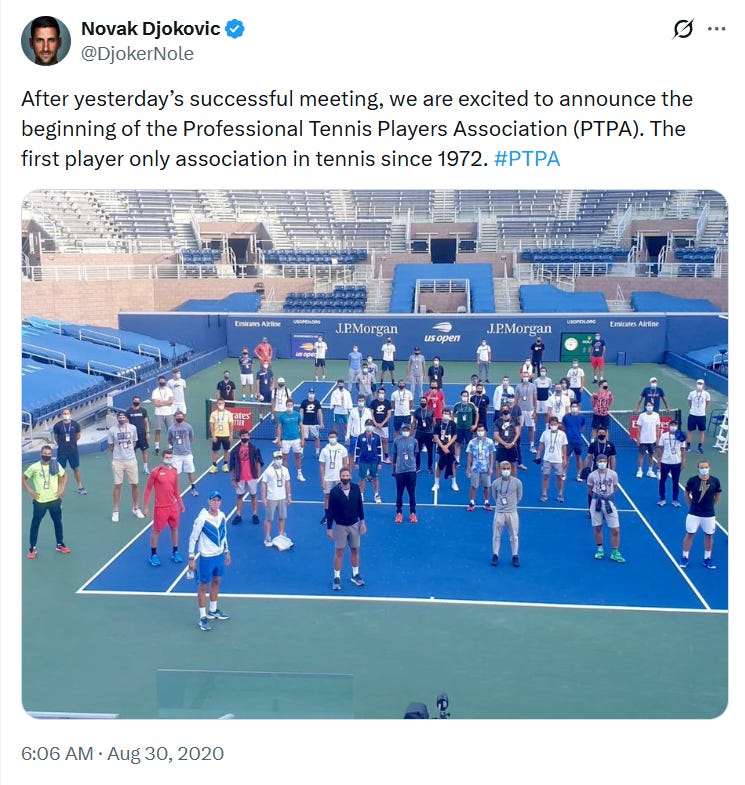
The PTPA didn’t have any seat at the table in tennis governance, so the consistent backing of the best player in men’s tennis was key to whatever relevance it had. Djokovic stayed as the face of the nebulous organization for years. He memorably held his own PTPA press conference on the eve of Wimbledon 2021—a tournament he won.
From the New York Times article I wrote then:
“It’s really difficult for a player whose priority is to hit the tennis ball, recover, have all his needs met in order for him to perform at his best, then, if he has time and energy, to deal with the politics and business side of things in tennis,” he said. “It’s very difficult for us to take this step forward and be responsible and really fully active and involved in the business side of things. But I’m glad I’m able, from the ranking position that I have in the tennis world, that my voice is being heard.”
But when the PTPA dragged the tennis powers-that-be into court last year with a wide-ranging lawsuit that used antagonistic language—“an illegal conspiracy protecting a cartel,” PTPA executive director Ahmad Nassar called professional tennis in his Bounces interview—Djokovic left his name off the list of plaintiffs. Without their superstar leader, the PTPA’s case became known as Pospisil et al. v ATP Tour et al.
In our Bounces interview, Nassar spun Djokovic staying out of the fray as a positive: “I talked to Novak yesterday morning before we filed, at length, and we’re all on the same page here…we all collectively view this as a great opportunity to let other players have the limelight. Like it doesn’t all need to be Novak, Novak, Novak.”
But when he spoke to media in Miami days after the complaint was filed, Djokovic expressed mixed emotions and misgivings about the lawsuit.
Novak Djokovic: …To be quite frank with you, there are things that I agree with in the lawsuit and then there are also things that I don’t agree with. I found that maybe some wording was quite strong in there, you know, but I guess, you know, the legal team knows what they are doing and what kind of terminology they are supposed to use in order to get the right effect.
I’ve never been a fan and supporter of division in our sport, but I’ve always fought for better representation and influence and positioning of the players globally in our sport, which I think is still not where I think it should be and where most of the players think it should be—not just in terms of prize money, but in terms of many other points that have been also stated in that document.
That was nearly 10 months ago, though, and there had been no other subsequent signs of tension between Djokovic and the PTPA; what changed since then? The PTPA lawsuit has trotted along without any major controversy; the four Grand Slam events were added as defendants, and Tennis Australia broke rank to make a settlement with the plaintiffs’ side.
“What I can say is that we decided as an organization early on that if we’ve got to expend resources … we would much rather make it in compensating the players and growing the game than we would in legal fees and damages,” Tennis Australia’s Craig Tiley said Friday.
There hadn’t been any other major public developments on the PTPA’s lawsuit front in months. But in this sudden statement he made on Sunday, the language Djokovic used was strikingly severe: he didn’t just step away from the organization, he distanced himself and disowned the PTPA forcefully, suggesting the movement he’d personally founded was now at odds with his “principles and integrity.”
I reached out to the blindsided PTPA right after Djokovic’s announcement; the statement they returned with hours later was vague and cryptic, not directly acknowledging Djokovic or his announcement at all, but instead ambiguously mentioning “misinformation” and “attacks.”
Players created the PTPA to secure a stronger, more transparent voice in professional tennis. The PTPA is governed by players and operates with open communication, collaborative decisions, and regular engagement. We always welcome the opportunity to address issues with any player, and remain available to do so.
As part of its mission, the PTPA initiated litigation against the tours and Grand Slams to advance reforms related to governance, transparency, and player rights. As a result, we have been targets of a coordinated defamation and witness intimidation campaign through the spreading of inaccurate and misleading narratives intended to discredit the PTPA, its staff, and its work. A federal court has already ruled this type of harassment improper and ordered it to cease.
We are working closely with legal counsel, law enforcement, and players to evaluate all available options to address the spread of misinformation. These attacks from non-player third parties will not distract us from our mission: pursuing meaningful reforms for all players.
Pospisil also declined to comment when reached by Bounces.
There were many news reports about Djokovic’s announcement this week; none had any illuminating explanation for why he made such an absolute exit from the organization he’d founded at this moment.
I was left with far more questions than answers. What had caused this sharp, stark divorce between Djokovic and the PTPA, and why had it come nearly 10 months after the PTPA’s last major maneuver?
So in between packing and planning for Melbourne, I’ve been poking and prying around this week, looking for a satisfactory answer about why Djokovic departed when he did. After some digging, I…found out a possible theory.
Or should I say…
The timing of Novak Djokovic’s abrupt departure from the PTPA this week, Bounces can report, correlates with something big one of his former rivals has been cooking up.
Andy Roddick, who has become a preeminent tennis podcaster since starting his show Served just under two years ago, has an atypical episode of his show in the works: an investigative deep-dive into the PTPA and its executive director Ahmad Nassar.
The content of this forthcoming episode, as I’ve ascertained, does not sound like standard Served fare whatsoever; it sounds far more like Pablo Torre Finds Out, a show that would understandably inspire emulation after it took sports media by storm last year.
It tracks then, that Served is bringing in a ringer for this atypical exercise: Tim Rohan, an investigative sports reporter who has been a correspondent several times on PTFO. Rohan has done a bit in the tennis sphere recently; in 2023 he traveled to Kyiv for a podcast series called “Volley and Serve” about Sergiy Stakhovsky joining the Ukrainian military.
(I overlapped with Rohan for a few years in the early 2010s when we were both writing for the New York Times’ Sports section, where he was a very well-liked colleague).
An investigative exposé of the PTPA fits into Rohan’s oeuvre, but again, it’s definitely atypical for Roddick’s. Though Roddick consistently has a punchy tone on his show, he really doesn’t take many hard swings at targets within the sport. A clear exception to that, however, has been the PTPA: Roddick’s two most antagonistic episodes last year were his confrontational interview of Nassar and Pospisil and his rant against PTPA funder Bill Ackman’s farcical wildcard into the Newport Challenger.
On Served’s most recent episode, a news roundup, the huge story of Djokovic leaving the PTPA was only mentioned very briefly in the literal last minute of the show, with conspicuously scant reaction from any of the hosts.
“This does not feel like a story that’s going to go away quickly,” Roddick said. “We’ll see. I was shocked when I heard the news, when it came across yesterday.”
Roddick’s frequent co-host Jon Wertheim added: “This is an ongoing story. There is a major [the fast-approaching Australian Open] at which point, I’m sure, more details will come out.”
We will have to wait for the episode’s publication to see all of what Roddick and Served throw at the PTPA this time, but they’ve been winding up with force.
Nassar declined to comment when contacted by Bounces about the upcoming Served episode.
Michael Hayden, co-founder and executive producer of Served Media—known on the show as “Producer Mike”—responded to a message about my reporting here with purported confusion.
“As we said on our last episode, we’re interviewing Holger Rune on the show next week and then beginning our Australian Open coverage,” Hayden wrote.
“Not sure what your story is or where this narrative is coming from…”
I understand the desire of the respective parties not to engage with this story about a still-unfinished project, but I would not be reporting this here if not confident in my reporting on this, and if I didn’t think it was important context to present in trying to understand this big off-court news story.
There’s no absolute guarantee, of course, that this under-construction episode will be completed and published. But the reverberations of the construction have already been radiating outward, so I wanted to bring news of those tremors I’ve been feeling to Bounces readers.
I had hoped to publish this post before taking off for Australia, but in the end I’m glad I was running behind schedule. Somewhere a bit earlier in my transpacific crossing, I heard back from a key figure in this story who I wasn’t sure I would: Novak Djokovic himself.
Djokovic told Bounces that he was indeed aware of the episode in progress.
“I am aware of a podcast in relation to PTPA as [I] was contacted by them for comment, which I responded to,” Djokovic said.
But the correlation of the timing, Djokovic insisted, did not amount to causation.
“This podcast had no impact on my decision or timing to step away from PTPA,” Djokovic told Bounces.
One brief update on a story I broke last month: IMG made what I had reported at Bounces official today, announcing the signing of Naomi Osaka after she left Evolve, the agency she’d founded after leaving IMG in 2022.
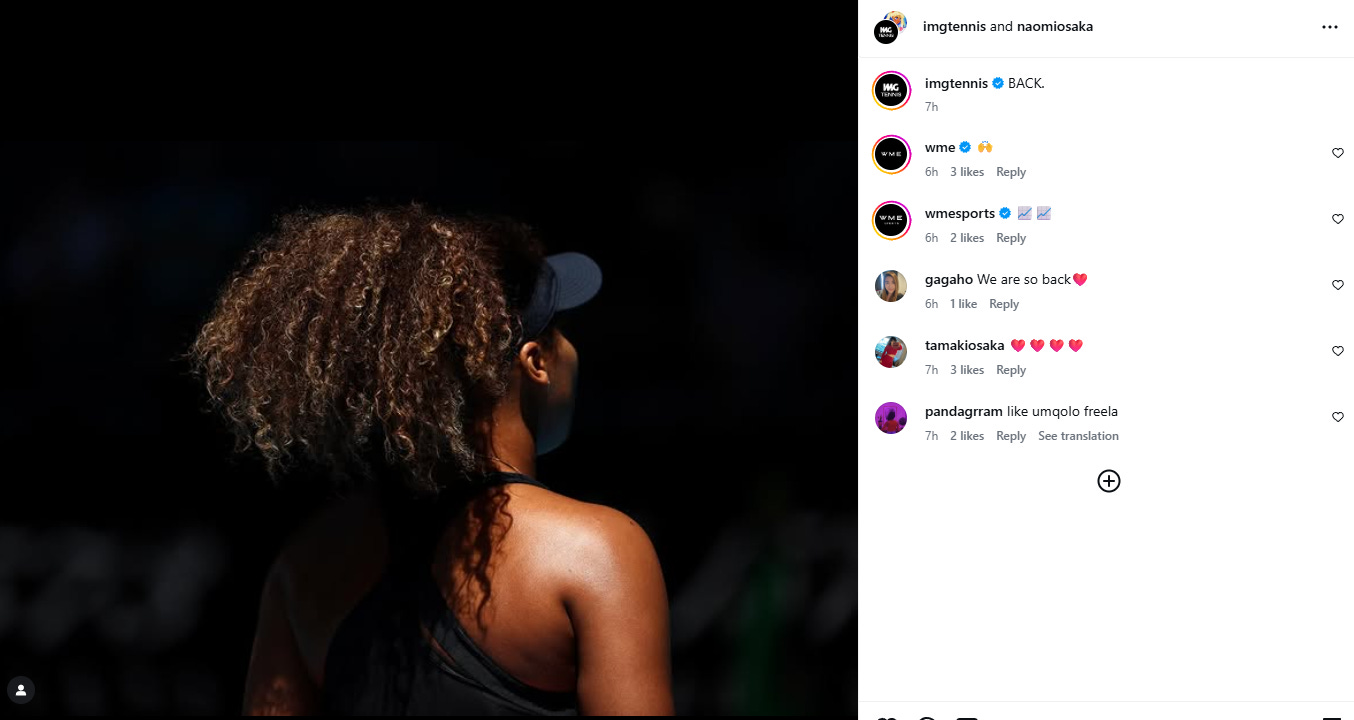
Osaka’s agent at IMG will be Max Eisenbud (who you may recall responded “???” when contacted for the Bounces story back in December).
Before I wrap this up, I wanted to briefly pay tribute to Damian Kust, the young Polish tennis reporter who tragically passed away this week after battling illness, just 26 years old.
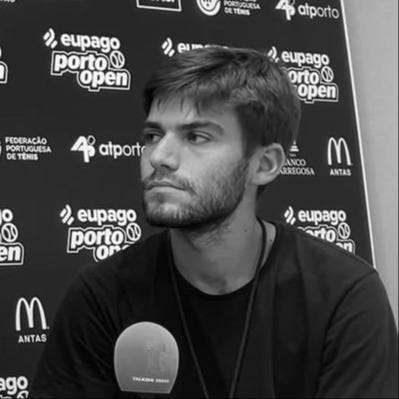
I didn’t know Damian personally beyond our interactions on Twitter over the last five years, but his knowledge and his passion about tennis shone through, even on a medium that so often elevates ignorance, and I share with so many others in mourning his horrifically unfair departure from this world.
I often refer to meeting other tennis diehards as finding your tribe; you get to speak a language with them that so few others in this world would understand, and make jokes with punchlines that only 0.0001% of the world would ever laugh at. Damian’s vocabulary in this tennis language was some of the richest the sport has probably ever heard; finding a stranger who can instantly riff with you on Zdenek Kolar’s apparel choices is truly a joy.
Damian flourished in bringing light to the deepest recesses of the sport, documenting players and stories that would have otherwise languished and been lost to total obscurity. And he did it all with clear joy and warmth, and without any of the know-it-all gate-keeping that can so often linger in such hipsterish pursuits. I’m sad and angry that he’s gone, but I feel very lucky that we had him to make tennis a better place, if only for far too short of a time.
Thanks for reading Bounces. -Ben